
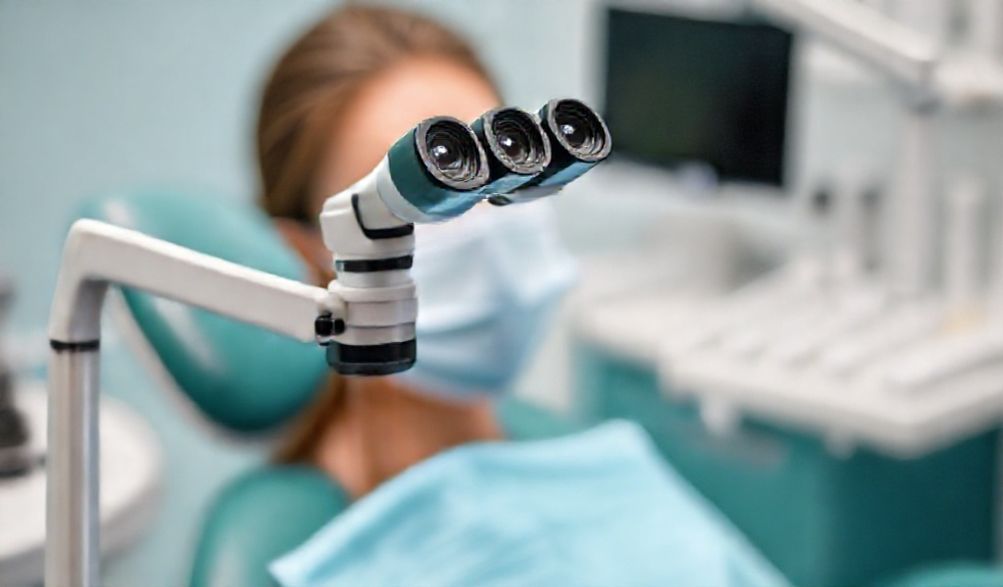
Ergonomic Loupes for Dental Hygiene: A Complete Guide to Posture, Precision & Health
A startling statistic reveals the silent epidemic within dental practices: over 70% of dental professionals report suffering from neck or back pain. For dental hygienists, this isn’t just an occasional ache; it’s a direct and pervasive threat to career longevity and quality of life. The repetitive, precision-driven nature of prophylaxis, combined with prolonged static postures, creates a perfect storm for musculoskeletal disorders (MSDs). But what if a key piece of technology could fundamentally alter this trajectory?
This comprehensive guide positions ergonomic loupes not as a simple magnification tool, but as an essential, transformative investment in your physical health and clinical prowess. Drawing on ergonomic principles, dental hygiene best practices, and equipment science, we will dissect how the right loupes serve as a postural solution. Our aim is to empower you with knowledge, synthesizing insights from ergonomic researchers, seasoned practitioners, and equipment specialists, to help you prevent injury, enhance clinical outcomes, and build a sustainable, pain-free career.
Why Posture Matters: The Hidden Physical Cost of Dental Hygiene
The daily routine of a dental hygienist is a marathon of precision. Hours are spent in a confined space, head tilted forward, shoulders rounded, and wrists flexed, all while applying controlled force. This biomechanical reality carries a significant, and often underestimated, physical cost.
The Statistics of Strain: MSDs in the Dental Profession
The data is unequivocal. Studies consistently show dental professionals are at the highest risk for work-related musculoskeletal disorders among all healthcare providers. Research published in journals like The Journal of the American Dental Association (JADA) and by organizations like the National Institute for Occupational Safety and Health (NIOSH) indicates prevalence rates of MSDs ranging from 64% to 93%. The most commonly affected areas are the neck, shoulders, upper back, and lower back. For hygienists, the risk is often elevated due to the high volume of repetitive scaling and root planing motions.
Common Culprits: Neck Flexion, Static Postures & Repetitive Motion
The primary offender is excessive neck flexion—bending your head forward to see into the oral cavity. Without visual aids, a hygienist might bend their neck 30-60 degrees for extended periods. This position places immense strain on the cervical spine, compressing discs and overloading the posterior neck muscles (like the trapezius and levator scapulae).
Compounding this is static posture. Holding any position, even a “good” one, for too long causes muscle fatigue and reduces blood flow. When combined with repetitive motion of the hands and wrists during instrumentation, the result is cumulative trauma. The body isn’t designed for this trifecta, leading to inflammation, pain, and eventual injury.
Long-Term Consequences: From Chronic Pain to Early Career Burnout
The impact transcends occasional discomfort. Chronic pain can lead to:
* Decreased Clinical Performance: Pain and fatigue reduce fine motor control, potentially affecting the quality of care.
* Increased Absenteeism: Severe issues may require time off for physical therapy or recovery.
* Career Limitation or Termination: Some professionals are forced to reduce their hours or leave the profession entirely due to debilitating conditions like cervical disc herniation, chronic tendonitis, or thoracic outlet syndrome.
* Reduced Quality of Life: Pain doesn’t clock out. It affects sleep, hobbies, and time with family.
This trajectory often leads to early career burnout—not from a lack of passion for patient care, but from the physical toll the job exacts.
Ergonomic Loupes: More Than Magnification, A Postural Solution
This is where the narrative shifts. Ergonomic loupes are fundamentally misunderstood if viewed only as “glasses that make things bigger.” Their primary role is as a postural intervention device. They are engineered to break the cycle of neck flexion by bringing the visual field to you, allowing you to maintain a neutral, healthy spine.
The Core Principle: Working in a Neutral Position
Neutral posture is the gold standard for musculoskeletal health. For a seated clinician, this means:
* Tête : Balanced directly over the shoulders, ears aligned with the shoulders.
* Neck & Spine: Maintaining the natural cervical and lumbar curves.
* Épaules : Détendues et basses, pas voûtées ou surélevées.
* Arms: Close to the body, elbows at roughly a 90-degree angle.
Ergonomic loupes with a correctly prescribed angle de déclinaison make this possible. The optics are angled downward, allowing you to sit upright with your head in a neutral position while your line of sight is directed into the patient’s mouth. You stop bending to see and start seeing while aligned.
Key Components of Ergonomic Loupes
Understanding the anatomy of loupes is key to choosing the right pair.
Declination Angle: The Most Critical Factor
Measured in degrees, the declination angle is the tilt of the optical barrels relative to your horizontal line of sight. A higher angle (e.g., 30°-45°+) allows for a more upright posture. A certified fitter will measure your “neutral head position” and the angle needed for you to see the working field while maintaining it. This is the single most important ergonomic specification.
Working Distance: Finding Your “Sweet Spot”
This is the distance from your eyes to the patient’s oral cavity when you are in a neutral posture. It’s personal and depends on your arm length and preferred operating position. Too short, and you’ll hunch; too long, and you’ll over-reach. It must be measured precisely during a fitting.
Field of View & Depth of Field: Balancing Detail and Awareness
- Field of View (FOV): The width of the area you see through the loupes. Higher magnification typically reduces FOV. A balance is needed to maintain situational awareness.
- Depth of Field: The “focal zone” where objects appear sharp. A greater depth of field is forgiving with minor head movements and is crucial for procedures where instrument tips are at varying levels.
Frame Weight and Adjustability
Lightweight materials (like titanium) reduce pressure on the nose and ears. Fully adjustable frames and nose pads ensure the loupes sit perfectly, maintaining the optical axis and preventing slippage that can lead to compensatory poor posture.
How to Choose the Right Ergonomic Loupes for Your Practice
Selecting loupes is a highly personalized process. Treat it with the same seriousness as a medical device prescription.
Step 1: The Professional Fitting – Non-Negotiable
Do not buy loupes online based on generic specs. An in-person or comprehensive virtual fitting with a certified representative is essential. They will take precise measurements of your interpupillary distance (IPD), working distance, and required declination angle while simulating your clinical position. This step is the cornerstone of the loupes’ ergonomic benefit.
Step 2: Determining Your Specifications
Before your fitting, consider:
* Your Current Posture: Are you a “huncher”? Your needed declination angle may be higher.
* Your Operatory Setup: Chair height, patient chair position, and delivery system style influence your working distance.
* Your Primary Procedures: A hygienist performing mostly periodontal therapy may prioritize different depth of field and magnification (often starting at 2.5x to 3.5x) than a general dentist.
Step 3: Evaluating Features & Accessories
- Éclairage : Integrated LED lights are a game-changer. Coaxial lighting (where light travels down the same optical path as your vision) eliminates shadows directly in your line of sight, further reducing the need to contort for better visibility.
- TTL vs. Flip-Up: Through-the-Lens (TTL) loupes are custom-mounted to your precise measurements, offering consistent ergonomics. Flip-ups offer versatility (you can look over them) but can be heavier and may shift over time.
- Custom Frames: Many brands offer compatibility with popular eyewear frames for a customized, comfortable fit.
Step 4: Considering Budget and Value Over Cost
Quality ergonomic loupes are an investment, typically ranging from $800 to over $2,500. Frame this not as an expense, but as an investment with a clear return: the prevention of chronic pain, potential medical bills, and lost income. The value lies in preserving your ability to practice comfortably for decades.
Integrating Loupes into a Holistic Ergonomic Strategy
Loupes are a powerful tool, but they are not a magic bullet. They work best as part of a comprehensive ergonomic system.
The Ergonomic Triad: Loupes, Operator Stool, and Patient Positioning
These three elements must be in harmony:
1. Loupes: Allow you to sit upright.
2. Operator Stool: Must support this upright posture. Use a saddle stool that promotes a neutral pelvis and allows your feet to be flat, with thighs sloping downward.
3. Patient Positioning: The patient should be positioned low (often near your lap level) and supine. This brings the oral cavity to you, minimizing reach.
If one element is off, you will compensate, negating the benefits of the others.
Exercises and Stretches for Dental Professionals
Incorporate daily routines to counteract occupational strains. Focus on:
* Chin Tucks: To strengthen deep neck flexors and combat forward head posture.
* Doorway Pectoral Stretches: To open up the chest and rounded shoulders.
* Scapular Retractions: Squeeze shoulder blades together to strengthen upper back muscles.
* Wrist Flexor/Extensor Stretches: To maintain forearm flexibility.
* Consulting a physical therapist who specializes in treating dental professionals can provide a personalized regimen.
Daily Habits for Sustained Musculoskeletal Health
- Take Micro-Breaks: Every 20-30 minutes, take 30 seconds to look away, stretch your neck, and relax your shoulders.
- Perform Posture Checks: Set reminders to self-assess: “Are my ears over my shoulders? Are my shoulders relaxed?”
- Maintain Your Equipment: Keep loupes clean and lenses scratch-free. Ensure the frame adjustment remains tight and secure.
Foire Aux Questions (FAQ)
Q: Are ergonomic loupes only for dentists, or are they beneficial for dental hygienists?
R : They are especially critical for dental hygienists. The sheer volume of repetitive, fine-motor procedures like scaling makes hygienists particularly vulnerable to MSDs. Ergonomic loupes are a primary defense tool for this specific workload, directly addressing the postural strains inherent to hygiene practice.
Q: What’s the typical cost range, and are they worth the investment?
R : A quality set of ergonomic loupes with a professional fitting typically ranges from $800 to $2,500+, with higher magnifications and integrated lighting increasing the price. The return on investment is measured in health, not just dollars. Preventing even one chronic injury can save tens of thousands in medical costs, lost wages, and career disruption. The investment pays for itself by safeguarding your ability to work pain-free.
Q: Combien de temps faut-il pour s'adapter à l'utilisation de loupes ?
R : La plupart des cliniciens nécessitent une période d'adaptation de 1 à 2 semaines avec une utilisation quotidienne et constante. Durant cette période, vous pourriez ressentir une légère fatigue oculaire ou une désorientation, car votre cerveau s'adapte au champ de vision limité et agrandi. Commencez par des tâches simples, soyez patient et évitez d'alterner entre l'utilisation des loupes et leur non-utilisation. La persévérance est essentielle — les bénéfices à long terme dépassent largement cette courte phase d'ajustement.
Q: Puis-je utiliser mon système d'éclairage au plafond existant avec de nouvelles loupes ergonomiques ?
R : Bien que cela soit possible, ce n'est pas optimal. Les lumières au plafond projettent les ombres de votre tête et de vos mains directement dans votre ligne de vision, vous obligeant à bouger la tête ou la lumière pour voir. Un éclairage LED coaxial intégré illumine précisément l'endroit que vous regardez, éliminant les ombres et les reflets. Cela réduit la fatigue oculaire et minimise davantage le besoin de mouvements compensatoires du cou, complétant ainsi le système visuel ergonomique.
Conclusion
Les loupes ergonomiques représentent un changement de paradigme dans la pratique de l'hygiène dentaire. Elles sont bien plus qu'un outil d'acuité visuelle ; elles constituent un pilier fondamental de la prévention des blessures et de l'excellence clinique. En permettant une posture de travail neutre, elles combattent directement la principale cause de douleurs menaçant la carrière dans la profession.
Le chemin vers une carrière plus longue, plus saine et plus précise commence par une seule décision éclairée. Passez à l'étape suivante : planifiez un ajustement professionnel avec une entreprise réputée, évaluez de manière critique l'ergonomie actuelle de votre poste de travail, ou partagez ces connaissances avec un collègue qui souffre de douleurs. Votre système musculo-squelettique est votre atout professionnel le plus précieux. Le protéger avec des outils pratiques et fondés sur des preuves, comme les loupes ergonomiques, est le meilleur investissement que vous puissiez faire pour votre avenir professionnel.
p>