
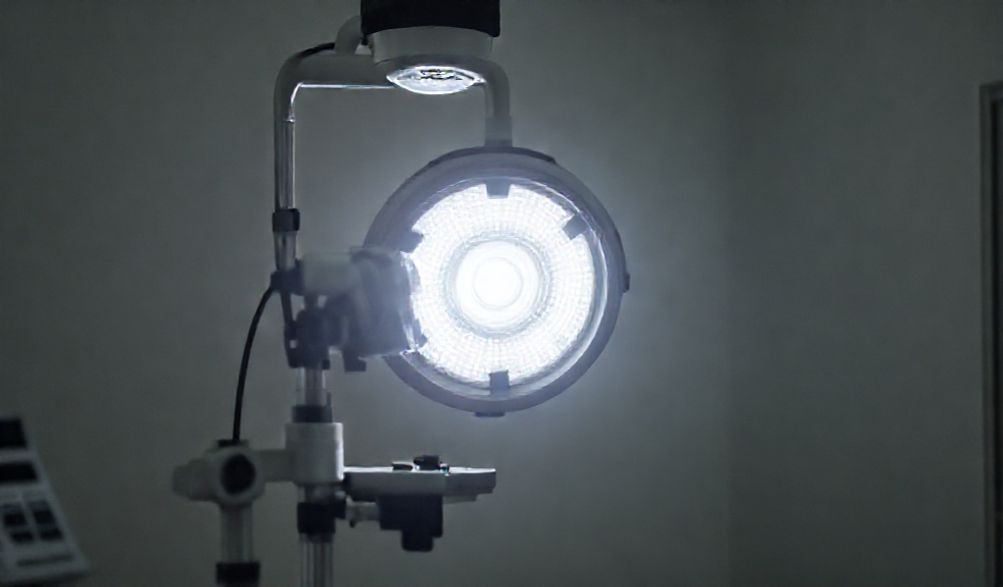
Examination Lights: A Comprehensive Guide to Types, Uses, and Selection Criteria
Introduction
In the intricate world of clinical practice, where diagnostic accuracy and procedural precision are paramount, one tool is so fundamental that its importance is often overlooked: the lampe d'examen. Far more than a simple source of brightness, a professional examination light is a sophisticated optical instrument. It is the clinician’s partner in visualization, transforming a routine check into a detailed assessment and guiding delicate interventions with clarity.
Proper illumination is not a luxury; it is a foundational requirement for positive patient outcomes. Inadequate lighting can lead to missed details, increased procedural time, and clinician eye strain. Whether in a bustling general practice, a focused dental operatory, or a dynamic veterinary clinic, the right light directly impacts the quality of care.
This comprehensive guide serves as an authoritative resource on examination lights. We will demystify the core technology, explore the diverse types tailored for specific medical fields, and provide a detailed, expert-backed framework for selection. If you are a healthcare practitioner equipping a new clinic, a facility manager overseeing an upgrade, or a student deepening your understanding of essential medical tools, this guide is designed to build trust through detailed, experience-driven information that prioritizes the well-being of both patient and practitioner.
Understanding Examination Light Core Technology & Key Metrics
To make an informed choice, one must first understand the language of light. Moving beyond “brightness,” several key metrics define the performance and suitability of a clinical light.
Illumination Fundamentals: Lux, Lumens, and Color Temperature
- Lux (Illuminance): This is the most critical metric for examination lights. It measures the amount of light (luminous flux) that actually falls on a surface (illuminance). Think of it as light intensity at the point of examination. For minor surgical procedures, 40,000 to 160,000 lux or more may be required. For general physical exams, 2,000 to 10,000 lux is often sufficient. Always look for the lux rating at a specified working distance (e.g., “40,000 lux at 1 meter”).
- Lumens (Luminous Flux): This measures the total quantity of visible light emitted by the source. While related, lumens alone don’t tell you how concentrated or effective that light is on the target area. A high-lumen light poorly focused will be less effective than a lower-lumen light perfectly directed.
- Color Temperature (Kelvin – K): This describes the hue of the white light, ranging from warm, yellowish light (2700K-3500K) to cool, bluish daylight (5000K-6500K). Clinical settings typically use neutral to cool white light (4000K-5500K) as it is perceived as brighter and less fatiguing for detailed tasks.
- Indice de Rendu des Couleurs (IRC) : Arguably as important as intensity, CRI measures a light source’s ability to reveal the true colors of objects compared to natural light. On a scale of 0-100, a CRI above 90 is considered excellent and is crucial in medicine. It allows for accurate differentiation between tissue types, identification of subtle inflammation, jaundice, cyanosis, and precise shade matching in dentistry.
The Evolution of Light Sources: Halogen, LED, and Beyond
The heart of any examination light is its light source, and technology has evolved dramatically.
- Halogène : Once the standard, halogen bulbs are now largely phased out in new equipment. They produce light by heating a tungsten filament, resulting in significant infrared (heat) radiation, high energy consumption, and a relatively short lifespan. The intense heat can be uncomfortable for patients and staff.
- LED (Light Emitting Diode): Modern LED technology is now the undisputed standard. LEDs generate light through electroluminescence, offering profound advantages:
- Cool Operation: They emit minimal infrared radiation, enhancing patient comfort, especially during prolonged procedures.
- Efficacité énergétique : They consume up to 80% less power than halogen equivalents.
- Longévité : Lifespans of 50,000 hours or more are common, drastically reducing replacement costs and downtime.
- Performance : Advanced LED arrays provide exceptional homogeneity (even light field) and enable designs that actively reduce shadowing.
Critical Performance Features
Beyond specs, these functional features define a light’s usability:
- Depth of Illumination: The ability to illuminate deep cavities (like a surgical wound or oral cavity) without causing excessive glare on the surface. This is achieved through optical lens systems that focus and direct the light.
- Homogénéité : A uniform light field without distracting bright spots (hot spots) or dim areas. Good homogeneity prevents eye fatigue as the clinician’s eyes don’t constantly adjust to varying intensities across the field.
- Gestion des ombres : The bane of any examination. High-quality lights combat shadows through multi-diode arrays that fill in shadows from different angles and through the physical design of the light head and reflector.
Types of Examination Lights for Specific Clinical Applications
One size does not fit all. The ideal examination light is chosen based on its clinical environment and primary task.
Medical Examination Lights for General Practice & Specialties
- Ceiling-Mounted Procedure Lights: These are the workhorses for minor surgery, laceration repair, and colposcopy. They offer the greatest range of motion, stay completely out of the floor space, and provide high-intensity, shadow-reduced illumination. Many feature sterile handles for intra-procedure adjustment.
- Wall-Mounted Lights: With flexible gooseneck or multi-joint arms, these are perfect for general physical exams in consultation rooms. They are space-efficient and provide excellent localized light for ENT, dermatological checks, or wound inspection.
- Specialized Lights: Dermatology often uses lights with specific wavelengths for assessing lesions. ENT may utilize headlights or focused spot lights. Wound care clinics prioritize lights with high CRI and cool operation.
Dental Operatory Lights: Precision for Oral Cavities
Dental lights face unique challenges: a small, deep, and reflective field of view.
* Focus & Shape: They typically produce a focused, round beam designed to illuminate the oral cavity without shining in the patient’s eyes. The light head is often smaller and more maneuverable.
* Contrôle des infections : Given the aerosol-generating environment, dental lights frequently feature autoclavable or disposable diaphragms that cover the light handle.
* Dual Configuration: Many operatories use a dentist light and a separate assistant light, both ceiling-mounted, to eliminate all shadows from both sides of the patient’s mouth.
Veterinary Examination Lights: Durability and Flexibility
Veterinary applications demand ruggedness and adaptability.
* Durabilité : Lights must withstand a more unpredictable environment. Construction is often more robust.
* Broader Light Fields: To accommodate animals of vastly different sizes, from a kitten to a Great Dane, the light field is typically broader and more adjustable.
* Surgical & Exam Variants: As in human medicine, there is a distinction between high-intensity surgical lights for sterile suites and flexible exam lights for consultation rooms.
Lampes Portables et de Diagnostic
This category includes the handheld tools that are extensions of the clinician’s diagnostic senses.
* Otoscopes/Ophthalmoscopes: These incorporate focused, battery-powered lights to visualize the ear canal and retina, respectively.
* Pen Lights & General Diagnostic Lights: Used for checking pupil reactivity, examining the throat, or as a general-purpose portable light.
How to Choose the Right Examination Light: An Expert Selection Framework
Selecting a light is a strategic decision. Follow this framework to ensure your choice aligns with clinical and operational needs.
Assessing Your Clinical Needs and Workflow
Start with a needs analysis:
* Primary Use: Is it for general examinations, minor surgery, dental procedures, or veterinary checks?
* Room Layout & Workflow: Consider the room size, ceiling height, placement of the exam table/chair, and the typical positioning of the clinician and assistants. Where does the light need to reach?
* Ergonomie : A light that is difficult to position will cause neck, back, and eye strain. The adjustment mechanism should be intuitive and smooth, allowing the light to be positioned and locked with minimal effort.
Technical Specifications Checklist
Prioritize these specs when comparing models:
1. Illuminance (Lux): Ensure it meets the recommended level for your tasks (e.g., 40,000+ lux for minor surgery).
2. Indice de Rendu des Couleurs (IRC) : Must be >90 for accurate color discrimination.
3. Température de Couleur : Adjustable (e.g., 4000K-5500K) is a valuable feature for different procedures.
4. Doit être ≥90. Insist on modern LED technology.
5. Homogénéité : Look for a stated homogeneity percentage (e.g., >80%) or evaluate beam patterns in demonstrations.
6. Depth of Illumination: Check specifications or reviews regarding performance in deep-cavity illumination.
Mounting Options and Maneuverability
The mount determines the light’s footprint and range.
* Fixation au plafond : Best for procedure rooms and dental operatories. Offers maximum floor space clearance and wide range of motion. Requires secure structural support.
* Fixation murale : Ideal for exam rooms. Space-efficient but has a more limited arc of movement.
* Pied au sol : Portable and flexible, good for multi-purpose rooms or clinics in rented spaces. Can be a trip hazard and consumes floor space.
* Tabletop: Least expensive and portable, but least stable and with the most limited range.
Evaluate the arm system: the number of joints, the smoothness of the tension system (gas spring vs. mechanical), and the ease of repositioning.
Safety, Sterilization, and Compliance Standards
- Safety Standards: Ensure the light complies with norme IEC 60601-1, the international standard for the safety of medical electrical equipment. This covers electrical safety, mechanical stability, and radiation hazards.
- Nettoyabilité : In clinical environments, the light must withstand frequent disinfection. Look for seamless housings, cleanable handles (often with removable covers), and materials that can tolerate clinic-grade disinfectant wipes without degrading.
Installation, Maintenance et Bonnes Pratiques
Considérations pour une Installation Professionnelle
Especially for ceiling-mounted units, professional installation is non-negotiable. It ensures:
* Intégrité Structurelle : The ceiling can support the weight and dynamic forces of the light arm.
* Sécurité électrique : Proper wiring and grounding according to local codes.
* Optimal Positioning: The light is centered correctly over the primary work area for maximum utility.
Routine Maintenance Protocol for Longevity
- Quotidien : Wipe down all handles, touch surfaces, and the light head exterior with a recommended disinfectant. Avoid spraying liquid directly onto the unit.
- Hebdomadaire/Mensuel : Check the tension in the arms. Do they hold position securely, or do they drift? Inspect electrical cords for fraying.
- Annuel : Consider a professional check-up to ensure all mechanical and electrical components are functioning within specification.
Optimizing Light Use for Patient Comfort and Accuracy
- Avoid Glare: Before turning on a high-intensity light, warn the patient. Position the light at an angle to the patient’s line of sight rather than shining it directly into their eyes.
- Minimiser la Chaleur : Bien que les lampes LED soient froides, évitez de placer la tête lumineuse extrêmement près de la peau du patient pendant de longues périodes.
- Réduire les Ombres : Positionnez la lumière aussi près que possible de votre ligne de visée. L'idéal est d'avoir la source lumineuse directement au-dessus ou légèrement derrière les yeux du clinicien. Utilisez plusieurs sources lumineuses (par exemple, un plafonnier et une lampe frontale) pour les tâches critiques sans ombres.
Section FAQ
Q1 : Quel est le facteur le plus important lors du choix d'une lampe d'examen ?
R : Bien que de nombreux facteurs comptent, un éclairage adéquat et homogène (mesuré en lux) pour votre tâche spécifique est primordial, suivi de près par un indice de rendu des couleurs élevé (IRC >90) pour garantir la précision du diagnostic. Une lumière vive qui déforme les couleurs est cliniquement dangereuse.
Q2 : Les lampes d'examen LED sont-elles vraiment meilleures que les halogènes ?
R : Oui, de manière écrasante. Les lampes LED modernes offrent une efficacité énergétique supérieure (économisant sur les coûts d'exploitation), génèrent nettement moins de chaleur (améliorant le confort du patient et du personnel), ont une durée de vie beaucoup plus longue (réduisant les coûts de remplacement et les temps d'arrêt) et fournissent une lumière plus uniforme et réduisant les ombres. Elles sont la norme pour toutes les nouvelles installations et mises à niveau.
Q3 : Combien dois-je prévoir de dépenser pour une lampe d'examen de bonne qualité ?
R : Les prix varient considérablement selon le type et les fonctionnalités. Une lampe LED murale basique pour un cabinet de médecin généraliste peut démarrer à quelques centaines de dollars. Une lampe chirurgicale plafonnière haut de gamme avec réduction avancée des ombres et des poignées stériles peut coûter plusieurs milliers de dollars. Considérez-la comme un investissement en capital à long terme dans les capacités de diagnostic, l'ergonomie et la qualité des soins.
Q4 : Puis-je utiliser un éclairage de pièce standard au lieu d'une lampe d'examen dédiée ?
R : Non. L'éclairage ambiant général est totalement insuffisant pour les examens cliniques. Il crée des ombres profondes, manque de l'intensité et de la précision des couleurs nécessaires, et entraîne une fatigue oculaire et des erreurs de diagnostic. Les lampes d'examen dédiées sont une nécessité clinique, et non un accessoire optionnel.
Q5 : À quelle fréquence les lampes d'examen doivent-elles être remplacées ou entretenues ?
R : Avec un entretien approprié, une lampe LED de haute qualité peut avoir une durée de vie fonctionnelle de 10 ans ou plus, selon l'utilisation typique. L'entretien est généralement minime mais peut impliquer le réglage de la tension du bras, le remplacement d'un revêtement de poignée ou le nettoyage des composants internes. La clé est un nettoyage régulier et une inspection visuelle dans le cadre du planning de maintenance de votre clinique.
Conclusion
Choisir la bonne lampe d'examen est une décision qui résonne à travers chaque consultation et chaque intervention. Elle impacte directement la confiance diagnostique, l'efficacité des procédures et l'expérience quotidienne du patient comme du praticien. En allant au-delà de la simple luminosité pour comprendre les paramètres clés comme le rendu des couleurs, l'homogénéité et la profondeur d'éclairage, vous vous donnez les moyens de faire un choix éclairé et fondé sur des preuves.
Donner la priorité à la technologie LED moderne avec un IRC élevé et une conception ergonomique et adaptée au flux de travail représente un investissement visionnaire dans la qualité et la sécurité des soins. C'est un investissement qui porte ses fruits en termes de précision, de bien-être du personnel et de satisfaction des patients pour les années à venir. Utilisez le cadre et la liste de contrôle fournis dans ce guide comme base pour votre évaluation, et consultez toujours des spécialistes qualifiés en équipement médical pour finaliser la solution d'éclairage optimale pour votre environnement clinique unique.
p>