
How Much Are Dental Loupes? A Complete 2024 Pricing & Buyer’s Guide
Si vous êtes un professionnel dentaire à la recherche de loupes, vous avez probablement constaté que les prix varient de quelques centaines à plusieurs milliers de dollars. Comprendre why is key to making a smart investment. This wide spectrum can be confusing, leaving you wondering if you’re overpaying for bells and whistles or underinvesting in a critical tool.
With years of experience reviewing dental equipment and consulting with practitioners on their ergonomic setups, we’ve created this transparent guide to cut through the confusion. Our goal is to move beyond simple price tags and explore the value behind the cost.
This guide will break down the cost factors, compare what you get at different price points, and provide a realistic price range for every type of dental loupe. By the end, you’ll know exactly what to budget for and how to choose the right loupes for your specific clinical needs and career stage. Whether you’re a dental student making your first purchase, a hygienist looking to upgrade, or a specialist seeking the highest magnification, this article is for you.
Understanding Dental Loupes: More Than Just Magnification
Before diving into costs, it’s crucial to understand what loupes dentaires are and why they are considered non-negotiable by most modern practitioners. This foundation explains why this isn’t an area to simply seek the cheapest option.
What Are Dental Loupes and Why Are They Essential?
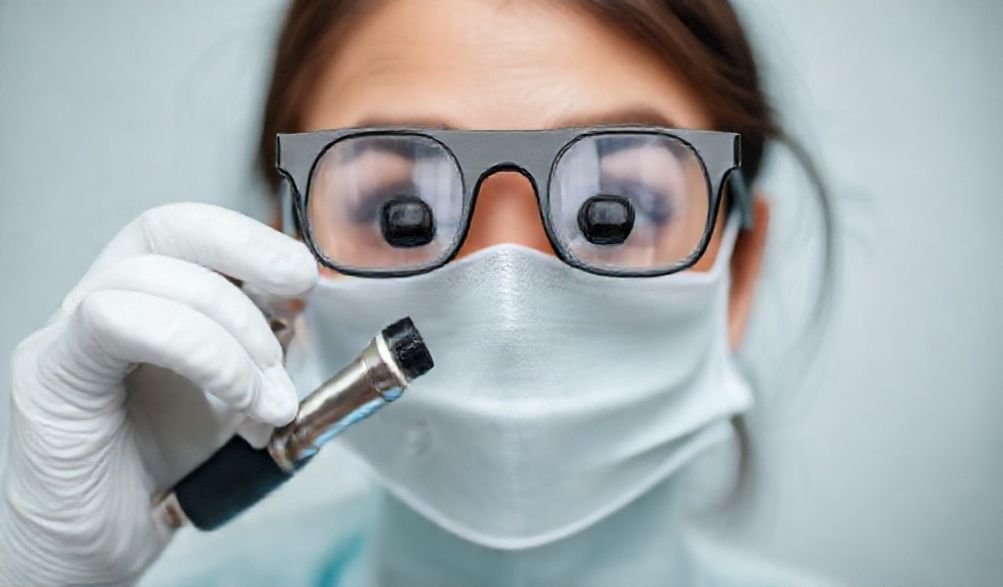
Dental loupes are telescopic lenses worn like glasses that provide ergonomic magnification. They are not just simple magnifying glasses; they are precision optical instruments designed to improve your clinical practice in four fundamental ways:
- Enhanced Precision & Clinical Outcomes: Magnification allows you to see fine details—micro-fractures, calculus, margin lines—that are invisible to the naked eye. This leads to more accurate diagnoses, superior preparation, and better restorative results.
- Improved Posture & Career Longevity: By bringing the patient’s mouth into clear focus, loupes force you to sit upright with your back straight and your arms closer to your body. This dramatically reduces the chronic neck and back pain associated with dentistry, protecting your health for a decades-long career.
- Reduced Eye Strain & Fatigue: High-quality optics provide a clear, wide field of view at a fixed focal distance. Your eyes are no longer constantly straining to refocus between near and far objects, reducing headaches and fatigue, especially during long procedures.
- Professional Confidence: The improved visibility and ergonomics translate directly into greater confidence during procedures, benefiting both you and your patient.
Key Components That Influence Cost
The price of a loupe system isn’t arbitrary. It’s a direct reflection of the quality and customization of its core components. When you see a $300 loupe next to a $3,000 loupe, you are looking at differences in:
* Optical System & Magnification Power
* Frame Material & Build Quality
* Lighting Integration
* Degree of Customization
* Brand Support & Warranty
Let’s break down exactly what you’re paying for in each of these areas.
Breaking Down the Cost: What You’re Really Paying For
Think of purchasing loupes as building a system. Each choice you make adds to (or subtracts from) the final price, performance, and comfort.
1. Magnification & Optical Quality (The Core Investment)
This is the heart of the system and the largest driver of cost. There are two main types:
-
Galilean Systems (2x – 3.5x): These use a simple lens system. They are lighter, more compact, and have a longer depth of field (more is in focus at once). They are also less expensive.
- Price Impact: Lower cost. A good entry point.
- Idéal pour : Students, hygienists, and general dentists doing routine procedures.
-
Prismatic (Keplerian) Systems (3.5x – 8x+): These use a prism to fold the light path, allowing for much higher magnification without excessive length. They offer superior clarity, a wider field of view at higher powers, but a shallower depth of field and are heavier.
- Price Impact: Significant cost increase. Represents the premium optical tier.
- Idéal pour : Specialists (endodontists, periodontists), restorative dentists, and any professional seeking the highest level of visual detail.
Other Optical Factors:
* Traitements des Verres : Anti-reflective and anti-fog coatings are essential and are standard on mid-to-high-end models. Premium coatings add cost but drastically improve performance in varying clinical conditions.
* Champ de Vision & Profondeur de Champ : Higher-quality optics provide a better balance—a wider area you can see clearly at once. This is a key differentiator between cheap and premium loupes.
2. Frame Materials & Design (Durability & Comfort)
You’ll wear these for hours each day. Comfort and durability are paramount.
- Standard Alloy Frames: The most economical option. They are functional but can be heavier and less adjustable.
- Lightweight Titanium Frames: The industry standard for professionals. Titanium is incredibly strong, corrosion-resistant, and about 40% lighter than alloy. This reduces pressure on your nose and ears.
- Custom-Fit & Adjustable Frames: Some brands offer frames with multiple adjustment points (pantoscopic tilt, temple length, nose bridge) for a perfect, personalized fit. “Through-the-lens” (TTL) designs have the optics mounted directly into your prescription lens carrier for optimal weight distribution.
- Price Impact: Titanium and custom-fit frames add several hundred dollars to the cost but are a wise investment for long-term comfort.
3. The Light Source: Loupe-Mounted vs. Overhead
While overhead lights are common, a coaxial loupe-mounted light (emitting light along your line of sight) is a game-changer. It eliminates shadows in the deep, dark oral cavity.
- Corded LED Lights: Plug into a battery pack on your waist. Reliable, never run out of charge mid-procedure, but the cord can feel restrictive.
- Wireless LED Lights: A small, rechargeable battery attaches directly to the loupe frame. Offers complete freedom of movement but has a finite battery life (typically 3-6 hours per charge).
- Adding Light Later: You can often add a light to a system later, but it’s usually more cost-effective to buy them as a bundled system from the start.
- Price Impact: A quality LED light system adds $800 – $2,000+ to the total cost. It is widely considered one of the most valuable additions you can make.
4. Customization: Working Distance & Declination Angle
This is the critical step that separates professional loupes from reading glasses bought online.
- Distance de travail : The precise distance from your eye to the patient’s mouth. Measured in centimeters by a trained representative.
- Angle d’inclinaison : The angle of the oculars (eyepieces) relative to the frame. This determines how far you need to tilt your head to see through them.
Why it Matters & Costs: “Off-the-shelf” loupes use average measurements. If yours aren’t custom-fit, you will compensate by hunching or craning your neck, defeating the primary ergonomic benefit and potentially causing injury. The process of taking these measurements and manufacturing the loupes to your exact specs adds value and cost. Reputable brands insist on it.
5. Brand Reputation & Warranty
Established brands like Orascoptic, Zeiss, Q-Optics, SurgiTel, and Designs for Vision command higher prices for good reason.
- Research & Development: They invest heavily in optical science, ergonomic design, and new technologies.
- Professional Fitting Network: They employ trained representatives who provide in-person consultations and fittings—a vital service.
- Renseignez-vous sur la durée de vie de la batterie (en cycles) et le coût de remplacement. Premium brands often offer exceptional warranties (5 years, 10 years, even lifetime on frames). This includes repair services, re-alignments, and sometimes even upgrades. This long-term support is factored into the initial price but provides immense peace of mind.
Dental Loupe Price Ranges: From Student to Specialist
Now for the numbers. Here’s a realistic breakdown of what you can expect to pay in 2024.
Entry-Level & Student Loupes: $300 – $1,200
- What You Get: Typically a Galilean system (2x-2.5x) with basic alloy frames. May be sold as a “starter kit.” Optics are functional but not exceptional. Customization may be limited.
- Who It’s For: Dental and hygiene students on a tight budget, or a professional wanting to try magnification for the first time with minimal investment.
- Consideration: This is a starting point. Many practitioners outgrow these quickly and upgrade within a few years.
Mid-Range Professional Loupes: $1,200 – $2,800
- What You Get: This is the sweet spot for most general practitioners and hygienists. Expect good-quality prismatic optics (3.0x-4.5x), lightweight titanium frames, and a basic corded or wireless LED light. Full customization (working distance, declination) is standard.
- Who It’s For: The committed general dentist, hygienist, or new graduate establishing their practice. This range offers an excellent balance of performance, durability, and value.
High-End & Specialist Loupes: $2,800 – $6,000+
- What You Get: The best of everything. High-magnification prismatics (5x-8x+), ultra-lightweight or custom titanium frames, top-tier wireless lighting systems with excellent battery life and color temperature, and premium lens coatings. Often includes advanced features like expanded field lenses.
- Who It’s For: Specialists (endodontists, periodontists, oral surgeons), master restorative dentists, and any clinician for whom visual detail is paramount and who demands the utmost in comfort and technology.
The Added Cost of Accessories & Upkeep
Remember to budget for the ecosystem:
* Éclairage : Replacement LED bulbs/batteries can cost $100-$300.
* Protection: A quality hard case is essential ($50-$150).
* Maintenance : Cleaning kits and potential out-of-warranty repairs.
How to Choose: Aligning Budget with Clinical Needs
With the price ranges in mind, how do you make the right choice?
Assessing Your Daily Procedures & Specialty
- Hygienists & Prophy: 2.5x-3.5x (Galilean or low-power Prismatic) is often sufficient. Prioritize lightweight frames and a good light.
- General Restorative Dentistry: 3.5x-4.5x (Prismatic) is ideal for crown preps, composites, and finding subgingival margins. A wireless light is highly recommended.
- Endodontics, Periodontics, Surgery: 5x-8x (High-power Prismatic) is standard. A bright, shadow-free wireless light is non-negotiable. Invest in the best optics you can afford.
The “Try Before You Buy” Imperative
This is the most important advice in this guide. Never buy loupes, especially mid-to-high-end ones, without an in-person fitting and trial. A reputable dealer will:
1. Take all your custom measurements.
2. Let you try different magnifications and frame styles.
3. Allow you to simulate clinical posture and movement.
This hands-on experience is invaluable and prevents a costly mistake.
Financing, Discounts, and Tax Implications
- Student Discounts: Most major brands offer significant discounts (15-30%) for students. Some dental schools have partnered programs.
- Manufacturer Financing: Many brands offer interest-free or low-interest payment plans.
- Practice Purchase: If you’re an associate, ask if the practice has a budget or plan for equipment. If you’re an owner, loupes are a deductible business expense.
- Aspects Fiscaux : In the US and many other countries, loupes and lights are considered deductible professional tools/equipment. Always consult your tax professional for advice specific to your situation.
Foire Aux Questions (FAQ)
Q1: Can I get good quality dental loupes for under $1,000?
R : Yes, but with caveats. In the $300-$1,000 range, you are primarily looking at entry-level Galilean systems or very basic prismatic sets, often targeted at students. They are a great way to start using magnification. However, they often lack the optical clarity, durable construction, and deep customization of higher-priced models. The most important factor, even at this price point, is a proper fit.
Q2 : Est-il judicieux d'investir dans un éclairage monté sur loupes ?
R : Presque universellement, oui. Bien qu'il ajoute un coût significatif, un éclairage coaxial est révolutionnaire. Il éclaire directement dans l'axe de votre vision, éliminant les ombres créées par les lumières plafonnantes et la tête du patient. L'amélioration de la visibilité, du contraste des couleurs et de la capacité diagnostique est si profonde que la plupart des professionnels qui l'essaient ne reviendraient jamais en arrière.
Q3 : À quelle fréquence dois-je remplacer mes loupes dentaires ?
R : Des loupes de haute qualité, ajustées professionnellement, sont un investissement à long terme. Avec un entretien approprié, elles peuvent durer 5 à 10 ans ou plus. Les raisons de remplacement incluent : un changement significatif de votre prescription visuelle, l'envie de passer à un grossissement supérieur ou à une technologie plus récente (comme de meilleurs éclairages), ou un dommage physique. Un entretien régulier, comme la vérification de l'alignement, peut prolonger leur durée de vie.
Q4 : Les loupes moins chères sur Amazon ou eBay sont-elles une bonne option ?
R : Nous conseillons une extrême prudence. Ces loupes “DIY” (à monter soi-même) n'incluent presque jamais l'ajustement personnalisé crucial pour la distance de travail et l'angle d'inclinaison. Utiliser des loupes mal ajustées peut vous contraindre à une posture pire que sans loupes du tout, entraînant fatigue et blessures. Leur qualité optique est fréquemment médiocre, causant des distorsions et une fatigue oculaire. Plus important encore, elles sont livrées avec peu ou pas de support professionnel ou de garantie. Vos loupes sont un investissement dans vos compétences cliniques et votre santé physique—ce n'est pas le domaine où il faut chercher à économiser.
Q5 : Les écoles dentaires incluent-elles généralement les loupes dans les frais de scolarité ?
R : Les politiques varient considérablement. Certaines écoles incluent un kit de loupes de base dans les frais étudiants. D'autres ont des partenariats exclusifs de remises avec des fournisseurs spécifiques et organisent des achats groupés. Beaucoup exigent que les étudiants les achètent indépendamment. Votre première étape devrait être de vous renseigner auprès de l'administration de votre programme spécifique de dentisterie ou d'hygiène dentaire, ou auprès des étudiants des années supérieures.
Conclusion
La question “combien coûtent les loupes dentaires ?” n'a pas une seule réponse car il ne s'agit pas d'un achat de commodité. Le prix reflète directement l'ingénierie optique, la personnalisation ergonomique, les matériaux durables et le support professionnel. Le prix “juste” est celui qui vous procure un système parfaitement adapté à vos exigences cliniques—un système qui améliore votre précision, protège votre corps et offre un service fiable pour les années à venir.
Investir dans votre posture, votre vision et votre précision, c'est investir dans la longévité de votre carrière et la qualité des soins que vous prodiguez à vos patients. C'est une décision qui porte ses fruits chaque jour au fauteuil.
Votre dernière étape : Avant de décider, nous recommandons fortement de planifier des consultations avec au moins deux vendeurs ou fabricants réputés. Comparez les modèles, essayez les montures, regardez à travers les optiques et faites-vous ajuster professionnellement. Cette expérience pratique est le seul moyen de faire un choix véritablement éclairé. Votre futur vous-même vous remerciera.
Vous avez d'autres questions sur des marques, des modèles spécifiques ou votre propre situation ? Partagez ce que vous recherchez ou vos expériences dans les commentaires ci-dessous—continuons la conversation.
p>