
Illuminating Wellness: How Advanced Lighting Solutions Are Transforming Healthcare Environments
For decades, lighting in hospitals and clinics was an afterthought—a simple utility to ensure doctors could see and corridors weren’t dark. Today, that paradigm has been completely overturned. healthcare lighting has evolved far beyond basic illumination, emerging as a critical, non-pharmacological tool that directly influences patient recovery, staff performance, and overall facility efficiency. We are moving from an era of ‘seeing’ to an era of ‘healing,’ where light is intentionally designed to support human biology.
This transformation is driven by a confluence of advanced technology and robust clinical science. Modern lighting healthcare systems are now integral to evidence-based design, a approach that uses credible research to influence architectural decisions that improve outcomes. This post delves into the sophisticated world of specialized medical lighting, exploring the science behind it, its diverse applications, and the tangible benefits it delivers. We will analyze how intelligent lighting contributes to physiological healing, reduces medical errors, and creates healthier, more humane environments for everyone within the healthcare ecosystem.
The Science of Light and Human Health (Circadian Rhythms)
At its core, the revolution in healthcare lighting is grounded in a fundamental understanding of human biology. Light is not just a visual signal; it is the primary regulator of our circadian rhythm, the internal 24-hour clock that governs sleep-wake cycles, hormone production, metabolism, and a host of other physiological processes.
Understanding Circadian Biology in Clinical Settings
The human eye contains specialized photoreceptor cells, intrinsically photosensitive retinal ganglion cells (ipRGCs), that are particularly sensitive to short-wavelength (blue) light. These cells don’t contribute much to vision but directly communicate with the brain’s suprachiasmatic nucleus (SCN)—the master circadian clock.
When these cells detect bright, blue-rich light (akin to morning sunlight), they signal the SCN to suppress the sleep hormone melatonin, increase cortisol for alertness, elevate core body temperature, and align the body with daytime activity. As daylight wanes towards evening, the reduction in blue light prompts melatonin release, preparing the body for rest.
In a healthcare setting, this natural cycle is profoundly disrupted. Patients are often confined to rooms with constant, artificial light, while staff work rotating shifts, rarely seeing natural daylight. This circadian disruption has measurable consequences:
* Pour les Patients : It can lead to sleep fragmentation, increased confusion (especially in elderly or ICU patients), higher perceived pain, and longer recovery times. Studies have linked circadian misalignment to increased inflammation and delayed wound healing.
* For Staff: Chronic disruption impairs cognitive function, alertness, and mood. For nurses and surgeons working long, irregular hours, this can contribute to fatigue, burnout, and an increased risk of medical errors.
Spectral Power Distribution: Beyond “Brightness”
To design effective lighting for healthcare, we must move past simple metrics like “brightness.” The key lies in Spectral Power Distribution (SPD)—the precise recipe of wavelengths that make up a light source. Two critical concepts derived from SPD are:
- Correlated Color Temperature (CCT – measured in Kelvin): This describes the visual “warmth” or “coolness” of light. Warm white light (~2700K-3500K) has less blue content and is relaxing. Cool white light (~5000K-6500K) is blue-enriched and stimulating.
- Intensity (Illuminance – measured in lux): The amount of light falling on a surface. A well-lit office may be 500 lux, while a detailed surgical task requires over 100,000 lux.
The impact is specific:
* Blue-Enriched Light (~5000K+): Promotes alertness, improves reaction time, and elevates mood. Ideal for nurse stations, pharmacies, and daytime settings in patient rooms.
* Warm, Dim Light (~2700K): Promotes relaxation and melatonin production. Critical for evening and night settings to support patient sleep and minimize disruption during nighttime checks.
Key Applications of Specialized Lighting in Healthcare Facilities
Understanding the science allows for targeted application. Modern healthcare lighting solutions are tailored to the unique needs of each space within a facility.
Patient Room Lighting: Supporting Healing and Comfort
The patient room is where the healing journey unfolds, and lighting plays a starring role. The gold standard is tunable white lighting.
* Dynamic Daylight Mimicry: Systems automatically adjust CCT and intensity throughout the day: cool, bright light in the morning; neutral, steady light during the day; and warm, dim light in the evening. This provides crucial circadian cues to bed-bound patients, helping to regulate sleep and improve orientation.
* Patient-Centric Control: Bedside controls allow patients to adjust ambient light for comfort and a sense of normalcy. Integrated, low-level night lighting (often amber or red, which minimally impacts melatonin) guides safe bathroom trips without fully waking the patient or disrupting their sleep cycle.
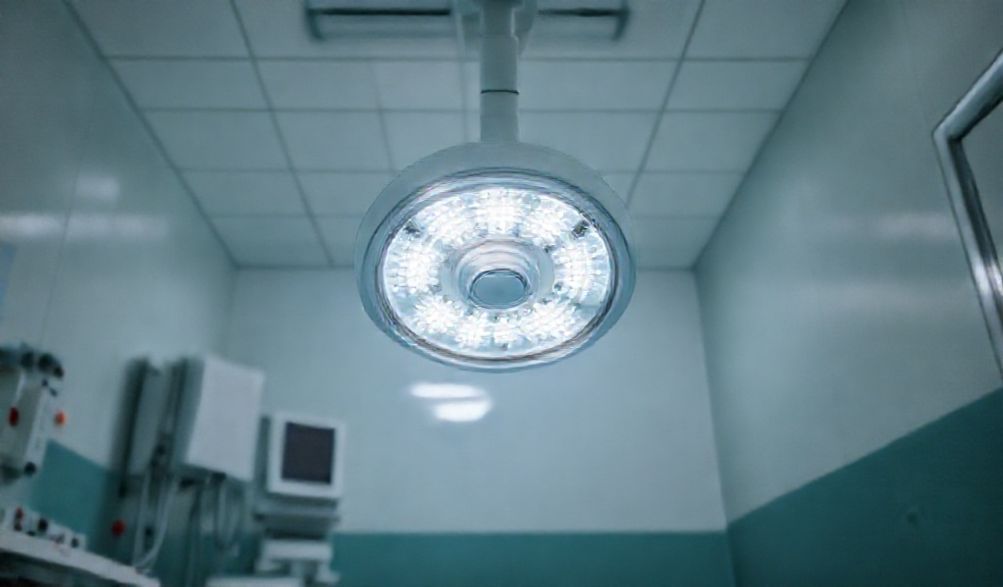
Surgical and Procedure Lighting: Precision and Safety
In the operating room, lighting is a mission-critical tool. The requirements are extreme:
* Shadow Reduction & Depth of Field: Surgical luminaires use multiple point sources and advanced optics to eliminate shadows in deep cavities, providing uniform, high-intensity light across the entire field.
* Color Rendering Index (CRI >90): A high CRI is non-negotiable. It ensures the light source accurately reveals the true colors of tissues, organs, and blood, allowing for precise visual diagnosis and differentiation.
* Integration & Ergonomics: Lights are often integrated with imaging systems (like endoscopes) and designed to minimize heat emission and staff eye strain during marathon procedures.
Staff Areas and Nurseries: Supporting Well-being and Critical Care
Lighting supports those who provide care and our most vulnerable patients.
* Staff Areas: Nursing stations and staff lounges utilize circadian-aligned, higher-CCT lighting to combat fatigue and maintain alertness during long shifts. Proper task lighting reduces eye strain during chart reviews and medication preparation.
* Neonatal Intensive Care Units (NICUs): Specialized bilirubin-reducing lights (phototherapy) are a life-saving treatment for jaundice. Furthermore, ambient NICU lighting is carefully designed to protect preterm infant sleep cycles and development, often using shielded, indirect light sources.
Measurable Benefits and Evidence-Based Outcomes
The investment in advanced healthcare lighting is justified by a growing body of evidence demonstrating clear, positive returns across clinical, human, and operational domains.
Enhancing Patient Outcomes and Experience
- Psychological & Physiological Benefits: Clinical studies, particularly in geriatric and psychiatric care, show that exposure to bright, circadian-appropriate light can significantly reduce symptoms of depression, lower agitation in dementia patients, and decrease the perception of pain.
- Functional Improvements: Well-designed lighting improves spatial orientation, reduces the risk of falls for elderly patients, and has been associated with shorter average lengths of stay in certain patient populations, such as those recovering from depression or severe illness.
Boosting Staff Performance and Reducing Errors
- Alertness and Accuracy: Research indicates that aligning light exposure with circadian principles for shift workers improves nocturnal alertness, cognitive performance, and mood. This directly translates to a potential reduction in procedural and medication errors.
- Well-being and Retention: A lighting environment that reduces eye strain and supports biological rhythms contributes to lower staff fatigue and burnout, improving job satisfaction and aiding in talent retention—a crucial factor in healthcare.
Operational Efficiency and Sustainability
- Energy and Cost Savings: The widespread adoption of LED technology, paired with smart sensors and controls (occupancy, daylight harvesting), can slash energy consumption by 50-70% compared to old fluorescent systems. The long lifespan of LEDs also drastically reduces maintenance costs.
- Compliance and Certification: Sustainable lighting healthcare strategies contribute directly to points under major green building standards like LEED (Leadership in Energy and Environmental Design) and the WELL Building Standard, which has an entire section dedicated to light, enhancing the facility’s marketability and commitment to wellness.
Implementing a Healthcare Lighting Strategy: Best Practices
Transitioning to an advanced lighting environment requires a strategic, phased approach.
The Planning and Assessment Phase
Success begins with a thorough needs analysis. This involves:
* Auditing Existing Conditions: Measuring light levels, spectral quality, and control functionality.
* Understanding Stakeholder Needs: Conducting interviews with clinicians, nurses, facility managers, and even patients to understand workflow challenges and experiential pain points.
* Defining Clinical Goals: Aligning the lighting plan with specific outcomes, such as reducing patient falls in a geriatric ward or improving staff alertness in the ICU.
Choosing the Right Technology and Partners
- Technology Criteria: Prioritize flicker-free LEDs with high CRI (>90) and R9 (deep red rendering) for clinical accuracy. Ensure control systems are intuitive, flexible, and capable of creating pre-set circadian scenes.
- The Importance of Specialized Expertise: This is not a standard commercial lighting project. Partner with lighting designers and consultants who have proven l'expérience in evidence-based design for healthcare. Their l'expertise in translating clinical research into practical specifications is invaluable.
Overcoming Common Challenges
- Budget Justification: Move the conversation from upfront cost to Total Cost of Ownership (TCO). A lifecycle cost analysis that factors in energy savings, maintenance reductions, and potential improvements in patient throughput and staff retention builds a compelling financial case.
- Retrofit vs. New Build: For existing facilities, a phased retrofit is often the most feasible path. Start with high-impact, high-return areas like patient rooms and nurse stations. New construction offers the ideal opportunity to integrate lighting seamlessly into the architectural and clinical workflow from the outset.
FAQ: Lighting in Healthcare
Q1: What is “human-centric” or “circadian” lighting in a hospital?
R : It’s a lighting system designed to support human biological rhythms by dynamically changing intensity and color temperature throughout the day, mimicking natural sunlight to improve sleep, mood, and alertness for patients and staff. It treats light as a therapeutic agent, not just a utility.
Q2 : Un meilleur éclairage peut-il vraiment aider les patients à guérir plus vite ?
R : Yes, numerous peer-reviewed studies indicate that exposure to appropriate daylight-mimicking light can reduce depression, lower agitation in dementia patients, decrease perceived pain, and contribute to shorter recovery times, particularly in long-term care and psychiatric settings. It creates a physiological environment more conducive to healing.
Q3: How does lighting affect healthcare workers?
R : Proper lighting reduces eye strain and fatigue during intricate tasks, supports circadian health for shift workers (improving alertness and reducing errors), and can create a less stressful visual environment. This contributes directly to improved job satisfaction, safety, and patient care quality.
Q4: Are LED lights safe for all healthcare applications?
R : High-quality, medical-grade LEDs are the standard for modern healthcare due to their efficiency, controllability, and cool operation. It is critical to select flicker-free LEDs with high color rendering (CRI >90, R9 >50) for accurate visual assessment of patient skin tone, tissue, and bodily fluids. Always specify products designed for clinical environments.
Q5: What’s the first step in upgrading our facility’s lighting?
R : Begin with a comprehensive audit and feasibility study conducted by a lighting professional specializing in healthcare. They will assess current conditions, interview staff, review research relevant to your patient demographics, and develop a phased, prioritized plan that demonstrates ROI through energy savings, operational efficiency, and improved outcomes.
Conclusion
The narrative of lighting in healthcare has been fundamentally rewritten. No longer a passive backdrop, light is now recognized as an active, powerful element in the healing equation. By embracing evidence-based, human-centric lighting design, healthcare administrators, architects, and clinicians can create environments that do more than house medical equipment—they can actively promote physiological healing, safeguard staff well-being, and express a profound commitment to holistic, patient-centered care. The future of healthcare is not just brighter; it is intelligently, deliberately, and beneficially illuminated, proving that the quality of light is indeed a critical component in the quality of care.
p>