
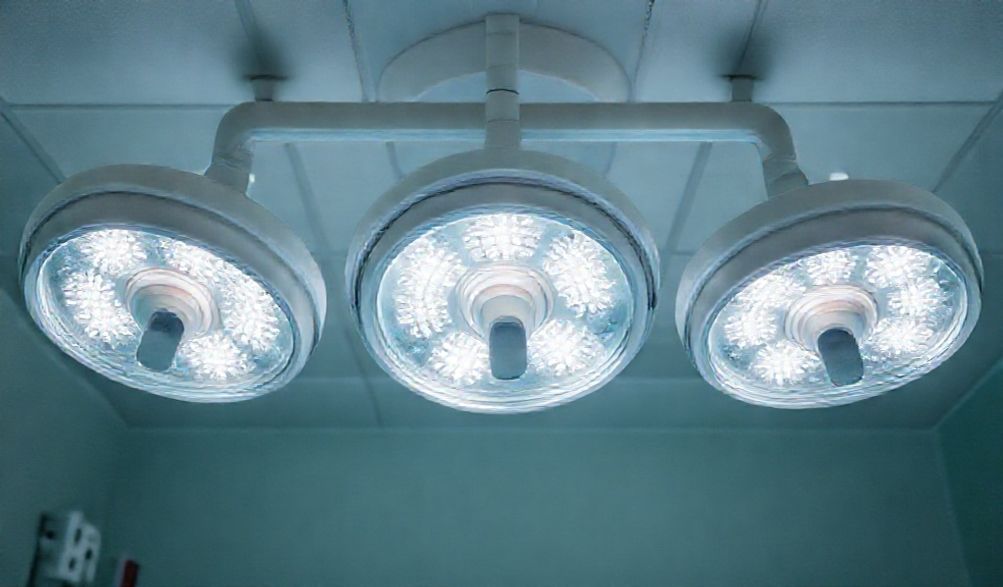
The Ultimate Guide to Medical Exam Lights: Illuminating the Path to Accurate Diagnosis
In the meticulously equipped modern clinic or hospital, attention often falls on the high-tech imaging machines and digital diagnostic tools. Yet, there is one fundamental piece of equipment whose importance is both profound and frequently underestimated: the une fois par an.. Far more than a simple source of brightness, a specialized medical light is a primary diagnostic instrument. It is the critical tool that allows a clinician’s most powerful asset—their trained vision—to function at its peak.
Proper medical illumination is not a matter of convenience; it is a cornerstone of patient safety, diagnostic accuracy, and effective treatment. The subtle difference between a benign mole and a suspicious lesion, the early hint of jaundice in sclera, or the precise margins of a wound—all are revealed under the right light. This comprehensive guide will illuminate the science, technology, and selection criteria behind medical exam lights, empowering healthcare professionals, clinic managers, and procurement specialists to make informed decisions that enhance clinical outcomes.
1. The Critical Role of Illumination in Medical Diagnosis & Treatment
1.1. Why Specialized Lighting is Non-Negotiable in Healthcare
Imagine trying to discern the faint blue hue of cyanosis or the subtle yellow of early jaundice under the warm, shadowy glow of a standard office lamp. It would be nearly impossible. Medical exam lights are engineered to solve this problem.
- Beyond General Illumination: Unlike ambient room lighting designed for comfort, medical lights are task-oriented. They deliver intense, focused light to a specific anatomical field without causing eye strain for the practitioner or discomfort for the patient.
- Key Optical Requirements: An effective medical light must meet several stringent criteria:
- High Intensity: To illuminate deep cavities and reveal fine detail.
- Accurate Color Rendering: To allow true differentiation of tissue colors, critical for diagnosing conditions like infections, bruising, or vascular health.
- Minimal Shadowing: To prevent obstructions (like the clinician’s head or hands) from casting deep, obscuring shadows on the area of interest.
- Fonctionnement à lumière froide : To prevent heat buildup that could dry tissues, cause patient discomfort, or compromise sterility during long procedures.
- Impact on Diagnostic Accuracy: The right light directly translates to clinical precision. It is essential for identifying dermatological conditions, assessing wound bed viability, performing otoscopic and oral exams, and detecting the visual cues of countless systemic illnesses.
1.2. Core Standards and Safety Regulations
Medical exam lights are not ordinary appliances; they are regulated medical devices. Compliance ensures patient and staff safety.
- Overview of Relevant Standards: The international benchmark is norme IEC 60601-1, which governs the safety of medical electrical equipment. Specific clauses address light intensity, temperature limits, and electrical isolation to protect against micro-shock hazards.
- Infection Control & Cleanability: In an era of heightened infection awareness, the light’s design is paramount. Seamless housings, non-porous materials (like medical-grade polymers or stainless steel), and coatings that withstand harsh disinfectants are mandatory to prevent the light itself from becoming a vector for pathogens.
- Electrical and Thermal Safety: Beyond shock prevention, standards limit the surface temperature of light heads to prevent accidental burns, a crucial consideration during lengthy examinations or with anesthetized patients.
2. Types of Medical Exam Lights: A Detailed Breakdown
Understanding the categories of lights is the first step in matching the tool to the task.
2.1. Overhead Examination Lights (Ceiling-Mounted)
These are the workhorses of procedure rooms and emergency departments.
- Primary Use Cases: Ideal for minor surgical procedures, laceration repairs, wound debridement, and emergency trauma care where hands-free, broad-area illumination is needed.
- Appliquons maintenant ces caractéristiques à des scénarios réels. La "meilleure" loupe lumineuse est celle parfaitement adaptée à votre tâche principale. They feature large-diameter reflectors with multi-LED arrays to produce a wide, deep field of bright, even light. Many offer manual or touch-free positioning.
- Advantages & Limitations: They provide superior, unobstructed illumination but require permanent ceiling installation and represent a higher initial investment.
2.2. Procedural & Surgical Lights
The pinnacle of medical lighting technology, designed for the most demanding environments.
- Defining Characteristics: These lights deliver extreme intensity (often 40,000 to 160,000 lux) with sophisticated shadow reduction technology. This is achieved via multiple light sources arranged in a ring or matrix; if one source is blocked, the others compensate. They feature sterile handles for intraoperative adjustment and often allow tuning of color temperature.
- Specialized Variants: This category includes laparoscopic light cables for internal illumination and high-precision headlights worn by neurosurgeons, dentists, and ENT specialists.
2.3. Diagnostic Wall-Mounted & Portable Lights
The most common type found in general examination rooms across all specialties.
- Common Applications: Routine physical exams, dermatology evaluations, ENT checks, and dental consultations.
- Flexibility Features: Their hallmark is adaptability. They are typically mounted on a wall or cabinet and feature multi-jointed, articulating arms or flexible goosenecks. This allows the clinician to precisely position the light beam from any angle. Some are battery-powered for ultimate portability at the bedside.
- Example: The classic “swing-arm” light is a quintessential example, offering a perfect balance of power and positioning flexibility.
2.4. LED vs. Halogen: The Technology Shift
The medical lighting world has undergone a revolution, moving decisively from halogen to LED.
- LED Technology Dominance:
- Avantages : LEDs are now the undisputed standard. They run cool, generate very little heat, and are exceptionally energy-efficient. Their lifespan is remarkable—often exceeding 50,000 hours—virtually eliminating bulb replacements. Most importantly, high-quality LEDs provide consistent color temperature and superior L’Indice de Rendu des Couleurs (IRC).
- Indice de Rendu des Couleurs (IRC) : Measured from 0-100, CRI indicates how accurately a light source reveals the true colors of an object. For medical use, a CRI >90 is essential. A light with a CRI of 95+ renders tissue tones, blood oxygenation colors, and rash hues with near-perfect fidelity.
- The Decline of Halogen:
- Drawbacks: Halogen lights are largely obsolete. They are inefficient, converting most energy into heat, which can be dangerous and uncomfortable. Their bulbs have short lifespans (1,000-2,000 hours), and their color temperature yellows and dims over time, degrading diagnostic reliability.
3. How to Choose the Right Medical Exam Light: An Expert Buying Guide
Selecting a light requires a strategic assessment of clinical needs against technical specifications.
3.1. Assessing Your Clinical Requirements
Start by defining the primary use case.
- Specialty-Specific Needs:
- Primary Care/General Practice: Prioritize versatile, maneuverable wall lights with excellent CRI for full-body exams.
- Dermatologie : Require lights with exceptional color accuracy (CRI >95) and even, shadow-free illumination for assessing skin lesions.
- Surgery/Procedure Rooms: Need high-intensity overhead or surgical lights with deep cavity illumination and shadow reduction.
- Soins des Plaies : Benefit from lights that enhance contrast to differentiate between granulation, slough, and necrotic tissue.
- Procedure Type: Consider the duration, sterility requirements, and level of precision. A 30-minute biopsy has different needs than a 5-hour orthopedic surgery.
3.2. Technical Specifications Decoded
Speak the language of light to make an informed choice.
- Lux/Lumen Output: Lux measures illuminance (brightness on a surface). General exams may require 15,000-25,000 lux, while major surgery demands 40,000-100,000+ lux.
- Field Diameter & Depth: A light should provide a wide, even field (e.g., 15-25cm diameter) at a typical working distance (e.g., 75-100cm), with sufficient depth to keep the area in focus even as tools move in and out.
- Color Temperature (Kelvin): This describes the “warmth” or “coolness” of light.
- ~3500K (Warm White): Softer, may be used for ambient lighting.
- 4500K-5500K (Cool Daylight): The clinical standard. It reduces eye strain for the provider and provides a neutral, alert environment that best matches natural daylight for accurate color assessment.
- Gestion des ombres : Evaluate the light head design. A single LED/reflector will cast a hard shadow. Look for multi-source designs (e.g., ring LEDs or multiple reflectors) that inherently minimize shadows.
3.3. Ergonomics, Usability, and Workflow Integration
A light that is difficult to use will be underutilized.
- Mobility and Positioning: Test the movement. Arms should glide smoothly into position and lock securely without drift. The reach should cover the entire exam area without obstruction.
- Sterilization and Maintenance: Confirm which disinfectants are safe for the housing. The design should have no crevices where contaminants can lodge.
- Durability and Warranty: Medical equipment faces daily use. Look for robust construction, quality bearings in the arms, and a comprehensive warranty from a reputable manufacturer.
4. Installation, Maintenance, and Best Practices
4.1. Professional Installation Considerations
- Ceiling-Mounted Systems: Installation is not a DIY project. It requires evaluating ceiling structural support, running dedicated electrical lines, and ensuring the light is perfectly centered over the procedure table or exam zone.
- Ensuring Stability and Safety: All mounting must be checked to prevent any risk of the light drifting down or falling, which is both a safety hazard and a disruption to sterile fields.
4.2. Routine Maintenance Protocol
- Daily/Pre-Use Check: Quickly inspect for flickering, dimming, or any erratic movement in the arms.
- Cleaning Guidelines: Follow the manufacturer’s instructions precisely. Typically, a damp cloth with a mild detergent or specified hospital-grade disinfectant is used. Avoid abrasive cleaners or solvents that can damage surfaces.
- Bulb/LED Module Replacement: With LEDs, replacement is rare. If a module fails, it’s usually a simple swap-out procedure per the manufacturer’s guide.
4.3. Optimizing Light Use for Patient Comfort
- Avoiding Glare: Always position the light beam onto the area of interest from an angle, never shining it directly into the patient’s eyes. Some lights have built-in glare control rings.
- Pre-Warming the Field: For procedures using metal specula or instruments, briefly turn on the light over the field before the patient is in position. This takes the “chill” off the equipment, improving the patient experience.
Foire Aux Questions (FAQ)
Q1: What is the most important feature to look for in a general exam room light?
R : For a general exam room, prioritize a combination of un Indice de Rendu des Couleurs (IRC >90) élevé et un une excellente maniabilité. Des couleurs précises sont vitales pour le diagnostic, et un bras articulé qui positionne facilement la lumière exactement là où elle est nécessaire est crucial pour des flux de travail efficaces.
Q2 : Les lampes médicales à LED valent-elles vraiment leur coût initial plus élevé ?
R : Absolument. Bien que l'investissement initial soit plus élevé, les lampes LED offrent des économies à long terme significatives grâce à une consommation d'énergie considérablement réduite et un et l'élimination des remplacements fréquents d'ampoules.. Leur fonctionnement à basse température améliore le confort et la sécurité du patient, et la qualité de lumière constante renforce la confiance diagnostique. Le coût total de possession est généralement inférieur.
Q3 : À quelle fréquence les lampes d'examen médical doivent-elles être étalonnées ou entretenues ?
R : Les lampes LED modernes nécessitent un étalonnage minimal. Cependant, une vérification professionnelle annuelle est recommandée pour s'assurer que tous les bras mécaniques se déplacent avec fluidité et sécurité, que les connexions électriques sont intactes et que la puissance lumineuse répond aux spécifications d'origine. Suivez toujours le programme de maintenance spécifique du fabricant.
Q4 : Puis-je utiliser une lampe LED de photographie de haute qualité pour des actes médicaux mineurs ?
R : Ce n'est pas recommandé.. Les lampes d'examen médical sont construites selon des normes de sécurité spécifiques (IEC 60601-1), avec des conceptions qui privilégient la nettoyabilité, le contrôle des infections et l'isolation électrique du patient. Les lampes grand public ne disposent pas de ces certifications critiques de sécurité et d'hygiène.
Q5 : Que signifie la “réduction d'ombres” dans les lampes chirurgicales ?
R : La technologie de réduction d'ombres utilise plusieurs sources lumineuses provenant d'angles légèrement différents au sein d'un même projecteur. Lorsque la main ou un instrument du chirurgien bloque une source de lumière, les autres comblent l'ombre, maintenant un champ de vision constamment lumineux et uniforme dans les cavités profondes.
Conclusion
Choisir la bonne lampe d'examen médical est une décision qui résonne à chaque interaction avec un patient. C'est un investissement dans la clarté du diagnostic, l'efficacité des procédures et, en fin de compte, la qualité des soins. En allant au-delà de la considérer comme un simple utilitaire et en la reconnaissant comme un outil clinique vital, vous pouvez sélectionner une solution qui renforce les capacités de votre équipe médicale. Équilibrez les spécifications techniques non négociables – un IRC élevé, un lux approprié et une température de lumière du jour froide – avec les réalités pratiques de l'ergonomie, de la durabilité et de la conception sûre face aux infections. Ce faisant, vous obtenez plus qu'un équipement ; vous vous assurez un partenaire fiable pour dispenser des soins précis, confiants et exceptionnels aux patients pour les années à venir.
p>