
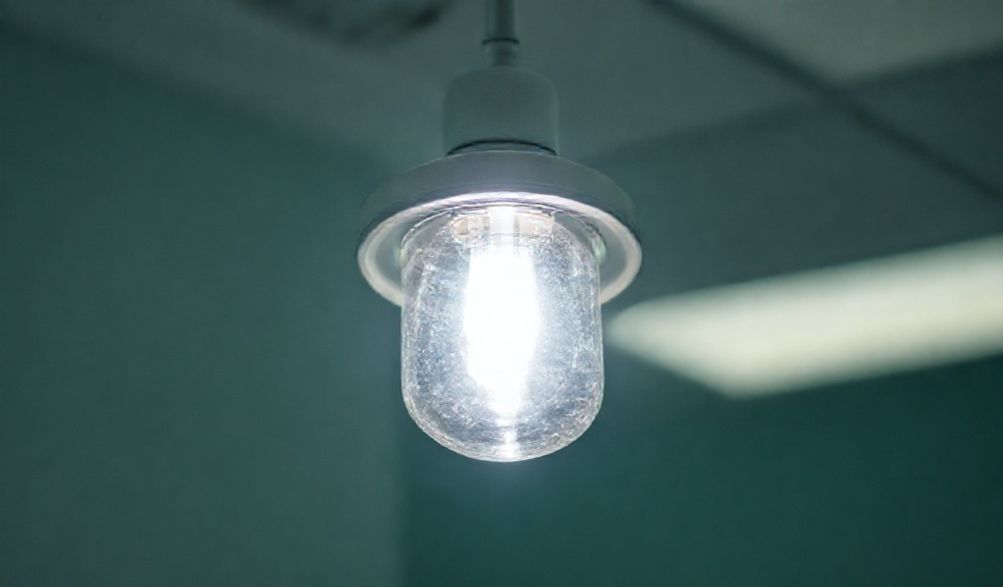
The Ultimate Guide to Medical Lamps: Types, Uses, and How to Choose
Imagine a surgeon poised to make a delicate incision, a dentist searching for the subtlest crack in a tooth, or a pediatrician assessing a newborn’s skin tone. In each of these critical moments, success hinges not just on skill, but on something often taken for granted: light. But this isn’t the light that fills your living room. In healthcare, illumination is a fundamental tool, as vital as a scalpel or a stethoscope. So, what transforms a simple bulb into a medical lamp? It’s a combination of rigorous engineering, adherence to life-saving standards, and a deep understanding of human physiology.
This guide is designed to demystify the world of medical-grade lighting. We’ll move beyond catalog specifications to explore the why behind the design, drawing on clinical requirements, industry standards, and practical realities. Whether you are a surgeon, a clinic manager, a dental practitioner, or a procurement specialist, our goal is to equip you with the knowledge to make confident, informed decisions about one of the most frequently used—and most critical—pieces of equipment in any healthcare setting.
By the end of this guide, you will have a clear understanding of the different types of medical lamps, their specific clinical applications, the key technical features that matter most, and a practical framework for selecting the perfect light for your needs.
What is a Medical Lamp? Beyond Standard Lighting
At its core, a medical lamp is a precision instrument designed to support visual accuracy in diagnosis, treatment, and surgical intervention. It is engineered to meet challenges that standard commercial lighting never encounters.
Defining Medical-Grade Illumination
The difference between a standard office light and a medical lamp is the difference between a kitchen knife and a surgical scalpel. Both cut, but their purpose, design, and regulatory oversight are worlds apart. Medical lighting is governed by stringent international standards, most notably the IEC 60601-1 series for the safety and essential performance of medical electrical equipment. This certification is non-negotiable; it ensures the device is safe for use in proximity to patients and staff, with protections against electrical shock, excessive heat, and mechanical failure.
Beyond safety, medical-grade light is defined by its performance parameters: intense yet cool illumination, exceptional color accuracy, and designs that prioritize sterility and infection control. A typical household LED’s purpose is to make a room feel inviting; a medical lamp’s purpose is to reveal truth.
Core Requirements: Safety, Precision, and Ergonomics
Every quality medical lamp is built to address three pillars:
-
Precision through Quality of Light: This encompasses several factors:
- Shadow Reduction & Uniformity: Crucial in surgery and examination, advanced lights use multiple LED points or reflector systems to “fill in” shadows cast by the clinician’s hands or instruments, providing even illumination across the entire field.
- Cool Light Output: High-intensity light often means heat. Medical lamps must deliver bright light without radiating excessive heat onto the patient’s tissue, which can cause desiccation (drying out) and discomfort.
- Indice de Rendu des Couleurs (IRC) : This is perhaps the most critical spec for diagnosis. CRI measures a light source’s ability to reveal the true colors of an object compared to natural light. A CRI >90 (out of 100) is essential for accurately differentiating between tissue types, spotting inflammation, identifying cyanosis (bluish skin), or assessing wound healing. Low-CRI lighting can distort colors, leading to misdiagnosis.
- Adjustable Intensity & Color Temperature: The ability to dim the light or shift its color temperature (e.g., from a cooler, bluer white to a warmer, yellower white) allows clinicians to optimize the view for specific procedures or tissue types.
-
Safety & Infection Control: Surfaces must be smooth, non-porous, and easy to clean with hospital-grade disinfectants without degrading. Seals prevent dust and fluid ingress. For surgical lights, handles are often designed to be sterilizable or are single-use.
-
Ergonomics & Reliability: The lamp must be effortlessly maneuverable, staying firmly in position once placed. Arms should have a wide range of motion, smooth articulation, and sufficient reach to accommodate various room layouts and patient positions without obstructing the clinical team.
Types of Medical Lamps and Their Clinical Applications
The term “medical lamp” is an umbrella covering a family of specialized devices, each engineered for a specific clinical task. Understanding this taxonomy is the first step in selecting the right tool.
Surgical Lights (Operating Lights)
The pinnacle of medical lighting technology, surgical lights are designed for deep-cavity illumination during invasive procedures. Their primary mission is to provide brilliant, shadow-free light into the depths of a surgical site.
- Key Technology: They employ dilution des ombres technology, typically via a multi-LED array in a single reflector or a cluster of smaller, focused LED heads. This configuration ensures that if a surgeon’s head or hand blocks one light source, the others fill in the shadow.
- Clinical Focus: Delivering high lux levels (often 40,000 to 160,000 lux at the center of the field) with deep penetration. Many offer adjustable color temperature to enhance contrast between red tissue and blue or white backgrounds (like sutures or fascia).
- Design: Feature sterile, removable handles or touchless control systems to maintain the sterile field. Mounting is almost exclusively ceiling-based for stability and to keep floor space clear.
Examination Lights (Diagnostic Lights)
This broad category includes the most common medical lamps found in clinics, emergency rooms, dental offices, and bedside procedures. Their goal is to provide bright, white, uniform light for surface examination and minor interventions.
- Procedure Lights: A step between exam and surgical lights. Used for minor surgeries, suturing, wound care, and biopsies. They are highly maneuverable, offer very good intensity and color rendering, and may be ceiling, wall, or floor-mounted.
- General Examination Lights: The workhorses of the clinic. Used for physical exams, otoscopic/ophthalmoscopic procedures, and patient assessments. They prioritize flexibility, ease of positioning, and good CRI. Often found on rolling floor stands or wall-mounted articulating arms.
- Headlights (LOUPE Lights): Worn on the clinician’s head, these provide direct, hands-free illumination exactly where the user is looking. Essential for dentists, surgeons performing detailed work, and specialists in ENT or plastic surgery. They often integrate with magnifying loupes.
Specialized Medical Lighting
Beyond the major categories, numerous niche medical lamps serve specific diagnostic or therapeutic purposes:
- Sources lumineuses endoscopiques : High-intensity “cold” lights transmitted via fiber-optic cables to illuminate internal body cavities through scopes.
- Lampes de photothérapie : Use specific wavelengths of light (often blue for neonatal jaundice, or narrow-band UVB for psoriasis) to treat medical conditions.
- Dermatology Lamps: Such as Wood’s lamps, which use ultraviolet light to help diagnose fungal or bacterial skin infections and pigment disorders.
- Instrument-Integrated Lights: The small but powerful lights built into devices like otoscopes (for ears) and ophthalmoscopes (for eyes).
Caractéristiques clés à considérer lors du choix d'une lampe médicale
Navigating product specifications can be daunting. Here’s a breakdown of what those technical terms actually mean for clinical practice.
Light Source Technology: LED vs. Halogen
The industry has decisively moved toward LED (Light Emitting Diode) technology, and for compelling reasons:
- LED: The modern standard. LEDs produce minimal radiant heat, are extremely energy-efficient, and have exceptionally long lifespans (often 50,000+ hours). They offer instant-on capability, stable color output over time, and precise control over intensity and color temperature. The higher upfront cost is offset by negligible maintenance (no bulb changes for years) and low operating costs.
- Halogène : The older technology. Halogen bulbs produce a warm, continuous spectrum of light but convert most of their energy into heat. They have a short lifespan (1,000-5,000 hours), requiring frequent, costly bulb replacements and generating significant ambient heat. While the fixture itself may be cheaper initially, the total cost of ownership is higher.
Verdict: For any new procurement, LED is the only recommended choice for its clinical, operational, and economic benefits.
Technical Specifications Decoded
- Lux/Lumen Output: Lux measures illuminance (how much light falls on a surface), while lumens measure luminous flux (total light emitted). For medical use, lux at the working distance is more relevant. A general exam may require 2,000-5,000 lux, while a major surgical site needs 40,000-160,000 lux. Ensure the lamp’s output matches the visual demands of your task.
- Color Temperature (Kelvin): Measured in Kelvins (K), this describes the “warmth” or “coolness” of white light. Lower temperatures (3000K-4000K) are warmer/yellower; higher temperatures (4500K-7000K) are cooler/bluer. Many clinicians prefer cooler light (5000K-6700K) for its bright, alert quality that enhances visual acuity and contrast. Adjustable color temperature is a valuable premium feature.
- Indice de Rendu des Couleurs (IRC) : As mentioned, this is critical. Always choose a lamp with a CRI of 90 or higher. A CRI of 95+ is ideal for the most demanding diagnostic work. Do not compromise on this metric.
Mechanical & Operational Factors
- Maniabilité : Assess the lamp’s reach (horizontal and vertical), the number of articulation points, and the balance of the arms. It should move smoothly, stay in position without drift, and be easy to position with one hand.
- Options de fixation : Consider your space.
- Fixation au plafond : Most stable, frees up floor space, ideal for surgical and primary procedure lights.
- Fixation murale : Good for exam rooms with space constraints.
- Pied au sol : Offers maximum mobility and flexibility, perfect for multi-purpose rooms or clinics that reconfigure often.
- Track/Rail System: Allows multiple lights to share a ceiling track, offering flexible positioning in ORs or procedure rooms.
- Control Systems: Look for intuitive controls—touch panels on the light head, remote pendants, or foot switches—that allow adjustment without breaking sterility. Some offer programmable memory settings.
- Maintenance & Cleaning: The housing should be seamless and made of materials that can withstand daily wiping with harsh disinfectants. Check the manufacturer’s cleaning guidelines.
How to Select the Right Medical Lamp: A Step-by-Step Guide
Making the final choice involves synthesizing clinical need with practical reality. Follow this framework.
Step 1: Assess the Primary Clinical Use Case
Start with the most critical question: What is the primary procedure this light will support? Use this simple guide:
* Major Surgery (e.g., abdominal, orthopedic): → Major Surgical Light (Ceiling-mounted, high lux, deep cavity, shadow dilution).
* Minor Surgery/Procedure (e.g., suturing, biopsies, dental surgery): → Minor Surgical/Procedure Light (May be ceiling or floor-mounted, high CRI, excellent maneuverability).
* Patient Examination & Diagnosis (e.g., physical exams, wound inspection): → Lumière d'examen (Floor stand or wall mount, good CRI, adjustable intensity, wide coverage).
Step 2: Evaluate Your Workspace and Infrastructure
Measure your room. Consider ceiling height, the placement of other equipment (booms, monitors), and the need for clear floor space. A massive surgical light is useless in a low-ceilinged procedure room. Ensure your electrical infrastructure can support the chosen system, especially for ceiling-mounted units that may require dedicated power or data cabling.
Step 3: Set Your Budget and Consider Total Cost of Ownership (TCO)
Look beyond the sticker price. Calculate the TCO over 5-10 years:
* Prix d'achat : Initial cost of the lamp.
* Installation Cost: Particularly for ceiling mounts, which may require structural reinforcement and professional electrical work.
* Consommation énergétique : LEDs will save significantly on electricity.
* Maintenance & Pièces : Prenez en compte le coût et la fréquence des remplacements d'ampoules (négligeable pour les LED), des filtres et des pièces détachées. Quelle est la durée de garantie ?
* Contrats de maintenance : Disponibilité et coût du support technique local.
Étape 4 : Prioriser la Conformité et la Certification
Il s'agit d'une impérative de sécurité. Ne considérez que les équipements disposant de certifications valides d'appareils médicaux. Recherchez les marques telles que :
* Marquage CE (avec conformité à la norme IEC 60601-1 pour le marché européen).
* Autorisation/Enregistrement FDA (pour le marché américain).
* Certification ISO 13485 du système de management de la qualité du fabricant.
L'achat d'équipements non certifiés expose votre établissement, votre personnel et vos patients à un risque inacceptable et constitue probablement une violation des réglementations locales.
Foire Aux Questions (FAQ) sur les Lampes Médicales
Q1 : Quelle est la durée de vie typique d'une lampe médicale à LED ?
R : Les lampes médicales à LED de haute qualité ont généralement une durée de vie nominale de 50 000 à 100 000 heures. Cela représente plus d'une décennie d'utilisation clinique régulière avant que l'intensité lumineuse ne se dégrade significativement. C'est un élément clé de leur retour sur investissement, éliminant virtuellement les coûts de remplacement d'ampoule et les temps d'arrêt.
Q2 : Une lampe LED standard peut-elle être utilisée pour des examens médicaux ?
R : Absolument pas. Les lampes LED standard ne possèdent pas l'Indice de Rendu des Couleurs élevé (IRC >90) nécessaire à une évaluation précise des tissus. Elles ne sont pas conçues pour rester froides au toucher à courte distance, manquent du contrôle d'intensité précis requis pour différentes procédures, et surtout, ne sont pas certifiées en tant qu'équipement électrique médical. Leur utilisation introduit des risques de diagnostic erroné, d'inconfort pour le patient et de dangers liés à la sécurité électrique.
Q3 : Quelle est l'importance de la garantie et du support de maintenance ?
R : Extrêmement importante. Une medical lamp est un appareil critique et fréquemment utilisé. Une garantie complète (souvent de 3 à 5 ans sur les LED) et un accès à un support technique qualifié et réactif sont essentiels. Avant l'achat, renseignez-vous sur la réputation du fabricant en matière de service et assurez-vous que les pièces et le support sont disponibles dans votre région.
Q4 : Quels sont les conseils de maintenance les plus importants pour une lampe médicale ?
R :
1. Nettoyage régulier : Essuyez toutes les surfaces quotidiennement (ou entre chaque patient) en utilisant uniquement les désinfectants approuvés par le fabricant pour éviter d'endommager les finitions ou les joints.
2. Vérification de la mécanique : Vérifiez périodiquement les bras articulés pour un mouvement fluide et tout signe de jeu ou de dérive.
3. Manipuler avec Précaution : Évitez de heurter la tête lumineuse ou d'exercer une force excessive sur les bras.
4. Service Professionnel : Respectez le calendrier d'entretien recommandé par le fabricant pour les inspections internes et l'étalonnage afin d'assurer des performances et une sécurité optimales.
Conclusion
Le choix d'une medical lamp est une décision qui impacte la précision du diagnostic, l'efficacité des procédures et, en fin de compte, les résultats pour les patients. Il ne s'agit pas de l'achat d'un simple éclairage, mais d'un investissement dans un outil clinique fondamental. Le bon choix se trouve à l'intersection du besoin clinique, des performances techniques et des exigences pratiques de l'établissement.
Nous vous encourageons à utiliser ce guide comme base pour des discussions éclairées avec les équipes cliniques, les responsables d'établissement et les fournisseurs d'équipements. Pour les environnements à haut risque, demandez toujours une démonstration en direct ou une installation d'essai dans un cadre simulé. Voir les performances de la lumière dans votre propre espace est le test ultime.
Vous avez des questions spécifiques sur l'équipement d'une salle d'opération, d'une nouvelle clinique ou d'une zone de procédure spécialisée ? Consulter un ingénieur clinique qualifié ou un conseiller expérimenté en équipements médicaux est toujours une étape suivante recommandée.
p>