
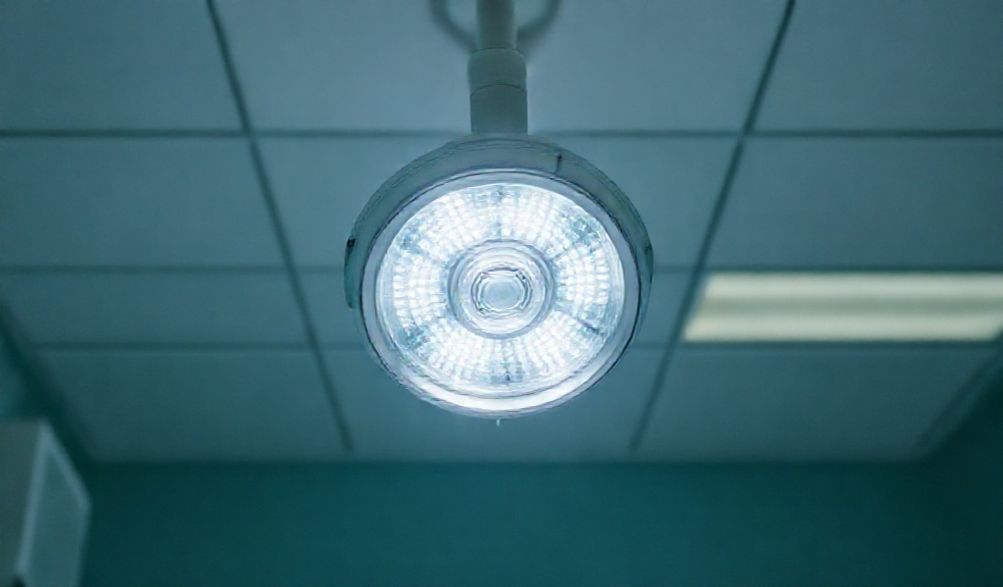
The Essential Guide to Medical Lighting: Enhancing Patient Care & Clinical Outcomes
In the high-stakes world of healthcare, every detail matters. While advanced imaging machines and sophisticated surgical tools often capture the spotlight, there is a fundamental, yet profoundly complex, element that underpins nearly every clinical interaction: light. Medical lighting is far more than simple illumination; it is a critical component of modern healthcare infrastructure that directly impacts patient safety, staff performance, and clinical accuracy. From the intense, shadow-free light required in an operating theater to the calming, circadian-rhythm-friendly glow in a patient room, the right lighting technology serves a vital therapeutic and diagnostic purpose.
Gone are the days of harsh, one-size-fits-all fluorescent tubes. Today, medical-grade lighting is a sophisticated discipline blending photobiology, human factors engineering, and cutting-edge technology. This guide will illuminate the science, applications, and critical considerations behind medical-grade lighting, empowering healthcare administrators, facility planners, and medical professionals to make informed decisions that prioritize both human well-being and technological efficacy. We will explore how advancements in technologie LED and human-centric design are transforming clinical environments, always grounding our discussion in evidence-based practice and patient-centered care.
Understanding Medical Lighting: Core Principles and Classifications
To appreciate the innovation in modern medical lighting, one must first understand its multifaceted roles. It is a tool, an environmental modulator, and in some cases, a treatment modality itself.
Beyond Illumination: The Functional Roles of Light in Healthcare
The function of a medical light extends far beyond allowing people to see.
- Task Performance and Visual Acuity for Medical Staff: At its most basic, lighting must enable precision. A surgeon differentiating between arterial and venous tissue, a nurse assessing a wound for signs of infection, or a pathologist examining a cell sample—all require optimal visual conditions. Inadequate or poorly designed lighting can lead to eye strain, fatigue, and, most critically, diagnostic or procedural errors. The right medical light reduces visual noise, enhances contrast, and reveals true color and texture.
- Patient Psychological and Physiological Impact (Circadian Rhythm): Light is our primary zeitgeber, or time-giver, for the circadian system. For patients confined to a hospital room, constant, monotonous lighting can disrupt sleep-wake cycles, leading to delirium, longer recovery times, and poorer mood. Therapeutic lighting design considers this, using tunable systems to mimic natural daylight patterns, promoting better sleep at night and alertness during the day, thereby supporting the healing process.
- Sterilization and Infection Control: UV-C and Other Germicidal Applications: This is where light acts as a direct agent. Ultraviolet-C (UV-C) light at specific wavelengths (around 254 nm) is a proven disinfectant, damaging the DNA and RNA of bacteria, viruses, and fungi. Germicidal medical lighting systems are used for air purification in HVAC systems, upper-room irradiation, and for disinfecting surfaces and equipment in unoccupied spaces, playing a crucial role in combating healthcare-associated infections (HAIs).
Key Classifications of Medical Lighting Systems
Different clinical settings demand specialized lighting solutions.
- Surgical Lighting (Operating Lights): The pinnacle of medical lighting engineering. These systems must provide intense, shadow-free illumination deep into body cavities. Key requirements include exceptional réduction supérieure des ombres (achieved through multiple light sources or reflective technology), a very un Indice de Rendu des Couleurs (IRC >90) élevé for accurate tissue differentiation, excellent depth of field, and minimal heat emission to avoid desiccating tissue.
- Examination Lighting: Used in ER bays, consultation rooms, and minor procedure areas. These lights offer bright, focused, and often adjustable illumination for close visual inspection. They prioritize color accuracy and flexibility, often being mounted on articulating arms for precise positioning.
- Ambient and Patient Room Lighting: This lighting sets the tone for the healing environment. It must be versatile: bright and uniform for daytime care activities, yet capable of dimming to very low, warm levels for nighttime checks without disrupting patient sleep. Integration with patient controls is increasingly important.
- Specialized Lighting: This category includes highly focused tools:
- Endoscopy/Dental: Provides intense, cool light delivered via fiber optic cables into internal cavities or the oral cavity.
- Dermatologie : Often utilizes specific wavelengths (like narrow-band UVB for psoriasis) or cross-polarized light to reveal sub-surface skin conditions.
- Neonatal Care: Designed to protect premature infants’ developing eyes, using shielded, dimmable lights and specific phototherapy units (bilirubin lights) to treat jaundice.
Critical Technical Specifications for Medical-Grade Lights
Selecting a medical light requires navigating a lexicon of technical terms. Understanding these metrics is non-negotiable for ensuring clinical efficacy and safety.
Lux, Lumens, and Color Temperature: The Metrics That Matter
- Illuminance (Lux): This measures the amount of light falling on a surface. Different tasks have prescribed lux levels. For example, a general examination may require 1,000 lux, while a detailed surgical field needs 40,000 to 160,000 lux. Under-illumination risks error; over-illumination causes glare and fatigue.
- Indice de Rendu des Couleurs (IRC) : Perhaps the most critical spec for diagnostic and surgical lights. CRI measures a light source’s ability to reveal the true colors of an object compared to natural light. A high CRI (90+ or even 95+) is essential for accurately distinguishing between shades of tissue, organ viability, blood oxygenation, and subtle signs of disease. A low-CRI light can make tissue appear unnaturally pale, yellow, or grey.
- Color Temperature (Kelvin, K): This describes the “warmth” or “coolness” of light. Warm white (2700K-3500K) is calming and used in patient rooms. Cool white (4000K-5000K) is alerting and common in clinical work areas. Tunable systems can adjust across this spectrum.
Safety, Compliance, and Regulatory Standards
Medical lights are regulated as medical devices, not consumer goods.
- IEC 60601-1 : The international benchmark for the basic safety and essential performance of medical electrical equipment. Compliance is mandatory. This covers protection against electric shock, mechanical hazards, excessive temperatures, and more.
- Electrical Safety & EMI/RFI Shielding: Lights must not interfere with other sensitive medical electronics (like monitors or infusion pumps) and must be immune to interference themselves.
- IP Ratings (Ingress Protection): This two-digit code (e.g., IP54) indicates protection against solids (first digit) and liquids (second digit). Lights in sterile fields or wet areas (like ORs or cleanrooms) require high IP ratings (e.g., IP65) to withstand cleaning and prevent ingress of fluids or contaminants.
The Shift to LED Technology in Medical Settings
The transition from halogen and xenon to Light Emitting Diode (LED) technology represents the most significant evolution in medical lighting in decades.
Advantages of LED Medical Lighting Over Traditional Sources
- Energy Efficiency & Longevity: LEDs consume a fraction of the energy of halogen bulbs and last tens of thousands of hours, drastically reducing energy costs and maintenance interruptions for bulb replacement.
- Enhanced Control & Quality: LEDs are inherently dimmable and flicker-free, reducing eye strain. They offer instant-on capability at full intensity. Crucially, they allow for precise adjustment of color temperature.
- Cooler Operation: LEDs emit very little infrared radiation, meaning the light delivered to the surgical site is “cool.” This prevents tissue drying and improves comfort for both patient and staff, who often work under hot lights for hours.
Implementing Human-Centric Lighting (HCL) for Staff and Patients
LED technology enables HCL—lighting that supports human health, well-being, and performance by mimicking the dynamic spectrum and intensity of natural daylight.
- Tunable White Systems: These LED systems can automatically or manually adjust their color temperature and intensity throughout the day—cool, bright light during morning and afternoon to support staff alertness and patient circadian entrainment, shifting to warm, dim light in the evening to promote melatonin production and rest.
- Evidence-Based Benefits: Studies in healthcare settings suggest HCL can reduce nurse fatigue and error rates, improve patient sleep quality, decrease the length of stay for certain conditions, and alleviate symptoms of depression and agitation, particularly in geriatric and psychiatric care units.
Selecting the Right Medical Lighting: A Procurement Checklist
Choosing a medical lighting system is a strategic investment. Here’s a framework for decision-making.
Assessing Clinical Needs and Environmental Factors
- Define the Primary Procedure: The needs of a neurosurgery suite (requiring deep-cavity illumination) differ from a dermatology clinic (needing broad, even surface light) or an MRI room (requiring non-magnetic components).
- Map Workflow and Architecture: Consider sightlines, ceiling height, boom placement, and how staff move around the patient. Lighting should integrate seamlessly, not obstruct.
- Involve End-Users: Surgeons, nurses, and facilities engineers must provide input on ergonomics, controls, and maintenance needs.
Vendor Evaluation and Long-Term Considerations
- Manufacturer Expertise: Seek partners with proven experience in healthcare, not just general lighting. Do they understand clinical workflows and regulations?
- Clinical Evidence & Support: Request case studies, white papers, or clinical validation of their system’s performance (e.g., CRI measurements, shadow reduction data).
- Coût Total de Possession (CTP) : Look beyond the purchase price. Calculate energy savings, expected lifespan, warranty terms, and service contract costs. A more expensive, reliable LED system often has a lower TCO than a cheaper, inefficient one.
- Future-Proofing: Is the system adaptable? Can it integrate with future building management or IoT platforms? Are software/firmware upgrades available?
Emerging Trends and Future Directions
The future of medical lighting is intelligent, integrated, and increasingly therapeutic.
- Smart Lighting and the Digital Hospital: IoT-enabled medical light fixtures are becoming data hubs. They can integrate with Real-Time Location Systems (RTLS) to track equipment, provide staff wayfinding via colored light paths, or monitor room occupancy for automated energy savings and infection control logging.
- Advanced Therapeutic Applications:
- Photobiomodulation (PBM): Using specific wavelengths of red or near-infrared light to reduce inflammation and stimulate cellular repair, accelerating wound healing and treating conditions like oral mucositis.
- Advanced Surgical Guidance: Multispectral and narrow-band imaging lights are used to enhance visualization of vasculature, bile ducts, or cancerous tissue during surgery, providing real-time diagnostic information directly within the surgical field.
Section FAQ
Q1 : Quelle est la caractéristique la plus importante à rechercher dans une lampe chirurgicale ?
R : While multiple features are critical, superior réduction supérieure des ombres (often via multiple LED point sources) and an exceptionally un Indice de Rendu des Couleurs (IRC >90) élevé are paramount. These ensure surgeons have a clear, true-to-life view of the surgical field, which is essential for patient safety and procedural accuracy.
Q2: Can LED medical lighting really help patients recover faster?
R : Emerging research on Human-Centric Lighting (HCL) suggests yes. Tunable LED systems that mimic natural daylight patterns can help regulate patients’ circadian rhythms, improving sleep quality, reducing confusion (like sundowning), and potentially enhancing mood. While not a direct treatment, it creates a more supportive healing environment, which can positively influence recovery.
Q3: Are there specific lights that can kill bacteria and viruses?
R : Yes, this is a specialized category known as Germicidal or UV-C Lighting. These fixtures emit ultraviolet light at a specific wavelength (typically 254nm) that disrupts the DNA of microorganisms. They are used for air and surface disinfection in rooms, HVAC systems, and for sterilizing equipment. Crucially, they require strict safety protocols as direct exposure to UV-C is harmful to human skin and eyes.
Q4: How does medical lighting for a dentist differ from that for a general surgeon?
R : Dental lighting prioritizes high-intensity, focused light into a small, deep cavity (the oral cavity) with excellent color accuracy to match shades for restorations. Surgical lighting for general surgery requires a broader, deeper field of illumination for open cavities or body surfaces, with even greater emphasis on depth of field and shadow management across a larger area.
Q5: What regulatory standards apply to medical lighting equipment?
R : Medical lights are classified as medical devices in most regions. They must comply with strict standards like norme IEC 60601-1 (general safety for medical electrical equipment) and often specific collateral standards for usability and electromagnetic compatibility. Always verify that equipment carries the necessary certifications (like CE Marking, FDA clearance) for use in your region.
Conclusion
Selecting and implementing appropriate medical lighting is a strategic decision with profound implications for clinical efficacy, operational efficiency, and human experience within a healthcare facility. It requires a careful balance of rigorous technical specifications—from lux levels and CRI to stringent safety standards—and a nuanced understanding of the human factors affecting both staff and patients. As LED and smart technologies continue to evolve, they offer unprecedented opportunities to create adaptive, therapeutic environments that go beyond mere visibility.
The modern medical light is no longer just a tool to see by; it is an integral part of the care team. By prioritizing evidence-based solutions from reputable manufacturers and focusing on the specific needs of each clinical space, healthcare leaders can invest in lighting systems that truly illuminate the path to better care, safety, and outcomes. This commitment to quality and purpose—where light serves diagnosis, enhances healing, and protects well-being—is at the very heart of both excellent medicine and sound facility management.
p>