
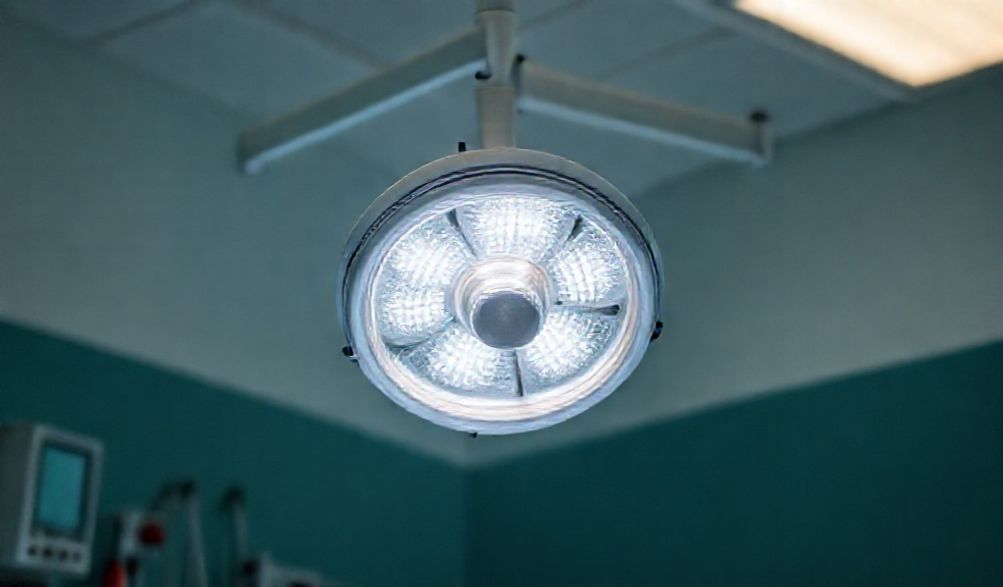
The Complete Guide to Operating Room Lamps: Technology, Safety, and Selection
In the high-stakes environment of the modern operating theater, every piece of equipment plays a role in the delicate ballet of surgery. Among the most critical, yet sometimes overlooked, is the operating room lamp. Far more than a simple source of brightness, the modern lampe chirurgicale is a pinnacle of medical engineering—a sophisticated device designed to illuminate not just the surgical field, but the path to a successful outcome. Its performance directly influences a surgeon’s precision, a patient’s safety, and the entire surgical team’s efficiency and endurance.
This guide delves into the intricate world of operating room lamps, moving beyond basic specifications to explore the core technology, clinical impact, and strategic considerations behind this essential equipment. Drawing on principles of surgical engineering and clinical practice, we provide healthcare administrators, clinical engineers, and curious medical professionals with the authoritative knowledge needed to understand, evaluate, and select the optimal lighting solution for any operating room.
The Critical Role of Surgical Lighting in Modern Medicine
The primary function of an operating room lamp is deceptively simple: to provide clear visualization. However, the implications of this task are profound, touching every aspect of a surgical procedure. Inadequate or poor-quality lighting is not merely an inconvenience; it is a tangible risk factor that can compromise patient care.
Beyond Illumination: Enhancing Surgical Precision and Patient Safety
A superior operating room lamp does more than banish darkness. It creates an optimized visual environment that enables a surgeon to perform at their peak. Key to this is the accurate differentiation of tissue types—distinguishing between a nerve, an artery, a vein, and a tumor margin often relies on subtle variations in color, texture, and reflectivity. High-fidelity lighting with excellent color rendering is crucial for these critical decisions.
Furthermore, proper illumination minimizes visual strain and fatigue. When a surgeon must constantly squint or adjust their focus to see details in a poorly lit or shadow-filled cavity, the risk of error increases. A high-intensity, uniformly distributed light reduces this cognitive load, allowing the surgical team to maintain unwavering attention on the task at hand. This directly translates to enhanced patient safety, as precise dissection reduces unintended tissue damage and improves control during delicate maneuvers.
The Impact on Surgical Team Performance and Fatigue Reduction
Surgical procedures can be marathons, lasting several hours. The cumulative effect of eye strain under suboptimal lighting contributes significantly to mental and physical fatigue. A high-quality operating room lamp mitigates this by providing consistent, comfortable illumination that mimics natural daylight. This stability helps maintain the surgical team’s concentration and visual acuity throughout long operations. By reducing the effort required to see, the light allows energy to be directed toward decision-making and technical skill, ultimately supporting sustained team performance and reducing the likelihood of fatigue-related mistakes.
Core Technology and Features of Advanced Operating Room Lamps
Today’s operating room lamps are marvels of optical and mechanical engineering. Understanding their core features is essential to appreciating their value and making an informed selection.
Understanding Light Quality: Lux, Color Temperature, and Color Rendering Index (CRI)
Evaluating a surgical light requires moving beyond subjective “brightness” to objective metrics:
- Lux: This measures illuminance, or the intensity of light falling on a surface. In surgery, a minimum of 40,000 to 160,000 lux is typically required at the center of the surgical field, depending on the specialty, to ensure deep-cavity illumination is sufficient.
- Color Temperature (Kelvin, K): Measured in Kelvins, this describes the hue of the white light. “Warm” light has a lower temperature (e.g., 3000K, yellowish), while “cool” light has a higher temperature (e.g., 5000K, bluish). The surgical standard is a neutral to cool white light, typically between 4000K and 5000K, which provides a bright, alert atmosphere and reduces color distortion.
- Indice de Rendu des Couleurs (IRC) : Perhaps the most critical metric for surgery, CRI measures a light source’s ability to reveal the true colors of objects compared to natural light. It is rated on a scale of 0 to 100. For accurate tissue differentiation, a CRI of 90 or higher is essential. A light with a low CRI can make tissues appear misleadingly pale, flushed, or dull, posing a significant clinical risk.
Achieving Shadow-Reduction: Multi-Lens Systems and LED Arrays
The elimination of shadows is a defining challenge in surgical lighting. A single light source casts strong shadows from the surgeon’s head, hands, and instruments. Modern operating room lamps solve this through sophisticated optical design:
- Multi-Source LED Arrays: Instead of one large bulb, advanced lights use a panel containing dozens, sometimes hundreds, of individual Light Emitting Diodes (LEDs). These LEDs are arranged in concentric rings or specific patterns.
- Multi-Lens Optical Systems: Each LED or group of LEDs is covered by a specially designed lens. These lenses direct and overlap the light beams from the different points on the panel onto the same spot on the surgical field. When a surgeon’s hand obstructs the light path from one set of LEDs, the overlapping beams from the others fill in the potential shadow, dramatically reducing it to a faint, soft penumbra. This principle of “shadow dilution” is the cornerstone of modern surgical illumination.
Key Functional Features: Sterility, Maneuverability, and Heat Management
The technology extends beyond the light itself to the fixture’s design:
- Sterility: The lamp head is designed for the aseptic environment. It features seamless, smooth, non-porous surfaces that can withstand repeated cleaning and disinfection with hospital-grade chemicals without degrading.
- Maniabilité : A surgical light must be effortlessly positioned and remain securely in place. This is achieved through a system of counterbalanced, multi-jointed arms that allow the heavy lamp head to be moved with a light touch and then stay rigidly in position, without drift or droop.
- Heat Management: Traditional halogen and metal halide lamps emitted significant radiant heat, which could dry out tissues and discomfort the surgical team. LED technology has revolutionized this aspect, producing minimal infrared radiation. The light delivered is “cold light,” providing intense illumination without the associated heat, greatly enhancing patient and staff comfort.
Types of Operating Room Lamps and Their Applications
Not all operating rooms require the same lighting solution. The choice depends heavily on the surgical specialties performed.
Central Ceiling-Mounted Surgical Lights: The Standard for Major Procedures
These are the workhorses of the main operating room. Typically featuring one or two lamp heads on multi-articulated arms suspended from the ceiling, they offer high intensity (often exceeding 100,000 lux), exceptional shadow reduction, and a large field of illumination. They are designed for versatility, supporting general surgery, orthopedics, cardiothoracic, and abdominal procedures where deep, wide illumination is needed.
Specialty Lights: For ENT, Neurosurgery, and Minimally Invasive Procedures
Certain specialties demand unique lighting solutions:
* ENT/Neurosurgery Lights: These are often smaller, more focused lights that can provide intense, coaxial (straight-line) illumination into deep, narrow cavities like the sinuses or cranial base.
* Endoscopic/Laparoscopic Lights: For minimally invasive surgery, the primary light source is often the scope itself. However, overhead lights are still crucial for ancillary tasks and must be designed to avoid glare on the monitor screens that the surgical team relies on.
Portable and Examination Lights: Supplementary and Emergency Use
Single-arm, mobile surgical lights on floor stands provide flexibility. They are used for minor procedures in treatment rooms, as supplemental lighting in a main OR (e.g., for an additional surgical site), or as reliable backup in case of a main light failure.
Essential Factors for Selecting an Operating Room Lamp
Choosing an operating room lamp is a significant capital investment. A strategic, multi-faceted evaluation is necessary.
Clinical Needs Assessment: Matching the Light to the Surgical Specialty
The selection process must start with the surgeons and the procedures. Conduct a needs analysis: What are the primary surgeries performed? Do they involve deep cavities (requiring high depth-of-field illumination)? Is color differentiation paramount (demanding the highest CRI)? A trauma OR and an ophthalmic OR have vastly different lighting priorities. The best light is the one that best enables the specific surgical work being done.
Evaluating Total Cost of Ownership: Initial Investment vs. Long-Term Operational Costs
The purchase price is just the beginning. A comprehensive financial analysis includes:
* Consommation énergétique : LED systems consume 50-70% less power than older halogen systems, leading to substantial savings on electricity.
* Lamp Lifespan and Replacement Costs: LED arrays can last 20,000 to 50,000 hours, often outlasting the useful life of the fixture itself, eliminating bulb replacement costs and downtime.
* Maintenance and Service: Consider the reliability of the brand, the cost and terms of service contracts, and the availability of local technical support.
Compliance, Standards, and Certification (FDA, IEC 60601-2-41)
This is non-negotiable. Any operating room lamp must be approved as a medical device in its region (e.g., FDA clearance in the USA, CE Marking in Europe). It must comply with stringent international safety standards, most notably l'IEC 60601-2-41, which specifies essential safety and performance requirements for surgical luminaires and examination lights. Compliance ensures protection against electrical, mechanical, and thermal hazards.
Installation, Maintenance, and Best Practices for Optimal Performance
To ensure a surgical light delivers on its promise for years, proper installation and care are vital.
Planning for Installation: Structural Considerations and OR Layout Integration
Installation is not an afterthought. It requires:
* Structural Analysis: The ceiling must support the significant weight of the light, its mounting system, and any potential future additions (like camera arms).
* Planification électrique : Dedicated circuits with appropriate voltage and backup power considerations are needed.
* Ergonomic Coverage: The light’s range of motion must be mapped to ensure it can adequately cover the entire surgical table and surrounding areas without colliding with other ceiling-mounted equipment like booms or monitors.
Routine Maintenance and Sterilization Protocols to Ensure Safety and Longevity
- Nettoyage Quotidien : The lamp head should be disinfected after each procedure using manufacturer-approved agents that will not damage the seals or optical surfaces.
- Preventive Maintenance: A qualified biomedical engineer should perform a thorough inspection at least annually. This includes checking arm tension and balance, verifying light output (lux and color metrics), inspecting cables and connectors, and cleaning internal filters.
Training Surgical Staff for Effective and Safe Use
Even the best light is ineffective if used incorrectly. Comprehensive training for surgeons, nurses, and support staff is essential. They should be trained on proper handling techniques to avoid damaging the delicate arms, optimal positioning to maximize illumination and minimize shadows, and understanding all controls and safety features (like emergency manual repositioning).
Section FAQ
Q: Why have LED OR lamps largely replaced halogen and metal halide systems?
R : LED systems offer a superior trifecta: dramatic energy efficiency (lowering operational costs), significantly reduced heat output (enhancing patient and staff comfort), and an exceptionally long lifespan (20,000-50,000 hours) with consistent light quality that doesn’t degrade or require a warm-up period.
Q: How often should an operating room lamp be serviced or inspected?
R : Beyond daily cleaning by clinical staff, a formal technical inspection and preventive maintenance by a qualified biomedical engineer or certified service technician should be performed at least annually, or strictly according to the manufacturer’s recommended schedule, to ensure all systems operate within safe and effective specifications.
Q: What is the most important factor when choosing a surgical light for a new operating room?
R : While cost, compliance, and features are critical, the paramount factor is clinical need. The specific surgical specialties and procedures dictate the required performance in intensity, depth-of-field, shadow control, and color accuracy. The light must first and foremost be a tool that empowers the surgical team to achieve the best possible patient outcomes.
Q: Can surgical lights be integrated with other OR technologies?
R : Absolutely. Modern “hybrid” or “digital OR” concepts allow surgical lights to be integrated with high-definition video cameras for recording, teaching, and telemedicine. They can interface with room control systems for preset lighting scenes and may connect with surgical navigation or imaging systems, creating a cohesive and intelligent operating environment.
Conclusion
Selecting the right operating room lamp is a strategic decision with far-reaching implications. It is an investment in surgical precision, patient safety, team well-being, and long-term operational efficiency. The choice requires a careful balance: harnessing advanced technologies like shadow-free LED illumination and high-fidelity color rendering, while rigorously assessing clinical requirements, total lifecycle costs, and uncompromising regulatory compliance.
By grounding the decision in the fundamental needs of the surgical team and their patients, and by committing to professional installation and disciplined maintenance, healthcare facilities can secure a lighting solution that becomes a silent, reliable partner in care—illuminating the path to successful outcomes for thousands of procedures to come. This guide has aimed to provide the foundational knowledge to navigate that selection process with confidence and clarity.
p>