
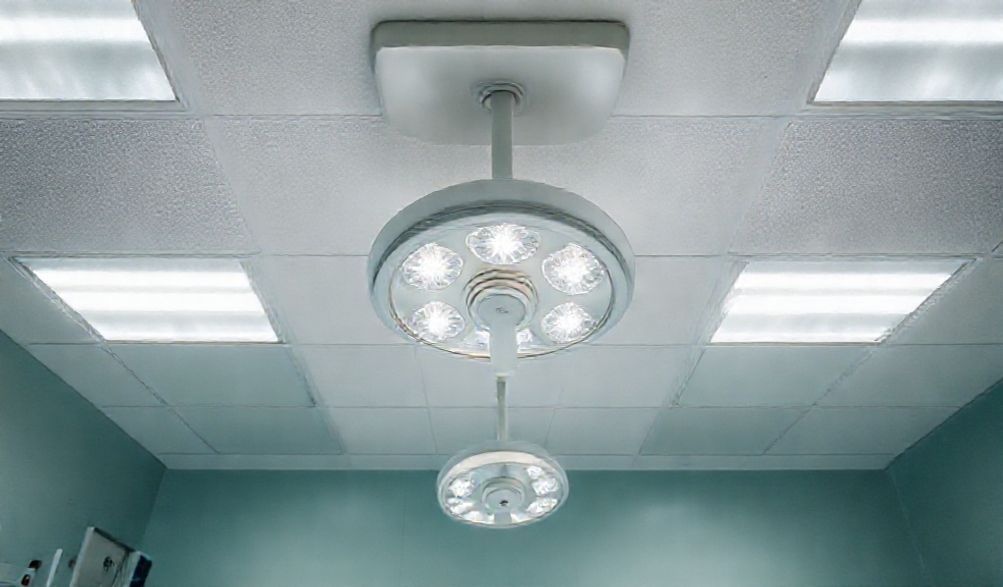
Operating Room Overhead Lights: A Guide to Technology, Safety, and Selection
Introduction
What if the single most important tool in an operating room isn’t wielded by a surgeon’s hand, but hangs silently from the ceiling? While scalpels, imaging devices, and monitors often capture the spotlight, the quality of illumination is a foundational pillar of surgical success. Les lampes de plafond de salle d'opération, ou surgical lights, are not mere fixtures; they are highly advanced, life-critical medical devices. Their performance directly influences a surgeon’s ability to see, a factor intrinsically linked to precision, accuracy, and ultimately, patient safety.
This guide delves into the sophisticated world of modern surgical lighting. We’ll move beyond basic brightness to explore the engineering marvels that illuminate the human body with clarity and consistency. Understanding this technology is essential for healthcare administrators, facility planners, clinical engineers, and anyone involved in creating optimal surgical environments.
A Note on Expertise & Trust: This guide synthesizes information from clinical studies, manufacturer technical specifications, and healthcare facility planning resources. It covers critical technical aspects—from lux levels to color rendering—and aligns with best-practice guidelines from reputable organizations like the Association of periOperative Registered Nurses (AORN) and the Illuminating Engineering Society (IES). Our goal is to provide balanced, factual education. Please note: this is an informational resource and is not a substitute for professional consultation with clinical teams and certified medical equipment planners.
The Critical Role of Surgical Lighting in Modern Medicine
In the high-stakes environment of the OR, vision is everything. Surgical lighting is the unsung hero that transforms a surgical site from a obscured cavity into a clearly defined field of action. Its impact is both physiological and practical.
Enhancing Surgical Precision and Patient Outcomes
The connection between lighting and surgical outcomes is well-documented. Optimal illumination reduces surgeon eye strain and visual fatigue, which can set in during lengthy procedures. This fatigue is more than an inconvenience; it is a cognitive burden that can slow decision-making and increase the risk of error. High-quality, shadow-reduced light allows for faster and more accurate identification of anatomical structures, leading to reduced procedure times. This efficiency benefits patient safety by minimizing anesthesia exposure and potential for infection.
This role is magnified in modern surgical techniques. In minimally invasive surgery (laparoscopic, robotic), where the surgeon operates via a video monitor, the overhead light is crucial for external port placement and any auxiliary open incisions. In microsurgery (e.g., hand, plastic, neurosurgery), where surgeons operate on sub-millimeter structures like nerves and blood vessels, the light must provide intense, focused illumination without heat or glare that could compromise the delicate tissue or the surgeon’s microscopic view.
Key Performance Metrics: Understanding Lux, Shadow Reduction, and CRI
To evaluate surgical lights, one must speak the language of photometrics. Here are the three most critical metrics:
- Lux (Illuminance): This measures the amount of light (luminous flux) falling on a surface. Think of it as “brightness at the surgical site.” General OR lighting provides around 1,000 lux, but the focused beam of an overhead surgical light must be exponentially more powerful. Modern systems typically deliver between 40,000 to over 160,000 lux at the center of the light field. This intense, focused light is necessary to penetrate deep cavities and provide sufficient contrast.
- Shadow Reduction & Multi-Source Design: A single light source casts hard, obstructive shadows. Surgical lights combat this through ingenious optical design. Most high-end systems use a multi-point light source—often an array of dozens of small LEDs arranged in a ring or pattern. These individual beams overlap at the surgical site, “filling in” shadows created by the surgeon’s head, hands, or instruments. This principle is called dilution des ombres. Some systems offer a secondary “focus” light that can be adjusted independently to illuminate a specific deep shadow.
- Indice de Rendu des Couleurs (IRC) : This is a measure of a light source’s ability to reveal the true colors of objects compared to natural light. In surgery, accurate color differentiation is vital. A high CRI (90+ and up to 98 is ideal) allows surgeons to confidently distinguish between arterial and venous blood, identify subtle variations in tissue health (ischemic vs. perfused tissue), and recognize bile or other fluids. Poor CRI can make tissues appear washed out or misleadingly discolored.
Core Technologies in Contemporary OR Lights
The evolution from simple incandescent bulbs to today’s systems represents a revolution in medical technology, centered largely on the light source itself.
LED vs. Halogen: A Comparison of Light Sources
The shift from halogen to Light Emitting Diode (LED) technology is the defining trend of the last 15 years in surgical lighting.
- Advantages of LED:
- Cool Light: LEDs emit significantly less infrared radiation than halogen bulbs. This “cold light” drastically reduces the risk of thermal injury to exposed tissues and minimizes tissue drying (desiccation) during long procedures.
- Energy Efficiency & Lifespan: LEDs consume far less power and have a dramatically longer lifespan—often rated for 40,000 to 60,000 hours compared to 1,000-2,000 hours for a halogen bulb. This reduces operational costs and the logistical burden of frequent bulb changes.
- Consistent Performance: LED color temperature remains stable throughout its lifespan and instantly reaches full intensity, unlike halogens which can dim over time and require a warm-up period.
- The Role of Halogen: Halogen lights were the previous standard and are still found in some older installations. Their warm, full-spectrum light is still valued by some surgeons for its color rendering. However, due to their heat output, inefficiency, and maintenance demands, they are largely considered legacy technology, with new installations almost universally opting for LED.
Advanced Features for the Modern OR
Beyond the light source, modern systems incorporate features that enhance sterility, usability, and integration.
- Sterility & Design: Surgical lights are designed to be part of the sterile field. They feature seamless, smooth surfaces with minimal seams or crevices where pathogens could accumulate. The entire assembly is sealed to prevent internal contamination. Handles are often designed for easy draping or are made of materials that can be thoroughly disinfected.
- Maniabilité : A light that is difficult to position is a liability. Modern systems use sophisticated balanced arm systems with gas springs or counterweights, allowing effortless movement with a single touch. They offer extensive articulation (multiple points of rotation) and sufficient suffisante to cover any position on the surgical table without obstructing the team.
- Intégration : The modern OR is a networked environment. Surgical lights now often feature integrated HD camera systems for recording and broadcasting procedures for teaching or telemedicine. They can connect to OR integration suites, allowing control of light intensity and color mode from a central touchscreen or even voice command.
How to Choose the Right Operating Room Light System
Selecting surgical lights is a major capital investment with a lifespan of a decade or more. The decision must be driven by clinical need, not just specification sheets.
Assessing Your Surgical Suite’s Needs
Start with an internal audit:
* Surgical Specialty Mix: A high-volume orthopedic suite performing joint replacements needs a light with excellent depth of illumination for deep cavities. A neurosurgery suite requires extreme intensity and precision for intricate brain and spine work. An ophthalmology OR needs specialized coaxial lighting systems.
* Physical OR Characteristics: Measure ceiling height, table position, and potential obstructions (like booms or imaging equipment). The light’s reach and mounting options (ceiling track, single point, dual-arm) must suit the room’s geometry.
* Future-Proofing: Consider emerging techniques. Will the hospital adopt more robotic surgery? Are hybrid ORs with advanced imaging in the future? Choose a system from a vendor with a roadmap for integration and upgrades.
Navigating Procurement: Key Questions to Ask
When evaluating vendors and models, go beyond the brochure with these questions:
* Service & Support: What is the warranty period? What are the terms and costs of a comprehensive service contract? Is there local, certified technical support for emergency repairs?
* La conformité réglementaire : Does the system carry the necessary regulatory approvals for your region (e.g., FDA 510(k) clearance in the U.S., CE marking in Europe)?
* Coût Total de Possession (CTP) : Look beyond the purchase price. Calculate the energy savings of LED vs. older technology. Inquire about the cost and replacement interval for any serviceable parts (filters, handles). A slightly more expensive system with lower energy use and a 10-year warranty may have a lower TCO.
Maintenance, Sécurité et Bonnes Pratiques
A surgical light is only as good as its upkeep. Proper maintenance is a patient safety imperative.
Ensuring Peak Performance and Longevity
- Nettoyage courant : Follow the manufacturer’s instructions meticulously. Use only approved, non-corrosive disinfectants. Wipe down the entire exterior, including handles and joints, after each procedure to maintain sterility.
- Scheduled Professional Service: An annual inspection by a certified technician is recommended. This includes checking mechanical balance, calibrating light intensity and focus, verifying electrical safety, and cleaning internal optics and filters.
- User Training: All OR staff should be trained on proper handling—how to position the light gently, how to use the controls, and how to recognize basic faults (e.g., flickering, dimming).
Prioritizing Patient and Staff Safety
- Heat Management: Even with cool LED sources, ensure the light is not left focused on a single spot of patient skin for an extended period when not needed.
- Electrical Safety & Backup: Surgical lights should be on emergency power circuits. Some systems have a small battery backup to maintain minimal illumination during a total power failure, allowing for safe termination of a procedure.
- Ergonomie : Easy maneuverability reduces physical strain on nurses and surgical techs who reposition the light, contributing to a safer and less fatiguing work environment.
Section FAQ
Q1 : Quelle est la durée de vie typique d'une lampe chirurgicale LED ?
R : The LED modules themselves are typically rated for 40,000 to 60,000 hours of use. In a busy OR used 10 hours a day, 250 days a year, this translates to 16-24 years. The mechanical arms and electronics will also require maintenance over this period, but the core light source is exceptionally long-lived.
Q2 : À quelle fréquence les lampes chirurgicales doivent-elles être entretenues ou inspectées ?
R : Users should perform a basic visual and functional check before each use (cleanliness, ease of movement, focus). A detailed inspection and calibration by a qualified service engineer should be performed au moins une fois par an, or per the manufacturer’s more specific schedule.
Q3 : Les anciens systèmes d'éclairage halogène peuvent-ils être mis à niveau vers la LED ?
R : Some manufacturers offer LED retrofit kits for specific older models, which can be a cost-effective way to gain some benefits of cooler, more efficient light. However, a retrofit may not achieve the full performance (e.g., shadow reduction, CRI) of a new, purpose-built LED system. A complete replacement is often recommended for optimal results and to secure a full warranty.
Q4: What does “depth of illumination” mean?
R : This refers to the light’s ability to provide adequate, uniform illumination deep within a body cavity (e.g., during abdominal or pelvic surgery) without the surgeon’s hands or instruments creating obstructive shadows at the rim. It is a function of the light field diameter, intensity (lux), and the optical design that directs light inward.
Q5: Are there specific lights for specialized surgeries like neurosurgery or ophthalmology?
R : Absolutely. Neurosurgery lights often provide the highest possible intensity (up to 160,000+ lux) and may have exceptionally small, focused spot settings for deep brain work. Ophthalmic surgical microscopes and lights use coaxial illumination (light directed along the same axis as the surgeon’s view) to eliminate shadows from the cornea and lens, and they often feature specific color filters to enhance contrast of retinal tissues.
Conclusion
Les lampes de plafond de salle d'opération are far from simple commodities; they are sophisticated, life-critical investments that form the visual foundation of every surgical procedure. The choice between systems hinges on understanding core technologies—with LED as the unequivocal modern standard—and key performance metrics like lux, shadow reduction, and CRI. The most prudent selection process balances clinical evidence, the specific needs of your surgical specialties, and a rigorous evaluation of total cost of ownership and vendor support.
Making this decision requires a collaborative approach. We strongly encourage you to consult directly with your surgeons and OR nursing staff, engage experienced clinical facility planners, and arrange hands-on evaluations with reputable medical equipment providers. Seeing the light in your own environment is the final, essential step in ensuring your OR is equipped to deliver the highest standard of safe, precise patient care.
p>