
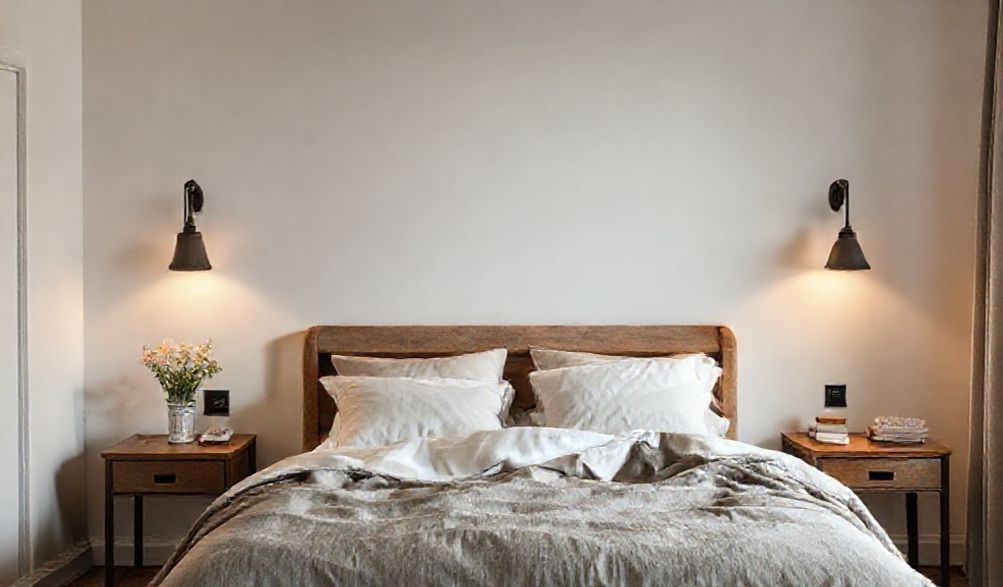
The Ultimate Guide to Over Bed Light Fixtures: Style, Safety & Smart Solutions
We’ve all been there. You settle into bed with a good book, only to be squinting in the shadow cast by your own head. You reach over to turn off the harsh overhead light, plunging the room into darkness, then fumble blindly for your nightstand. Or perhaps your bedroom feels functional but lacks that cozy, inviting ambiance you crave. The culprit? Ineffective lighting.
Your bedroom is your sanctuary—a place for rest, relaxation, and recharging. Yet, its lighting is often an afterthought, leading to a space that’s either too bright, too dim, or just plain impractical. This is where over-bed light fixtures come in, not as a mere decorative touch, but as a critical design solution. They bridge the gap between ambient glow and focused task light, all while elevating your room’s style from the comfort of your duvet.
This guide is your comprehensive, trustworthy resource for navigating the world of over-bed lighting. We’ll move beyond just aesthetics to delve into the crucial safety considerations, demystify the different types of fixtures, and explore modern smart features. Whether you’re a renter looking for a simple solution or a homeowner planning a full renovation, our goal is to arm you with the knowledge to make an informed, satisfying purchase that transforms your bedroom into the perfectly lit retreat it deserves to be.
Why Over Bed Lighting is Essential for Your Bedroom
Before we dive into fixture types, let’s solidify why this category of lighting is so transformative. It directly addresses the most common lighting failures in the bedroom.
Solving Common Lighting Problems
- Banishing Glare & Shadows: The classic central ceiling light is a primary offender. It casts unflattering shadows, creates glare on screens and pages, and does little to create a relaxing atmosphere. Over-bed lighting provides targeted illumination right where you need it, eliminating eye strain.
- Mastering Multi-Function Lighting: A bedroom serves multiple purposes: reading, relaxing, getting dressed, and setting a mood. A single light source can’t do it all. Over-bed fixtures allow you to layer light—providing bright, focused light for reading without washing out the entire room in harsh light.
- Ultimate Convenience: The ability to control your primary light source without leaving the bed is a luxury that quickly becomes a necessity. It’s the difference between a cozy, seamless wind-down routine and a disruptive one.
Benefits Beyond Illumination
The advantages extend far beyond simply seeing better.
* Space-Saving Genius: In smaller bedrooms, floor and table lamps can eat up precious real estate. Wall-mounted sconces or pendants free up your nightstands and floor, making the room feel larger and more open.
* Defines the Focal Point: Your bed is the centerpiece of the room. Lighting it intentionally—with a striking pendant or symmetrical sconces—architecturally defines the space, drawing the eye and creating a sense of balance and purpose.
* Elevates Design & Value: A well-chosen light fixture is like jewelry for your room. It can reinforce your design style, add a layer of texture or sparkle, and significantly increase the perceived value and sophistication of your space.
Types of Over Bed Light Fixtures Explained
Understanding the different categories is key to finding your perfect match. Each type offers distinct aesthetics and functionalities.
Wall-Mounted Sconces
Sconces are the versatile workhorses of bedroom lighting, mounted directly to the wall on either side of the bed.
* Varieties: Fixed sconces provide uplight or downlight in a stationary position. Swing-arm sconces are the reader’s best friend, allowing you to direct light exactly where needed. Plug-in sconces offer easy installation without hardwiring, though cord management is key.
* Ideal Placement: Typically, mount the sconce 60-65 inches from the floor to its center, or about 30-36 inches above the top of the mattress. Horizontally, they should be placed 28-36 inches apart (measuring from the center of each fixture), framing the headboard neatly.
* Avantages : Extremely space-saving, excellent for directed task lighting, and available in endless styles.
* Inconvénients : Hardwired versions require electrical work. Plug-in versions require clever cord concealment (think paintable cord covers run neatly down the wall).
Pendant Lights & Chandeliers
A single pendant or a small chandelier hung centrally over the bed makes a bold style statement and provides generous ambient light.
* Options: A single large pendant (like a drum or globe shade) offers a clean, modern look. Multi-pendant clusters ou vos linear multi-light fixtures are perfect for spanning the width of a king-size bed. Small-scale chandeliers add drama and texture.
* Choosing the Right Size: The fixture’s diameter (in inches) should be roughly ½ to ¾ the width of your bed. For a 60-inch wide queen bed, look for a fixture 30-45 inches wide.
* Drop Length & Style: Consider your ceiling height. In standard 8-foot ceilings, the bottom of the fixture should hang 30-36 inches above the mattress. Always maintain at least 7 feet of clearance from the floor. Styles range from minimalist and modern to rustic and crystal-encrusted.
Track Lighting & Monorails
Often overlooked for bedrooms, modern track systems offer unparalleled flexibility.
* Function: A track or monorail is mounted on the ceiling, with adjustable spotlights or pendants that can be aimed precisely. You can light both sides of the bed, a reading nook, and artwork with one system.
* Esthétique : Today’s tracks are sleek and minimalist. Monorails, with their curved, sculptural wires, can be a design feature in themselves. They work exceptionally well in contemporary, industrial, or loft-style bedrooms.
Mounted Reading Lights
These are the pure function specialists. Often attached to a bed frame or headboard (or a wall very close by), they feature long, fully adjustable arms and small, focused shades designed to throw light directly onto a book with zero glare for your partner.
* Idéal pour : Serious readers, minimalist spaces, or beds without space for nightstands. They offer the most ergonomic and personalized task lighting solution.
Critical Safety & Installation Considerations
This isn’t just about looks—it’s about safety and longevity. Proper installation is non-negotiable.
Weight Ratings & Secure Mounting
A light fixture falling is no joke.
* Check the Fixture Weight: Always note the product’s weight.
* Use the Right Hardware: For hardwired wall or ceiling mounts, you doit secure the mounting bracket to a wooden ceiling joist or wall stud. For drywall where a stud isn’t available, you must use heavy-duty drywall anchors rated for at least twice the weight of the fixture. Never rely on simple plastic plugs or screws in drywall alone.
Building Codes & Wire Management
- Codes: For hardwired installations, local electrical codes exist for your safety. If you’re unsure, hiring a licensed electrician is always the best and safest choice.
- Cord Management for Plug-Ins: For plug-in sconces, plan the path of the cord. Use adhesive-backed cord clips or paintable cord-hiding raceways to run the cord neatly down the wall to the baseboard and over to an outlet. This creates a cleaner, semi-permanent look and prevents tripping hazards.
Ideal Height and Clearance Guidelines
Specific measurements prevent bumps and ensure comfort:
* Sconces: Bottom of shade 30-36” above mattress top.
* Pendants/Chandeliers: Bottom of fixture 30-36” above mattress top (for 8’ ceilings). Adjust up for higher ceilings.
* Clearance: Always ensure at least 7 feet from the floor to the bottom of any hanging fixture in the walking path.
* Overhang: A pendant should be centered over the bed. Its width should be contained within the width of the headboard or bed frame for a balanced look.
Choosing the Right Fixture: A Buyer’s Checklist
Walk through this decision framework before you click “buy.”
Assessing Your Room’s Scale & Ceiling Height
- Fixture Width: As a rule, the fixture’s diameter should not exceed ½ to ¾ the width of your bed.
- Hauteur sous plafond : Low ceilings (under 8 ft) favor flush-mounts, semi-flush mounts, or sconces. High ceilings (9 ft+) can handle dramatic drops and larger chandeliers. Remember the 7-foot floor clearance rule.
Matching Your Design Style
- Modern Farmhouse: Wagon wheel chandeliers, black metal cage sconces, lantern-style pendants.
- Mid-Century Modern: Sputnik chandeliers, brass swing-arm sconces, atomic geometric forms.
- Coastal: Woven rattan pendants, whitewashed wood bead chandeliers, glass globe sconces.
- Minimalist: Single-dome pendants, cylindrical fabric sconces, monorail track lighting.
- Glam: Crystal chandeliers, mirrored sconces, fixtures with metallic finishes.
Light Bulb Basics: Lumens, Color Temperature, and Dimmability
The bulb makes all the difference.
* Lumens (luminosité) : For reading in bed, aim for 400-600 lumens per light source (per sconce or reading light). For ambient light from a pendant, 800-1500 lumens may be suitable.
* Color Temperature (Warmth): Measured in Kelvins (K). For bedrooms, always choose warm white (2700K – 3000K). This range mimics sunset or candlelight, promoting relaxation and melatonin production. Avoid cool white (4000K+) which is too stark and stimulating.
* Dimmability: This is a game-changer. A dimmer switch allows one fixture to transition from bright task lighting to soft mood lighting. Ensure both your fixture and your bulbs are dimmer-compatible.
Modern Innovations: Smart & Integrated Over Bed Lighting
Today’s fixtures offer convenience that was unimaginable a decade ago.
Ampoules connectées et commande vocale
Remplacez les ampoules standard par des LED intelligentes (comme Philips Hue, LIFX ou WiZ).
* Avantages : Contrôlez les lumières via une application smartphone ou par commande vocale (Alexa/Google Home/Siri). Programmez des horaires (allumage progressif au réveil), créez des “ scènes ” d'éclairage (Cinéma, Lecture) et choisissez même parmi des millions de couleurs pour des effets d'ambiance. Aucun câblage spécial requis – juste une douille standard.
Appliques avec ports USB et prises intégrés
C'est une tendance extrêmement pratique, surtout pour l'éclairage de chevet.
* Function: De nombreuses appliques modernes et même certaines bases de suspensions intègrent désormais des ports de charge USB-A ou USB-C, voire des prises électriques standard. Cela élimine le besoin d'un bloc de charge encombrant sur la table de nuit, gardant les surfaces dégagées.
Solutions sans fil et à piles
Idéales pour les locataires ou toute personne souhaitant éviter des travaux électriques.
* Fonctionnement : Ces appliques élégantes ou lampes à bras articulé fonctionnent sur batteries rechargeables (souvent plusieurs mois entre deux charges) et se fixent avec des adhésifs sans dommage ou de simples vis. Elles sont commandées par une télécommande ou un capteur tactile.
* Limites : La puissance lumineuse peut être inférieure à celle des options câblées, et les batteries nécessitent une recharge périodique. Cependant, elles offrent une flexibilité et une facilité d'installation incroyables.
Foire Aux Questions (FAQ)
Q : À quelle hauteur dois-je suspendre une suspension au-dessus de mon lit ?
R : La règle générale veut que le bas de la suspension soit suspendu entre 75 et 90 cm au-dessus du sommet du matelas. Cela assure un lien visuel avec le lit sans être trop bas. Maintenez toujours un dégagement minimum de 2,10 mètres par rapport au sol pour la sécurité.
Q : Puis-je installer moi-même un luminaire au-dessus du lit ?
R : Cela dépend du type. Les luminaires à brancher, à piles ou à fixation adhésive simple sont parfaitement adaptés au bricolage. Pour tout luminaire nécessitant un raccordement au circuit électrique de la maison, si vous n'êtes pas expérimenté et à l'aise avec l'électricité, nous recommandons vivement de faire appel à un électricien qualifié. La sécurité et le respect des normes locales sont primordiaux.
Q : Quel est le meilleur éclairage au-dessus du lit pour la lecture ?
R : Les meilleurs choix sont les appliques murales réglables (styles à bras articulé) ou les lampes de lecture murales dédiées. Privilégiez les modèles avec abat-jour qui dirigent la lumière vers le bas pour éviter l'éblouissement. La source lumineuse doit être positionnée légèrement au-dessus et en avant de votre épaule, fournissant 400 à 600 lumens de lumière blanc chaud de chaque côté.
Q : Comment choisir entre une applique et une suspension ?
R : Utilisez ce cadre de décision :
* Choisissez des appliques si : Vous avez besoin d'un éclairage de tâche focalisé pour la lecture, l'espace est limité, vous souhaitez une symétrie, ou vous avez des plafonds bas.
* Choisissez une suspension / un lustre si : Vous voulez faire une déclaration stylistique forte, vous avez besoin d'une lumière d'ambiance plus générale sur tout le lit, vous avez des plafonds hauts, ou votre lit n'est pas contre un mur (ex. : au centre de la pièce).
Conclusion
Choisir le luminaire parfait pour au-dessus du lit est une intersection gratifiante entre style personnel, fonctionnalité quotidienne et sécurité absolue. Il ne s'agit pas seulement de choisir un bel objet ; il s'agit de mesurer attentivement votre espace, de comprendre l'engagement que représente l'installation, et de choisir des fonctionnalités – comme la gradation ou la technologie connectée – qui vous serviront pendant des années.
En utilisant ce guide comme feuille de route, vous pouvez avancer en toute confiance. Vous n'achetez pas seulement une lumière ; vous investissez dans l'ambiance de votre sanctuaire, la praticité de votre routine nocturne et l'harmonie globale du design de votre chambre. Prenez votre temps, pesez vos options et préparez-vous à transformer votre chambre en un havre parfaitement éclairé qui vous accueille à la fin de chaque journée.
p>