
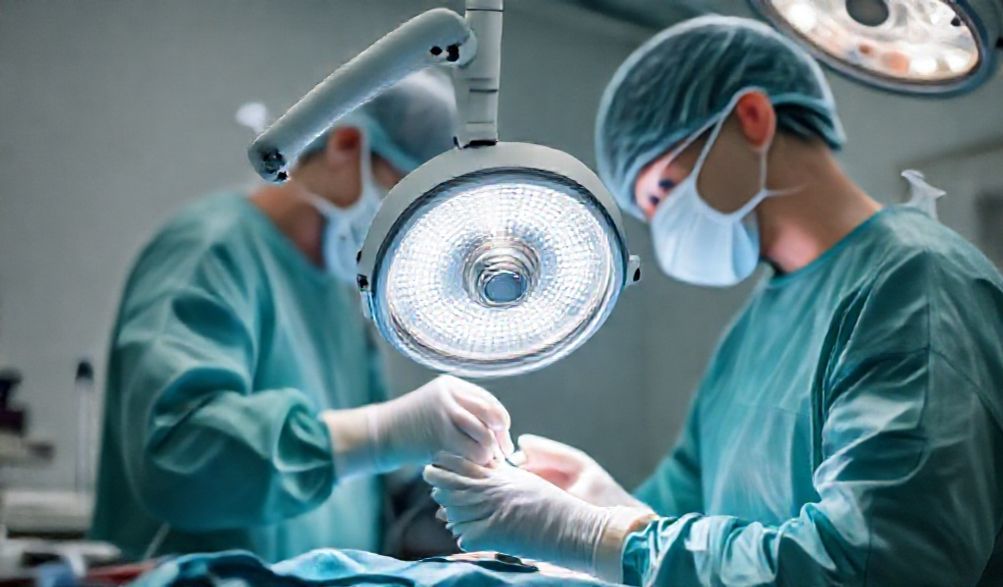
Portable Surgery Lights: A Comprehensive Guide to Mobile, High-Quality Surgical Lighting
Imagine a makeshift operating room in a disaster zone, a cramped emergency vehicle speeding to the hospital, or a rural clinic experiencing a sudden power outage. In these critical moments, the success of a life-saving procedure hinges on one fundamental element: the surgeon’s ability to see. Traditional, fixed surgical lighting—the stalwart of the main operating suite—is rendered useless. It is in these high-stakes, unpredictable environments that portable surgery lights emerge not just as a piece of equipment, but as a revolutionary force in patient care.
Portable surgery lights are transforming medical practice by delivering critical, high-quality illumination anywhere it’s needed. This comprehensive guide is designed to empower medical professionals, procurement officers, and facility planners. Built on a foundation of clinical requirements, technical specifications, and real-world user experience, our goal is to provide the knowledge necessary for making informed, safety-first decisions that directly impact patient outcomes.
What Are Portable Surgery Lights? Defining Mobile Surgical Illumination
At their core, portable surgery lights are self-contained, mobile illumination systems designed to meet the stringent visual demands of surgical procedures outside of a traditional, fixed-installation operating room.
Core Definition and Key Differentiators from Fixed Lights
While both fixed and portable lights aim to illuminate the surgical field, their design philosophies diverge dramatically. Fixed lights are permanent fixtures, often ceiling-mounted, drawing continuous power from the building’s grid and integrated into the OR’s infrastructure. Portable surgery lights, in contrast, are defined by three key attributes:
- Mobility: They are mounted on wheels (floor stands) or designed to attach to various surfaces (clamps, rails), allowing them to be moved and positioned with ease.
- battery operation: A built-in, rechargeable battery pack is their hallmark, providing complete independence from external power sources for several hours.
- Rapid Deployment: They can be set up, positioned, and activated in minutes, making them ideal for emergent or temporary situations.
Primary Use Cases and Clinical Applications
The versatility of portable surgical lighting unlocks a wide array of applications:
- Field Surgeries & Military Medicine: The quintessential use case. From forward military surgical teams to disaster medical assistance teams (DMAT), these lights enable complex procedures in tents, warehouses, or mobile army surgical hospitals (MASH).
- Emergency Rooms and Triage Areas: For emergency procedures at the bedside, in trauma bays, or during mass casualty incidents where dedicated ORs are overwhelmed.
- Veterinary Surgery and Mobile Clinics: Essential for equine surgery, farm animal care, and mobile veterinary units where procedures are performed in non-clinical settings.
- Low-Resource Settings and Disaster Response: Bringing surgical capability to remote clinics, humanitarian missions, and areas recovering from natural disasters where infrastructure is damaged or non-existent.
- Supplementary Lighting in Main ORs: Used as a secondary or backup light source for complex multi-site surgeries (e.g., plastic reconstruction) or as an immediate replacement if a primary fixed light fails.
Critical Technical Specifications for Optimal Surgical Outcomes
Selecting a portable surgery light requires moving beyond general features and understanding the technical specifications that directly affect surgical performance and patient safety.
Illumination Quality: Lux, Lumen, and Color Temperature
- Lux (Illuminance): This is the most critical metric. It measures the amount of light (lumens) falling on a surface per square meter. For major surgery, a minimum of 40,000 to 160,000 lux at the center of the light field is the clinical standard. Portable lights must achieve this high intensity to reveal fine detail, depth, and tissue texture.
- Lumen (Luminous Flux): Measures the total visible light output of the source. While important, lumens alone don’t guarantee good surgical light; the optical design must focus that light effectively (hence, lux is more relevant).
- Color Temperature (Kelvin – K): Measured in Kelvins, this defines the “color” of the light. Surgical lighting typically mimics daylight in the range of 4500K to 5500K. This neutral white light provides optimal color rendition, allowing surgeons to accurately differentiate between tissues, such as distinguishing arteries from veins or healthy tissue from necrotic tissue.
Light Field Characteristics: Depth and Diameter
A good surgical light must illuminate a cavity, not just a surface.
* Depth of Illumination: This specifies how deep into a wound (e.g., 15cm to 25cm or more) the light can maintain adequate intensity without causing shadows from the rim of the incision. A deep, uniform light field is crucial for abdominal or thoracic surgery.
* Adjustable Field Diameter: The ability to adjust the size of the illuminated spot from a small, intense circle for minor procedures to a wide field for major surgery adds tremendous versatility.
Shadow Reduction and Homogeneity
Shadows are the enemy of the surgeon. High-quality portable lights employ multi-LED arrays (often dozens of individual LEDs) paired with sophisticated reflector or lens systems. This design ensures that if an instrument or the surgeon’s head blocks some LEDs, the others fill in the shadow, maintaining a consistently homogeneous (even) light across the entire field.
Power Source and Battery Life
Independence is key.
* Battery Type & Runtime: Modern lights use high-capacity Lithium-ion or Lithium-polymer batteries. Look for a minimum of 3-4 hours of runtime at full intensity, with high-end models offering 6-8 hours or more. Runtime should be clearly stated at the required lux level.
* Fail-Safe Features: Essential features include clear battery level indicators (visual and audible low-battery warnings), hot-swappable batteries (allowing replacement without turning off the light), and the ability to operate while plugged in, which also charges the battery.
Key Features to Consider When Selecting a Portable Surgery Light
Beyond core specs, these features determine how well the light integrates into your workflow and environment.
Mobility and Mounting Options
- Floor Stands: The most common, offering stable, height-adjustable mobility.
- Transport Carts: Integrated carts for moving the light and related equipment.
- Ceiling Mounts & Wall Brackets: For semi-permanent installation in smaller procedure rooms or emergency bays.
- Clamp-Ons: For attachment to bed rails, IV poles, or other structures, saving floor space.
Adjustability and Ease of Use
- Articulating Arms: Multi-jointed arms allow precise positioning of the light head without moving the entire stand. Look for smooth movement and the ability to hold position without drift.
- Stérilisation : The light head should be designed for easy cleaning. Some models have handles or control panels that can be covered with sterile sleeves.
- Commandes intuitives : Touchless (infrared sensor) controls or large, easy-to-clean buttons that can be operated while wearing gloves are a significant advantage.
Durability and Sterilization Compliance
- IP Rating: An Ingress Protection rating (e.g., IP54) certifies resistance to dust and fluids. A rating is crucial for withstanding surgical splashes and rigorous cleaning.
- Cleanroom Compatibility: Materials and design should not shed particles and should withstand frequent wiping with harsh hospital-grade disinfectants like bleach or alcohol-based solutions.
Safety Features and Certifications
- Gestion thermique : LED lights are “cool” but still generate heat. Effective heat sinks or fans are necessary to prevent overheating of the light head, protecting both the device and the patient.
- Electrical Safety Certification: The device must carry relevant medical safety certifications, such as norme IEC 60601-1, ensuring it is safe for use in the patient environment.
- Battery Management Systems: Protects against overcharging, deep discharge, and short circuits.
The Tangible Benefits: Why Invest in Portable Surgical Lighting?
Enhancing Patient Safety and Surgical Precision
The primary benefit is unequivocal: superior visualization directly reduces surgical error rates. Accurate identification of anatomical structures, clear visualization of bleeders, and precise dissection are all dependent on light. A high-quality portable light brings OR-standard visualization to any setting, directly contributing to better patient outcomes.
Unlocking Operational Flexibility and Efficiency
These lights decouple surgical capability from a fixed location. They enable:
* Procedures in non-OR spaces (ICU, ER, endoscopy suites).
* Rapid room turnover, as the light moves with the surgical team, not the room.
* Efficient use of space in smaller clinics that cannot justify a dedicated, fully-equipped OR.
Cost-Effectiveness and ROI Considerations
While the unit cost can be significant, the total cost of ownership can be favorable:
* Lower Infrastructure Cost: No need for expensive ceiling installations, structural reinforcements, or complex electrical work.
* Utility Savings: Highly efficient LEDs consume far less power than old halogen systems.
* Multi-Department Usability: One unit can serve the ER, ICU, labor & delivery, and outpatient surgery, maximizing asset utilization.
Improving Care Access in Underserved and Remote Areas
This is where the impact is most profound. Portable surgery lights are a cornerstone of making surgical care equitable. They are the enabling technology for mobile surgical camps, humanitarian missions, and clinics in remote regions. By bringing the essential tool of sight to these settings, they directly expand access to life-saving and life-improving procedures for populations that would otherwise go without. This real-world impact on patient care equity is the ultimate testament to their value.
How to Choose the Right Portable Surgery Light: A Step-by-Step Evaluation Guide
Step 1: Assess Your Primary Clinical Needs and Environment
Ask: What procedures will it be used for? (Major abdominal vs. minor superficial). Where will it be used? (Ambulance, tent, crowded ER). Who will use it? (Surgeons, nurses, veterinarians).
Step 2: Compare Core Specifications Against Minimum Standards
Create a checklist: Must achieve >40,000 lux? Requires 6-hour battery life? Needs a 20cm depth of illumination? Use these as non-negotiable filters when comparing models.
Step 3: Evaluate Ergonomics and Clinical Workflow Integration
Request a demo or trial if possible. Is it easy to maneuver in a tight space? Can the surgeon position it intuitively? How quickly can it be cleaned between cases?
Step 4: Review Manufacturer Reputation, Service, and Warranty
This is critical for long-term value and safety. Choose established manufacturers with a proven track record in medical lighting. Investigate the availability of local service technicians, the terms of the warranty (especially on the battery and LEDs), and the cost and lead time for replacement parts. The l'expertise of the manufacturer and the fiabilité of their support network are integral to your investment.
Foire Aux Questions (FAQ) sur les Lampes Chirurgicales Portables
Q1 : Une lampe chirurgicale portable peut-elle vraiment fournir assez de lumière pour une chirurgie majeure ?
R : Absolument. Les lampes chirurgicales portables modernes et haut de gamme, utilisant des matrices LED avancées et une optique de pointe, peuvent atteindre et souvent dépasser la norme de 40 000 lux et plus requise pour les interventions chirurgicales majeures. L'essentiel est de vérifier attentivement que les spécifications techniques publiées de la lampe correspondent aux exigences de vos procédures chirurgicales spécifiques.
Q2 : Quelle est la durée de vie typique des batteries, et que se passe-t-il en cas de panne de courant pendant une intervention ?
R : L'autonomie de la batterie varie selon le modèle et le réglage de l'intensité. Les lampes de haute qualité offrent généralement une autonomie de 3 à 8 heures à pleine intensité chirurgicale. Elles sont conçues avec des sécurités intégrées : elles fonctionnent sur secteur tout en chargeant, émettent des avertissements sonores/visuels clairs de batterie faible bien à l'avance, et beaucoup permettent l'échange à chaud des batteries sans interrompre l'éclairage, garantissant ainsi la continuité de l'intervention.
Q3 : Les lampes chirurgicales portables sont-elles faciles à nettoyer et à stériliser ?
R : Oui, elles sont conçues pour les environnements cliniques. Elles présentent des boîtiers scellés et lisses avec des indices de protection (IP) élevés pour une résistance aux fluides. Toutes les surfaces externes peuvent être nettoyées minutieusement avec les désinfectants hospitaliers standard. Certains modèles ont des poignées ou des panneaux de commande amovibles qui sont autoclavables.
Q4 : Quel est le fourchette de prix typique, et la location est-elle une option ?
R : Les prix varient considérablement selon les performances et les fonctionnalités, allant d'environ 2 000 € pour les modèles de base à plus de 20 000 € pour les systèmes haut de gamme à très haute luminosité utilisés pour la chirurgie majeure. De nombreux fournisseurs et fabricants d'équipements médicaux proposent des options de location, de crédit-bail ou de financement pour aider les établissements de santé à gérer leurs dépenses en capital.
Q5 : Comment entretenir une lampe chirurgicale portable pour assurer sa longévité ?
R : Suivez scrupuleusement les directives du fabricant : nettoyage régulier avec les agents approuvés, cycle de charge approprié pour la batterie (éviter les décharges complètes constantes), stockage dans un environnement à température contrôlée, et programmation d'un entretien professionnel périodique pour vérifier l'alignement optique, la sécurité électrique et l'état de la batterie.
Conclusion
Les lampes chirurgicales portables représentent un bond en avant transformateur dans la technologie médicale, fournissant un éclairage flexible et haute fidélité qui répond aux normes chirurgicales rigoureuses, bien au-delà des limites de la salle d'opération principale. Elles ne sont plus seulement une solution de secours, mais une stratégie primaire pour étendre l'accès à la chirurgie et renforcer la résilience.
Lors de votre sélection, laissez le besoin clinique et la conformité aux spécifications être vos principaux moteurs, suivis de près par la facilité d'utilisation et la qualité du support du fabricant. L'objectif ultime de toute technologie médicale est d'améliorer les résultats pour les patients, et un éclairage fiable et de haute qualité est fondamental pour cette mission.
Nous vous encourageons à passer à l'étape suivante : consultez votre équipe d'ingénierie clinique, téléchargez une liste de contrôle détaillée des spécifications auprès d'un fournisseur réputé, et organisez une démonstration pratique. En priorisant la sécurité des patients et une prise de décision éclairée, vous pouvez exploiter la puissance de l'éclairage chirurgical portable pour améliorer les soins dans tous les contextes.
p>