
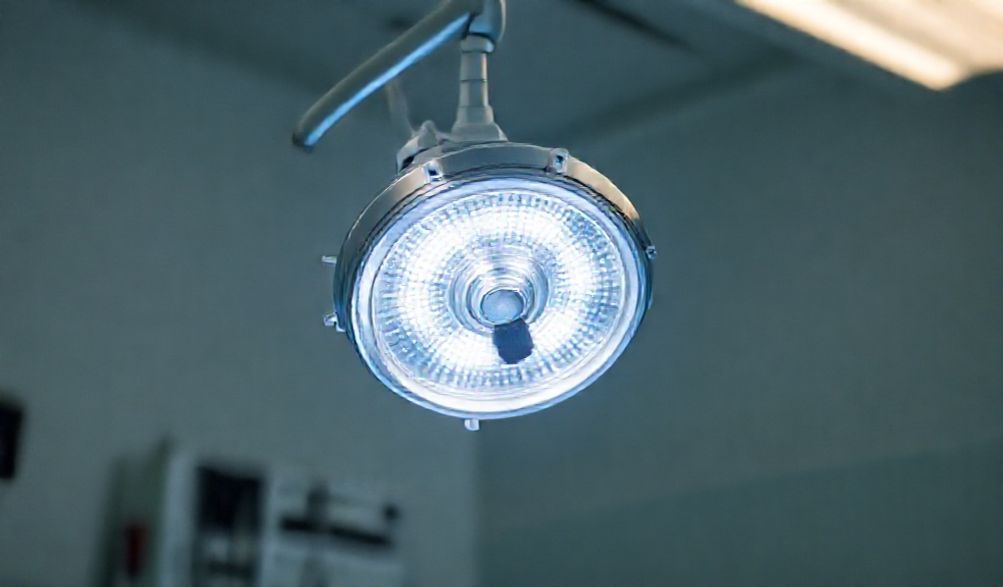
Portable Surgical Lights: A Comprehensive Guide to Mobile Illumination Solutions
In the high-stakes environment of surgery, illumination is not merely a convenience—it is a fundamental component of patient safety and procedural success. Optimal lighting reduces eye strain for the surgical team, enhances contrast and depth perception, and is critical for the accurate identification of anatomy, tissue differentiation, and control of bleeding. For decades, this need was met almost exclusively by large, ceiling-mounted surgical lights anchored to the operating room (OR) suite.
However, the modern healthcare landscape demands flexibility. Surgical and procedural interventions are increasingly performed in diverse settings: bustling emergency departments, austere field hospitals, outpatient surgery centers, veterinary clinics, and even in transit. This paradigm shift has propelled the development and adoption of portable surgical lights—sophisticated, mobile illumination solutions that bring high-quality light wherever it is needed.
This guide serves as an authoritative, expert-driven resource for surgeons, nurses, clinical engineers, procurement officers, and healthcare administrators. We will move beyond marketing claims to explore the engineering principles, clinical requirements, and key performance metrics that define a superior portable surgical light. Our goal is to equip you with the knowledge to make an informed, safe, and cost-effective purchasing decision that enhances your facility’s capabilities and, ultimately, patient care.
What Are Portable Surgical Lights? Defining Mobile Surgical Illumination
Core Definition and Key Characteristics
Portable surgical lights are self-contained, maneuverable medical devices engineered to deliver high-intensity, shadow-reduced illumination independent of fixed room infrastructure. Unlike their ceiling-mounted counterparts, these units are defined by their autonomy and mobility.
The key characteristics that set them apart include:
* Mobility: Integrated into their design are robust wheeled bases (casters) for easy movement and, crucially, onboard battery systems that free them from the need for a nearby power outlet during use. This allows for rapid relocation between rooms or deployment in areas without installed surgical lighting.
* Compact & Integrated Design: All components—light head, articulating arms, power system, and controls—are consolidated into a single unit. This streamlined design minimizes setup time and physical footprint.
* Rapid Deployment: The primary value proposition is speed. In an emergency or in a multi-purpose procedure room, a portable light can be wheeled into position, powered on, and adjusted to provide optimal lighting in a matter of moments.
Primary Use Cases and Clinical Applications
The versatility of portable surgical lights makes them indispensable across a wide spectrum of care:
* Emergency & Trauma Surgery: In the Emergency Room or Trauma Bay, where time is critical and fixed ORs may be occupied, these lights provide immediate, high-quality illumination for life-saving procedures like chest tube insertions, emergency thoracotomies, or complex wound management.
* Field Medicine & Military Surgery: For disaster response teams, humanitarian aid missions, and military field hospitals, portable lights are essential equipment. They enable surgical capability in tents, temporary structures, or remote clinics where reliable infrastructure is nonexistent.
* Veterinary Operating Rooms: Veterinary practices, from large animal ambulatory services to small animal clinics, benefit immensely from the flexibility and cost-effectiveness of portable systems, avoiding the high installation costs of fixed lights.
* Outpatient Surgical Centers & ASCs: In ambulatory settings where rooms may be used for various specialties throughout the day, portable lights offer the flexibility to reconfigure spaces quickly without compromising on lighting quality for procedures like ophthalmology, orthopedics, or plastic surgery.
* Dental Surgery: For complex oral surgeries requiring intense, focused light, portable surgical lights offer a superior alternative to standard dental lamps, providing deeper cavity illumination and better shadow control.
Critical Technical Specifications and Performance Metrics
Choosing a portable surgical light requires a deep understanding of its technical capabilities. Here are the non-negotiable metrics to evaluate.
Illumination Quality: Lux, Color Temperature, and Shadow Reduction
The core function is to deliver light that meets surgical visual demands.
* Illuminance (Lux): This measures the intensity of light falling on the surgical field. General minor procedures may require 40,000-80,000 lux, while complex, deep-cavity surgeries often demand 100,000-160,000 lux or more. Always verify the lux at a specified working distance (e.g., 1 meter).
* Indice de Rendu des Couleurs (IRC) : A critical but often overlooked metric. CRI measures a light source’s ability to reveal the true colors of objects compared to natural light. A high CRI (>90, with >95 being ideal) is essential for accurately distinguishing between tissues, such as arteries, veins, nerves, and identifying subtle changes in tissue color that indicate oxygenation or pathology.
* Réduction des ombres : Effective systems use optical engineering to minimize shadows cast by instruments and hands. This is typically achieved through multiple, strategically positioned LED arrays combined with specially designed prismatic lenses or reflectors that blend the light beams to create a homogeneous field. Look for descriptions like “multi-point source” or “deep cavity illumination” technology.
Mobility and Power Systems
This is what defines “portable.”
* Battery Technology: Lithium-ion (Li-ion) batteries are the current standard due to their high energy density, lack of memory effect, and relatively long lifespan. Key questions are: Runtime (typically 2-6 hours at full intensity), recharge time (can it recharge between cases?), and fail-safes (does it have a battery indicator and a warning system for low charge? Can it operate while plugged in?).
* Maneuverability & Stability: Evaluate the weight of the unit (lighter is easier to move but may be less stable), the quality of the casters (should lock securely), and the design of the boom arm. The arm should offer smooth, multi-axis articulation with sufficient reach and the ability to hold its position securely without drift, even when fully extended.
Sterility and Infection Control Design
The device must support aseptic technique.
* Poignées Stériles : The primary point of contact for the sterile surgical team. The best systems offer removable, autoclavable handles or disposable sterile sleeves that can be changed between procedures.
* Cleanable Surfaces: The entire housing should be constructed of non-porous, medical-grade materials that can withstand frequent cleaning and disinfection with hospital-grade agents without degrading. Sealed seams and buttons prevent fluid ingress and biofilm formation.
Advantages and Limitations: An Evidence-Based Analysis
A balanced view is essential for proper expectation management and application.
Key Benefits of Portable Surgical Lighting Systems
- Unmatched Flexibility & Space Efficiency: They transform any room with adequate space into a potential procedure area—an ICU bed space, a minor procedure room, or a standard clinic exam room. This maximizes facility utilization.
- Rapid Deployment: In emergency or urgent scenarios, the ability to have surgical-grade light within seconds is a tangible clinical advantage that can impact outcomes.
- Cost-Effectiveness: The initial capital outlay is significantly lower than installing a ceiling-mounted system, which requires structural support, electrical work, and potentially expensive ceiling tracks. There are also minimal installation costs.
- Disaster & Remote Readiness: They are a cornerstone of mobile medical kits and mass casualty preparedness plans, ensuring surgical capability can be established anywhere.
Potential Drawbacks and Considerations
- Lower Maximum Illuminance: While high-quality portable lights are incredibly powerful, the very top tier of illumination (e.g., 200,000+ lux) is still the domain of the largest, ceiling-mounted systems with massive optical heads.
- Battery Dependency: This introduces a new variable to manage. A failed battery management protocol can lead to light failure mid-procedure. Redundant charging stations and procedural checklists are mandatory.
- Physical Footprint: The unit occupies floor space, which can be a challenge in already crowded rooms. It also introduces cords (when charging) and a physical object that staff must navigate around.
- Durability Demands: A portable light must withstand the rigors of being moved, bumped, cleaned aggressively, and transported—a harsher life than a fixed light. Build quality and warranty are paramount.
How to Choose the Right Portable Surgical Light: A Procurement Checklist
Step 1: Assessing Your Clinical and Facility Needs
Begin with a needs assessment:
* Types d'interventions : What is the most demanding procedure you will perform? (e.g., superficial laceration repair vs. deep abdominal exploration). This defines your required lux and CRI.
* Environnement : Where will it be used? (ER, ASC, field pack). This defines needs for battery life, durability, and size.
* Cas d'Utilisation : Is it for planned, scheduled procedures or primarily for emergency backup? This influences battery strategy and desired feature set.
Step 2: Evaluating Manufacturer Reputation and Compliance
Do not compromise on safety and support.
* Regulatory Clearance: The device must have the appropriate regulatory markings for your region—l'autorisation de la FDA, in the US, le marquage CE in Europe, etc. This is non-negotiable.
* Manufacturer Credentials: Choose established manufacturers with a proven track record in medical lighting. Research their clinical validations, peer-reviewed studies (if available), and service network. Is local technical support available?
* Renseignez-vous sur la durée de vie de la batterie (en cycles) et le coût de remplacement. Understand the warranty period for the entire unit and key components like LEDs and batteries. What is the process for service and repair?
Step 3: Total Cost of Ownership (TCO) Analysis
Regardez au-delà du prix affiché :
* Prix d'achat : The initial cost of the unit.
* Consommables : Cost and lifespan of sterile handles/sleeves.
* Un modèle plus durable et fiable peut avoir un coût initial plus élevé mais des dépenses globales réduites. Li-ion batteries have a finite lifespan (often 3-5 years or a set number of charge cycles). Factor in the future cost of replacement battery packs.
* Durée de vie des LED : While LEDs last for tens of thousands of hours, they do eventually degrade. Check if the LED modules are user-replaceable and their estimated cost.
* Preventive Maintenance: Are there recommended service intervals? What is the cost?
Sécurité, maintenance et bonnes pratiques
Essential Safety Protocols
- Sécurité électrique : Only use the manufacturer-provided charger. Inspect cords for damage regularly. Ensure the device is used in accordance with its ingress protection (IP) rating if fluid exposure is likely.
- Gestion thermique : Although LEDs are cool, the electronics and high-power output can generate heat. Ensure air vents are not blocked and the device is not covered during or immediately after use.
- Trip Hazard Management: Develop a protocol for routing the power cord during charging to avoid creating a hazard in a busy clinical space.
Routine Maintenance and Cleaning Procedures
- Quotidienne/Par Intervention : Follow the manufacturer’s Instructions for Use (IFU) precisely. This typically involves:
- Removing and cleaning/autoclaving the sterile handles.
- Wiping down the entire unit, especially the light head and arms, with an approved hospital disinfectant.
- Checking the battery charge status.
- Periodic: Perform deeper cleaning as per schedule, check arm tension and movement, and verify all locks and casters are functioning properly.
Training for Clinical Staff
The best equipment is only as good as the people using it. Mandatory training should cover:
* Proper Positioning: How to articulate the arms to achieve optimal light field and minimize shadows.
* Battery Management: Comprendre les indicateurs de charge, les cycles de charge appropriés et le protocole pour assurer une charge complète avant une utilisation programmée.
* Nettoyage et stérilité : Mise en place et retrait corrects des manches/poignées stériles et régime de nettoyage approuvé pour maintenir le contrôle des infections et la longévité de l'appareil.
Section FAQ
Quelle est l'autonomie typique de la batterie d'une lumière chirurgicale portable ?
Réponse : L'autonomie de la batterie varie considérablement selon le modèle et l'intensité d'utilisation. En règle générale, vous pouvez vous attendre à 2 à 6 heures de fonctionnement à l'illuminance maximale sur une seule charge. Il est crucial de consulter les spécifications du modèle spécifique et d'établir un protocole de charge strict pour s'assurer que la lumière est toujours prête à l'emploi.
Les lumières chirurgicales portables peuvent-elles fournir suffisamment de lumière pour une chirurgie de cavité profonde ?
Réponse : Oui, les modèles portables de haute qualité sont spécifiquement conçus pour relever ce défi. Ils atteignent des niveaux de lux élevés et utilisent des systèmes optiques conçus pour la pénétration en cavité profonde. Cependant, pour les sites chirurgicaux les plus complexes et profonds (par exemple, neurochirurgie, chirurgie cardiothoracique), le niveau d'éclairage absolument le plus élevé peut encore être mieux fourni par un système fixe haut de gamme. Consultez toujours la fiche technique pour des métriques telles que la “ profondeur d'éclairage ” ou la “ pénétration ”.”
Comment puis-je m'assurer que la lumière reste stérile pendant une intervention ?
Réponse : La stérilité est maintenue grâce à l'utilisation d'accessoires fournis par le fabricant. La méthode principale consiste à utiliser des poignées stériles autoclavables qui s'attachent à la tête d'éclairage. Alternativement, certains systèmes utilisent des manches en plastique stériles jetables qui recouvrent les bras de réglage. Le corps principal de la lumière est considéré comme non stérile et est nettoyé entre les interventions selon les instructions d'utilisation (IFU).
Les lumières portables sont-elles conformes aux normes de la salle d'opération ?
Réponse : Les lumières chirurgicales portables réputées, provenant de fabricants d'appareils médicaux établis, sont conçues et testées pour se conformer aux normes internationales strictes de sécurité et de performance pour les équipements électriques médicaux, telles que norme IEC 60601-1. La conformité est démontrée par les marquages réglementaires appropriés (FDA, CE, etc.). Vérifiez toujours que ces certifications sont présentes pour votre région spécifique avant l'achat.
Quelle est la principale différence entre les lumières portables LED et halogènes ?
Réponse : La technologie LED est la norme moderne incontestée. Les principaux avantages par rapport à l'halogène obsolète incluent : Un fonctionnement plus frais (beaucoup moins de chaleur radiante dirigée vers le site chirurgical, améliorant le confort du patient et du personnel), une efficacité énergétique bien supérieure,, une durée de vie exceptionnellement plus longue (50 000+ heures contre 1 000 pour l'halogène), et une constance des couleurs supérieure tout au long de la vie de la diode. Les lumières halogènes sont inefficaces, chaudes et nécessitent des remplacements d'ampoules fréquents et coûteux.
Conclusion
Les lumières chirurgicales portables ont évolué, passant de simples options de secours à des outils sophistiqués indispensables qui élargissent activement les capacités chirurgicales et procédurales d'un établissement de santé. Elles apportent un éclairage haute fidélité là où le besoin se fait sentir, que ce soit dans un service d'urgence chaotique, une clinique de terrain éloignée ou un centre de soins ambulatoires polyvalent.
La décision d'investir dans un système d'éclairage chirurgical portable doit être guidée par une trinité de facteurs : une compréhension claire des besoin clinique, une évaluation rigoureuse des métriques de performance technique, et un engagement inébranlable envers la sécurité vérifiée et la conformité réglementaire. En appliquant le cadre décrit dans ce guide – de l'évaluation du lux et de l'IRC à l'analyse du coût total de possession – vous pouvez naviguer sur le marché en toute confiance.
À l'avenir, nous pouvons nous attendre à une intégration continue de la technologie intelligente, telle que des systèmes de gestion de batterie avec analytique prédictive, et même à une synergie potentielle avec les plateformes d'imagerie et de navigation chirurgicales. Alors que vous avancez, nous offrons cette recommandation finale ancrée dans les principes E-E-A-T : consultez votre personnel d'ingénierie clinique et biomédicale, exigez des preuves et une validation de la part des fabricants, et fondez votre décision finale sur la littérature évaluée par les pairs et les normes qui définissent des soins aux patients sûrs et efficaces. La bonne lumière n'est pas seulement un équipement ; c'est un investissement dans la préparation clinique et des résultats optimaux.
p>