
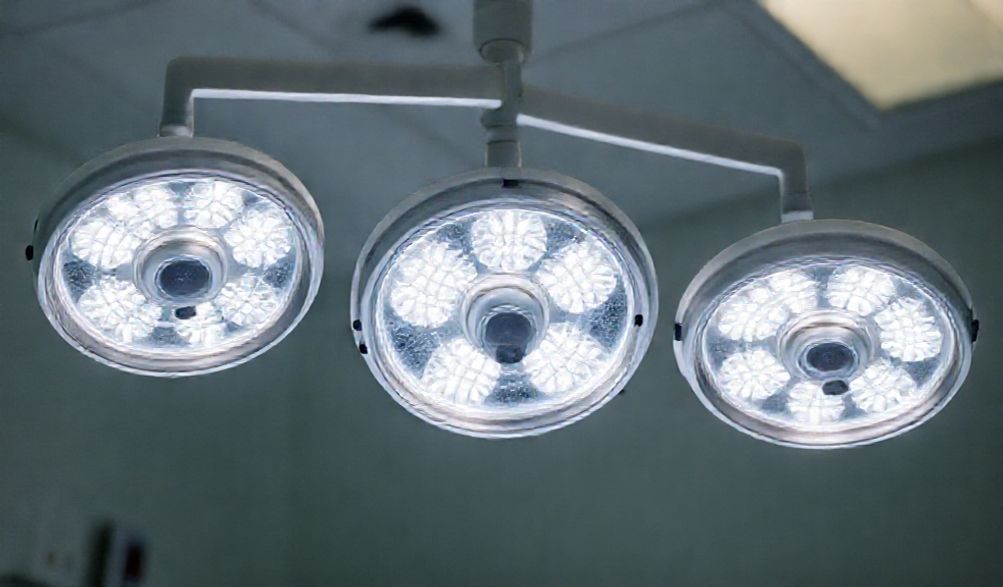
Your Complete Guide to Buying Surgical Lights for Sale: Features, Types, and Key Considerations
In the high-stakes environment of an operating room, few factors are as fundamentally critical—and yet as potentially overlooked during procurement—as illumination. The quality of light falling on the surgical field directly influences a surgeon’s ability to discern subtle tissue variations, identify critical structures, and perform with precision. It impacts the speed of procedures, reduces team fatigue, and is a cornerstone of patient safety. Choosing the right surgical lighting system is not merely an equipment purchase; it is a strategic investment in clinical outcomes, operational efficiency, and the long-term capability of your surgical suite.
This guide is designed to cut through the marketing jargon and provide a clear, detaiLED framework for evaluating surgical lights for sale. Compiled from industry specifications, procurement best practices, and an understanding of clinical needs, our aim is to empower hospital administrators, OR managers, and procurement specialists with objective knowledge. Your goals—securing value, ensuring compliance, and guaranteeing peak performance—are at the forefront. We will delve into the core technologies, compare the main types of lights, break down critical specifications, and navigate the often-overlooked aspects of the procurement process to help you make a supremely informed decision.
Understanding Surgical Lighting Technology: Core Principles
Before comparing models and prices, it’s essential to understand what makes a surgical light exceptional. Modern lights are engineered to solve specific challenges inherent to surgery: eliminating shadows, providing true color, and delivering consistent, cool illumination.
The Importance of Shadow Reduction and Homogeneity
The enemy of surgical precision is shadow. A surgeon leaning over the field must not cast a shadow that obscures the site. This is achieved through sophisticated optical design.
- Multi-Point Source vs. Single-Point Source: Modern surgical lights use a multi-point source design, where dozens to hundreds of individual LED elements are arranged in a ring or pattern. When aligned, these multiple points of light converge on the surgical field from slightly different angles. If an object (like a surgeon’s head or hand) obstructs some beams, the others fill in, dramatically reducing perceptible shadows. Older single-bulb designs cannot achieve this.
- Depth of Field and Light Field Diameter: Depth of field refers to the vertical distance over which the light remains in focus and intense. A large depth of field (e.g., 15-30 cm) is crucial, as it maintains optimal illumination even as instruments and hands move in and out of the plane of focus. The light field diameter is the adjustable size of the illuminated area. The ability to widen the field for larger incisions or focus it to a small, intense spot for deep-cavity work is a key performance feature.
Color Temperature and Color Rendering Index (CRI)
Accurate color perception is non-negotiable for differentiating between arterial blood, venous blood, fatty tissue, and organ parenchyma.
- Température de Couleur : Measured in Kelvin (K), this describes the “warmth” or “coolness” of white light. Surgical lights typically operate in the 4000K to 4500K range, producing a neutral, daylight-like white that minimizes eye strain and provides a natural view of tissues.
- Indice de Rendu des Couleurs (IRC) : This is arguably more important than color temperature. CRI measures a light source’s ability to reveal the true colors of objects compared to natural light. A IRC de 90 ou plus is the standard for surgical applications. A high CRI ensures that the subtle differences between tissue types, which can be critical for diagnosis and dissection, are visible and accurate.
LED Technology: The Modern Standard
Halogen and fluorescent surgical lights are obsolete. Light Emitting Diode (LED) technology is the universal standard, and for compelling reasons:
- Cool Light: LEDs produce minimal infrared radiation, meaning almost all their energy is converted to visible light with very little heat. This protects delicate tissues from thermal damage and keeps the surgical team more comfortable.
- Long Lifespan & Reliability: LED modules often boast lifespans of 50 000 à 100 000 heures, translating to over a decade of typical OR use. This drastically reduces the frequency and cost of bulb replacements.
- Efficacité énergétique : LEDs consume significantly less power than older technologies, leading to substantial savings on electricity and reducing the facility’s environmental footprint.
- Heat Management: Despite their efficiency, the concentrated electronics do generate some heat. High-quality lights incorporate advanced passive or active cooling systems (like heat sinks or quiet fans) to manage this, ensuring long-term diode stability and performance.
Key Types of Surgical Lights for Sale
Surgical lighting needs vary by specialty and procedure. Understanding the primary categories will help you match the equipment to your clinical requirements.
Ceiling-Mounted Surgical Lights
The workhorse of the main operating room, these systems offer powerful, hands-free illumination.
- Overview: Permanently mounted to the OR ceiling, they provide sterile, adjustable light from above.
- Sub-types:
- Single-Arm: A single, articulated arm. Cost-effective and space-saving, but with a more limited range of motion.
- Double-Arm: The most common configuration. Features two parallel arms (symmetrical) or a primary and secondary arm (asymmetrical), offering exceptional positioning flexibility and reach.
- Multi-Arm Clusters: Two or more light heads mounted on a central column. Ideal for complex procedures (like trauma or cardiac) requiring illumination from multiple angles, or for large ORs where lights need to service multiple tables.
- Ideal For: Major operating rooms for general surgery, orthopedics, neurosurgery, and cardiovascular procedures.
Surgical Headlights and Loupe Lights
When overhead light isn’t enough, surgeons turn to personal illumination systems.
- Overview: These are lightweight, portable systems worn on the head, often integrated with surgical loupes (magnification glasses).
- Appliquons maintenant ces caractéristiques à des scénarios réels. La "meilleure" loupe lumineuse est celle parfaitement adaptée à votre tâche principale. Look for adjustable brightness levels, a homogeneous light pattern, and long battery life with quick-charge capabilities. Compatibility with specific loupe frames is essential.
- Ideal For: Providing shadow-free, coaxial light (light aligned with the surgeon’s line of sight) in dental, ENT, plastic, reconstructive, and vascular surgery. They are also invaluable as a supplemental light source in any specialty when working in deep cavities.
Specialized and Hybrid Lighting Systems
Certain procedures demand tailored lighting solutions.
- Overview: This category includes lights engineered for specific clinical tasks or environments.
- Examples:
- Endoscopy Light Sources: High-intensity generators that power light cables for scopes, requiring specific color temperatures and intense output.
- Examination Lights: For minor procedure rooms, emergency departments, or ICU bays. They are less powerful than major OR lights but offer excellent maneuverability and color quality.
- Dual-Mode Lights: A hybrid light that can switch between a focused, high-intensity “procedure” mode and a wider, softer “examination” mode, offering versatility for multi-purpose rooms.
Critical Features and Specifications to Compare
With the basics understood, you can now dissect product spec sheets. Focus on these concrete metrics and features.
Performance Metrics You Can’t Ignore
These numbers define the light’s core capability.
- Lux/Lumen Output: Illuminance (lux) measures light intensity on a surface. Look for specifications like “Over 160,000 lux at 1 meter.” This indicates exceptional brightness that can be dimmed as needed. Ensure the measurement is provided at a standard distance.
- Depth of Field: As defined earlier, a larger number (e.g., 25 cm) is better, indicating the light stays in focus over a greater working distance.
- Light Field Diameter: The adjustable range of the light spot, typically from a focused 10-12 cm to a wide 25-30 cm or more. Verify the intensity remains homogeneous across the entire adjustable range.
Ergonomic and Usability Features
A light that performs brilliantly in specs but is frustrating to use will be rejected by staff.
- Sterilization & Controls: Handles and control panels must be designed for easy and thorough cleaning. Touchless control (via sterile handles, voice activation, or foot pedals) is a premium feature that enhances aseptic technique.
- Maniabilité : The light should move smoothly and effortlessly, staying precisely where positioned. Assess the braking system—it should hold the light head securely in place without drift. The “reach” of the arms determines how far from the ceiling mount the light can travel.
- Integration Capabilities: For modern hybrid ORs, the ability to integrate a 4K or HD camera directly into the light head is crucial. Check for standard video outputs (HDMI, SDI) and compatibility with your existing recording or streaming infrastructure.
Safety and Maintenance Specifications
Reliability is paramount in life-critical equipment.
- Backup Systems: Redundancy is key. Look for lights with multiple, independent LED banks. If one bank fails, others automatically illuminate to maintain a safe light level. Battery backup for power failure is also a critical feature.
- Serviceability: A modular design allows for quick replacement of handles, control panels, or individual LED modules without replacing the entire head. This reduces downtime and long-term costs.
- FMEA Ratings: Some manufacturers provide a Failure Mode and Effects Analysis rating. A high FMEA score indicates the product has been rigorously designed for maximum reliability and minimal risk of failure.
The Procurement Process: Beyond the Price Tag
The lowest purchase price can be the most expensive choice in the long run. A strategic procurement process looks at the bigger picture.
Navigating Regulatory Compliance and Standards
Compliance is not optional. It is the baseline for patient and staff safety.
- Essential Certifications: In the USA, surgical lights must have d'une autorisation FDA 510(k). In the European Union and many other markets, the Marquage CE is required. The manufacturer should ideally be certified to l'ISO 13485., the international standard for quality management systems in medical devices.
- Safety & Performance Standards: The equipment must comply with norme IEC 60601-1, the general standard for the safety of medical electrical equipment, and its particular standards (like IEC 60601-2-41 for surgical lights). These standards cover electrical safety, mechanical safety, and radiation hazards.
Évaluation du Coût Total de Possession (CTP)
Smart buyers analyze costs over the asset’s entire lifecycle.
- Initial Purchase: The invoice price.
- Installation : Costs for ceiling reinforcement, electrical work, and assembly.
- Operating Costs: Energy consumption (LEDs will save here).
- Maintenance Costs: Costs of scheduled preventive maintenance contracts, replacement parts (filters, handles), and the labor for repairs. What is the expected cost and frequency of LED module replacement?
- Garantie : A comprehensive, long warranty reduces future TCO. Compare what is included (parts, labor, travel for service techs).
Vendor Selection and Post-Sale Support
The manufacturer or distributor is your partner for the next decade.
- Clinical Evaluation: Always insist on a trial period. Install the light in a live or simulated OR environment. Have surgeons and nurses use it. Their feedback on glare, color, handling, and heat is invaluable.
- Key Support Questions:
- Quel est le temps de réponse et la zone de couverture de votre réseau de service ?
- Quelle formation proposez-vous à notre personnel clinique et biomédical ?
- Quelle est la portée exacte et la durée de la garantie ? Est-elle totale ou proratisée ?
- Quelle est la période garantie de disponibilité des pièces après l'arrêt du modèle ?
Foire Aux Questions (FAQ) sur l'Achat de Lampes Chirurgicales
Q1 : Quelle est la durée de vie typique d'une lampe chirurgicale LED moderne, et en quoi consiste la maintenance ?
R : Les lampes chirurgicales LED de haute qualité sont conçues pour une durée de vie de 50 000 à 100 000 heures. Dans des conditions normales de bloc opératoire, cela peut correspondre à 10-20 ans avant une baisse significative du flux lumineux. La maintenance courante consiste principalement en un nettoyage quotidien des poignées et des surfaces selon les directives du fabricant en matière de contrôle des infections. Une maintenance périodique professionnelle (souvent annuelle) par un technicien biomédical doit inclure la vérification du mouvement fluide et de l'équilibre des bras mécaniques, le contrôle de la sécurité électrique, et le nettoyage des filtres internes ou des systèmes de refroidissement.
Q2 : Puis-je intégrer de nouvelles lampes chirurgicales à l'infrastructure existante de ma salle d'opération ou à mes systèmes vidéo ?
R : De nombreuses lampes modernes sont conçues pour l'intégration, avec des ports caméra intégrés et des sorties vidéo standard (comme 3G-SDI ou HDMI). Cependant, la compatibilité n'est pas universelle. Il est crucial d'impliquer vos équipes IT/AV et d'ingénierie biomédicale dès le processus de sélection. Fournissez-leur les spécifications techniques du vendeur de lampes pour garantir une intégration transparente avec vos enregistreurs vidéo, moniteurs et réseau existants.
Q3 : Quelle est l'importance de la garantie, et que devrait couvrir une garantie complète ?
R : La garantie est un indicateur essentiel de la confiance du fabricant en son produit. Une garantie solide est souvent 3 à 5 ans pour le système complet. Une garantie complète devrait couvrir les pièces, la main-d'œuvre et les modules LED intégralement, sans proratisation pendant sa durée. Portez une attention particulière à ce qui est exclu (par ex., les dommages dus à une mauvaise utilisation, les pièces esthétiques) et à la procédure pour faire appel au service.
Q4 : Les lampes chirurgicales reconditionnées ou d'occasion sont-elles une option viable ?
R : Les lampes reconditionnées peuvent offrir des économies significatives pour des environnements de soins moins aigus, des laboratoires de formation ou des salles de petites interventions. Cependant, elles présentent des risques inhérents. Si vous envisagez cette voie, assurez-vous que l'appareil est :
1. 1. Entièrement re-certifié par une entreprise réputée pour répondre à toutes les normes actuelles de sécurité et de performance IEC 60601.
2. Équipé de nouveaux modules LED et de pièces d'usure critiques.
3. Vendu avec un historique de service clair et une garantie robuste du revendeur (d'au moins 1 à 2 ans).
Pour les lampes principales des sles d'opération critiques, où la fiabilité et la technologie la plus récente sont primordiales, l'achat de neuf auprès d'un vendeur autorisé est presque toujours la voie recommandée.
Conclusion
Choisir le bon système d'éclairage chirurgical est une décision multidimensionnelle qui résonne à travers chaque intervention réalisée sous celui-ci. Il s'agit d'équilibrer la science de pointe d'un éclairage sans ombre et fidèle aux couleurs avec les réalités pratiques de l'ergonomie, de l'infrastructure de l'établissement et de la planification budgétaire à long terme. Le choix optimal n'est pas simplement la lampe la plus lumineuse ou la moins chère, mais celle qui offre une performance inébranlable, améliore le flux de travail de l'équipe chirurgicale et est soutenue par un service fiable et réactif.
Au fur et à mesure de votre avancement, rappelez-vous que les évaluateurs les plus précieux sont les utilisateurs finaux. Consultez étroitement vos chirurgiens, infirmier(ère)s de bloc opératoire et votre département d'ingénierie biomédicale. Créez une liste de contrôle de spécifications détaillée basée sur les caractéristiques décrites dans ce guide. Invitez les vendeurs présélectionnés à des démonstrations approfondies et insistez pour des évaluations cliniques. En privilégiant la valeur totale et le partenariat clinique plutôt que le prix initial, vous ferez un investissement qui éclairera la voie vers de meilleurs résultats pour les années à venir.
p>