
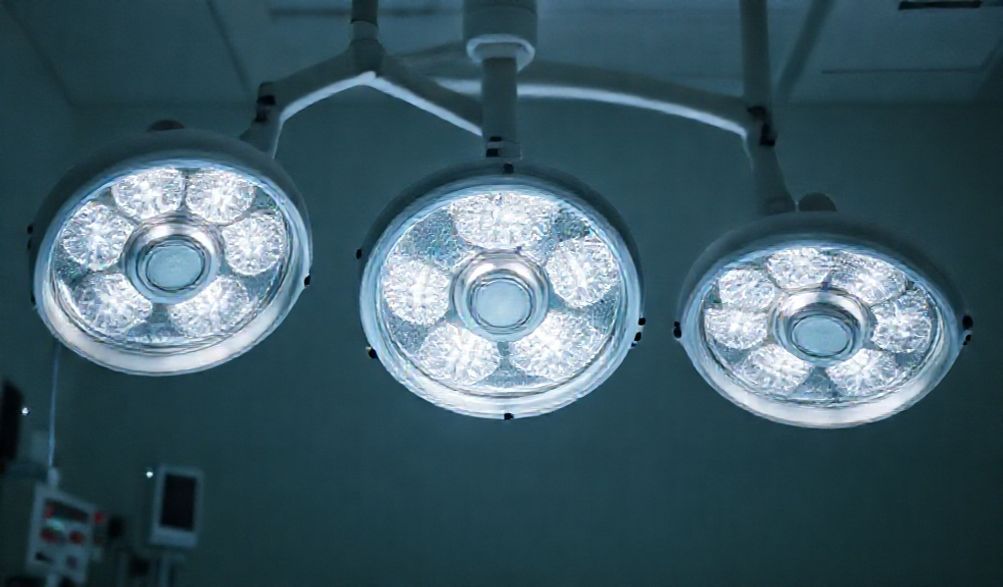
Illuminating Precision: The Ultimate Guide to Shadow-Free Surgical Lights
Introduction
Imagine a cardiac surgeon delicately suturing a microscopic coronary artery. A neurosurgeon navigating the intricate folds of the brain to resect a tumor. An orthopedic surgeon ensuring the perfect alignment of a joint prosthesis. In each of these high-stakes moments, a single, unseen variable can mean the difference between success and complication: the presence of a shadow. Studies suggest that inadequate lighting is a contributing factor in a significant percentage of preventable surgical errors. In the modern operating room (OR), where precision is measured in millimeters, lighting is not merely about visibility—it is the foundational tool that defines the surgical landscape.
Eliminating shadows transcends convenience; it is a critical imperative for surgical accuracy, patient safety, and the long-term well-being of the surgical team. Shadows obscure anatomical landmarks, distort depth perception, and force surgeons to compensate through awkward postures or prolonged mental strain, increasing the risk of error and fatigue.
This definitive guide is crafted to illuminate the path beyond basic illumination. Built on an analysis of technical specifications, clinical insights, and industry expertise, it is designed for surgeons, OR managers, clinical engineers, and procurement teams tasked with a crucial decision: selecting a lampe chirurgicale with no shadow. We will demystify the engineering behind true shadow-free performance, detail the tangible clinical and ergonomic benefits, provide a structured framework for evaluation, and explore the leading solutions that are redefining the standard of care in operating theaters worldwide.
Why “No Shadow” Technology is a Non-Negualble in Modern Surgery
The pursuit of a shadow-free field is not an aesthetic upgrade; it is a direct investment in clinical outcomes and operational excellence. Moving from traditional lighting to advanced shadow-reduction systems addresses core challenges at the heart of surgery.
The Clinical Impact of Surgical Shadows
Shadows in the surgical field are more than mere absences of light; they are active impediments to performance. When a surgeon’s hand or an instrument casts a shadow, it can:
- Obscure Critical Anatomy: Vital structures, subtle tissue color variations, and small bleeding vessels can be hidden, forcing the surgeon to reposition or work from memory and tactile feel alone.
- Increase Error Risk and Procedure Time: Uncertainty leads to hesitation. A surgeon may need to pause to adjust the light or their position, disrupting workflow. In complex procedures, this can add significant minutes, extending anesthesia time and increasing the potential for complications.
- Compromise Surgical Accuracy: Depth perception is crucial for tasks like suturing, dissecting along planes, and placing implants. Shadows flatten the visual field, making it difficult to judge distances accurately.
The evidence is clear. Leading surgical societies and ergonomic studies consistently highlight optimal lighting as a key factor in reducing operative stress and enhancing precision. As one veteran neurosurgeon noted, “The difference between a good light and a great light isn’t just brightness; it’s the confidence that what I need to see will be illuminated, from every angle, without my having to fight for it.”
Beyond Visibility: Enhancing Surgical Team Performance
The benefits of shadow-free surgical lights extend far beyond the primary surgeon’s view, impacting the entire OR ecosystem:
- Reduction in Eye Strain and Mental Fatigue: Constantly adjusting to areas of high contrast between light and shadow forces the eye muscles and brain to work harder. Consistent, homogeneous illumination reduces this cognitive load, allowing the team to maintain focus and visual comfort throughout lengthy procedures.
- Improved Ergonomics and Workflow: Surgeons are no longer compelled to contort their bodies or hold instruments at suboptimal angles to avoid casting shadows. This promotes neutral postures, reducing the risk of musculoskeletal injuries common among surgeons. Furthermore, consistent lighting allows all team members—assistants, scrub nurses, anesthetists—to have a clear view of the field without constant repositioning, fostering better communication and coordination.
The Engineering Behind Truly Shadow-Free Illumination
Achieving a near-shadowless field is not a matter of simply using brighter bulbs. It is a sophisticated feat of optical engineering designed to mimic the effect of diffuse, omnidirectional light.
Core Technology: LED Arrays and Multi-Point Sources
The cornerstone of modern shadow-free surgical light design is the use of multiple, independent light sources arranged in a specific geometric pattern (an array). Here’s how it works:
- Multiple Light Paths: Instead of a single, central bulb (like a traditional spotlight), a surgical light head contains hundreds, sometimes thousands, of individual LED chips.
- Strategic Placement: These LEDs are arranged on a curved reflector or in concentric rings. Each ring is angled to project light onto the surgical field from a slightly different direction.
- Overlapping Illumination: When an object (like a hand) interrupts one set of light rays, creating a potential shadow, the other rings of LEDs, projecting from different angles, fill that shadow with their light. The result is a phenomenon called “shadow dilution,” where shadows are reduced by over 90%, becoming faint and diffuse rather than dark and obstructive.
This multi-point source system stands in stark contrast to older halogen or single-LED designs, which create sharp, defined shadows that must be manually worked around.
Key Technical Specifications to Understand
When evaluating surgical lights with no shadow, understanding these key metrics is essential:
- Lux & Illuminance: This measures the intensity of light falling on the surgical field. Modern systems often deliver 160,000 lux or more at the center. Crucially, the illuminance should remain high and consistent across the entire defined light field (e.g., a 30cm diameter), not just in a bright central “hotspot.”
- Indice de Rendu des Couleurs (IRC) : A CRI of 90 or higher (out of 100) is considered excellent for surgery. This metric indicates how accurately the light reveals the true colors of tissues. High CRI is vital for distinguishing between arterial blood, venous blood, fatty tissue, and organ parenchyma, which can be life-saving in procedures like cancer resection or vascular surgery.
- Depth of Illumination: This refers to the light’s ability to provide consistent, deep-cavity illumination without hotspots at the rim and darkness at the base. Advanced optical systems focus light to penetrate deep into wounds (e.g., during spinal or pelvic surgery) while maintaining color quality and shadow control.
How to Choose the Right Shadow-Free Surgical Light System
Selecting the ideal system requires a balance of clinical need, technical performance, and practical OR logistics.
Assessing Your Surgical Specialty’s Needs
Different specialties have unique lighting priorities:
* General & Abdominal Surgery: Require a large, homogeneous light field for open cavities.
* Neurosurgery & ENT: Need exceptional depth of illumination and the ability to maintain shadow control in deep, narrow openings. Cooler color temperatures may be preferred for contrast.
* Orthopedic & Trauma: Demand high intensity to see into deep wounds and assess bone structure, often during procedures with many large, shadow-casting instruments.
* Cardiac & Plastic Surgery: Prioritize exceptional color rendering (very high CRI) to discern subtle tissue viability and vascular details.
Critical Evaluation Criteria for Procurement
Move beyond marketing claims and focus on verifiable performance:
- Performance Metrics:
- Light Field Diameter & Homogeneity: Does it provide a wide, even pool of light? Ask for homogeneity graphs (e.g., “≥ 20% of center lux at the edge of a 30cm field”).
- Shadow Dilution: Reputable manufacturers provide a percentage (e.g., “>95% shadow reduction”). Request a live demonstration where you can test it with your own hands and instruments.
- Mobility & Ergonomics:
- Boom Reach & Articulation: Can the light easily cover all potential table positions? Are the arms counterbalanced for smooth, effortless positioning with a single touch?
- Ease of Sterilization: The light head should have a seamless, crevice-free design compatible with standard OR disinfectants.
- Safety & Compliance:
- Heat Management: LED systems are inherently cool, but verify low infrared emission to prevent tissue desiccation.
- Backup Systems: Look for redundant LED drivers and backup battery systems that activate instantly if main power fails.
- Certifications : Ensure the system meets international standards like ISO 9680 and has necessary regional approvals (e.g., FDA, CE).
Considérations sur le Coût Total de Possession (CTP)
The sticker price is only the beginning. A surgical light with no shadow is a long-term investment:
* Durée de vie des LED : High-quality surgical LEDs are rated for 50,000 to 100,000 hours, effectively eliminating bulb replacement costs for over a decade.
* Efficacité énergétique : LEDs consume up to 80% less power than old halogen systems, leading to substantial savings on electricity.
* Maintenance Costs: Inquire about warranty length, service contract options, and the reliability of mechanical components (arms, joints, handles), which are often the first points of wear.
Comparing Top Surgical Light Architectures
The physical design of the light system determines its flexibility and suitability for your OR.
Single vs. Dual vs. Multi-Arm Systems
- Single-Arm Lights: Offer simplicity and a smaller footprint. Ideal for smaller ORs or where the light is dedicated to a specific, consistent position.
- Dual-Arm Lights: The current gold standard for major ORs. Two independent light heads provide redundancy (if one fails, the other provides basic illumination) and allow for “compound lighting”—angling two heads from different sides to virtually eliminate all remaining shadows.
- Multi-Arm/Ceiling Track Systems: Offer maximum flexibility, allowing multiple light heads to be positioned anywhere along a ceiling track. Perfect for hybrid ORs or rooms where procedure types vary widely.
Integrated vs. Modular Systems
- Integrated Systems: Feature built-in 4K cameras, document cameras, or displays. Streamlines the OR environment and allows for seamless recording and telemedicine. Best for new construction or major renovations.
- Modular Systems: Keep the light standalone, allowing cameras and displays to be added as needed. Offers greater flexibility for future upgrades and is often easier to retrofit into existing spaces.
Maintenance and Best Practices for Optimal Performance
To protect your investment and ensure consistent, safe performance, proper care is non-negotiable.
Routine Cleaning and Sterilization Protocols
- Follow the manufacturer’s instructions precisely. Typically, this involves daily and post-procedure wiping with a soft cloth dampened with a mild, non-abrasive disinfectant (e.g., diluted bleach solution or hospital-grade quaternary ammonium compound).
- Ne jamais spray disinfectant directly onto the light head. Spray the cloth first to prevent fluid from seeping into vents or electrical components.
- Avoid solvents, abrasive pads, or high-pressure sprays that can damage anti-reflective coatings and seals.
Calibration and Periodic Performance Checks
- Schedule annual performance validations with a qualified biomedical engineer or the manufacturer’s service team.
- Checks should verify center and edge illuminance (lux), color temperature consistency, and the functionality of all controls, brakes, and backup systems.
- Keep a log of all maintenance and performance checks for compliance and lifecycle management.
Frequently Asked Questions (FAQ) About Shadow-Free Surgical Lights
Q1: What does “shadow-free” actually mean? Is it 100% elimination?
A: In technical terms, “shadow-free” refers to a high degree of dilution des ombres, typically over 90-95%. It does not mean the complete physical elimination of all shadows, which is impossible. Instead, through multi-point source engineering, shadows are rendered so faint, diffuse, and non-obstructive that they do not interfere with surgical tasks. The standard is clinical utility, not absolute perfection.
Q2: Are all LED surgical lights automatically “shadow-free”?
A: No. While LED technology is essential for its brightness, efficiency, and color quality, shadow control is a function of optical design. A light with a single cluster of LEDs or poor reflector design can still cast significant shadows. True shadow-free performance requires the specific multi-ring, overlapping-beam architecture described in this guide.
Q3: How important is color temperature adjustment in a surgical light?
A: Very important. Adjustable color temperature (e.g., from a warm 3000K to a cool 5000K) allows surgeons to tailor the light to the procedure. Cooler light (higher Kelvin) increases contrast and is often preferred for discerning subtle details in deep cavities or against bloody fields. Warmer light can reduce glare and be less fatiguing over long periods. The ability to adjust is a mark of a advanced system.
Q4 : Quelle est la durée de vie typique d'un projecteur chirurgical LED moderne, et quels sont les premiers éléments à défaillir ?
R : Les modules LED eux-mêmes sont généralement conçus pour durer de 50 000 à 100 000 heures. Avec une utilisation de 8 heures par jour, cela représente plus de 17 ans de fonctionnement. Les composants les plus susceptibles de nécessiter une maintenance en premier sont les pièces mécaniques: les ressorts à gaz des bras, les articulations, les poignées et les interrupteurs de commande, qui subissent une usure physique. Les unités d'alimentation électrique sont les suivantes en termes de fréquence d'intervention.
Q5 : Pouvons-nous moderniser nos salles d'opération existantes avec de nouveaux systèmes sans ombre ?
R : Dans la plupart des cas, oui, mais cela nécessite une planification minutieuse. Les considérations clés incluent :
* Infrastructure du plafond : S'assurer que la fixation au plafond peut supporter le poids et l'envergure du nouveau projecteur.
* Alimentation électrique et données : Vérifier l'alimentation électrique et la nécessité éventuelle de lignes de données pour les systèmes intégrés.
* Compatibilité du rail porte-projecteur : Si vous remplacez un projecteur sur rail, vérifier la compatibilité des interfaces.
Il est fortement recommandé de consulter un planificateur d'installations cliniques ou l'équipe d'installation du fabricant avant l'achat.
Conclusion
Le processus de sélection du bon projecteur surgical light with no shadow est une étape cruciale, dont les implications se répercutent sur chaque intervention réalisée sous son faisceau. Comme nous l'avons exploré, cette technologie représente bien plus qu'un éclairage avancé ; c'est un pilier fondamental de la sécurité chirurgicale moderne, permettant une précision inégalée, garantissant les résultats des patients et protégeant la santé et l'efficacité de l'équipe chirurgicale.
Le choix ne doit pas être guidé par les seules spécifications, mais par des performances cliniques vérifiées, une fiabilité à long terme et une compréhension claire des exigences propres à votre spécialité. Allez au-delà de la brochure et exigez des données, des démonstrations et des avis de pairs.
Appel à l'action : Avant de réaliser cet investissement déterminant, nous vous encourageons à passer à l'étape suivante. Demandez une démonstration en direct en salle d'opération aux fournisseurs présélectionnés. Faites tester les projecteurs par vos chirurgiens principaux et votre équipe d'ingénierie clinique avec leurs propres instruments dans un environnement simulé. Examinez attentivement les contrats de maintenance et les modèles de coût total de possession. Dans l'environnement à haut risque de la salle d'opération, la qualité de votre éclairage définit la qualité de votre vision, et finalement, la qualité de vos soins. Choisissez judicieusement.
p>