
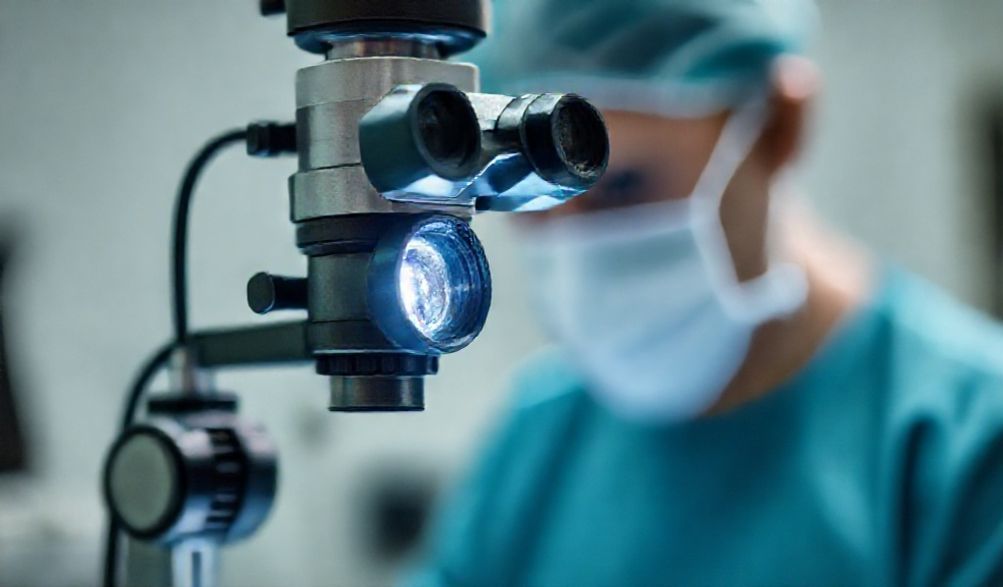
Surgical Loupes with Light: A Surgeon’s Guide to Enhanced Precision & Illumination
Imagine this: you’re deep in a critical procedure, navigating a complex anatomical landscape. The overhead lights are bright, yet a crucial detail remains hidden in a shadow cast by your own instrument or the angle of your head. You lean in, straining your neck and eyes, trying to discern a subtle tissue plane or a minute vessel. This scenario, a daily reality for many surgeons and dentists, highlights a fundamental limitation of traditional setups. In precision-driven medicine, optimal visualization is not a luxury—it is the bedrock of accuracy, efficiency, and patient safety.
Enter surgical loupes with integrated light, a transformative evolution of the classic fonction de grossissement tool. This technology is more than just loupes with a flashlight attached; it is a sophisticated fusion of optics and illumination engineered to work in harmony. By delivering bright, shadow-free light directly into your magnified field of view, these systems address the core visual challenges that can lead to eye strain, procedural inefficiency, and compromised ergonomics.
This guide synthesizes insights from optical engineering, clinical studies, and professional best practices to serve as your comprehensive resource. We will explore how lighted surgical loupes work, their undeniable benefits, the critical features to consider, and how to seamlessly integrate them into your practice. Whether you’re a seasoned practitioner or a resident selecting your first pair, understanding this technology is an investment in elevating your craft and safeguarding your most important tool: your vision.
What Are Surgical Loupes with Light?
At its core, a surgical loupe with light is a precision optical device that combines magnification with a dedicated, focused light source. It is designed to overcome the two main obstacles to perfect visualization: insufficient detail and inadequate, poorly directed light.
Defining the Technology
The device consists of two primary systems:
1. The Magnification System: This utilizes either Galilean (lower power, lighter, less expensive) or Prismatic (Keplerian) optics (higher power, wider field of view, generally heavier). These lenses enlarge the surgical site, bringing minute structures into clear focus.
2. The Illumination System: Integrated directly onto the loupe frame or the lens barrel is a high-intensity, cool-running LED (Light Emitting Diode) light source. This light is engineered to project a beam that is coaxial or near-coaxial with the user’s line of sight.
Unlike overhead OR lights which cast shadows and require constant repositioning, this integrated light moves with your gaze, illuminating exactly what you are looking at.
Core Components & How They Work Together
The synergy between the components is what creates the transformative experience:
- Optics: Le magnification power (e.g., 2.5x, 3.5x, 5.0x) determines how much larger the object appears. The field of view is the diameter of the area you can see at a set distance. The profondeur de champ is the range within which objects remain in sharp focus without needing to refocus. Higher magnification typically narrows both field and depth of view.
- Illumination: Le LED provides bright, white light with a long lifespan. Key specifications include:
- Lumens: A measure of total visible light output (brightness).
- Motif du faisceau : Ranges from a focused spot for deep cavities to a wider flood for larger surface areas.
- Température de Couleur : Measured in Kelvins (K), it affects how “warm” or “cool” the light appears. A neutral white (4500-5500K) is often preferred for true tissue color rendition.
- IRC (Indice de Rendu des Couleurs) : A critical but often overlooked metric. A high CRI (90+) ensures that tissue colors—differentiating between artery, vein, nerve, and healthy vs. inflamed tissue—are rendered accurately and naturally.
Primary Users and Specialties
While beneficial to many, lighted loupes are particularly transformative for specialists who work in confined spaces or on highly detailed structures:
- Dental Professionals: Oral Surgeons, Periodontists, and Endodontists benefit immensely during extractions, implant placements, root planing, and root canal therapy, where blood and saliva can obscure vision.
- Medical Surgeons: Plastic & Reconstructive Surgeons, Neurosurgeons, Otolaryngologists (ENT), and Vascular Surgeons rely on them for microsuturing, nerve repair, and delicate dissection where shadow-free, magnified vision is paramount.
- Veterinarians: Especially those in small animal surgery or exotic animal practice, where precision is required on a small scale.
- Other Specialists: Podiatrists, Ophthalmologists, et un Hand Surgeons also find significant advantages in their detailed procedural work.
Key Benefits of Using Lighted Surgical Loupes
The integration of light with magnification yields a suite of benefits that directly impact both the practitioner and the patient.
Unparalleled Visual Clarity and Shadow Reduction
This is the most immediate and obvious benefit. Traditional overhead lighting creates shadows from the surgeon’s head, hands, and instruments. Lighted loupes provide coaxial illumination—light that travels along the same axis as your line of sight. This effectively eliminates these obstructive shadows, revealing true tissue planes, tiny vasculature, and subtle anatomical details that might otherwise be missed. The surgical site becomes a uniformly lit, high-definition field.
Reduced Eye Strain and Fatigue
Performing surgery under magnification requires intense visual focus. In suboptimal light, your pupils dilate to let in more light, and your ciliary muscles work harder to accommodate (focus). Over hours, this leads to significant la fatigue visuelle, Maux de tête, et même arrêt prématuré d'une procédure. Un éclairage propre et ciblé des loupes lumineuses réduit le besoin d'ajustement pupillaire constant et d'effort d'accommodation. Le résultat est une fatigue oculaire nettement moindre, vous permettant de maintenir des performances visuelles optimales tout au long d'interventions longues et complexes.
Amélioration de la Précision et de l'Exactitude Chirurgicales
Une meilleure visualisation se traduit directement par une amélioration de la technique. Grâce à une vision claire, sans ombre et agrandie, vous pouvez réaliser des incisions plus précises, une dissection plus exacte le long des plans anatomiques et une suture plus nette et plus régulière. Cela peut conduire à une meilleure hémostase, une réduction des traumatismes tissulaires, et potentiellement de meilleurs résultats de cicatrisation et une diminution des taux de complications. Cela permet un niveau de finesse difficile à atteindre avec un éclairage standard.
Amélioration de l'Ergonomie et de la Posture
Une mauvaise visualisation est un facteur majeur d'une mauvaise posture chirurgicale. Les chirurgiens penchent souvent le cou, voûtent le dos ou rapprochent dangereusement leurs yeux du champ opératoire pour “mieux voir”. Les loupes lumineuses, en offrant une vue parfaitement claire à la distance de travail prévue, vous permettent de maintenir une position neutre de la colonne vertébrale et du cou. Cela réduit le risque de troubles musculo-squelettiques chroniques—un problème prévalent en chirurgie—et contribue à votre santé physique à long terme et à la durée de votre carrière.
Caractéristiques Essentielles à Considérer lors du Choix de Loupes avec Lumière
Choisir le bon système est une décision personnelle et professionnelle. Voici les caractéristiques clés à évaluer :
Grossissement & Distance de Travail
- Grossissement : Commencez par la puissance adaptée à votre spécialité. 2,5x à 3,5x est courant pour la dentisterie générale et de nombreuses procédures chirurgicales. 4,5x à 5,5x+ est utilisé pour la microchirurgie et les travaux très détaillés. Une puissance plus élevée réduit le champ et la profondeur de vue.
- Distance de travail : Il s'agit de la distance entre votre œil et le site chirurgical lorsque vous êtes dans une posture confortable et droite. Elle est mesurée lors d'un ajustement professionnel et est essentielle pour maintenir l'ergonomie. Les plages courantes sont de 14-18 pouces pour la dentisterie et de 18-22 pouces pour la chirurgie.
Spécifications de la Source Lumineuse : Qualité LED, Lumens, & Faisceau
- Qualité LED & Lumens : Recherchez des LED de haute qualité réputées pour leur fiabilité. La luminosité (lumens) doit être suffisante pour vos besoins—typiquement 200-500+ lumens est efficace pour la plupart des interventions. Des réglages de luminosité ajustables sont essentiels.
- Motif du Faisceau & IRC : Déterminez si vous avez besoin d'un faisceau ponctuel, large ou réglable. Plus important encore, renseignez-vous sur l' L’Indice de Rendu des Couleurs (IRC). Un IRC de 90 ou plus est recommandé pour une différenciation tissulaire précise.
Système d'Alimentation et Autonomie de la Batterie
- Type de Batterie : Les options incluent des batteries rechargeables intégrées dans la monture (design épuré mais peut être plus lourd sur la tête) ou un bloc-piles à clip de ceinture (déplace le poids vers la taille, permet souvent une plus grande capacité).
- Autonomie de la batterie : Assurez-vous que le système peut durer pendant vos interventions les plus longues avec une seule charge—6-10 heures sur un réglage moyen est une bonne référence. Des fonctionnalités comme des batteries interchangeables rapidement ou une charge en utilisation (utilisation branchée) sont précieuses pour les cas marathon.
Poids, Équilibre et Confort
L'ajout d'une source lumineuse augmente le poids. Une monture légère (par ex., titane) et un design bien équilibré sont non négociables pour un confort toute la journée. Le poids doit être réparti entre le nez, les oreilles, et éventuellement l'arrière de la tête ou la taille (avec un bloc ceinture) pour éviter les points de pression.
Durabilité et Facilité d'Entretien
Les instruments chirurgicaux doivent résister à des environnements rigoureux. Considérez :
* Stérilisation : La tête lumineuse et la monture sont-elles autoclavables, chimio-clavables ou seulement nettoyables par lingette? Cela dicte votre protocole de stérilisation.
* Renseignez-vous sur la durée de vie de la batterie (en cycles) et le coût de remplacement. Recherchez une garantie solide (souvent 2-5 ans) et un fabricant disposant d'un réseau de service fiable pour les réparations et les ajustements.
* Traitements des Verres : Les traitements anti-buée, anti-reflets et anti-rayures protègent votre investissement et maintiennent des performances optimales.
Comment Intégrer des Loupes Lumineuses dans votre Pratique Chirurgicale
Adopter cette technologie avec succès nécessite plus que de simplement la déballer.
Le Processus d'Ajustage est Primordial
Un ajustement approprié par un représentant certifié et expérimenté n'est pas optionnel—il est essentiel. Ce processus garantit :
* La distance interpupillaire (DIP) est correctement réglée pour vos yeux.
* La angle de déclinaison positionne les verres confortablement.
* La typique correspond à votre posture naturelle et ergonomique.
* The light beam is centered in your field of view.
A poor fit will lead to discomfort, headaches, and subpar performance.
Developing a Sterilization and Care Routine
Protect your investment with a consistent care protocol:
* Lentilles : Clean daily with a microfiber cloth and lens-specific solution. Avoid harsh chemicals.
* Frame & Light Head: Follow the manufacturer’s instructions precisely for disinfection (e.g., using approved wipes for the frame, proper sterilization cycles for the light module).
* Stockage : Always store in a hard, protective case when not in use.
Optimizing the Light for Different Procedures
Learn to use the light as a dynamic tool:
* Use lower brightness for initial incisions or highly reflective surfaces to reduce glare.
* Increase to higher brightness for deep cavity work or when differentiating subtle tissue colors.
* Adjust the beam focus (if available) from flood for a wide area to spot for a deep, narrow field.
Dépannage des Problèmes Courants
- Fogging: Ensure anti-fog coatings are present and properly maintained. Allow loupes to acclimate to room temperature before use. Anti-fog sprays or wipes can help.
- Battery Management: Always start the day with a full charge. Have a backup battery charged and ready. Know how to quickly swap batteries if your system allows it.
- Réglages : Minor tweaks to nose pads or temple arms can often be done by the user, but for optical alignment or major issues, contact the manufacturer or your representative.
Foire Aux Questions (FAQ)
Q: Are surgical loupes with light worth the investment compared to standard loupes?
R : For specialists performing intricate, detailed work, the answer is overwhelmingly yes. While the initial cost is higher, the combined benefits of dramatically reduced eye and neck fatigue, enhanced precision, and improved procedural efficiency often lead to a rapid return on investment. Many practitioners find they can work longer, with greater accuracy and less physical toll.
Q: How do I prevent the light from causing glare or reflection off wet surfaces?
R : High-quality systems address this with polarized light filters ou vos specialty anti-reflective lens coatings designed to minimize glare from wet tissue or instruments. Slightly adjusting your angle of view or reducing the brightness setting can also help. Ensuring your lenses are clean is crucial.
Q : Puis-je ajouter une lumière à mes loupes existantes ?
R : Some manufacturers offer clip-on or attachable light systems that can be added to existing frames. While more affordable, these can affect balance and may not provide perfect coaxial alignment. An integrated system, designed as a single unit, typically offers superior performance, weight distribution, and reliability.
Q: What is the typical battery life, and how do I manage it during long surgeries?
R : Modern systems typically offer 6 à 10 heures ou plus of runtime on a medium brightness setting. For exceptionally long procedures, management strategies include: using a belt-pack battery (higher capacity), having a second, fully charged battery ready for a quick swap, or utilizing a system with pass-through charging that allows you to operate while plugged in.
Q: How do lighted loupes compare to a surgical headlight?
R : Both provide hands-free illumination, but they differ fundamentally. A chirurgicale générale provides broad illumination and is often very bright, but it is a separate device from your magnification (loupes). Lighted loupes integrate magnification and light into a single, cohesive line of sight. This integration often provides better shadow reduction (true coaxial light) and is simpler to don/doff. Headlights may be preferred for procedures requiring extremely broad, deep-cavity lighting without magnification.
Conclusion
Surgical loupes with integrated light represent a significant technological leap, moving beyond simple magnification to provide a complete visual solution. By fusing crystal-clear optics with targeted, shadow-free illumination, they address the core challenges of surgical visualization that impact precision, practitioner health, and patient outcomes.
The decision to invest in this technology hinges on the specific visual demands of your practice and a recognition of the tangible benefits: reduced physical strain and enhanced visual clarity. As with any precision instrument, the key to success lies in informed selection and proper implementation.
We advise consulting with experienced colleagues, seeking hands-on demonstrations from reputable manufacturers with strong clinical support, and, above all, prioritizing a comprehensive professional fitting. View this not merely as a purchase, but as an evidence-based investment in the quality of your craft and your own long-term professional well-being.
Appel à l'action : Reflect on the visual challenges you face in your daily procedures. Is shadowing, eye fatigue, or the need for better detail a constant companion? Research brands renowned for quality in your specialty. Take the decisive next step: schedule a consultation and a professional demo to experience the transformative difference of true, integrated illumination firsthand.
p>