
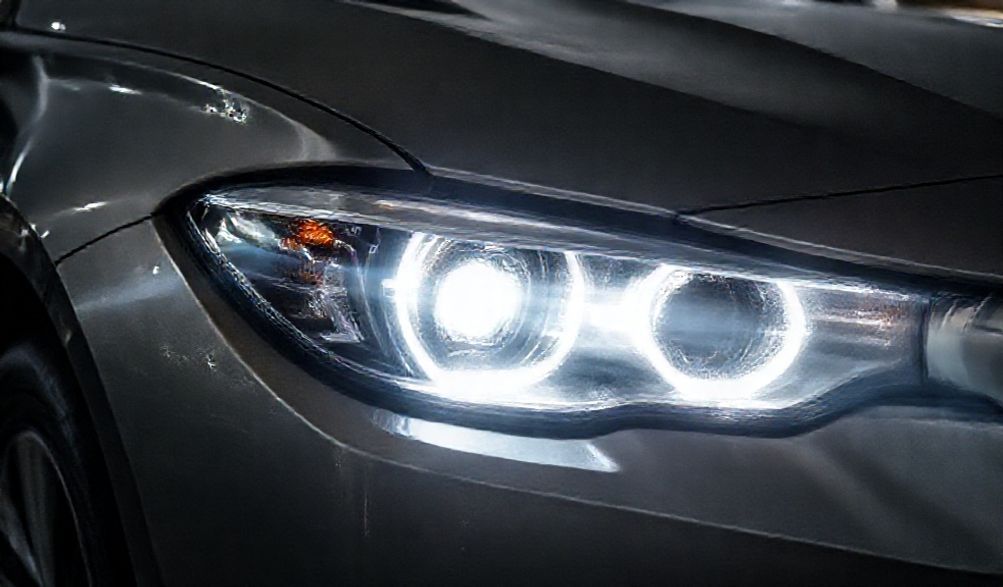
What Are Headlights on a Car? Your Complete Guide to Function, Types, and Safety
Picture this: you’re driving down a winding country road on a moonless night. The world beyond your windshield is a pool of ink. Suddenly, your headlights sweep across a deer frozen in the middle of your lane. You have just enough time to react, your heart pounding. This scenario, played out in countless variations every day, underscores a simple truth: your car’s headlights are among its most vital safety features. They are your eyes when darkness falls, your signal in the fog, and a critical communication tool with every other road user.
But what are headlights on a car, really? Far more than just “the front lights,” they are a sophisticated system engineered for illumination, visibility, and safety. This comprehensive guide will illuminate not only what headlights do but also how they’ve evolved, how the different technologies work, and—most importantly—how to maintain and use them correctly. Drawing on automotive engineering principles, safety standards from organizations like the NHTSA (National Highway Traffic Safety Administration) and IIHS (Insurance Institute for Highway Safety), and expert maintenance advice, we’ll equip you with the knowledge to be a safer, more informed driver.
The Primary Function: What Do Car Headlights Do?
At their core, headlights are the forward-facing illumination devices mounted on your vehicle. Their purpose is threefold, each aspect crucial for safe travel:
- Illumination: This is the most obvious function. Headlights light up the road ahead, revealing potholes, debris, animals, road markings, and street signs. They extend your visual range, giving you precious extra seconds to identify and react to hazards.
- Visibility: Headlights make vous seen. In low-light conditions, rain, or fog, your headlights are the primary means by which oncoming drivers, cyclists, and pedestrians perceive your vehicle’s presence, size, and direction of travel.
- Safety Communication: Headlights are a dynamic communication tool. The switch between low and high beams signals your intent and awareness of others. Properly aimed lights convey consideration, while misused high beams communicate a dangerous disregard for fellow motorists.
A Brief History of Automotive Headlight Technology
The journey from flickering flames to laser beams is a story of relentless innovation in the pursuit of better vision and safety.
From Acetylene to Sealed Beams
The earliest automobiles used acetylene or oil lamps, similar to carriage lights. These provided feeble, inconsistent light. The introduction of electric headlights in the 1910s was a major leap forward. For decades, the sealed-beam headlight (circa 1940s-1980s) was the standard. This was a single, self-contained unit where the bulb, reflector, and lens were sealed together. If one part failed, you replaced the entire, standardized unit.
The Halogen Revolution
The widespread adoption of halogen bulb technology in the 1970s and 80s marked another revolution. Halogen bulbs burned brighter and whiter than their predecessors and were much more efficient. They could be housed separately from the reflector and lens, allowing for more varied and aerodynamic headlight designs. For over 30 years, halogen was the undisputed king of the road.
Modern Advancements: HID, LED, and Laser
The quest for better light led to exotic technologies trickling down from luxury vehicles:
* HID (High-Intensity Discharge)/Xenon: Emerging in the 1990s, HID lights use an electric arc between two electrodes in a xenon-gas-filled chamber. They produce an intense, bright white-to-bluish light with much greater range and efficiency than halogen.
* LED (Light Emitting Diode): Now the dominant technology in new cars, LEDs use semiconductors to emit light. They are incredibly energy-efficient, have a near-instantaneous on/off time, last exceptionally long, and allow for incredibly precise and adaptive lighting patterns (like matrix LED systems that can selectively dim sections to avoid glaring other drivers).
* Laser Light: The current cutting edge, laser lights excite a phosphorous material to create an intensely bright, focused white light. They offer extreme range in a compact package but are currently reserved for high-end luxury and performance models due to cost.
Understanding Headlight Components and How They Work
Regardless of the light source, most headlight systems share common components that work together to shape and direct light.
The Core Components
- Bulb/Light Source: This is the element that generates the light—be it a halogen filament, an HID arc tube, or an LED chip array.
- Reflector: Located behind the bulb, this is a precisely shaped, mirrored surface that captures light radiating in all directions and redirects it forward in a controlled beam pattern.
- Lentille : The clear plastic or glass cover at the front of the headlight assembly. It protects the internal components from weather and debris. In many modern projector-style headlights, the lens is part of a focused optical system that creates a very sharp, defined beam cutoff (that distinct horizontal line of your low beams).
- Housing: The sealed, often plastic body that contains all the above components. It must be robust enough to withstand vibration, temperature extremes, and impacts.
The Two Essential Beam Patterns
Every headlight system is designed to produce two distinct beams:
* Low Beams: These are your default, daily-driving lights. They are angled downward and to the right (in left-hand-drive countries) to illuminate the road approximately 150-200 feet ahead without blinding oncoming traffic. The beam pattern has a sharp horizontal cutoff on the left side to achieve this.
* High Beams: When you “flash” or turn on your high beams, a shutter moves or a second filament/array activates. This provides a much brighter, longer-range beam that is centered and projects farther down the road, essential for dark rural highways. Using them responsibly—dimming them for any oncoming traffic or when following another vehicle—is a fundamental rule of safe driving.
Main Types of Car Headlights Explained
Here’s a breakdown of the headlight technologies you’ll find on the road today.
Halogen Headlights
- How they work: Electricity heats a tungsten filament inside a glass bulb filled with halogen gas, causing it to glow.
- Avantages : Inexpensive to purchase and replace. Simple technology understood by all mechanics.
- Inconvénients : Least efficient (convert most energy to heat), shortest lifespan, produce a yellower light compared to newer tech.
HID (Xenon) Headlights
- How they work: High voltage sparks an arc between two electrodes inside a quartz glass tube filled with xenon gas and metal salts, creating an intense plasma light.
- Avantages : Produce 2-3 times more light than halogen with less power, longer lifespan, distinctive bright white light.
- Inconvénients : Expensive to replace. Require a ballast to generate high voltage. Can take a few seconds to reach full brightness. Poorly retrofitted kits cause severe glare.
LED Headlights
- How they work: Electrical current passes through a semiconductor (diode), causing it to emit photons (light).
- Avantages : Extremely energy-efficient, incredibly long lifespan (often the life of the vehicle), instant on, compact size enabling innovative designs, can be precisely controlled for adaptive features.
- Inconvénients : Higher initial cost. Generate significant heat that requires dedicated heat sinks or cooling fans. Repair usually means replacing the entire LED module or assembly.
Laser Headlights
- How they work: Laser diodes focus blue laser beams onto a yellow phosphor element, which then emits an intense, bright white light that is reflected forward.
- Avantages : Extreme range and brightness in a very small package, highly efficient.
- Inconvénients : Currently prohibitively expensive, limited to high-end vehicles, and typically used only for high-beam assist due to regulations.
Headlight Laws, Safety Ratings, and Proper Use
Using your headlights isn’t just a suggestion—it’s governed by law and critical safety science.
Legal Requirements and Alignment
In the U.S., all vehicle headlights must comply with FMVSS 108, a federal safety standard that specifies brightness, color, and beam pattern. Crucially, headlights must be properly aimed. Misaligned headlights—pointed too high—become dangerous glare machines for oncoming traffic. If pointed too low, they dangerously shorten your seeing distance. Alignment can be knocked out by minor impacts, suspension changes, or even bulb replacement. Most states have laws requiring functional, properly aimed headlights, and driving with a light out is a ticketable offense everywhere.
What is IIHS Headlight Rating?
Since 2016, the IIHS has rated headlight systems as part of its Top Safety Pick awards. They test headlights on a track, evaluating how far the low beams illuminate the road on both straightaways and curves, while also measuring excessive glare produced for oncoming drivers. Many good vehicles have received poor ratings due to inadequate headlights. Checking your vehicle’s IIHS headlight rating is an excellent way to understand its safety performance in the dark.
Etiquette and Safe Operation
- Use low beams in the city, in fog, rain, or snow (high beams reflect back and create a “white wall” effect), and when following within 500 feet of another vehicle.
- Use high beams only on dark, open roads with no oncoming traffic. Dim them at least 500 feet before an oncoming vehicle and when approaching a vehicle from behind.
- Never “overdrive” your headlights. This means driving at a speed where your stopping distance is longer than the distance illuminated by your lights. If you can’t stop within the lighted area, you’re going too fast for the conditions.
- Fog lights are wide, low, and flat-beam lights designed to cut under fog and illuminate the road edges. They are supplements, not replacements, for low beams. Use them only in low-visibility conditions, as they can cause glare in clear weather.
Maintenance, Restoration, and Replacement
Proactive care keeps your headlights performing safely and effectively.
Routine Checks and Bulb Replacement
- Monthly Check: Turn on your headlights and walk around the car. Ensure both low beams, high beams, and parking lights are working. Check for condensation inside the housing.
- Signs of Failure: A single headlight appearing dimmer than the other, flickering, or complete outage. Always replace bulbs in pairs. If one halogen bulb has burned out, the other is likely near the end of its life, and mismatched brightness is a safety issue.
- Consult your owner’s manual for the correct bulb type/size. Using the wrong bulb can affect beam pattern and legality.
Dealing with Foggy or Yellowed Headlights
Modern polycarbonate headlight lenses are susceptible to UV oxidation, which causes a hazy, yellowed film that can reduce light output by up to 80%.
* Cause : Sunlight degrades the protective clear coat, allowing the plastic to oxidize.
* Solution: DIY restoration kits with sandpaper (to remove oxidation) and a new UV-resistant sealant can be effective for mild-to-moderate haze. For severe damage, professional polishing ou vos lens replacement may be necessary.
When to Consult a Professional
Seek a qualified technician for:
* Electrical issues (fuses, wiring, switches).
* Replacing HID ballasts or LED driver modules.
* Any moisture intrusion or major condensation inside the housing.
* Professional realignment after any front-end repair, suspension work, or even a bulb change to ensure your lights are aimed safely and legally.
Foire Aux Questions (FAQ)
Q: How long do car headlights typically last?
A: Lifespan varies dramatically by type: Halogen (450-1,000 hours), HID (2,000-10,000 hours), LED (15,000-30,000+ hours). Your owner’s manual provides the best estimate for your specific vehicle.
Q : Puis-je remplacer mes phares halogènes par des LED ou des HID ?
A: While “plug-and-play” retrofit kits are sold, they are often not street-legal and frequently create dangerous, scattered glare because the LED or HID chip is not in the exact focal point the halogen reflector/lens was designed for. A proper, safe upgrade usually requires replacing the entire headlight assembly with one engineered for that light source. Always check local regulations.
Q: Why are my headlights dim?
A: The most common causes are: 1) Hazy/yellowed lenses (obstruant la lumière), 2) Ampoules vieillissantes (les halogènes perdent de l'intensité avec le temps), 3) Connecteurs corrodés ou câblage défectueux, ou 4) Un alternateur faible ne fournissant pas la tension nominale. Commencez par inspecter et nettoyer les optiques et les contacts des ampoules.
Q : Est-il illégal de conduire avec un phare éteint ?
R : Oui. Conduire avec tout éclairage obligatoire non fonctionnel (phare, feu arrière, feu stop) constitue une infraction au code de la route dans tous les États et territoires des États-Unis, car cela réduit considérablement la visibilité de votre véhicule et représente un danger pour la sécurité.
Q : Combien coûte le remplacement des phares ?
R : Les coûts varient considérablement : remplacement d'ampoules halogènes en DIY (20-60 € la paire), remplacement d'ampoules halogènes par un professionnel (50-150 € main-d'œuvre comprise), remplacement complet d'un ensemble OEM LED ou xénon (250 € à plus de 2 000 € par ensemble, plus la main-d'œuvre).
Conclusion
Les phares sont bien plus que de simples ampoules ; ils constituent un système de sécurité active complexe, ayant évolué des flammes vacillantes aux faisceaux lumineux contrôlés par ordinateur. Comprendre ce que sont réellement les phares d'une voiture — leur fonction, leur technologie et les lois qui les régissent — vous permet de devenir un conducteur plus sûr. En entretenant leur clarté, en les utilisant de manière courtoise et en vous assurant de leur bon fonctionnement, vous contribuez directement à la sécurité de vos passagers, de vous-même et de tous les usagers de la route. Ce soir, prenez un moment pour faire le tour de votre voiture. Allumez vos feux. Vérifiez l'absence de voile, contrôlez le fonctionnement de tous les faisceaux et assurez-vous qu'ils sont correctement réglés. Ce simple geste de vigilance est la première étape pour honorer cette pièce essentielle de la technologie automobile de sécurité.
p>