
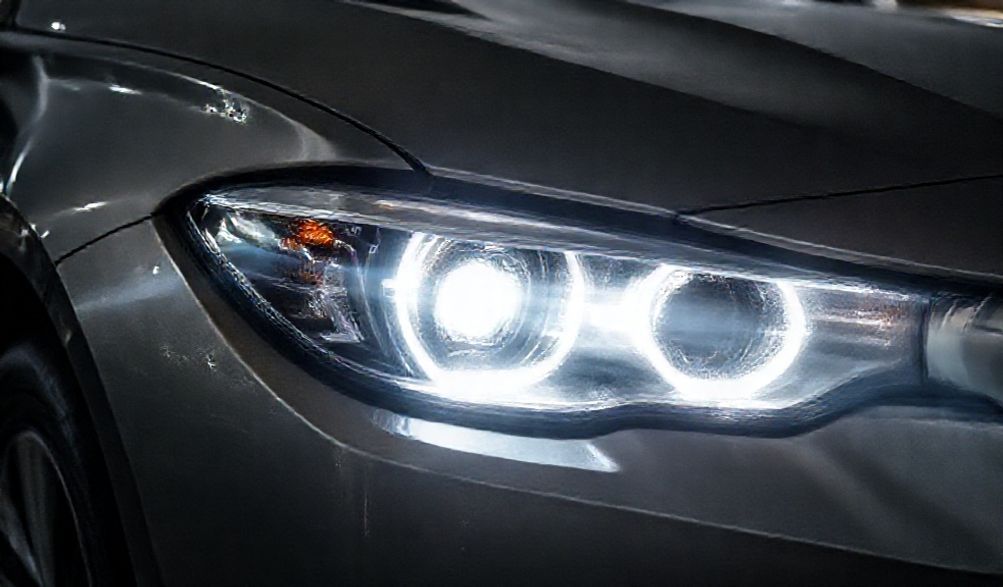
What Are Headlights on a Car? Your Complete Guide to Function, Types, and Safety
Picture this: you’re driving home on a dark, rainy night. The windshield wipers are working overtime, and the world beyond your hood seems to shrink to a small, murky tunnel. In this moment, your most critical connection to the road isn’t the steering wheel or the brakes—it’s the pair of beams cutting through the gloom ahead. Those are your headlights, and they are far more than just simple lights; they are your primary safety lifeline in low-visibility conditions.
So, what are headlights on a car? In simple terms, they are the primary forward-facing lighting devices mounted on a vehicle, engineered to illuminate the road ahead and make the vehicle visible to others. But to think of them merely as “lights” is to underestimate one of your car’s most vital systems. Understanding how they work, the different types available, and how to maintain them is a fundamental part of being a responsible and safe vehicle owner. It’s not just about seeing; it’s about being seen and sharing the road safely.
This complete guide will demystify your car’s headlights. We’ll explore their essential functions, walk through the evolution and technology behind modern types—from standard halogen to cutting-edge laser lights—and provide practical maintenance tips to ensure yours are always performing at their best. Consider this your roadmap to a brighter, safer drive.
The Primary Function: Why Your Car’s Headlights Are Essential
Headlights serve a dual, non-negotiable purpose: to help you see and to help you be seen. This simple duality is the bedrock of nighttime and low-visibility driving safety.
Illuminating the Road Ahead
The most obvious function of headlights is to extend your visual range. They cast light beyond the vehicle’s own reach, transforming a pitch-black road into a navigable path. Effective headlights reveal the critical details: the curve of the road ahead, the reflective paint of lane markings, road signs, and, most importantly, potential hazards like debris, animals, or pedestrians long before you’re upon them. They effectively buy you precious reaction time.
Making Your Vehicle Visible to Others
This function is equally critical. Your headlights announce your presence, size, and direction to every other road user. For oncoming traffic, your headlights signal that a vehicle is approaching, allowing them to gauge distance and position. For drivers ahead of you, your headlights appear in their rearview and side mirrors. For cyclists and pedestrians, your headlights are often the first and only indication of your approach. Without this visibility, you become a ghost on the road, a sudden surprise that can lead to catastrophic accidents.
A Legal Requirement for Safe Driving
Given their life-saving role, it’s no surprise that functional headlights are a legal mandate in every jurisdiction. Laws universally require headlights to be used from sunset to sunrise and during any period of low visibility, such as heavy rain, fog, or snow. Driving with a single malfunctioning headlight, or with lights that are improperly aimed, isn’t just risky—it’s typically a traffic violation that can result in a fine. The law recognizes what we should all internalize: working headlights are a cornerstone of public safety.
A Brief History of Automotive Headlights
The journey to today’s sophisticated headlights is a story of relentless innovation. The earliest cars in the late 1800s used primitive oil or acetylene lamps, which offered a flickering, weak flame that was more symbolic than functional. The first major revolution came with the introduction of electric headlights in the 1910s, followed by the standardized sealed beam headlight in 1939. These were simple, self-contained units—a bulb, reflector, and lens in one sealed package—that dominated for decades.
The modern era began in the 1960s with the introduction of halogen bulbs, which were brighter and more efficient than their predecessors. The real game-changers arrived closer to the turn of the 21st century: HID (Xenon) lights in the 1990s offered a dramatic leap in brightness and color, and LED technology, first used for daytime running lights and brake lights, began its takeover of primary headlight functions in the 2000s. Each step brought more light, better efficiency, and greater design possibilities, setting the stage for the diverse options available on today’s vehicles.
Types of Car Headlights: Technology Explained
When you look at a modern car lot, you’re likely seeing a mix of several different headlight technologies. Understanding the differences is key to knowing what you have, what you might want, and how to care for it.
Halogen Headlights: The Common Standard
For decades, halogen has been the default. Inside a glass bulb, a tungsten filament heats up to produce light, surrounded by halogen gas that redeposits evaporated tungsten back onto the filament, prolonging its life.
* Avantages : They are incredibly inexpensive to produce and replace. The technology is simple and well-understood by every mechanic.
* Inconvénients : They are the least efficient, converting most of their energy into heat rather than light. They have a relatively short lifespan (typically 450-1,000 hours) and produce a yellower, warmer light compared to newer technologies.
HID (Xenon) Headlights: High-Intensity Discharge
HID lights work on a completely different principle. There’s no filament. Instead, an electrical arc is struck inside a quartz capsule filled with xenon gas and metal salts, creating an intensely bright and white/blue plasma light.
* Avantages : They produce 2-3 times more light than halogens with less power, offer a wider beam pattern, and have a much longer lifespan (2,000-8,000 hours). The bright white light is often preferred for its modern look and perceived luxury.
* Inconvénients : They are significantly more expensive. They require a high-voltage ballast to start, which adds complexity. A key drawback is their potential to cause severe glare for oncoming drivers if not properly aimed, and they take a second or two to reach full brightness when first turned on.
LED Headlights: The Modern Leader
Light Emitting Diode (LED) headlights use semiconductors to emit light when an electrical current passes through them. They are now the leading technology in new vehicles.
* Avantages : They are extremely energy-efficient, have an exceptionally long lifespan (often 15,000 to 30,000+ hours—potentially the life of the car), and provide bright, crisp white light instantly. Their small size allows designers incredible flexibility in headlight shape and style. They also generate very little heat in the beam itself (though heat sinks are needed for the electronics).
* Inconvénients : The upfront cost is higher, and replacement usually involves the entire headlight assembly or a specialized LED module, not just a simple bulb. Proper thermal management is crucial for longevity.
Laser Headlights: The Cutting Edge
Currently found only on a handful of ultra-high-end vehicles, laser headlights are the frontier. They use lasers to excite a phosphor material inside the headlight, which then emits an incredibly bright, focused white light.
* Avantages : They offer an unparalleled range—illuminating objects nearly twice as far as LEDs—while using less energy. The beam can be controlled with extreme precision.
* Inconvénients : The cost is prohibitively high for mass adoption. Regulations and the sheer intensity of the light also limit their use, often functioning as an ultra-high-beam assist rather than the primary low-beam source.
Headlight Features and Beam Patterns
It’s not just about the light source; it’s about how that light is shaped and controlled.
Low Beams vs. High Beams: When to Use Each
This is a critical safety distinction every driver must know.
* Low Beams: These are for tous normal nighttime driving when other vehicles are present. The beam is angled downward and to the right (in left-hand drive countries) to illuminate the road without blinding oncoming traffic or glaring in the mirrors of cars ahead.
* High Beams: These provide the maximum forward illumination and should seul be used on dark, unlit roads when there is no oncoming traffic for at least 500 feet and you are not following closely behind another vehicle. The moment you see another car’s lights, switch back to low beams.
What Are Fog Lights? (Auxiliary Lighting)
Fog lights are separate, auxiliary lights mounted low on the bumper. They are designed with a very wide, flat, bar-shaped beam pattern that cuts sous the fog, rain, or snow, illuminating the road surface immediately in front of the car. Their purpose is not to see à travers the fog, but to see the edge of the road without the light reflecting back into the driver’s eyes, which is what happens when you use standard low beams in thick fog.
Adaptive and Matrix Headlights
This is where headlight technology gets “smart.” Phares adaptatifs (or Adaptive Front-lighting Systems – AFS) swivel the beam slightly in the direction you are steering, lighting up corners before you turn into them. LED Matrix ou vos Adaptive Driving Beam systems are more advanced. They consist of dozens of individual LED segments that can be turned on or off independently. A camera detects other vehicles and selectively dims or turns off the specific LEDs that would shine directly on them, allowing you to keep your high beams on continuously without ever dazzling other drivers.
Maintaining Your Headlights for Safety and Performance
Like any critical system, headlights require basic maintenance to function correctly. Neglect doesn’t just look bad—it’s a safety hazard.
How to Check and Align Your Headlights
Misaligned headlights are dangerous. They can blind other drivers or fail to light the road where you need it. A quick check: park your car on level ground facing a flat wall (like a garage door) about 25 feet away. Turn on your low beams. The brightest part of each beam’s “hot spot” should be at or just below the height of the headlight centers and symmetrically positioned. If one is pointing at the sky, into the bushes, or is wildly uneven, a professional alignment is needed.
Cleaning and Restoring Cloudy Headlights
Over time, UV radiation oxidizes the polycarbonate plastic of headlight lenses, creating a hazy, yellowed film that can block up to 80% of the light output. This is the #1 cause of “dim” headlights. DIY restoration kits with sandpaper, polish, and UV sealant can work wonders for mild-to-moderate haze. For severe pitting or internal condensation, professional restoration or lens replacement may be necessary. Clear lenses are crucial for both safety and your car’s appearance.
When to Replace Bulbs and Assemblies
- Signs of Failure: One light out, both lights significantly dimmer than before, or flickering.
- Replace in Pairs: Headlight bulbs degrade over time. If one fails, the other is likely not far behind and may be producing less light. Replacing both ensures balanced, optimal illumination.
- Assembly Replacement: Physical damage from an accident, severe internal moisture, or a desire for a major technology upgrade (e.g., swapping a halogen assembly for an LED unit) requires replacing the entire headlight housing. This is a more complex and costly job.
FAQ : Réponses à vos questions sur les phares
Q: How long do car headlights typically last?
A: It varies dramatically by technology: Halogen (450-1,000 hours), HID/Xenon (2,000-8,000 hours), LED (15,000-30,000+ hours). Driving habits (frequent short trips can shorten bulb life) and environmental factors also play a role.
Q: Can I replace my halogen headlights with LED bulbs?
A: It is possible with aftermarket conversion kits, but caution is required. First, check your local laws, as such conversions are illegal in some areas. Second, a halogen housing is not designed for an LED bulb’s different light pattern, which often results in excessive glare and scatter, blinding other drivers. For a safe and legal upgrade, consider a complete LED headlight assembly designed for your vehicle or seek professional advice.
Q: Why are my headlights dim or yellow?
A: This is almost always caused by cloudy, UV-damaged plastic lenses (see the maintenance section above). It can also be a sign of aging bulbs nearing the end of their life or a weak electrical connection.
Q : Est-il illégal de conduire avec un phare éteint ?
R : Yes, in virtually all areas. Driving with one headlight severely reduces your own visibility and, critically, makes it difficult for other drivers to judge your vehicle’s width and distance. It poses a significant safety risk. Get it fixed immediately.
Q: What do adaptive headlights do?
A: As explained earlier, they automatically adjust the headlight beam—either by swiveling it as you steer or by selectively dimming parts of it—to maximize your illumination without dazzling other road users.
Conclusion
Your car’s headlights are a sophisticated and vital safety system, evolving from simple sealed beams to intelligent, adaptive units. We’ve explored the core technologies—halogen, HID, LED, and laser—and the critical importance of proper beam patterns and features like fog lights. The most important takeaway is that properly functioning, correctly aimed, and thoughtfully used headlights are non-negotiable for the safety of everyone on the road.
As a responsible driver, make headlight checks part of your routine. Walk around your car at night and turn them on. Test both low and high beams. Look for cloudiness, damage, or misalignment. If anything seems amiss, don’t delay. For complex issues like alignment, electrical problems, or technology upgrades, consult a certified automotive technician. Their expertise ensures the job is done safely and correctly.
Your Call to Action: Tonight, take two minutes. Go out to your car, turn on your headlights, and see what they—and others—see. That simple check could be the most important safety inspection you perform all year.
p>