
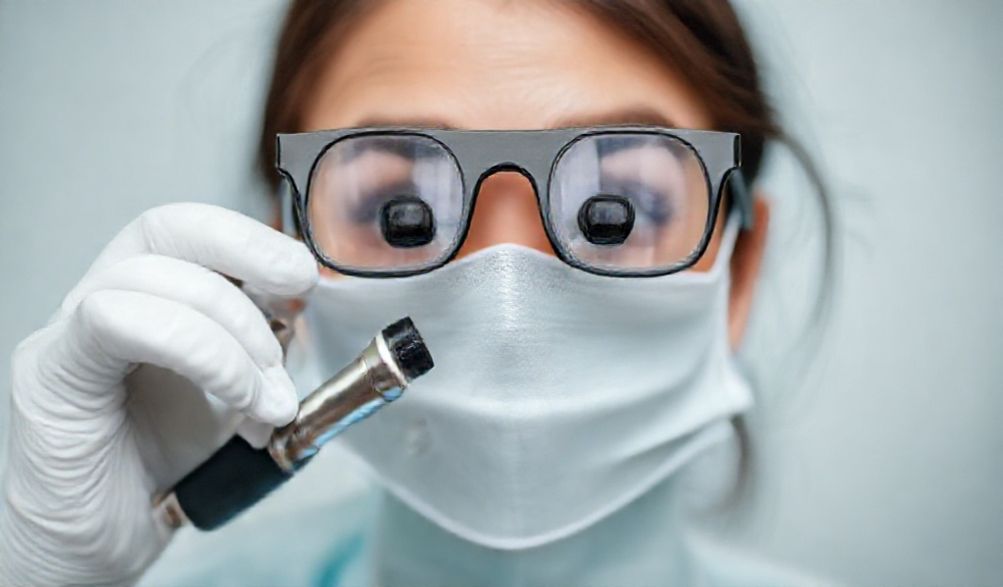
How Much Are Dental Loupes? A Complete 2024 Pricing & Value Guide
As a dental professional researching “how much are Dental loupes,” you’re likely balancing the desire for better ergonomics and precision with a very real budget. It’s a significant decision, and the price tags you encounter can be confusing, ranging from a few hundred to several thousand dollars.
This guide isn’t just a list of prices. We’ll break down the true cost factors, from entry-level to premium systems, helping you make a value-driven investment for your long-term health and practice. By the end, you’ll understand the price ranges for different types of loupes, the critical components that affect cost, and a framework to determine which option offers the best return on investment for your specific needs.
Understanding Dental Loupes: More Than Just Magnification
Before diving into costs, it’s crucial to understand what you’re buying. Dental loupes are a sophisticated optical tool, not a simple magnifying glass. They are a core piece of ergonomic and clinical equipment designed to extend your career and improve your work.
Core Benefits: Why Dentists Invest in Loupes
- Ergonomics & Posture: This is the primary driver for most. Loupes allow you to sit upright with a neutral spine while bringing a magnified view of the oral cavity to you. This prevents the chronic forward-head posture and stooping that lead to debilitating musculoskeletal disorders (MSDs) in the neck, back, and shoulders.
- Enhanced Precision & Clinical Outcomes: magnification reveals what the naked eye misses. You can identify finer caries, prepare more precise margins, and perform more accurate endodontic procedures. This directly translates to higher-quality, longer-lasting restorations and better patient outcomes.
- Reduced Eye Strain and Fatigue: By focusing on a closer, magnified field, your eye muscles (the ciliary muscles) are under less constant strain than when trying to focus on a small area from a farther distance. This reduces overall fatigue, allowing you to maintain focus and steadiness throughout a full day of procedures.
Key Components of a Loupes System
The price is directly tied to the quality and customization of these components:
- Optical Quality (Galilean vs. Prismatic):
- Galilean: Uses a simple lens system. Lighter and more affordable but offers lower magnification (typically up to 3.0x) and a narrower depth of field.
- Prismatic (Keplerian): Uses a prism to fold the light path. This allows for higher magnification (3.5x to 8.0x+), a wider field of view, and a significantly larger depth of field (the area that remains in focus). This superior optical performance comes at a higher cost and slightly more weight.
- Magnification Level: Common ranges are 2.5x, 3.0x, 3.5x, 4.5x, and higher. Higher magnification isn’t always better—it reduces the field of view and depth of field. General dentists often find 3.0x-3.5x ideal, while specialists like endodontists may prefer 4.5x+.
- Field of View (FOV): This is the width of the area you see through the lenses. A wider FOV, often a feature of premium prismatic loupes, provides better spatial awareness but increases cost.
- Working Distance: This is the precise distance from your eye to the patient’s mouth. It must be custom-measured to fit your posture and arm length. An incorrect working distance will force you back into poor ergonomics.
Dental Loupes Price Ranges: A Detailed Breakdown (2024)
Now, let’s answer the core question: “How much are dental loupes?” Prices are for the optical system and frame; lighting and prescriptions are additional.
Entry-Level / Galilean Loupes
- Price Range: $300 – $800
- Typical Features: Lower magnification (2.0x-2.5x, sometimes up to 3.0x), standard frame options (like standard TTL or flip-up), limited customization options. Optics are often made with lighter, less expensive materials.
- Best For: Dental and hygiene students on a strict budget, first-time buyers who want to “try out” magnification, or professionals who use loupes very infrequently. They are a starting point but may lack the clarity, depth of field, and postural benefits needed for full-time practice.
Mid-Range / Prismatic (Keplerian) Loupes
- Price Range: $800 – $2,500
- Typical Features: This is the sweet spot for most practicing clinicians. You get higher magnification (3.0x-6.0x), the superior depth of field and clarity of prismatic optics, and good customization for working distance, declination angle, and frame fit. The build quality is durable for daily use.
- Best For: The majority of general dentists, hygienists, and many specialists. This category offers an excellent balance of performance, durability, and value. It represents a serious investment in a tool that will be a daily workhorse for 5-10 years or more.
High-End / Custom Premium Systems
- Price Range: $2,500 – $5,000+
- Typical Features: This tier includes the highest-end optics, such as expanded-field prismatic loupes that offer an exceptionally wide, flat field of view. Frames are ultra-lightweight (e.g., titanium or carbon fiber). This range also includes integrated systems with built-in cameras or proprietary lighting. The level of customization is extensive.
- Best For: Specialists (endodontists, periodontists, oral surgeons) who require maximum magnification and clarity, high-volume practitioners who demand the best comfort for 8+ hour days, and early adopters who want integrated digital workflow tools (like live-view cameras).
What Factors Into the Final Cost?
The base price of the loupes is just the beginning. Several add-ons and variables will affect your final total.
The Core Components (A La Carte Pricing)
- The Loupes Themselves: As outlined above, the optical design and frame material set the baseline.
- Lighting System: This is a critical and major add-on. A dedicated, coaxial LED light is essential to illuminate the magnified field without shadows.
- Price Range: $300 – $1,200+
- Factors: Cordless vs. corded (cordless is more expensive), battery life and type, light output (lumens), and beam quality (cool white vs. warm, spot size). Premium lights from loupe manufacturers are often optimized for their specific optics.
- Prescription Lenses: If you wear corrective lenses, they can be ground into the loupe’s oculars.
- Price Range: $100 – $400
- This is often more affordable than expecting to wear your regular glasses underneath the loupes, which can compromise fit and field of view.
The Value of Customization
A proper fitting is not an upsell—it’s the process that makes loupes a therapeutic ergonomic device. Reputable vendors include this service. The cost is embedded in the product’s value.
* Working Distance & Declination Angle: A trained representative will take precise measurements to ensure the loupes align perfectly with your posture.
* Frame Style & Material: Lightweight, adjustable titanium frames cost more than standard alloy or plastic frames but significantly enhance all-day comfort.
Brand, Warranty, and Service
- Brand Reputation: Established brands like Orascoptic, Zeiss, SurgiTel, Designs for Vision, and Heine invest heavily in optical R&D, quality control, and clinician education. This commands a premium over generic, online-only brands.
- Warranty: A strong warranty (e.g., lifetime on optics, 1-2 years on frames/electronics) provides peace of mind and protects your investment. It’s a sign of the manufacturer’s confidence.
- Service & Support: Access to adjustment services, repair programs, and knowledgeable customer support is invaluable over the decade-long lifespan of your loupes.
How to Assess Value: A Cost vs. Investment Framework
Shifting your mindset from “cost” to “investment” is key. Let’s quantify the value.
Calculating Your Return on Investment (ROI)
- Longevity: Divide the total cost by the number of days you’ll use them. A $2,500 prismatic loupe and light system used daily for 10 years (~2,500 working days) costs $1 per day. Over 15 years, it’s about $0.67 per day.
- Health Savings: The potential cost of chronic pain, physical therapy, missed work, or even a career-ending injury is astronomical. Loupes are a primary preventive measure. Investing in your musculoskeletal health is investing in your ability to earn a living.
- Practice Revenue: While harder to quantify, the ability to perform more precise, efficient, and higher-quality procedures can lead to better patient outcomes, fewer remakes, and the ability to take on more complex (and often higher-value) cases.
Key Questions to Ask Before Buying
- “What procedures do I perform most?” A general dentist doing mostly crowns and fillings has different needs than a periodontist performing surgeries.
- “How many clinical hours do I work per day/week?” A high-volume practice justifies a greater investment in comfort and premium optics.
- “Does the vendor offer a live, in-person or virtual fitting with precise measurements?” Avoid vendors who just ask for your height and prescription.
- “What does the warranty cover, and for how long?”
- “Are there financing options, student discounts, or package deals?” Most reputable companies offer these.
FAQ: How Much Are Dental Loupes?
Q1: What is the average cost of dental loupes with light?
A: For a complete, quality system suited for a full-time practitioner, expect to invest between $1,500 and $3,000. This would typically cover a mid-range prismatic loupe and a good cordless LED light. Entry-level systems with light start around $800, while premium integrated systems can exceed $4,000.
Q2: Are expensive dental loupes worth it?
A: For any dental professional who plans to practice clinically for more than a few years, the answer is a resounding yes. The “expense” is an investment in three critical areas: your long-term physical health (preventing career-limiting pain), your clinical performance (improved precision), and your daily comfort (reduced fatigue). The cost of not having them can be far higher.
Q3: Can I get cheap or used dental loupes?
A: Proceed with extreme caution. Loupes are as personal as a pair of custom orthotics. Used loupes are calibrated for another person’s interpupillary distance, working distance, and declination angle. Using them will likely force your body into an awkward, harmful position, defeating their primary purpose. Cheap, non-branded loupes online often have poor optical alignment, leading to headaches, dizziness, and eye strain. The true value is in a properly fitted system.
Q4: Do dental schools offer discounts on loupes?
A: Absolutely. Most major manufacturers offer substantial student discounts (often 20-40%) and curated starter packages. Dental school is the most financially advantageous time to purchase a high-quality set that will carry you into your early career.
Conclusion
So, how much are dental loupes? As we’ve seen, the range is broad—from a few hundred dollars for a basic student setup to over $5,000 for a top-tier, integrated specialist system. However, the more important question evolves from “What do they cost?” to “What is the right investment for my career longevity and clinical excellence?”
The right loupes are not merely an accessory or an expense; they are foundational professional equipment. They protect your most valuable asset—your physical ability to practice—and enhance the quality of care you provide. Your next step is to research reputable vendors, schedule consultations or attend trade show demonstrations where you can try different models, and use the framework above to evaluate the true value of each option for your specific practice. Invest wisely in the tools that invest in you.
p>