
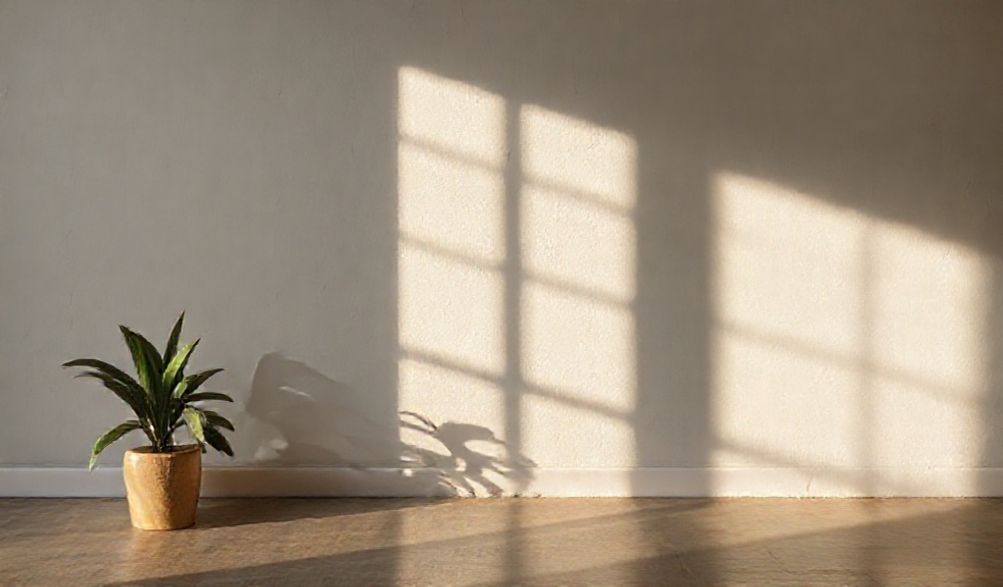
How to Eliminate Shadows with Lighting: A Complete Guide to Brighter Spaces
Tired of straining to see in your home office corner? Frustrated by harsh shadows ruining a perfect photo? Shadows are an inevitable part of light, but in our daily lives, they often become obstacles—creating eye fatigue, obscuring details, and making rooms feel cramped and uninviting. The good news is that with a bit of knowledge, you can take control. Eliminating problematic shadows isn’t about magic; it’s about applied science and smart technique.
This guide moves beyond basic lamp recommendations to explain the core principles of light and shadow. Whether you’re optimizing a workspace, setting up a photography studio, or simply want a cozier living room, understanding the why empowers you to solve the how for any situation. Let’s illuminate the path to perfectly balanced, shadow-minimized spaces.
Understanding the Science of Shadows
To conquer shadows, you must first understand your adversary. Shadows aren’t random; they are predictable results of physics. Grasping these fundamentals is the key to choosing the right solution every time.
The Core Principle: Light Direction & Point Sources
Imagine a single, bare light bulb in a dark room—this is a classic point source. Light travels from this small origin in straight lines. When an object blocks these straight rays, it creates a sharp, well-defined shadow because the light cannot bend around it. This shadow has two parts: the umbra (the inner, darkest core where light is completely blocked) and the penumbra (the softer, outer edge where light is only partially blocked). The hardness of a shadow is directly tied to the size and distance of the light source relative to the subject.
Key Factors That Influence Shadow Intensity
Four main factors determine whether a shadow is a subtle nuance or a glaring problem:
- Size of the Light Source: This is the most critical factor. A small, pinpoint source (a candle, a bare bulb) creates hard, dramatic shadows. A large source (a cloudy sky, a big softbox) wraps light around the subject, producing soft, gradual shadows with a wide, faint penumbra. In essence, a larger light source relative to your subject equals softer shadows.
- Distance from Subject: The closer a light source is to the subject, the larger it appears from the subject’s perspective. Bringing a lamp closer softens its shadows. Moving it farther away makes it act more like a smaller point source, hardening the shadows.
- Angle of Incidence: This refers to the angle at which light hits a surface. A low, raking light (like late afternoon sun) stretches shadows long and pronounced. Light from directly above (like noon sun or a central ceiling fixture) compresses shadows directly beneath objects, which can be just as problematic for tasks.
- Presence of Ambient Light: This is the existing, general light in a room (daylight from windows, reflected light from walls). Ambient light acts as a natural “fill,” bouncing into shadow areas and softening the contrast between light and dark created by your primary source.
Essential Tools & Types of Lighting to Combat Shadows
Arm yourself with the right arsenal. Each tool in a lighting designer’s or photographer’s kit serves a specific purpose in the battle against unwanted darkness.
The Main Players: Key, Fill, and Ambient Lights
This classic three-point lighting framework is the blueprint for controlled illumination:
* Key Light: Your main, brightest source. It establishes the primary direction of light and creates the dominant shadows.
* Fill Light: Your shadow-elimination hero. Positioned on the opposite side of the key light, its sole job is to soften and “fill in” the shadows created by the key. It is always less intense than the key.
* Back/Rim Light: Placed behind the subject, facing the camera/observer. It creates a highlight along the subject’s edge, separating them from the background and adding depth, which indirectly helps define form without creating frontal shadows.
Diffusers: Your Secret Weapon for Softening
A diffuser is any material placed between a light source and the subject to scatter its rays. By scattering the light, it effectively turns a small, hard source into a large, soft one. Common diffusers include:
* Softboxes & Umbrellas: Attach to studio lights or flashes to create a broad, window-like light source.
* Diffusion Panels & Scrims: Large, framed fabrics used in photography and film.
* Household Hacks: Parchment paper, a white shower curtain, or even a thin white t-shirt can diffuse a lamp in a pinch.
Reflectors: Bouncing Light into Darkness
Why create more light when you can redirect what you already have? Reflectors are passive, inexpensive, and incredibly effective. They bounce light from your key source into shadow areas, acting as a fill light.
* Professional Reflectors: Come in white (soft fill), silver (bright, direct fill), and gold (warm fill).
* DIY Solutions: White foam board, a poster board, a matte white wall, or a ceiling painted in a light color all serve as excellent reflectors.
Broad vs. Focused Light Sources
Consider the light’s spread:
* Broad Sources: LED panel lights, fluorescent troffers, or cove lighting emit light over a wide area, providing even, shadow-reducing illumination ideal for general ambient light.
* Focused Sources: Spotlights, track lights, and recessed downlights direct a beam. Used alone, they create pronounced pools of light and shadows. Their power is in accenting, not filling, a space.
Practical Strategies for Shadow Elimination by Scenario
Let’s apply the theory. Here are targeted solutions for common environments.
For Home Offices & Task Lighting
Shadows here cause real fatigue and reduce productivity.
* Placement is Critical: Never have your primary task light behind you. It will cast your body’s shadow directly onto your work. Position it in front of you or to the side opposite your dominant hand.
* Layering Light: Relying on a single overhead light is a recipe for shadows. Combine ambient light (overhead fixture) with task light (desk lamp) and accent light (a small lamp on a shelf). This multi-directional approach fills shadows from multiple angles.
* Using a Wall Wash: Install LED strip lights or sconces that graze or wash up a wall. This brightly illuminated vertical surface becomes a giant reflector, pushing soft, diffuse light back into the room and drastically reducing dark corners.
For Photography & Videography
Controlled shadows define professional imagery.
* Implementing Three-Point Setup: Start with your key light (at a 45-degree angle to the subject). Add a fill light or reflector on the opposite side, at a lower intensity. Finally, place a back light to separate the subject from the background.
* Using a Fill Flash or Ring Light: A camera’s fill flash (set to low power) can pop light into facial shadows on a sunny day. A ring light, surrounding the lens, provides extremely even, shadow-reduced front light popular for beauty shots and detail work.
* The Bounce Flash Technique: Instead of pointing a speedlight flash directly at your subject, swivel its head to point at a white ceiling or nearby wall. You turn that entire surface into a massive, soft light source, eliminating harsh flash shadows.
For Interior Spaces & Room Lighting
The goal is an inviting, uniformly bright atmosphere.
* Avoiding Single Overhead Points: The solitary ceiling-mounted “bug eye” fixture is the #1 cause of harsh, unflattering shadows in homes. It creates a bright “spotlight” effect directly underneath and leaves room perimeters in darkness.
* Embracing Multi-Point Lighting: Distribute light sources at different heights and locations. Use a combination of floor lamps, table lamps, sconces, and overhead fixtures. This “coves” the room in light from multiple vectors, leaving few places for deep shadows to hide.
* Indirect Lighting Techniques: Hide the source. Light the ceiling (with uplight sconces or cove lighting), the back of a valance, or the inside of a bookshelf. The light reflects off a broad surface first, entering the room as a gentle, shadow-minimizing glow.
Advanced Techniques & Professional Considerations
For those ready to fine-tune or tackle complex projects.
Calculating Lighting Needs: Lumens and Layout
Shadows thrive in underlit spaces. Ensure you have enough raw light output.
* Lumens = Brightness. A 100-watt incandescent bulb emits about 1600 lumens.
* A Basic Rule: For general room lighting, aim for 20 lumens per square foot. For task-heavy areas (kitchens, offices), aim for 50-75 lumens per square foot. Add up your bulb/luminaire lumens to see if your space is adequately lit at a base level.
Color Temperature & Perception
Measured in Kelvin (K), this affects how we “feel” about light and shadow.
* Cool White/Blue (5000K+): Mimics daylight. It can appear brighter, increase alertness, and enhance contrast, making shadows feel more defined.
* Warm White/Yellow (2700K-3000K): Mimics incandescent. It feels cozy, can soften a scene’s overall perception, and make subtle shadows less noticeable.
For shadow reduction, a neutral to cool white often provides the best “clinical” visibility, while warm white offers perceptual softness.
When to Call a Lighting Designer
DIY has its limits. Consider a professional for:
* Whole-Home Lighting Plans: Integrating architectural lighting, circuits, and controls.
* Complex Spaces: Rooms with high ceilings, challenging layouts, or extensive art collections.
* Specialized Needs: Museum-quality art lighting, showcase retail displays, or home theaters where precision is paramount.
FAQ: Your Questions on Eliminating Shadows, Answered
Q: What’s the single most effective change I can make to reduce shadows in my home office?
A: Add a second light source from a different direction. If you only have an overhead light, place an adjustable desk lamp on the side opposite your writing hand. This immediate cross-illumination fills the shadows cast by your primary light.
Q: Are LED lights better for reducing shadows than incandescent bulbs?
A: Not inherently due to the LED itself, but modern LED fixtures often use multiple diodes spread across a panel or are designed as long strips. This larger surface area makes them naturally better at producing soft, even light compared to the single, tiny filament of an incandescent bulb.
Q: How can I eliminate harsh shadows outdoors for daytime photography?
A: Use a reflector to bounce sunlight into the shadow side of your subject (like under the chin). Alternatively, move your subject into “open shade”—under a tree or porch where the sky, not the direct sun, is the light source. A fill flash is also a powerful tool to balance bright sunlight.
Q: Can paint color help with shadows?
A: Absolutely. Light-colored, matte-finish paints (whites, creams, light grays) are highly reflective. They act as room-sized reflectors, bouncing ambient light around to fill shadows. Dark or glossy paints absorb light or create sharp specular reflections, increasing contrast and shadow depth.
Q: Is it possible to have no shadows at all?
A: In practical terms, no—and it’s often not desirable. Completely shadowless light (like on a uniformly overcast day) can appear flat, dimensionless, and lifeless. The goal is not to erase all shadows, but to manage them—softening harsh ones, filling in obstructive ones, and using them to create pleasing depth and texture.
Conclusion
Mastering shadow elimination is ultimately about mastering light itself. It’s a skill that blends art and science, transforming challenging spaces into comfortable, functional, and beautiful environments. You now understand that the enemy is not darkness, but harsh, unidirectional light. Your toolkit is ready: use diffusers to soften, reflectors to bounce, and multiple sources to layer illumination.
The journey starts with observation. Look at the room you’re in right now. Identify its harshest, most problematic shadow. Is it on your desk? In the corner? On a person’s face in a photo? Choose one technique from this guide—add a fill light, reposition a lamp, or even just tape a piece of white poster board as a reflector—and apply it. The principles are universal. With this knowledge, you hold the power not just to eliminate unwanted shadows, but to sculpt with light, enhancing the beauty, utility, and atmosphere of any space you inhabit.
p>