
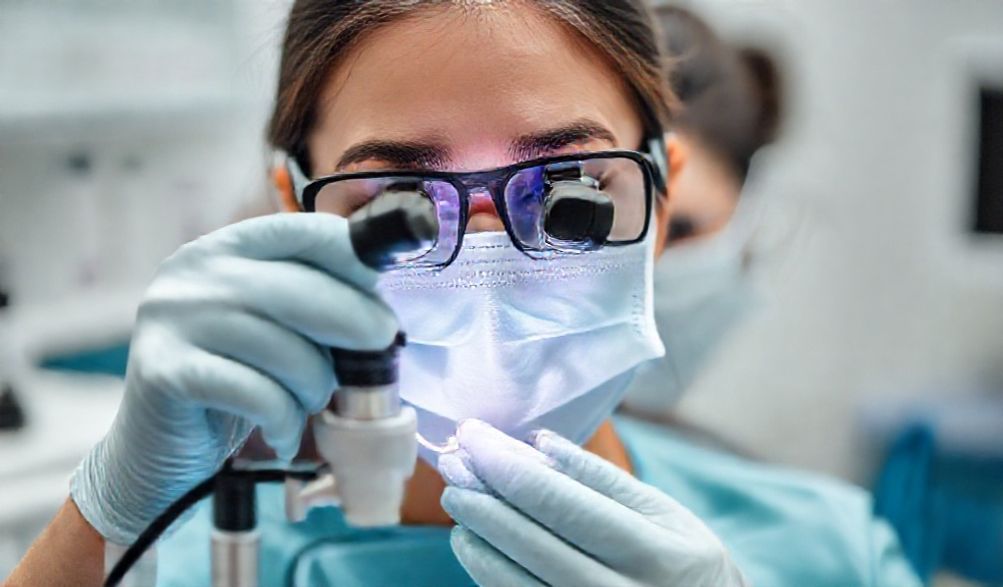
Hygienist Loupes: The Ultimate Guide to Enhanced Vision, Ergonomics, and Patient Care
Dental hygiene is a profession of millimeters and microns. Success hinges on the ability to detect the faintest trace of subgingival calculus, identify the earliest signs of demineralization, and perform meticulous debridement—all while contorted over the oral cavity for hours on end. This relentless demand for precision comes at a steep physical cost, with a high prevalence of musculoskeletal disorders and chronic eye strain among clinicians.
Enter hygienist loupes. Far more than simple magnifiers, they are a transformative ergonomic and clinical toolset. This comprehensive guide is designed to demystify dental loupes for the practicing hygienist. We will explore their profound benefits, decode the technical specifications, compare the different types available, and provide a practical roadmap for making this critical investment. Our goal is to empower you with the knowledge to choose a system that protects your body, elevates your clinical care, and extends your career longevity.
Why Dental Hygienist Loupes Are a Non-Negotiable Investment
For many hygienists, loupes are a paradigm shift. Moving from unaided vision to magnified, illuminated work is not just an upgrade; it’s a fundamental change in how you practice. The investment, while significant, pays dividends across three core areas: your physical health, your clinical capabilities, and your professional demeanor.
Ergonomic Imperative: Protecting Your Career Longevity
The statistics are sobering. Studies consistently show that between 60-90% of dental professionals experience work-related musculoskeletal disorders (MSDs), with neck and back pain being the most common complaints. The root cause is often “forward head posture”—craning your neck and hunching your shoulders to get closer to your work, which can place up to 60 pounds of strain on the cervical spine.
This is where loupes serve as a primary ergonomic intervention. By providing magnification, they allow you to:
- Maintain a Neutral Spine: You can sit upright with your back supported, your shoulders relaxed, and your head positioned over your shoulders. The loupes bring the magnified image to you, eliminating the need to contort your body to see.
- Increase Your Working Distance: With loupes, you naturally work further from the patient. This creates better angles for instrumentation and reduces the cramped, hunched posture that leads to fatigue and injury.
- Extend Your Career: The long-term benefit is immeasurable. Reduced daily pain means fewer missed workdays, less reliance on pain management, and the ability to practice comfortably for decades. Investing in loupes is an investment in your most valuable asset: your ability to work.
Clinical Precision and Enhanced Visualization
What you can’t see, you can’t treat. Unaided human vision has limits, especially in the shadowy, confined space of a sulcus or the complex anatomy of a furcation.
Loupes shatter those limits:
- Superior Detection: Magnification dramatically improves your ability to spot subtle pathologies: tenacious strands of subgingival calculus, enamel microfractures, early carious lesions, and defective restoration margins. What was once a “maybe” becomes a definitive “yes.”
- Definitive Debridement: Enhanced visualization leads to more complete and efficient scaling and root planing. You can confirm complete calculus removal, minimize tissue trauma, and ensure a smoother root surface, which is critical for successful periodontal therapy.
- Elevated Standard of Care: This precision directly translates to better patient outcomes. Healthier tissue, more accurate assessments, and more thorough treatment foster improved healing and patient satisfaction. It allows you to provide a level of care that matches your expertise.
Boosting Professional Confidence and Patient Trust
The benefits of loupes extend beyond the physical and clinical into the psychological and professional realm.
- A Signal of Expertise: Donning loupes (and a light) sends an immediate, non-verbal message to your patient: you are a meticulous professional who utilizes advanced technology to ensure the best possible care. It builds credibility before you even speak.
- Enhanced Communication: With a clear, magnified view, you can show patients what you see. Pointing out bleeding points, calculus deposits, or early decay on a monitor (if paired with an intraoral camera) makes diagnosis and treatment planning a collaborative, educational conversation.
- Clinician Confidence: There is an undeniable psychological boost that comes from working in a bright, clear, magnified field. It reduces visual guesswork, decreases procedural stress, and allows you to focus on technique and patient interaction with greater assurance.
Key Features and Terminology: Understanding Loupe Specifications
Navigating the world of loupes requires understanding a few key terms. These specifications determine how the loupes will feel, function, and fit into your daily practice.
Magnification Power: Finding the Right Balance (2.0x to 6.0x+)
- Magnification: How much larger an object appears compared to unaided vision. 3.0x means the object appears three times larger.
- Field of View: The diameter of the area you can see clearly through the loupes at a set distance. Higher magnification typically means a smaller field of view.
- The Sweet Spot: For most hygienists starting out, 2.5x to 3.5x magnification is the recommended range. This provides a significant visual boost and ergonomic benefit while maintaining a generous, manageable field of view for procedures like prophylaxis and SRP. Higher powers (4.5x and above) are fantastic for specialists but have a narrower field, requiring more head movement.
Working Distance and Declination Angle: The Fit for Your Posture
These are the most personal and critical measurements for ergonomics.
- Working Distance: Measured in inches or centimeters, this is the distance from your eyes (more precisely, the corneal plane) to your primary working area in the patient’s mouth. It is determined during a fitting by having you assume your ideal, upright posture. An incorrect working distance will force you back into a hunched position.
- Declination Angle: This is the angle of the loupe barrels relative to your eyes. It determines how far down you can look while keeping your head upright. A proper declination angle allows you to look straight ahead through the lenses to see into the mouth, preventing neck flexion.
Crucial Note: These measurements are highly individual. A professional, in-person fitting is non-negotiable for loupes to function as intended.
Depth of Field and Resolution: Clarity Matters
- Depth of Field: The “zone” of clear vision in front of and behind your focal point. A greater depth of field allows you to see clearly even if you move slightly closer or farther from the tooth, which is helpful during dynamic procedures. It is generally wider at lower magnifications.
- Resolution & Optical Quality: This refers to the sharpness, clarity, and color fidelity of the image. High-quality, multi-coated lenses provide a brighter, sharper, and more color-true image with minimal distortion at the edges. Cheaper optics can cause eye strain, headaches, and a less reliable clinical picture. This is an area where you truly get what you pay for.
Types of Dental Loupes: Pros, Cons, and Best Uses
Loupes come in different styles and optical designs, each with advantages for specific users and preferences.
Through-The-Lens (TTL) vs. Flip-Up Loupes
-
Through-The-Lens (TTL):
- How they work: The magnification lenses are permanently mounted into a custom-made frame, aligned precisely to your pupilary distance (PD) and declination angle.
- Pros: Superior optical alignment, typically lighter weight, less bulky, and more streamlined. They are “always ready” and optimized for your vision.
- Cons: The magnification is fixed; you cannot flip them up to see at normal magnification without looking over or under them. They are custom-made for one user.
- Best for: Clinicians who will wear loupes consistently for most procedures and want the lightest, most optically precise system.
-
Flip-Up Loupes:
- How they work: The magnification telescopes are mounted on a hinge, allowing you to flip them up and out of your line of sight.
- Pros: Versatility. You can quickly flip them up to talk to a patient, look at a chart, or take a break from magnification. The frame can sometimes be shared or used by someone with a similar prescription.
- Cons: Often heavier due to the hinge mechanism. The flip-up mechanism can wear over time, potentially leading to misalignment or wobble. The optical center can be less perfect than TTL.
- Best for: Those who value the ability to rapidly switch between magnified and normal vision, or who are just beginning to adapt to loupes.
Galilean vs. Prismatic (Keplerian) Optical Systems
-
Galilean Systems:
- Design: A simpler two-lens system.
- Pros: Lighter weight, more affordable, and offers excellent depth of field at lower to mid-range magnifications (2.5x – 3.5x). A fantastic, ergonomic entry point.
- Cons: Limited in how high they can magnify without becoming too long and heavy. Field of view decreases more noticeably as power increases.
-
Prismatic (Keplerian) Systems:
- Design: A more complex system using multiple lenses and internal prisms to fold the light path.
- Pros: Capable of higher magnifications (4.0x and above) while remaining relatively compact. They offer a wider field of view and superior resolution at these higher powers.
- Cons: Heavier and more expensive than Galilean systems due to the complex optics.
- Best for: Hygienists specializing in perio therapy who desire high magnification for furcation management and intricate root anatomy, or those who simply prefer the wider view at standard powers.
Integrating Lighting: The Game-Changer
If loupes are the game-changer, then the LED headlight is the essential co-star. Magnification is hampered by shadows. A dedicated light source provides coaxial illumination—light that travels directly along your line of sight—banishing shadows and illuminating the deepest part of the sulcus.
- Why LED? LED lights are cool, bright, energy-efficient, and have a long lifespan. They have largely replaced older halogen lights.
- Mounting Options: Lights can be mounted directly onto the loupe frame (integrated) or on a separate headband. Integrated systems are more streamlined, while headband mounts can offer more adjustability and may balance weight differently.
- The Verdict: When budgeting for loupes, plan to purchase a quality LED light simultaneously. Using loupes without a light is like driving a high-performance car with fogged-up windows.
A Step-by-Step Guide to Selecting Your First (or Next) Pair
Step 1: Self-Assessment and Goal Setting
Begin by asking yourself: What is my primary driver? Is it relieving neck pain? Improving my calculus detection? Both? Try on colleagues’ loupes (with proper hygiene barriers) to get a feel for different magnifications and styles. Note how 2.5x feels versus 3.5x.
Step 2: The Critical Importance of a Professional Fitting
This is the most important step in the process. Schedule a fitting with a reputable company representative. A proper fitting should take 30-60 minutes and include:
* Measurement of your Pupillary Distance (PD).
* Determination of your ideal Working Distance in your natural, upright posture.
* Assessment of your Declination Angle.
* Trying on different frame styles for comfort and stability.
A poor fit will compromise all the potential benefits and may even cause more strain.
Step 3: Budgeting and Evaluating Brands
- Budget Realistically: A quality starter kit (Galilean TTL loupes + basic LED light) often starts around $1,000 – $1,800. Premium prismatic systems with top-tier lights can range from $2,500 – $4,000+. Frame this as a 5-10 year investment in your health and career.
- Research Reputable Brands: Look for companies with a strong reputation for quality, service, and clinical support. Well-established names in the dental field include Orascoptic, Designs for Vision, SurgiTel, SheerVision, and Zeiss. Investigate their warranty, repair policies, and customer service reviews.
FAQ: Common Questions About Hygienist Loupes Answered
Q: Are loupes really worth the high cost?
A: Absolutely, when viewed as a long-term investment. The cost of treating chronic back pain, the income lost from missed work, or the risk of a career-ending injury far exceeds the price of a loupe system. Furthermore, the ability to provide superior care can enhance patient retention and professional satisfaction, offering a significant return on investment.
Q: How long does it take to get used to wearing loupes?
A: Most clinicians require an adaptation period of 2 to 4 weeks of consistent, full-time use. Start with simpler procedures like exams and supragingival scaling. Your brain needs to re-calibrate hand-eye coordination and depth perception. The key is commitment—wear them for entire appointments to accelerate the adaptation.
Q: Can I wear my regular prescription glasses with loupes?
A: It is not recommended to wear glasses underneath loupes. Instead, all major loupe companies offer custom prescription lenses. Your exact optical prescription can be ground into the loupe oculars (either as inserts or directly surfaced), giving you a single, perfectly clear visual path. Provide your current prescription at the time of ordering.
Q: How do I properly clean and maintain my loupes?
A:
* Lenses: Use only lens spray formulated for coated optics and a clean, soft microfiber cloth. Never use alcohol, window cleaner, or your clothing, as these can damage anti-reflective coatings.
* Storage: Always store them in a hard protective case when not in use.
* Maintenance: Periodically check hinge screws on flip-ups and all frame fittings for tightness. For the light, follow battery care instructions (avoid complete discharge for lithium-ion batteries) and gently clean the light cord.
Conclusion and Final Recommendations
Selecting the right pair of hygienist loupes is a pivotal decision that impacts your daily comfort, your clinical effectiveness, and your long-term career trajectory. It is an investment that pays for itself many times over in health and professional dividends.
Begin your journey by prioritizing an ergonomic assessment and professional fitting—this is the non-negotiable foundation for success. Understand the trade-offs between TTL and flip-up styles, and recognize that for most hygienists, a Galilean system in the 2.5x-3.5x range offers an ideal balance. Crucially, integrate a high-quality LED light into your purchase from the start.
View this not as a mere equipment expense, but as a strategic investment in the most important tool in the operatory: you. By equipping yourself with enhanced vision and posture, you are taking a powerful step toward a longer, healthier, and more proficient career, ensuring you can provide the highest standard of care for every patient, now and for years to come.
p>