
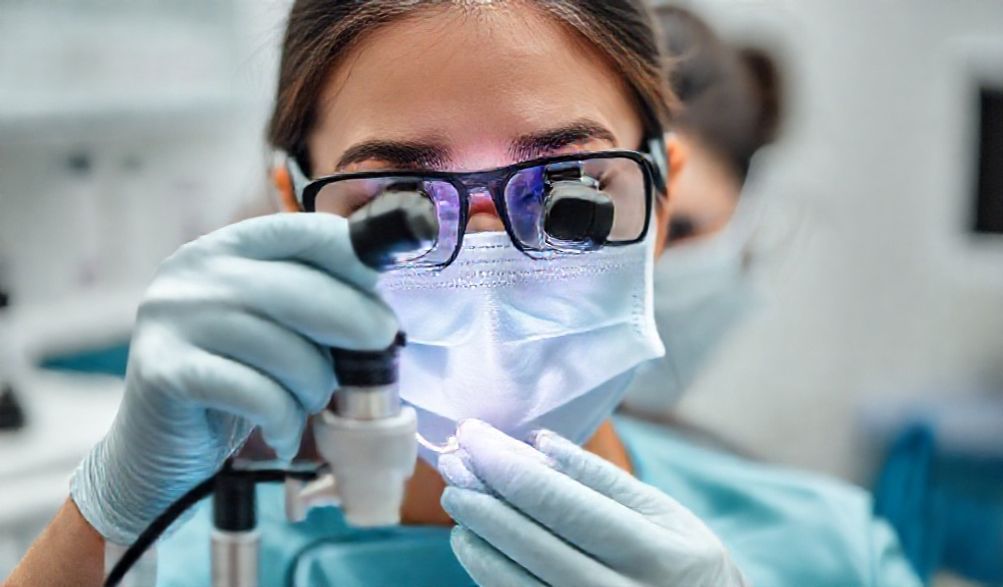
Hygienist Loupes: The Ultimate Guide to Better Vision, Ergonomics & Patient Care
For dental hygienists, the difference between a good day and a great day—or between a sustainable career and one cut short by pain—often comes down to millimeters and degrees of angulation. Not just in a patient’s sulcus, but in your own posture and field of view. The single most transformative tool to master these fine details isn’t a new ultrasonic insert or a different brand of probe. It’s a properly fitted pair of dental loupes.
This comprehensive guide moves beyond basic product comparisons. We’ll explore how the right loupes directly impact the trifecta of clinical success: precision, health, and care quality. Drawing on ergonomic science and clinical best practices, this is your evidence-based roadmap for investing in your most critical assets: your vision and your physical well-being. Whether you’re a student, a new graduate, or a seasoned hygienist considering an upgrade, understanding the “why” and “how” of loupes is essential.
Why Dental Hygienists Need Loupes: Beyond Simple Magnification
Many view loupes as simply “glasses that make things bigger.” This underestimates their role. For the modern hygienist, they are an ergonomic necessity and a standard of care, transforming every aspect of clinical practice.
Enhancing Clinical Precision and Accuracy
The human eye has limitations in sustained close-focus work. Magnification shatters those barriers.
- Superior Detection: What appears as a slightly rough surface to the naked eye can, under 2.5x or 3.0x magnification, be clearly identified as a spicule of subgingival calculus, a craze line, or the earliest sign of incipient caries. This allows for interceptive treatment and more accurate charting.
- Improved Scaling Efficacy: Magnification allows you to see the endpoint of root planing with clarity. You can ensure complete calculus removal while being more conservative with tooth structure, confirming a smooth, glassy surface. This leads to better healing outcomes and patient comfort.
- Elevated Documentation: Your periodontal charting and oral cancer screenings become more definitive. You can document with greater confidence, knowing your visual assessment is backed by enhanced detail.
The Critical Role in Ergonomics and Injury Prevention
This is the non-negotiable argument for loupes. Dental hygiene is a high-risk profession for Work-Related Musculoskeletal Disorders (MSDs). Studies suggest a staggering 60-90% of dental professionals experience MSD pain, with the neck, shoulders, and back being most common.
Without loupes, the instinct is to hunch forward, craning your neck and rounding your shoulders to get your eyes closer to the patient’s mouth. This places immense strain on the cervical spine and supporting muscles.
Loupes break this cycle through their declination angle—the engineered tilt of the lenses. When properly fitted, loupes bring the magnified image to you, allowing you to sit upright with a neutral spine, shoulders relaxed, and head positioned comfortably. You work with your body’s biomechanics, not against them. This isn’t about comfort; it’s about preventing career-ending chronic pain and ensuring you can practice for decades to come.
Reducing Eye Strain and Fatigue
Sustained focus on an object just 14-18 inches away forces your eyes’ ciliary muscles to work overtime, a process called accommodation. This leads to accommodative strain, manifesting as:
- Tension headaches
- Blurred vision
- General fatigue, especially in the afternoons
Loupes have a fixed focal length, significantly reducing the accommodative demand on your eyes. Your eyes are essentially looking at a relaxed, distant point, even though your hands are working precisely up close. The result is less eye strain, fewer headaches, and sustained mental focus throughout a full schedule of patients.
Key Features to Consider When Choosing Hygienist Loupes
Navigating loupe specifications can be daunting. Focus on these core features that directly impact your clinical performance and comfort.
Magnification Power: Finding the Right Balance (2.5x, 3.0x, 3.5x, etc.)
Higher power isn’t automatically better. It’s a trade-off between detail and field of view.
- 2.5x: An excellent starting point. Offers a wide field of view, making adaptation easier. Suitable for all hygiene procedures.
- 3.0x – 3.5x: The sweet spot for many experienced hygienists. Provides excellent detail for scaling, root planing, and detection while maintaining a manageable field. 3.5x is often preferred for periodontal therapy.
- 4.0x and above: Used for highly specialized work. The field of view narrows significantly, requiring more head movement. Not generally recommended as a first pair.
Recommendation: Start with 2.5x or 3.0x. You can always upgrade to higher magnification later, but starting too high can be frustrating.
Working Distance and Declination Angle: The Ergonomics Equation
These two custom measurements are the heart of a proper fit. Never buy “off-the-shelf” loupes.
- Working Distance: The measurement from the corner of your eye to your primary working point in the patient’s mouth (typically the mandibular anterior teeth). It’s measured in inches or centimeters. A distance too short will force you to hunch; too long will cause you to over-extend your arms.
- Declination Angle: The downward angle of the loupe barrels, measured in degrees. This is calculated based on your height, torso length, and chair position. A correct declination angle (often between 35-45 degrees) allows you to look straight ahead with your spine neutral while seeing directly into the oral cavity.
The Fitting is Paramount: A professional fitting, either in-person or via a detailed virtual kit, is non-negotiable. It ensures these values are tailored to you.
Frame Styles and Light Systems: Integration for Efficiency
- TTL vs. Flip-Up:
- Through-The-Lens (TTL): Lenses are permanently mounted in the frame, perfectly aligned with your eyes. They are lighter, more balanced, and offer a wider field of view. They are the preferred choice for full-time clinical use.
- Flip-Up: Magnification lenses flip up when not in use. They allow you to use your regular prescription glasses and can be shared (though not recommended). They tend to be heavier and can feel less stable.
- The Non-Negotiable Light: Overhead lights create shadows. A coaxial LED light mounted on your loupes is essential. It projects bright, white, shadow-free illumination directly in line with your vision, dramatically improving contrast and reducing eye strain. It’s a game-changer for seeing into deep pockets and subgingival areas.
- Comfort & Compatibility: Consider frame weight, nose pad adjustability, and whether you need a prescription carrier lens built in.
The Investment Perspective: Cost, Value, and ROI
A quality loupe system is a significant investment, often ranging from $800 to over $2,500. It’s vital to reframe this from an “expense” to a “career investment.”
Understanding the Price Range: What You’re Paying For
Costs vary based on:
* Optics Quality: Superior, edge-to-edge clarity lenses (e.g., Galilean vs. Prismatic).
* Customization: The precision of your working distance and declination angle.
* Brand & Materials: Design, warranty, and durability.
* Included Services: A proper fitting, training, and a robust warranty (often 5-10 years) are part of the value.
Calculating Your Return on Investment
The ROI extends far beyond the price tag:
* Career Longevity: Preventing one MSD-related injury or chronic pain condition can add years—and tens of thousands of dollars in earnings—to your career.
* Enhanced Care Quality: Improved detection and precision can lead to better patient outcomes, higher trust, and professional satisfaction.
* Daily Quality of Life: Reduced pain, fatigue, and headaches are invaluable.
* Tax Advantage: Loupes are typically a tax-deductible professional tool (consult your accountant).
* Resale Value: Well-maintained, brand-name loupes from reputable companies hold value.
Trial Periods and Professional Fittings: Don’t Skip This Step
Reputable companies offer trial periods (e.g., 30 days). Use it. Wear them in simulation or clinical practice. Pay attention to neck and back strain, eye comfort, and clarity.
Ask your fitter:
* “How do you determine my declination angle?”
* “What is your warranty and repair process?”
* “Can I upgrade magnification later?”
* “Do you offer virtual fitting support if my posture changes?”
Maintaining and Caring for Your Loupes
Your loupes are a precision instrument. Proper care extends their life and ensures optimal performance.
Daily Cleaning and Safe Handling Protocols
- Lens Cleaning: First, use a blower bulb to remove abrasive debris. Then, use a drop of lens-specific solution and a microfiber cloth. Never use paper towels, clothing, or harsh chemicals.
- Handling: Always don and doff your loupes using both hands to avoid twisting the frame and misaligning the hinges.
- Storage: Always place them in a hard, protective case when not in use. Never leave them on a chair, counter, or in a drawer loose.
Troubleshooting Common Issues
- Fogging: Ensure the lenses are clean. Anti-fog sprays or wipes designed for optical lenses can help. Proper mask fitting (tight top seal) is also crucial.
- Loose Hinges or Misalignment: Do not attempt major adjustments yourself. Contact the manufacturer for service. Small, careful adjustments to nose pads may be possible.
- Light System Care: Wipe the light head with an alcohol wipe. Follow charging instructions to preserve battery life. Ensure the connection port is clean and dry.
FAQ Section
Q: Are hygienist loupes really worth the cost?
A: When viewed as an essential investment in your clinical ability, physical health, and career longevity, the consensus among seasoned hygienists is a definitive yes. The prevention of chronic pain and extended career viability often outweighs the initial cost.
Q: What magnification is best for a dental hygienist just starting with loupes?
A: Most professionals recommend starting with 2.5x or 3.0x magnification. This provides a significant improvement in vision and ergonomics while offering a wider, more forgiving field of view as you adapt. You can always increase magnification later.
Q: Can I buy used loupes or share a pair with a colleague?
A: It is strongly discouraged. Loupes are highly personalized medical devices. The working distance, declination angle, and pupillary distance are specific to an individual’s anatomy and posture. Using improperly fitted loupes can cause neck/back strain and defeat their primary purpose.
Q: How long does it take to get used to working with loupes?
A: There is an adaptation period, typically 1-2 weeks. Start by wearing them for short periods during less complex tasks to build muscle memory and hand-eye coordination. Persistence is key. The feeling of “looking through a tunnel” will subside.
Q: Is a light system necessary, or are overhead lights sufficient?
A: A dedicated loupe-mounted light is highly recommended. Overhead lights create shadows in the oral cavity. A coaxial LED light (aligned with your line of sight) provides shadow-free, focused illumination directly on your field of view, further reducing eye strain and improving visibility for tasks like detecting subgingival calculus.
Conclusion
Choosing your loupes is one of the most impactful professional decisions you will make. The right pair is not defined by the highest magnification or the lowest price, but by how seamlessly it supports your unique posture, enhances your vision, and protects your long-term health. By prioritizing a professional fitting, understanding the ergonomic principles at play, and viewing this purchase as an investment in your career sustainability, you do more than buy a tool. You empower yourself to deliver exceptional, precise patient care while actively safeguarding the well-being that allows you to practice. Consult with reputable suppliers, take advantage of fittings and trials, and make the choice that allows you to perform at your absolute best for the long haul.
p>