
The Complete Guide to LED Examination Lamps: Enhancing Medical Precision & Patient Care
Introduction
In the high-stakes environment of medical diagnosis and treatment, clarity is everything. A subtle variation in tissue color, a faint shadow within a cavity, or the precise border of a lesion can be the difference between an early intervention and a missed opportunity. For generations, practitioners have relied on their eyes and their expertise, but they’ve been fundamentally limited by a critical, often overlooked tool: the quality of their light source. What if the very lamp illuminating your patient could become an active partner in enhancing diagnostic accuracy, improving operational efficiency, and elevating the standard of care?
This guide serves as your definitive, expert-driven resource on modern LED examination lamps. Whether you are a physician, dentist, nurse, procurement officer, or healthcare facility manager, the decision to upgrade or specify examination lighting is a significant one. It requires moving beyond simple brightness to a nuanced understanding of optical science, ergonomics, and clinical workflow. Your intent to make an informed, evidence-based choice is exactly what we aim to support.
We will navigate the complete landscape of LED examination lighting. We’ll start by defining the technology and its evolution from outdated predecessors. We’ll then delve into the compelling advantages that make LED the undisputed standard, from unparalleled color accuracy to dramatic cost savings. A detailed breakdown of critical features will equip you to decode specifications and assess usability. We’ll provide application-specific guidance for various medical fields, outline best practices for installation and maintenance, and answer the most pressing frequently asked questions. By the end, you will possess the knowledge to select the optimal LED examination lamp for your practice, ensuring it serves as a pillar of precision, safety, and efficiency for years to come.
What is an LED Examination Lamp? Defining Modern Medical Lighting
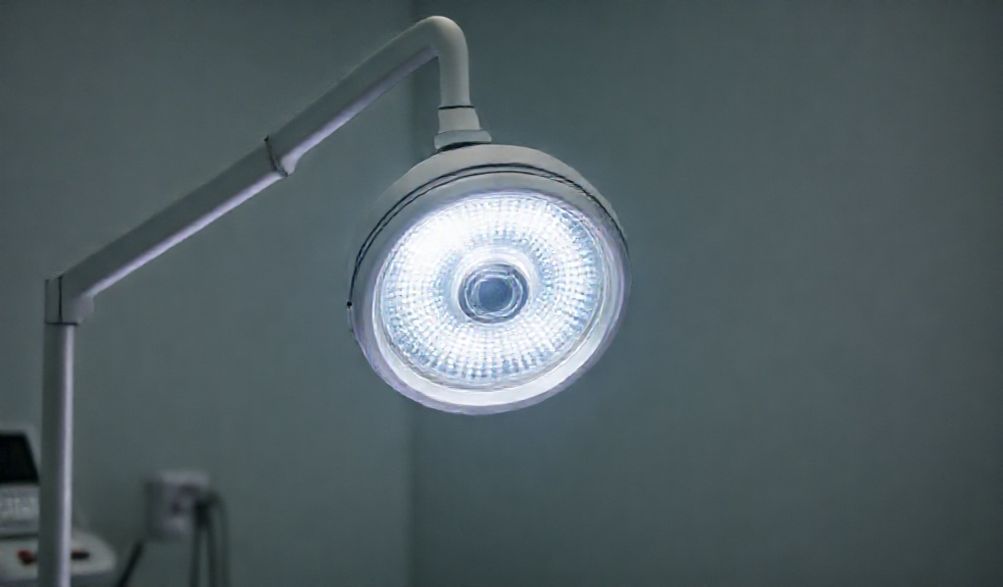
An LED examination lamp is a specialized medical lighting device designed to provide intense, consistent, and color-accurate illumination for patient examination, diagnosis, and minor procedures. Unlike generic lights, it is engineered to meet the rigorous demands of clinical environments, focusing on visual clarity, user control, and patient safety.
From Incandescent to LED: The Evolution of Exam Room Lighting
The journey to today’s advanced lighting has been transformative. For decades, halogen lamps were the workhorses of the exam room, prized for their bright, white light. However, they came with significant drawbacks: they operated at extremely high temperatures, posed burn risks, consumed substantial energy, and had filaments that frequently failed. Fluorescent lighting, while more efficient, often suffered from poor color rendering, flicker, and contained mercury.
The advent of Light Emitting Diode (LED) technology marked a paradigm shift. Moving from heating a filament or exciting a gas to the solid-state emission of light from a semiconductor, LEDs solved the core problems of their predecessors. This shift represents not just an incremental improvement, but a fundamental re-engineering of medical illumination around the needs of the practitioner and the patient.
Core Components and How They Work
Understanding a few key components demystifies why LED lamps perform so well:
- The LED Diode: This is the heart of the lamp. When an electrical current passes through the semiconductor material, it emits photons—light. Advanced lamps use high-quality, medical-grade LED chips that are carefully binned for consistent color and output.
- Heat Sink: While LEDs produce minimal radiant heat (the kind that shines on the patient), they do generate heat at the diode junction. A robust, often aluminum, heat sink passively draws this heat away, ensuring the LED operates at optimal temperature for maximum lifespan and stable light output.
- Optical Lens/Diffuser: This component shapes and directs the light. Precision lenses or engineered diffusers create a uniform, shadow-reduced field of light with a smooth edge, eliminating harsh “hot spots” and ensuring even illumination across the examination area.
- Adjustable Arm: The conduit for positioning. High-quality arms use gas springs or counterbalance mechanisms to allow smooth, effortless, and stable positioning with one hand. They maintain their position precisely where placed, without drifting or sagging.
The synergy of these components results in a tool that delivers cool, consistent, and brilliantly accurate light exactly where and when the clinician needs it.
Key Advantages of LED Technology for Medical Examination
The transition to LED is driven by a powerful combination of clinical, economic, and practical benefits that directly impact daily practice.
Superior Illumination Quality for Accurate Diagnoses
This is the most critical advantage. Diagnostic confidence hinges on seeing true colors and details.
- High Color Rendering Index (CRI >90): CRI measures a light source’s ability to reveal the true colors of an object compared to natural light. A CRI above 90 (with 100 being perfect sunlight) is essential in medicine. It allows clinicians to accurately distinguish between erythema, cyanosis, jaundice, and subtle variations in tissue health that lower-CRI lights can mask.
- Adjustable Color Temperature: The “warmth” or “coolness” of light, measured in Kelvins (K), has clinical utility. A cooler light (5000K-6000K) enhances contrast and is excellent for general examinations and spotting surface details. A warmer light (3500K-4000K) is often preferred for cavity examinations (e.g., ENT, dentistry) as it is less glaring for the patient and can improve depth perception. Premium LED examination lamps offer adjustable CCT to suit different procedures.
- Shadow Reduction & Even Field: Multi-LED arrays coupled with advanced optics are designed to minimize the sharp, obstructive shadows cast by single-point light sources like old halogen bulbs. This even, homogenous illumination reduces eye strain for the practitioner, who is no longer constantly refocusing between bright and dark areas.
Operational Efficiency & Cost-Effectiveness
While the upfront cost may be higher, the total cost of ownership (TCO) of an LED lamp is significantly lower, making it a wise long-term investment.
- Energy Savings: LED lamps typically consume 60-80% less energy than equivalent halogen lamps. For a busy clinic with multiple exam rooms, this translates to substantial, ongoing reductions in electricity bills.
- Exceptional Lifespan: A quality medical LED lamp boasts a lifespan of 30,000 to 50,000 hours. In a typical clinical setting (8 hours a day, 5 days a week), this equates to 15+ years of service without a bulb change. This eliminates the cost and labor of frequent replacements.
- Reduced Maintenance & Downtime: With no fragile filament to break and robust solid-state construction, LED lamps are incredibly reliable. This means fewer interruptions to patient schedules and no dark exam rooms waiting for a maintenance call.
Enhanced Safety and Patient Comfort
The patient experience is directly improved with LED technology.
- Minimal Heat Emission: Unlike halogen bulbs that become scorching hot, LED lamps emit virtually no infrared (IR) radiation in their beam. This eliminates the risk of accidental burns to patients or clinicians and increases comfort during prolonged examinations, especially for sensitive areas.
- Flicker-Free Light: Cheap LEDs or fluorescent lights can flicker at a frequency imperceptible to the conscious eye but linked to headaches, eye strain, and fatigue. High-quality medical LEDs use constant current drivers to provide perfectly stable, flicker-free light, creating a more comfortable environment for both staff and patients.
- Durability and Reliability: The solid-state construction makes LEDs highly resistant to shock and vibration. They are built to withstand the rigors of a busy clinical environment.
Critical Features to Consider When Choosing an LED Exam Lamp
Navigating product specifications requires knowing what truly matters. Here’s a decoder for the key features.
Technical Specifications Decoded
- Luminance (Lux) and Beam Distance: Lux measures light intensity at the examination surface. General exams may require 20,000-40,000 lux, while specialized procedures (e.g., minor surgery, detailed dental work) may need 50,000 lux or more. Consider the lamp’s beam distance—the working distance at which it delivers its rated lux. A lamp rated for 40,000 lux at 70cm is ideal for a standard exam, while an ENT lamp might be designed for 30,000 lux at a longer 90cm distance.
- CRI and CCT: As discussed, insist on a CRI >90. For CCT, assess if a fixed color temperature (e.g., 4500K) suits all your needs, or if the flexibility of adjustable CCT (e.g., 3500K-5000K) would benefit your practice.
- Degree of Protection (IP Rating): This indicates protection against solids and liquids. An IP rating is crucial for infection control. A rating like IP44 (splash-resistant from all directions) or higher ensures the lamp can be thoroughly cleaned and disinfected without liquid ingress damaging the electronics.
Ergonomic Design & Usability
A technically brilliant lamp is useless if it’s difficult to position.
- Mounting Options: Choose based on your room layout and workflow.
- Wall/Ceiling Mount: Saves floor space, offers a wide range of motion.
- Rail Mount: Provides lateral movement along a track, excellent for multi-position rooms.
- Mobile Floor Stand: Offers ultimate flexibility, can be moved between rooms or positioned precisely.
- Range of Motion & Adjustability: Look for lamps with multiple articulation points (3-5 joints are common). The arm should move smoothly, hold its position securely without creep, and be operable with one hand using a sterile handle.
- Intuitive Controls: Touch-sensitive or tactile controls for dimming and CCT adjustment should be easily accessible. Memory functions that recall favorite settings for different procedure types are a premium feature that streamlines workflow.
Compliance, Certification, and Hygiene
This is non-negotiable for medical devices.
- Certifications: Ensure the lamp carries relevant medical device certifications. Key marks include ISO 13485 (Quality Management for Medical Devices), CE Marking (EU compliance), FDA Registration, and RoHS (Restriction of Hazardous Substances).
- Hygienic Design: The lamp should be designed for the clinical environment. Look for seamless, crevice-free surfaces, materials that can withstand hospital-grade disinfectants (like isopropyl alcohol), and a design that prevents dust accumulation. Always follow the manufacturer’s Instructions for Use (IFU) for cleaning.
Application-Specific Guidance: Matching the Lamp to the Practice
One size does not fit all. Tailor your choice to your specialty’s unique demands.
Primary Care & General Practice
Versatility is key. A lamp with good all-around performance—20,000-40,000 lux, high CRI, and a wide area of even illumination—is ideal. A wall-mounted or ceiling-mounted lamp with a long reach is often perfect for the standard exam room.
Specialized Fields: Dermatology, ENT, Dentistry, and Surgery
- Dermatology: Requires exceptional color accuracy (CRI >95) and very even, shadow-free light to assess lesions, pigmentation, and texture. High luminance (40,000+ lux) is standard.
- ENT & Dentistry: These fields often require focused illumination into cavities. Lamps may have a smaller, more concentrated spot size and frequently offer warmer CCT settings to reduce glare for the patient. Some dental lamps integrate with the chair or delivery system.
- Minor Surgery & Procedure Rooms: Demand the highest luminance levels (50,000-100,000+ lux) for optimal visual acuity during suturing, biopsies, and other procedures. Ceiling-mounted models with large, sterile handles are common.
Emergency Departments and Mobile Clinics
Durability and flexibility are paramount. Robust mobile floor-stand lamps that can be quickly wheeled into position are invaluable. They must withstand frequent movement and potential impacts. Battery-operated or hybrid models can provide crucial backup lighting.
Installation, Maintenance, and Best Practices
Protect your investment with proper handling.
Professional Installation Tips
Always use a qualified technician. They will ensure:
* The mounting is secure to the wall stud or ceiling structure.
* The lamp is installed at the correct height for its intended range.
* Electrical connections are safe and compliant with local codes.
* The arm is properly tensioned and moves smoothly.
Routine Care for Longevity and Performance
- Cleaning: Wipe down the lamp head and arms regularly with a soft cloth dampened with a mild disinfectant compatible with the housing material. Avoid abrasive cleaners or sprays directly onto seams or controls.
- Mechanical Check: Periodically check arm joints for smooth movement. If a gas spring arm begins to sag, it may need servicing.
- Avoid Harsh Chemicals: Do not use bleach-based or phenolic cleaners unless explicitly approved by the manufacturer, as they can damage plastics and finishes.
Troubleshooting Common Issues
- Flickering or Dimming: Almost always related to the power supply or a loose connection. Check the wall outlet and power cord connections first.
- Stiff or Sagging Arm: This is a mechanical issue with the spring or pivot joints. Contact the manufacturer or a certified service provider.
- Light Not Turning On: Verify power source, check fuse/breaker, and ensure all connections are secure. If the issue persists, professional service is required.
FAQ Section
Q1: How long do LED examination lamps typically last?
A: High-quality medical LED lamps are rated for 30,000 to 50,000 hours. In a standard clinical practice using the lamp 8 hours a day, 250 days a year, this translates to 15 to 25 years of service before light output significantly degrades.
Q2: Are LED exam lamps really worth the higher upfront cost?
A: Absolutely. A simple cost-benefit analysis reveals their value. While the initial price is higher, you eliminate bulb replacement costs for over a decade, slash energy consumption by 60-80%, and reduce maintenance downtime. Most importantly, you invest in superior diagnostic capability and enhanced patient safety, which are priceless.
Q3: Can the light from an LED exam lamp harm a patient’s eyes?
A: Medical-grade LED examination lamps are designed to be safe. They produce negligible ultraviolet (UV) radiation and, unlike halogens, minimal infrared (IR) heat. The intensity is designed for examination, not prolonged direct staring into the light source. As with any bright light, avoid shining it directly into the eyes for extended periods.
Q4: How do I properly clean and disinfect my LED lamp?
A: The golden rule is to always follow the manufacturer’s Instructions for Use (IFU). Generally, use a soft cloth with a mild detergent or a disinfectant wipe approved for medical equipment. Avoid abrasive materials, excessive moisture on seams or controls, and harsh chemicals like bleach unless specified.
Q5: What is the difference between a “medical-grade” LED lamp and a standard LED light?
A: A medical-grade lamp is a regulated device. The differences are profound: it holds certifications (ISO 13485, FDA), undergoes rigorous testing for clinical safety and performance, uses LEDs with consistently high CRI (>90), is designed for easy and effective disinfection (IP rating), and features robust, ergonomic construction for daily clinical use. A standard LED light meets none of these critical clinical requirements.
Conclusion
The shift to LED examination lighting is more than a simple upgrade; it is a strategic investment in the foundational quality of care. As we have explored, this technology delivers a powerful trifecta: unmatched diagnostic precision through superior color rendering and shadow control, significant long-term economic savings via energy efficiency and unparalleled lifespan, and a safer, more comfortable environment for patients and practitioners alike.
Choosing the right LED examination lamp requires looking beyond initial price. Prioritize the specifications that matter most—high CRI, appropriate luminance, ergonomic adjustability, and proper medical certifications. Let these factors, aligned with the specific needs of your specialty, guide your decision.
The future of medical lighting is intelligent and integrated. We are already seeing trends like lamps with preset modes for different specialties, integration with electronic health records for lighting presets per procedure type, and even voice-activated controls for a truly hands-free environment.
Empower your practice with light that meets the highest standard. We encourage you to use this guide as a benchmark to audit your current examination lighting or as a foundation for discussions with reputable medical equipment suppliers. By making an informed, evidence-based choice, you ensure that your most fundamental diagnostic tool—clear vision—is supported by the best technology available, today and for the years to come.
p>