
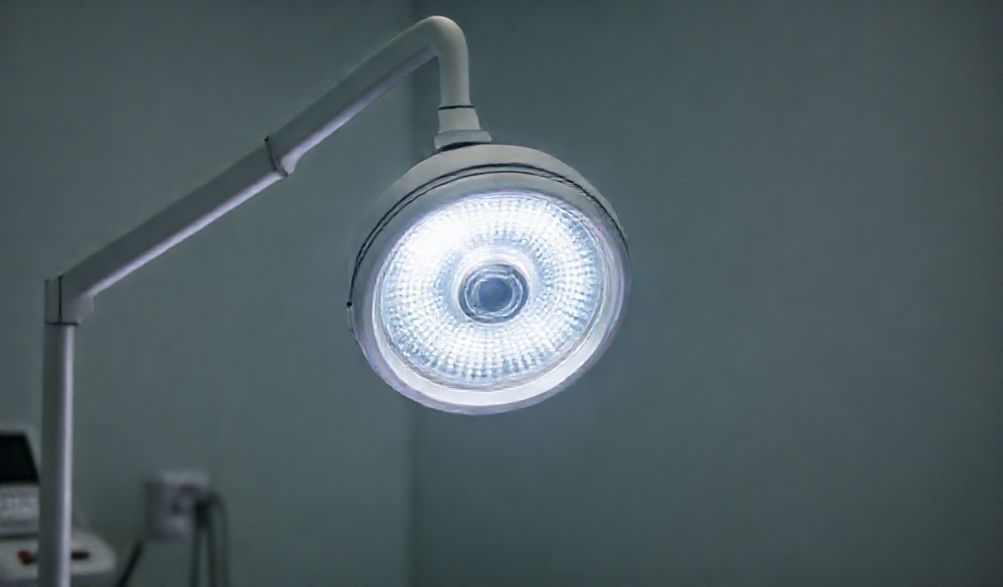
The Ultimate Guide to LED Examination Lamps: Benefits, Features & Selection
Introduction
Picture this: a dentist leans in for a critical look at a subtle crack in a molar, but a shadow falls across the tooth, obscuring detail. A general practitioner examines a rash, but the yellowish hue of the old halogen lamp makes it difficult to distinguish between erythema and bruising. In these moments, lighting isn’t just a utility—it’s a fundamental diagnostic tool. Poor clinical lighting compromises precision, strains the practitioner’s eyes, and can ultimately impact patient care.
For decades, the warm, often hot, glow of halogen lamps was the standard in clinics and operating rooms. But a quiet revolution has taken place, transforming the very nature of medical illumination. That revolution is LED technology. This guide serves as your comprehensive resource, compiled from industry standards, clinical ergonomic studies, and insights from healthcare technology experts. Whether you are a seasoned surgeon, a dental practitioner, a clinic manager overseeing procurement, or a technician setting up a new practice, this guide will help you understand why LED examination lamps are now the unequivocal standard, which features truly matter for clinical outcomes, and how to select the perfect lamp for your specific specialty and workflow.
We will navigate the superior advantages of LED technology, break down the critical optical and mechanical features you should evaluate, provide tailored recommendations for different medical fields, and discuss the practicalities of installation and total cost of ownership. By the end, you’ll be equipped to make an informed, confident investment in one of the most vital tools in any clinical setting.
Why LED Technology is the New Standard for Medical Examination
The shift from halogen to LED is more than just an upgrade; it’s a complete re-imagining of clinical lighting, driven by fundamental advantages that directly enhance medical practice.
From Halogen to LED: A Revolution in Clinical Lighting
The journey of exam lighting began with incandescent bulbs, moved to the brighter and somewhat more efficient halogen lamps, and has now settled on Light Emitting Diodes (LEDs). Halogen lamps work by heating a tungsten filament inside a gas-filled bulb, producing both light and a significant amount of infrared radiation (heat). LEDs, however, are solid-state devices that emit light when an electrical current passes through a semiconductor microchip. This core difference in physics is what unlocks a suite of benefits perfectly suited to the demanding environment of medical examination and procedure.
Unmatched Advantages of LED Examination Lamps
-
Superior Color Rendering (High CRI): This is arguably the most critical advantage. The Color Rendering Index (CRI) measures a light source’s ability to reveal the true colors of an object compared to natural light. Halogen lamps typically have a good CRI (around 100), but they do so inefficiently and with excessive heat. Quality LED examination lamps achieve a CRI of 90, 95, or even higher. This means subtle variations in tissue color—the pallor of anemia, the cyanosis of hypoxia, the erythema of infection, or the precise shade of a restoration material—are rendered with stunning accuracy, directly supporting more confident diagnoses.
-
Cool, Focused Light: Unlike halogen bulbs that radiate heat forward (often uncomfortably onto the patient’s skin or the clinician’s hands), LEDs emit minimal infrared radiation. The light is “cool.” This enhances patient comfort, especially during lengthy procedures, and prevents the drying or heating of sensitive tissues. It also improves clinician comfort and reduces fatigue.
-
Energy Efficiency & Longevity: The efficiency gap is staggering. A typical halogen exam lamp might consume 150 watts to produce a certain light level. An equivalent LED lamp achieves the same or better illumination with just 20-30 watts, slashing energy costs by up to 85%. Furthermore, where a halogen bulb may last 1,000 to 2,000 hours, an LED’s lifespan is typically 50,000 hours or more. This translates to over a decade of use without a single bulb replacement, eliminating maintenance downtime, spare part inventories, and associated waste.
-
Instant On & Dimming: LEDs reach full brightness instantly, with no warm-up period. Combined with smooth, flicker-free dimming capabilities, this allows practitioners to instantly adjust the light intensity to the perfect level for each specific task—from a broad, lower-intensity exam to a focused, high-intensity surgical field—with a simple touch or foot control.
Key Features to Evaluate in an LED Examination Lamp
Not all LED lamps are created equal. When evaluating options, look beyond the basic “LED” label and scrutinize these key performance and design characteristics.
Optical Performance Metrics
- Luminance Intensity (Lux) and Range: Lux measures the amount of light falling on a surface. Medical lamps should offer high intensity (often 40,000 to 160,000+ lux at a set distance) for detailed work, but crucially, this should be adjustable over a wide range. A good dimmer allows you to tailor the light from a soft exam glow to a brilliant surgical spotlight.
- Light Field Diameter and Uniformity: The lamp should provide a consistent, even circle of light without distracting central hotspots or dim edges. The diameter should be appropriate for your work—a smaller, focused spot for dentistry or dermatology, and a larger field for general exams or surgery.
- Color Temperature (Kelvin): This describes the “warmth” or “coolness” of the white light. Warmer light (3000K-4000K) is often considered more comfortable for longer exams, while cooler light (5000K-6000K) mimics daylight and can enhance contrast and alertness, preferred for surgical and detailed procedural work. Some advanced lamps offer adjustable color temperature.
Mechanical Design & Ergonomics
- Articulation & Range of Motion: A lamp is only as good as its ability to be positioned exactly where you need it. Look for multiple, smooth-moving joints (often 4 or more) that allow the light head to be placed directly over the field without casting shadows from your head or hands. It should stay firmly in position once set.
- Balance & Stability: High-quality lamps use internal counterweights or spring-balanced arms. This ensures the lamp feels weightless when you move it and won’t sag, drift, or tip over time, which is critical for maintaining a sterile field or a precise angle during a procedure.
- Ease of Sterilization & Infection Control: The lamp, especially handles and frequently touched surfaces, must be easy to clean and disinfect. Look for seamless designs, smooth surfaces, and materials that can withstand hospital-grade disinfectants. Some feature antimicrobial coatings as an added layer of protection.
Safety & Compliance Standards
A medical LED examination lamp is a Class I or Class IIa medical device. Never compromise on certifications.
* IEC 60601-1: This is the essential international safety standard for medical electrical equipment. Compliance is non-negotiable.
* ISO 13485: This certification indicates the manufacturer has a quality management system specifically for medical devices, ensuring consistent production and reliability.
* IEC 62471 / EN 62471: These are photobiological safety standards that ensure the optical radiation (including blue light) emitted by the lamp is within safe limits for both patients and staff.
Choosing the Right LED Lamp for Your Medical Specialty
Different specialties have unique visual demands. Here’s how to match the lamp’s features to your clinical needs.
For General Practice & Family Medicine
You need a versatile workhorse. Prioritize a lamp with good all-round brightness (40,000-80,000 lux), a medium color temperature (4000K-5000K), and excellent flexibility to examine patients on an exam table, in a seated position, or in a procedure chair. A wide, uniform light field is beneficial.
For Dentistry & Oral Surgery
Precision is paramount. Look for very high intensity (100,000+ lux) to illuminate the deep, dark oral cavity. A focused, smaller light field is standard. The lamp should be designed for shadow reduction, often by positioning the light source close to the clinician’s line of sight. Integration with dental chair controls and easy-to-use sterile sleeves for handles are key features.
For Dermatology & Aesthetic Procedures
Color accuracy and surface detail are everything. Exceptionally high CRI (95+) is mandatory to accurately assess skin tones, vascular lesions, and pigment changes. Magnifying lenses (e.g., 5x diopter) are often integrated or available as accessories. Some specialized dermatology lamps offer cross-polarized lighting, which eliminates surface glare from skin oils to reveal sub-surface detail critical for diagnosing conditions like melanoma.
For Surgery & Emergency Rooms
These settings demand the highest performance. Lamps must deliver extreme intensity (often 150,000+ lux) to penetrate deep cavities and provide shadow-free illumination. A large depth of field is crucial so the light remains focused and bright even as instruments and hands move in and out of the surgical site. Ceiling-mounted systems with multiple lamps or single lamps with sterile, removable handle covers are standard. Robustness and reliability are non-negotiable.
Installation, Maintenance & Total Cost of Ownership
Mounting Options: Ceiling, Wall, Floor, or Table?
- Ceiling Mount: Ideal for operating rooms, procedure rooms, and dental offices. Frees up floor space, provides maximum flexibility and range, and keeps cords out of the way. It is the most permanent and professional installation.
- Wall Mount: A good space-saving solution for exam rooms where the patient table is against a wall. Offers good range but less flexibility than a ceiling mount.
- Floor Stand: Provides great mobility and flexibility, perfect for clinics with multiple use cases or shared rooms. Can be moved out of the way when not in use.
- Table/Clamp Mount: A cost-effective and simple solution for specific, fixed workstations, but offers the least positional flexibility.
Ensuring Longevity and Performance
LEDs are virtually maintenance-free, but the mechanical system requires care. Clean regularly with approved disinfectants, avoiding harsh abrasives. Move the arms smoothly without forcing them past their stops. Periodically check for any looseness in the joints. Understand the warranty—it often covers the LED module for its entire lifespan but may have separate terms for mechanical parts.
The True Investment: Beyond the Purchase Price
While the upfront cost of a premium LED examination lamp may be higher than a legacy halogen model, the Total Cost of Ownership (TCO) tells a different story. Calculate the savings: an LED using 30W vs. a halogen using 150W saves ~$50+ per lamp annually in energy costs. Eliminating 25+ halogen bulb replacements over the LED’s life saves hundreds more in parts and labor. Most importantly, factor in the intangible ROI: reduced practitioner eye strain and fatigue, enhanced diagnostic confidence, and improved patient outcomes. The lamp pays for itself many times over.
Frequently Asked Questions (FAQ) About LED Examination Lamps
Q1: Are LED examination lamps really worth the higher upfront cost compared to halogen?
A: Absolutely. When considering Total Cost of Ownership (TCO), LEDs are far more economical. The savings from 80-90% lower energy consumption and the complete elimination of bulb replacements over a 50,000+ hour lifespan will typically recoup the price difference within 1-3 years. After that, it’s pure savings, plus the daily benefits of better light quality and reduced heat.
Q2: What does CRI mean, and what is a good CRI for medical diagnosis?
A: CRI stands for Color Rendering Index. It’s a scale from 0 to 100 that measures how accurately a light source reveals the true colors of objects compared to natural daylight. For accurate clinical assessment of tissue, a CRI of 90 or higher is strongly recommended. Specialties like dermatology, plastic surgery, and dentistry should aim for CRI 95+ for the most critical color discrimination.
Q3: How do I know if a lamp meets medical safety standards?
A: Check the product specifications, user manual, and labeling on the device itself. Reputable manufacturers will explicitly state compliance with IEC 60601-1 (general safety) and ISO 13485 (quality management). Look for the CE mark (with a notified body number for Class IIa devices) or other regional medical device approvals. If this information is not clearly provided, consider it a red flag.
Q4: Can the light from an LED exam lamp be too bright or harmful to eyes?
A: Quality medical LEDs are engineered to be safe. They minimize harmful UV/IR spectra and are designed to reduce glare. The adjustable dimmer allows you to set a comfortable, task-appropriate intensity. The main risk is temporary discomfort from looking directly at the very bright LED chip array. It’s good practice to avoid direct viewing of the light source and to use the dimmer to find the lowest sufficient intensity for the task.
Conclusion
The transition to LED examination lamps represents one of the most impactful upgrades a clinical practice can make. It’s a shift from a simple source of illumination to an intelligent, high-performance diagnostic partner. The benefits are clear: unparalleled color accuracy for confident diagnosis, cool and comfortable light for patients and staff, dramatic reductions in energy and maintenance costs, and robust, ergonomic designs that support daily workflow.
When making your selection, remember that you are investing in diagnostic precision and practitioner well-being. Prioritize high CRI and appropriate intensity for your specialty, demand robust mechanical construction with smooth articulation, and verify essential medical safety certifications. Use the criteria outlined in this guide as a checklist to compare models from reputable suppliers.
Take the time for due diligence—consult with clinical engineers, request demonstrations, and see the light quality for yourself. As LED technology continues to evolve, features like adaptive color temperature and smart system integration will further enhance clinical environments. By choosing a superior LED examination lamp today, you are not only solving an immediate need but also future-proofing your practice with a cornerstone of modern, high-quality patient care.
p>