
The Ultimate Guide to LED Surgical Lights: Benefits, Technology & Selection Criteria
Introduction
What separates a good operating room from a great one? While advanced imaging systems and robotic assistants often capture headlines, the foundation of every successful surgical intervention is far more fundamental: the quality of light. Optimal illumination is the silent, critical partner in the OR, directly influencing a surgeon’s ability to differentiate tissue, perceive depth, and perform with precision. Inadequate lighting isn’t just an inconvenience; it’s a variable that can impact patient safety, procedural duration, and clinical outcomes.
This comprehensive guide is designed for surgical directors, hospital procurement teams, biomedical engineers, and surgeons seeking authoritative, evidence-based information on modern surgical illumination. Our purpose is to move beyond marketing claims and provide a synthesized resource grounded in manufacturer specifications, clinical studies, and industry best practices. Whether you are researching a capital purchase, planning an OR upgrade, or deepening your technical knowledge, this guide will illuminate the critical aspects of LED surgical lighting systems. You will learn about the revolutionary advantages of LED technology, the key technical specifications that matter, the features defining modern surgical suites, and a practical framework for selecting the right system for your facility’s unique needs.
Why LED Technology Revolutionized the Operating Room
The transition to LED (Light Emitting Diode) technology represents the most significant leap in surgical illumination since the introduction of the shadowless lamp. It’s not merely a change of bulb; it’s a transformation in the very quality, reliability, and intelligence of light in the operating theater.
From Halogen to LED: A Timeline of Surgical Illumination
For decades, halogen lights were the gold standard. Preceded by rudimentary incandescent systems, halogen lamps offered brighter, whiter light than their predecessors. However, they came with significant drawbacks. These lamps operated at extremely high temperatures, emitting substantial radiant heat toward the surgical site—a concern for patient tissue and surgeon comfort. Their color rendering, while improved, was often inconsistent, and their lifespan was notoriously short, typically between 1,000 to 2,000 hours. This resulted in frequent, costly bulb changes and the ever-present risk of a light failing mid-procedure. The operating room demanded something better: a light source that was cooler, more reliable, and truer to life.
Core Advantages of LED Surgical Lighting Systems
LED technology answered this demand with a suite of inherent advantages that directly address the limitations of the past.
- Superior Color Rendering Index (CRI): The CRI is a measure of a light source’s ability to reveal the true colors of objects compared to natural light. In surgery, accurate color differentiation between arterial and venous blood, healthy and necrotic tissue, or subtle variations in organ hue is non-negotiable. LED systems consistently achieve CRI values of 90 or higher (out of 100), with premium models reaching 95+ or even 98. This is a stark contrast to the 80-90 CRI typical of halogen lights. The result is enhanced tissue contrast and visual clarity, reducing diagnostic uncertainty and surgical error.
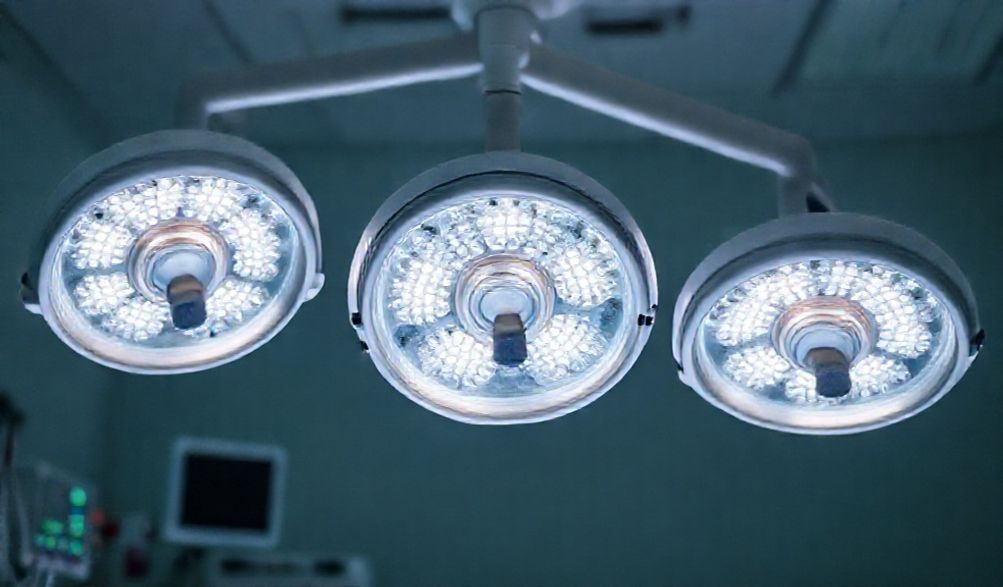
- Shadow Reduction & Depth of Field: Traditional single-point light sources create harsh, obstructive shadows. Modern LED surgical lights utilize multi-point source technology, where hundreds of individual LEDs are arranged in a specific geometric pattern (often concentric rings). This design allows light rays from multiple angles to fill in shadows created by the surgeon’s hands, head, or instruments, particularly in deep cavities. This creates a homogeneous, high-depth-of-field illumination that maintains clarity even in challenging anatomical landscapes.
Operational and Financial Benefits
The benefits of LED lighting extend far beyond the surgical field, delivering tangible operational and financial returns on investment.
- Energy Efficiency & Cost Savings: LED lights consume 50-70% less energy than equivalent halogen systems. While the initial capital outlay may be higher, the total lifetime cost of ownership is dramatically lower. This efficiency translates into direct savings on hospital utility bills and a reduced environmental footprint.
- Longevity & Reduced Maintenance: An LED module can have a functional lifespan of 50,000 to 100,000 hours—compared to 1,000 for halogen. This means years, even decades, of operation without a bulb change. The elimination of frequent lamp replacements reduces maintenance labor costs, spare parts inventory, and, most importantly, eliminates the risk of procedural interruption due to lamp failure.
- Minimal Heat Emission: LEDs produce light with very little infrared (IR) radiation. The intense heat associated with halogen lights is virtually eliminated. This enhances patient safety by minimizing the risk of tissue desiccation and thermal injury at the incision site. It also significantly improves comfort for the surgical team, who no longer work under a “heat lamp.”
Key Technical Specifications to Evaluate
Understanding the technical language of surgical lighting is essential for making an informed comparison. Here are the critical specifications to scrutinize.
Understanding Lux and Illuminance
Illuminance, measured in lux, is the amount of light falling on a surface. Surgical lights must deliver extremely high, focused illuminance. Center-field lux levels typically range from 40,000 to over 160,000 lux. Crucially, this intensity should be adjustable. A delicate ophthalmic procedure may require lower, diffused light, while a deep abdominal surgery demands maximum intensity. Look for systems with intuitive, stepless dimming controls that allow the team to tailor the light to the procedural phase instantly.
Color Temperature & Tissue Contrast
Measured in Kelvin (K), color temperature describes the hue of “white” light. Lower temperatures (3000K) appear warm/yellowish, while higher temperatures (6000K+) appear cool/bluish. Clinical consensus favors a daylight-mimicking range of 4000K to 5000K. This neutral white light optimizes visual contrast, reduces eye strain over long procedures, and provides the most accurate color perception—akin to working under natural daylight. Some advanced systems now offer adjustable color temperature, allowing surgeons to switch modes to enhance specific tissue types or contrast agents.
Beam Shape, Diameter, and Adjustability
The light’s beam should be highly controllable. Key features include:
* Focusable Field: The ability to adjust the beam diameter from a concentrated “spot” for deep-cavity work to a wide “flood” for superficial or large-area procedures.
* Homogeneity: The light field should be even, without distracting bright spots (hotspots) or dark rings. A homogeneous field prevents eye fatigue as the surgeon’s gaze moves across the wound.
* Depth of Illumination: This refers to how effectively the light maintains its intensity and homogeneity as it penetrates deeper into a cavity. Superior multi-source LED designs excel here.
Infection Control & Cleanability
The surgical light is a frequent point of contact and a potential reservoir for pathogens. Its design must support stringent infection control protocols.
* Sealed Optics: The LED modules and internal electronics should be fully sealed to prevent the ingress of fluids, dust, and surgical smoke.
* Crevice-Free Surfaces: The entire housing, especially handles and control panels, should have a smooth, monolithic design with minimal seams or joints where contaminants can accumulate.
* Disinfectant Compatibility: All external surfaces must be compatible with aggressive, hospital-grade chemical disinfectants without degrading, discoloring, or corroding.
Critical Features for Modern Surgical Suites
Today’s LED surgical lights are sophisticated ergonomic and technological tools integrated into complex environments.
Ergonomic Design and Maneuverability
A brilliant light is useless if it’s difficult to position. Modern systems feature advanced balanced arm assemblies with gas springs or magnetic counterweights. This allows for effortless, single-handed positioning—”floatation” movement—that stays precisely where placed, without drift. The system should have extensive reach and articulation to cover the entire OR table from various mounting points, minimizing physical strain on nurses and surgical techs.
Integration with Hybrid ORs and Imaging Systems
The modern OR is a hub of technology. Surgical lights must integrate seamlessly.
* Camera & Video Integration: Many lights have built-in or easily attachable 4K cameras for recording, streaming, and teaching. The light’s color rendering is critical for accurate video documentation.
* Imaging Compatibility: In Hybrid ORs with fixed C-arms, CT, or MRI, lights must have a small footprint and the ability to be positioned out of the way without sacrificing illumination. Furthermore, they must not emit electromagnetic interference that could disrupt sensitive imaging equipment.
* Specialty Imaging Support: For procedures using fluorescence imaging (e.g., ICG angiography), lights should offer specific modes that can be dimmed or switched to a different color spectrum to not overwhelm the sensitive fluorescent signal.
Redundancy and Safety Systems
Uninterrupted illumination is a patient safety imperative. Top-tier systems incorporate multiple layers of redundancy:
* Backup Light Sources: If one LED module or power supply fails, the system should automatically maintain illumination, often at a reduced but still clinically usable level.
* Battery Fail-Safe: In a power outage, an integrated battery should instantly power the light, typically for a minimum of 60-90 minutes, allowing the procedure to be completed or safely paused.
* Thermal Management: Advanced heat sink designs and passive/active cooling ensure the LED arrays operate within safe temperature ranges, guaranteeing longevity and consistent performance.
How to Select the Right LED Surgical Light for Your Facility
Selecting a surgical light is a strategic decision. A systematic approach ensures the investment meets clinical needs and delivers long-term value.
Assessing Procedure-Specific Needs
Not all ORs are the same. Create a decision matrix based on your facility’s surgical mix:
* General & Laparoscopic Surgery: Prioritize high intensity, excellent depth of illumination, and good shadow reduction. Camera integration is a major plus.
* Neurosurgery & Spine: Require exceptional depth of field for deep, narrow cavities. A focused, homogeneous spot beam is critical. Consider lights with excellent maneuverability to work around complex head fixation devices.
* Cardiac & Thoracic: Need wide, even coverage for large open fields. Integration with overhead equipment booms is key.
* Orthopedics & Trauma: Demand robust construction, very high lux levels for working with bright reflective bone, and often a wider flood beam.
* ENT & Plastic Surgery: Benefit from adjustable color temperature to enhance tissue differentiation and possibly smaller, more maneuverable light heads.
Evaluating Mounting Options (Ceiling, Wall, Floor)
The mounting solution impacts workflow and flexibility.
* Ceiling Mounted (Single or Multi-Arm): The most common and space-efficient. Provides the largest range of motion and keeps the floor clear. Ideal for new construction and major renovations.
* Wall Mounted: A cost-effective alternative where ceiling mounting is impractical. Offers good coverage but a more limited range of motion.
* Floor Stand (Mobile): Provides ultimate flexibility, allowing the light to be used in multiple rooms or positioned in unconventional ways. Essential for minor procedure rooms, endoscopy suites, or as a backup. Can be an obstacle in crowded ORs.
The Procurement Checklist
When engaging with vendors, use this checklist of must-ask questions:
* Warranty & Service: What is the comprehensive warranty period (e.g., 5 years on LEDs, 3 years on mechanics)? What are the terms of the service agreement and response times?
* Compliance: Does the system fully comply with the international safety and performance standard for surgical luminaires, IEC 60601-2-41?
* Total Cost of Ownership: Request a 5-10 year TCO analysis including energy consumption, expected maintenance, and part replacement costs vs. your current system.
* Upgrade Path: Is the system modular? Can LED engines or control systems be upgraded in the future without replacing the entire arm or mount?
* Training & Support: What on-site training is provided for clinical and biomedical engineering staff? Is 24/7 technical support available?
* Clinical Trial: Can we conduct a clinical evaluation or extended trial in one of our ORs before committing to a fleet-wide purchase?
FAQ Section
Q1: What is the typical lifespan of an LED surgical light, and what does the warranty cover?
The LED modules themselves typically have a rated lifespan of 50,000 to 100,000 hours, which translates to 15-30 years of normal use. A comprehensive warranty from a reputable manufacturer often covers the LED engines for 5 years or more and other mechanical/electrical components for 2-3 years. Always clarify what is included (parts, labor, travel) and the process for claims.
Q2: How does LED lighting specifically improve surgeon visual acuity and reduce eye strain during long procedures?
LED lights offer superior CRI (>90), providing true-to-life color that reduces the cognitive effort needed for tissue differentiation. The homogeneous, multi-source light field minimizes harsh shadows and hotspots, creating a consistent visual plane. The optimal 4000-5000K color temperature is less fatiguing than the yellowish tint of halogen. Together, these factors reduce the need for intense ocular focus and accommodation, decreasing fatigue.
Q3: Are LED surgical lights compatible with all existing operating room mounting infrastructure?
Not always. While many manufacturers offer adaptor plates for common mounting interfaces, the weight, balance, and electrical requirements of a new LED system may differ from your old halogen lights. A site assessment by a qualified biomedical engineer or the vendor is essential to confirm structural compatibility of the ceiling, electrical load capacity, and the need for any retrofit hardware.
Q4: What are the most important certifications or standards (like ISO or IEC) to look for?
The paramount standard is IEC 60601-2-41, which specifies the safety and essential performance requirements for surgical luminaires and diagnostic luminaires. Compliance with this standard is non-negotiable. Additionally, look for manufacturers with a certified ISO 13485 quality management system, which governs the design and production of medical devices, ensuring consistency and reliability.
Q5: Can the color temperature and intensity of LED lights be adjusted during a procedure, and why would this be needed?
Yes, many advanced LED systems now offer this feature. Adjustable intensity is standard for adapting to different procedural depths and surgeon preference. Adjustable color temperature (e.g., switching from 4500K to 5500K) can be used to enhance the visual contrast of specific tissues. For example, a cooler temperature might make arterial blood appear brighter red against yellow fat, aiding in dissection.
Conclusion
The adoption of LED surgical lighting is far more than a simple technology upgrade; it is a fundamental enhancement to the core environment of patient care. By delivering unparalleled color accuracy, shadow-free illumination, and profound operational reliability, LED systems directly contribute to improved surgical precision, enhanced patient safety, and increased OR efficiency. The long-term financial benefits, through energy savings and eliminated maintenance, make a compelling case for investment.
Selecting the right system is a data-driven decision with lasting implications. It requires synthesizing clinical needs from your surgical teams with technical specifications and financial planning. We strongly recommend a collaborative approach: involve surgeons, nurses, biomedical engineering, and procurement in the evaluation process. Insist on live demonstrations in a relevant clinical setting—there is no substitute for seeing the light on a simulated field.
As we look to the future, LED technology forms the foundational platform for the next evolution of the smart OR. Integration with centralized room control systems, data-driven adjustment of light settings for specific procedure types, and even AI-assisted dynamic illumination are on the horizon. Investing in a capable, modern LED surgical lighting system today prepares your facility not just for the present, but for the future of surgery.
p>