
Illuminating Modern Medicine: The Complete Guide to LED Surgical Lights
In the high-stakes environment of an operating room, success is measured in millimeters and minutes. Every decision, every movement, and every piece of equipment plays a role in determining patient outcomes. Among these critical tools, one is so fundamental that its importance can be overlooked: the surgical light. More than just a lamp, it is the surgeon’s sun, the primary source of visual information that guides incisions, identifies anatomy, and controls bleeding. For decades, the warm, intense glow of halogen bulbs defined the OR. Today, a quiet revolution has taken place, driven by solid-state technology that is transforming the visual landscape of surgery. This guide provides a comprehensive, expert-driven resource for medical professionals, hospital procurement teams, and biomedical engineers, exploring the technology, benefits, selection criteria, and future of LED surgical lights to inform evidence-based decision-making for modern healthcare facilities.
The Technology Behind LED Surgical Lights
Understanding the core engineering of LED surgical lights is key to appreciating their advantages. This isn’t merely a “new kind of bulb”; it’s a fundamentally different approach to generating light.
How LED Lighting Differs from Traditional Halogen
Traditional halogen surgical lights work on a principle familiar since Edison: electricity heats a tungsten filament inside a gas-filled bulb until it glows white-hot. This process is inherently inefficient, converting over 90% of the energy into infrared radiation (heat) and only a fraction into visible light. The filament gradually evaporates, darkening the bulb and dimming its output until it fails, typically after 1,000 to 2,000 hours. The intense radiant heat projected downward is a significant drawback, risking tissue desiccation and contributing to an uncomfortably warm environment for the surgical team.
In stark contrast, a Light Emitting Diode (LED) is a solid-state semiconductor device. When an electrical current passes through it, electrons recombine with electron holes, releasing energy in the form of photons—light. This electroluminescence process generates very little infrared energy directly in the light beam. The result is a “cold” light source where the majority of the heat produced is conducted away from the diode chip itself, not radiated onto the surgical field.
Key Technical Components and Their Functions
A modern LED surgical light is a sophisticated system comprised of several integrated components:
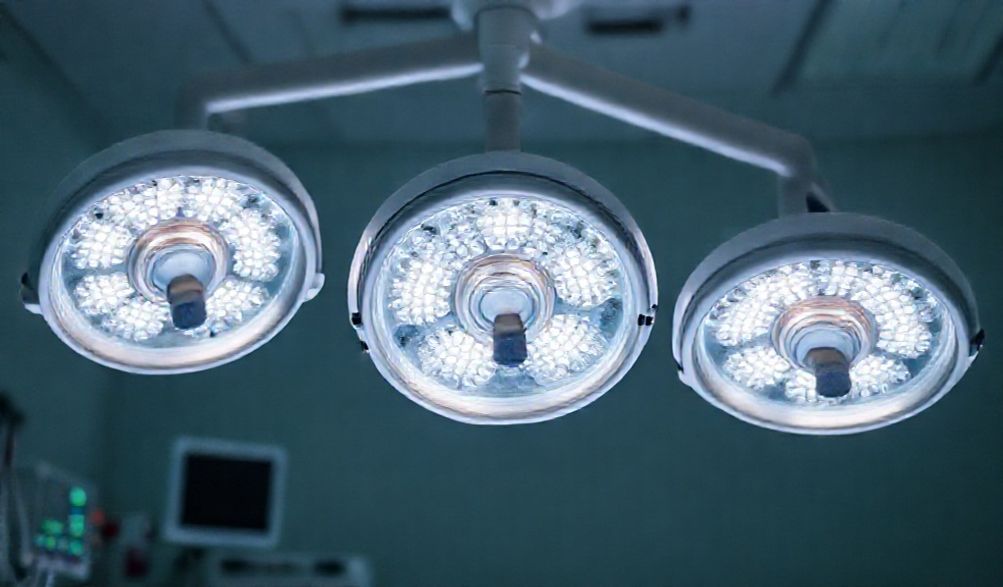
- LED Chips and Arrays: Instead of a single point of light, hundreds of tiny, powerful LED chips are arranged in a dense array. This multi-source design is the first secret to superior shadow reduction. The color temperature of these LEDs is meticulously calibrated, typically between 4000K and 4500K. This “cool white” range provides excellent brightness with a slight blue tint that enhances the contrast of red tissues and blood against yellow fat and pale organs, a critical factor for visual acuity.
- Heat Sink Technology: While the light beam is cool, the LED chips do generate heat at their base. Effective thermal management via advanced aluminum heat sinks is non-negotiable. These fins draw heat away from the diodes, dissipating it into the air behind the light head. This protects the LEDs from thermal degradation, ensuring a consistent light output and achieving that remarkable 50,000+ hour lifespan.
- Optics and Reflectors: Secondary optics—lenses and precision reflectors—work in tandem with the LED array to shape and direct the light. They focus the output to achieve a deep, uniform field of illumination, often described as a “light tunnel” effect. This allows for bright, shadow-minimized lighting even in deep-cavity procedures like spinal or pelvic surgery.
- Control Systems: Digital interfaces have replaced simple dials. Touchscreens or sterile handles allow surgeons to intuitively adjust intensity (often from 10% to 100%), fine-tune color temperature, and change the focus from a wide field to a concentrated spot. Some systems offer programmable memory settings for different procedure types.
Clinical and Operational Advantages of LED Surgical Lighting
The shift to LED technology delivers tangible benefits that directly impact both patient care and hospital operations, creating a compelling value proposition.
Enhancing Surgical Precision and Patient Safety
This is the paramount concern, and LED surgical lights excel here.
- Superior Color Rendering Index (CRI >90): CRI measures a light’s ability to reveal the true colors of objects compared to natural light. Halogen lights typically have a good CRI (~95-100), but LEDs now match or exceed this. A CRI above 90 is essential for accurately differentiating between arterial and venous blood, identifying subtle tissue pathologies, and distinguishing nerve structures. This reduces visual strain and surgeon fatigue, directly contributing to precision and safety.
- Minimal Heat Radiation: The dramatic reduction in infrared radiation projected onto the patient is a major safety advancement. It lowers the risk of iatrogenic tissue drying (desiccation), especially in open-cavity surgeries, and improves comfort for both patient and staff.
- Consistent Luminance: Unlike halogen bulbs that dim steadily over their life, high-quality LEDs maintain over 70% of their initial light output (L70) for their entire rated lifespan. The surgeon is guaranteed a consistent, reliable level of illumination for every procedure, with no surprise drop in performance.
Delivering Institutional ROI and Sustainability
Beyond the clinical benefits, the operational advantages make a powerful financial case.
- Energy Efficiency: LED surgical lights consume 60-80% less electricity than comparable halogen systems. For a busy OR with multiple lights running for 10+ hours a day, this translates to thousands of dollars in annual energy savings per light, with a significantly reduced carbon footprint.
- Longevity and Reduced Maintenance: A lifespan of 50,000-60,000 hours versus 1,000-2,000 hours is transformative. This eliminates the frequent, costly, and logistically disruptive process of bulb replacement. It also removes the patient safety risk associated with a bulb failure mid-procedure.
- Lower Total Cost of Ownership (TCO): While the initial capital investment for an LED system can be higher, the TCO analysis is decisively in its favor. When factoring in 5-10 years of zero bulb costs, dramatically lower energy bills, and reduced maintenance labor, LED surgical lights typically pay for themselves within a few years and then continue to generate savings.
How to Select the Right LED Surgical Light System
Selecting a surgical light is a major capital decision. A methodical evaluation based on key specifications and institutional needs is crucial.
Critical Specifications to Evaluate
- Illumination Metrics: Look for lux (illuminance) levels at standard working distances (e.g., 100,000+ lux at 1 meter). Equally important is the diameter of the illuminated field and the depth of illumination—how well the light penetrates into a cavity without a rapid fall-off in intensity.
- Shadow Management: Evaluate the light’s shadow dilution performance. This is achieved through the multi-source LED array and optical design. Ask for demonstrations where instruments or hands intrude into the light field; the best lights will render shadows faint and diffuse, not dark and obstructive.
- Sterilization and Cleanability: The light head must be designed for rigorous infection control. Look for a high Ingress Protection (IP) rating (e.g., IP54), indicating resistance to dust and water splashes. The surface should be seamless, without crevices where contaminants can lodge, and able to withstand harsh hospital-grade disinfectants.
Matching the Light to the Surgical Specialty
- General & Cardiothoracic Surgery: Require a large, uniform field with excellent depth for open procedures.
- Orthopedics & Neurosurgery: Need intense, deep-cavity illumination for working within spines or joints, often benefiting from a smaller, more focused central spot.
- ENT & Plastic Surgery: May prioritize lights with exceptional color rendering and adjustable color temperature to accurately assess tissue viability and aesthetics.
- Specialized Lights: Don’t overlook the ecosystem. LED headlights provide portable, high-quality light, and dedicated LED endoscopic light sources are critical for minimally invasive surgery.
Integration and Compliance Considerations
- Infrastructure: Verify mechanical and electrical compatibility with your existing OR booms, ceiling mounts, and control systems. Weight is a key factor.
- Compliance: Ensure the system carries the necessary certifications, such as IEC 60601-1 for medical electrical equipment safety and ISO 9680 for the specific performance of surgical luminaires.
The Future of Surgical Illumination
The evolution of LED surgical lights is moving beyond illumination toward becoming integrated information hubs.
Emerging Trends and Innovations
- Integration with Imaging and AI: Future light heads will incorporate 4K cameras for teaching and telemedicine, and may overlay real-time imaging (like angiography or MRI) directly onto the surgical field via augmented reality displays.
- Adaptive and Smart Lighting: Systems are in development that use cameras and sensors to automatically adjust light intensity and color temperature based on the tissue being viewed or the presence of blood, optimizing visualization dynamically.
- Advances in Connectivity: IoT-enabled lights will communicate with the hospital’s network, providing usage data, predictive maintenance alerts, and integrating with the OR’s control system for seamless “room states.”
Maintaining Your Investment: Care and Future-Proofing
- Care: Follow manufacturer guidelines for cleaning. Use only approved disinfectants to avoid damaging coatings or seals. Perform regular checks of movement, balance, and control responsiveness.
- Future-Proofing: Consider systems with modular designs that allow for future upgrades, such as swapping in a new LED engine or adding a camera module, rather than replacing the entire unit.
FAQ Section
Q: Are LED surgical lights really cooler than halogen lights?
A: Yes, significantly. While heat is generated at the LED chip, it is conducted away from the light beam by sophisticated heat sinks. The radiant heat projected onto the surgical site is a fraction of that from a halogen bulb, enhancing patient safety and staff comfort.
Q: What is the typical lifespan of an LED surgical light, and how does it compare?
A: High-quality LED surgical lights have a lifespan of 50,000 to 60,000 hours. In contrast, traditional halogen bulbs last only 1,000-2,000 hours. This means an LED light can last over a decade in typical operating room use before requiring major service.
Q: Can LED surgical lights be dimmed effectively without color shift?
A: Absolutely. One of the key advantages of quality LED systems is precise, flicker-free dimming across a wide range (often 10-100%). Unlike dimmed halogen lights that turn yellow, LEDs maintain a consistent color temperature throughout the dimming range.
Q: How important is the Color Rendering Index (CRI) for surgery?
A: Extremely important. A CRI >90 (on a scale where 100 is perfect natural light) is considered essential for accurately distinguishing subtle differences between tissues, arteries, veins, and organs. This accuracy is foundational to surgical precision and patient safety.
Q: Are all LED surgical lights compatible with older operating room mounts?
A: Not automatically. Compatibility must be carefully verified. While many manufacturers offer adapter kits, factors like the mechanical interface (clamp type), weight capacity of the existing boom, and electrical connection standards must all be assessed during the procurement process.
Conclusion
The transition from halogen to LED surgical lights represents more than an equipment upgrade; it is a fundamental enhancement to the surgical ecosystem. By delivering superior visualization that enhances precision and safety, while simultaneously driving down long-term operational costs and environmental impact, LED technology offers a compelling and responsible choice for modern healthcare. Investing in a surgical light is a critical, long-term decision that should be grounded in technical data, clinical evidence, and a clear understanding of institutional needs. Today’s LED surgical lights are not merely tools for illumination; they are foundational technologies actively enabling the future of safer, more precise, and sustainable surgical care. We encourage all stakeholders to consult with clinical engineers, review specific product validations, and, most importantly, request hands-on demonstrations to experience the profound differences firsthand.
p>