
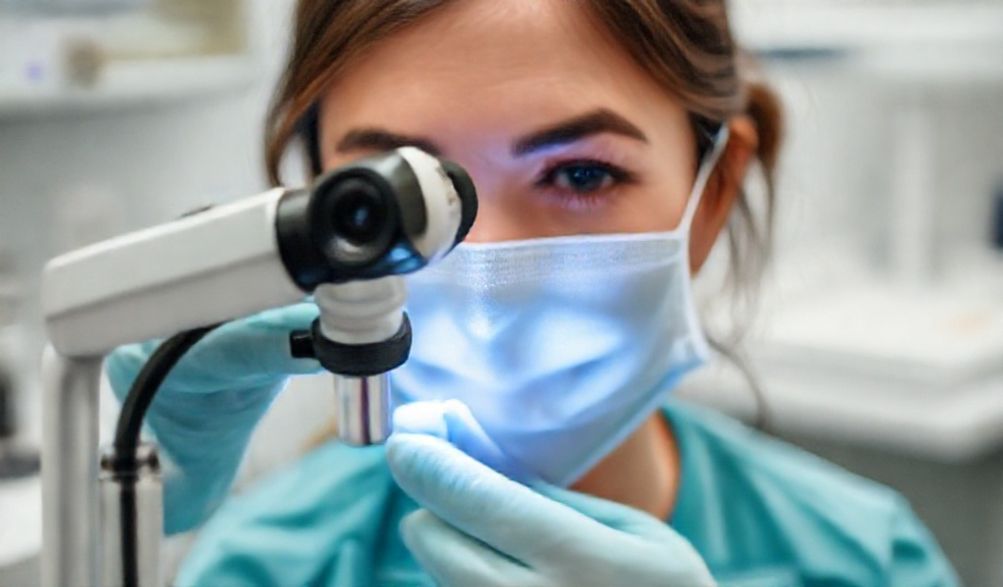
The Ultimate Guide to Loupes for Dental Hygienists: Enhancing Precision, Ergonomics, and Patient Care
You’ve just finished your fourth prophy of the day. As you straighten up, a familiar twinge radiates from your neck, down through your shoulders. Your eyes feel strained from hours of peering into dark, confined spaces, searching for the faintest hint of subgingival calculus. You wonder, as you reach for the ibuprofen, if this is just an inevitable part of the job. What if it didn’t have to be?
For the modern dental hygienist, loupes are far more than a simple magnifying tool. They represent a critical investment in your long-term career health, a significant upgrade to your clinical performance, and a direct enhancement to the quality of care you provide. In an era where precision and preventive ergonomics are paramount, aligning with the highest professional standards means equipping yourself with the best tools available. This guide is built not as a sales pitch, but as an evidence-based resource rooted in the real-world experience of clinical practice. We’ll delve into the proven benefits—from reducing musculoskeletal disorders to minimizing clinical errors—and break down the technical specifications in clear, practical terms. Our goal is trustworthy, authoritative information that empowers you, the dental hygienist, to make a confident, informed decision for your practice and well-being.
This comprehensive guide will explore the key benefits, types, critical selection criteria, and maintenance tips for dental loupes, specifically tailored to the needs and workflows of the practicing dental hygienist.
Why Dental Hygienists Need Loupes: Beyond Magnification
While the word “loupes” often conjures an image of simple magnification, their true value for dental hygienists is profoundly multidimensional. They are a foundational tool for sustainable practice, transforming not just what you see, but how you work.
Ergonomics and Career Longevity
The statistics are sobering: dental professionals have a high prevalence of work-related musculoskeletal disorders (MSDs), particularly in the neck, back, and shoulders. Hygienists are at exceptional risk due to the repetitive, static, and precision-demanding nature of their work. Loupes are a primary defense against this occupational hazard.
The magic lies in posture. Without loupes, you instinctively bring your head forward and down to get closer to your visual target—a position that places immense strain on your cervical spine. Loupes, when properly fitted, bring the magnified image to you. By incorporating a custom declination angle, they allow you to sit upright with your spine in a neutral posture—head positioned over your shoulders, back supported. This isn’t just about comfort; it’s about career sustainability. Reducing physical strain means less pain, lower risk of chronic injury, decreased absenteeism, and the ability to practice vigorously for decades, not just years.
Enhanced Visualization and Clinical Accuracy
Your tactile sense is expert, but vision is your primary guide. Standard vision simply cannot compete with magnified, illuminated detail. With loupes, what was a faint line becomes a clear crack. A subtle shade variation reveals early demineralization. Subgingival calculus, especially tenacious burnished deposits, becomes distinctly visible.
This enhanced visualization translates directly to clinical accuracy. You can perform more complete calculus removal, ensuring a cleaner root surface. You can identify incipient caries, cracked tooth syndromes, and soft tissue abnormalities like ulcerations or early cancerous lesions at their most treatable stages. This elevates the standard of care you provide and bolsters your professional confidence, knowing your assessment is based on superior visual information.
Improved Patient Communication and Education
“Seeing is believing” is a powerful principle in patient care. Loupes, especially when paired with an integrated camera, transform you from a narrator into a guide. You can show a patient, in real-time and stunning clarity, the buildup of calculus below their gumline, the bleeding points indicating inflammation, or the early signs of enamel breakdown.
This visual evidence fosters immense trust. It makes your recommendations—for a more frequent recall, a specific treatment, or improved home care—irrefutable and collaborative. Patients become active partners in their oral health, leading to higher case acceptance and better long-term outcomes. It turns a routine cleaning into an educational experience.
Reduced Eye Strain and Fatigue
Squinting, straining, and constantly refocusing (a process called accommodation) to see fine detail is exhausting. By providing a magnified, focused image at a fixed distance, loupes eliminate this constant effort. Integrated LED lighting (which we’ll discuss later) floods the operative field with shadow-free illumination, further reducing the need for ocular strain. The result? Less end-of-day fatigue, fewer headaches, and preserved visual acuity throughout your career.
Key Features and Terminology: Understanding Your Options
Navigating the world of loupes requires understanding some key terms. Knowing this language will empower you to choose a system that fits your clinical life perfectly.
Magnification Power (Galilean vs. Prismatic)
Magnification typically ranges from 2.5x to 6x or higher. For most hygienists starting out, a 2.5x to 3.5x magnification offers an excellent balance between an expanded field of view and valuable detail, suitable for procedures from prophies to SRP.
The optical system defines the loupes:
* Galilean Systems: Use a simple lens arrangement. They are generally lighter, more compact, and less expensive. They are ideal for lower magnification (2.5x-3.5x) and are a fantastic starting point for many hygienists.
* Prismatic (Keplerian) Systems: Use a series of prisms to fold the light path, allowing for higher magnification (3.5x and above) with a wider field of view and greater depth of field. They are typically heavier and more expensive but offer superior optical performance for those needing high power.
Field of View and Depth of Field
- Field of View (FOV): The diameter of the area you can see through the loupes at one time. Higher magnification usually means a smaller FOV.
- Depth of Field (DOF): The range of distance (from near to far) within which objects remain in clear focus. A greater DOF allows you to move your hands or instruments slightly without losing focus.
For the dynamic movements of hygiene, a wider FOV and reasonable DOF are crucial to maintain spatial awareness.
Working Distance and Declination Angle
These are the most critical custom parameters and are non-negotiable for ergonomics.
* Working Distance: Measured from your eye to the patient’s mouth. It’s determined by your arm length and preferred seating position.
* Declination Angle: The angle at which the loupes are tilted downward from horizontal. It’s calculated based on your height, torso length, and how you sit.
These measurements ensure your loupes place the magnified image precisely where your eyes naturally look when you are sitting in a healthy, upright posture. A generic or self-measured kit cannot achieve this precision.
Lighting Systems: Integrated LED Lights
Light is not an accessory; it is half of the equation. Magnification is useless in the dark shadows of the oral cavity. Integrated LED lights provide coaxial (shadow-free) or peripheral illumination.
* Corded vs. Wireless: Corded systems often provide brighter, unwavering light but have a cable that can be cumbersome. Wireless systems use a rechargeable battery pack (usually on your waist or headband) for ultimate freedom of movement.
* Light Quality: Consider intensity (measured in lux or lumens) and color temperature. A cooler, whiter light (5500K-6000K) often provides better contrast for detecting calculus and caries.
A Step-by-Step Guide to Choosing Your Loupes
Selecting loupes is a personal process. Follow these steps to find your perfect match.
Step 1: Self-Assessment of Your Clinical Needs
Ask yourself:
* What procedures do I find most visually challenging? (e.g., deep posterior calculus, furcations)
* Do I have any existing neck, back, or eye issues?
* How important is patient education and documentation in my practice?
* Do I work in multiple operatories or settings?
Your answers will guide your priorities for magnification, lighting, and potential camera compatibility.
Step 2: Setting a Realistic Budget
Loupes are an investment. Basic Galilean systems with light can start around $800-$1,500, while advanced prismatic systems with wireless lighting can range from $2,000 to $4,000+. Frame this not as a cost, but as an investment in your health and career longevity. Explore options: some employers offer contribution programs or equipment stipends. They may also be a tax-deductible professional expense.
Step 3: The Essentiality of a Professional Fitting
This cannot be overstated. An in-person fitting with a qualified representative is mandatory. They will use specialized tools to measure your interpupillary distance, working distance, and declination angle with clinical accuracy. Online “self-measure” kits cannot replicate this and risk delivering loupes that cause more harm than good.
Step 4: Trying Before You Buy: The Importance of Demos
If possible, arrange to try different models. Some representatives will let you use demo loupes during an actual patient procedure. There’s no better test than using them in your own operatory, on your own patients, to assess comfort, clarity, and workflow integration.
Top Considerations for the Dental Hygienist Workflow
Your loupes must integrate seamlessly into a fast-paced, patient-focused day.
Frame Styles: TTL vs. Flip-Up
- Through-The-Lens (TTL): The lenses are permanently mounted in the frame, aligned to your specific measurements. They are typically lighter and always in perfect alignment. You cannot adjust them or look over the top without removing them.
- Flip-Up: The magnification barrels flip up out of your line of sight. They are adjustable (allowing for minor sharing or changes if your prescription changes) and let you quickly glance at a computer screen or patient’s face without removing the frame. They can be slightly heavier.
For hygiene, many prefer the consistent, lightweight fit of TTL loupes, while others value the flexibility of flip-ups.
Weight and Comfort for All-Day Wear
You’ll wear these for 6-10 hours a day. Consider:
* Frame Material: Titanium is light and strong. Stainless steel is durable. Plastic/composite can be very light.
* Nose Bridge & Temple Pads: Look for adjustable, padded nose bridges and soft silicone temple tips. The lightest frame isn’t the best if it pinches or slips.
Durability and Ease of Maintenance
In a busy clinic, tools get knocked around.
* Lens Coatings: Anti-reflective, anti-fog, and anti-scratch coatings are worth the investment. They protect your optics and maintain clarity.
* Warranty: Understand what’s covered (optical defects, frame breakage) and for how long.
* Cleaning: Daily cleaning with lens-specific wipes and proper storage in a hard case is essential.
Future-Proofing: Adding a Camera
Intraoral photography is becoming standard in hygiene for documentation, patient education, and referrals. Many loupe systems are now “camera-ready.” You can either purchase a complete integrated system or choose a frame that allows you to easily add a camera attachment later. Consider this if you see your role expanding in this direction.
FAQ: Common Questions About Dental Loupes for Hygienists
Q: Are loupes really worth the investment for a hygienist?
A: Absolutely. Reframe the cost. Consider the potential financial and personal cost of a career-ending back or neck injury, chronic pain management, or early retirement. The return on investment (ROI) includes your health, increased clinical confidence, potentially higher job satisfaction, and the ability to provide a superior level of care that benefits your patients and your practice.
Q: I wear prescription glasses. Can I still use loupes?
A: Yes. You have two main options: 1) Custom TTL Loupes: Your exact prescription is ground into the ocular (eyepiece) lenses of the loupes. This is the ideal solution for optimal optics and comfort. 2) Flip-Up Loupes: You can wear these over your regular glasses. This works but can be bulkier, heavier, and may slightly reduce your field of view.
Q: How long does it take to get used to working with loupes?
A: Most clinicians experience a 1-2 week adaptation period. Your brain needs to re-calibrate hand-eye coordination and depth perception. Start by using them for simple tasks like charting or exams, then progress to scaling. Be patient—the initial feeling of disorientation is normal and passes quickly.
Q: What’s the single most important factor when choosing loupes?
A: Proper fit and ergonomic alignment. The finest optics in the world are useless—even harmful—if the loupes force you into a strained posture. Never compromise on a professional, in-person fitting. This is the cornerstone of their benefit.
Conclusion
Loupes for dental hygienists are far more than a piece of equipment; they are a transformative tool that impacts your physical health, clinical accuracy, and patient relationships. They empower you to practice at the highest level while safeguarding the instrument that is most critical to your career: your own body.
This guide aimed to provide you with trustworthy, expert-backed information to navigate this important decision, free from bias and full of practical considerations. We encourage you to prioritize your long-term well-being and clinical performance. Take the next step: research reputable vendors, schedule a professional fitting, and experience the difference for yourself. Your future self—with a healthier posture, sharper vision, and greater professional fulfillment—will thank you.
Have you recently purchased loupes or are you considering them? Share your questions or experiences in the comments below! Found this guide helpful? Please share it with a colleague who might be on the fence about investing in their clinical toolkit.
p>