
The Ultimate Guide to Loupes Headlights: Enhancing Vision for Precision Work
Introduction
You’re hunched over your workbench, squinting at a tiny component. Your neck is stiff, a dull headache is forming behind your eyes, and despite your best efforts, you’re just not seeing the detail you need. Was that a hairline fracture in the tooth prep, or just a trick of the light? Is that solder joint truly clean, or is a shadow hiding a bridge? For professionals and hobbyists whose work lives in the millimeter scale, this scenario is all too familiar. The universal challenge of maintaining visual acuity while preserving physical well-being is a constant battle in fields defined by precision.
The solution, however, is not to strain harder. It’s to work smarter with tools designed for the task. Enter the loupes headlight: an integrated system that marries the power of optical magnification with the clarity of focused, shadow-free illumination. This isn’t a simple headlamp or a drugstore magnifying glass. It’s a professional-grade instrument engineered to revolutionize close-up work.
The purpose of this guide is not to sell you a specific brand, but to empower you with knowledge. We will delve into the principles, specifications, and practical considerations behind loupes headlights, drawing on technical understanding and user experience. Our goal is to provide a comprehensive, unbiased resource so you can make an informed decision that supports your craft and your health for years to come. We’ll cover the profound benefits, break down the key features you must consider, provide a step-by-step selection framework, and offer best practices for use and care.
What Are Loupes Headlights and Who Are They For?
Defining the Tool: More Than Just a Magnifying Glass
At its core, a loupes headlight is a synergistic system combining two critical components:
- optical loupes: These are precision magnifying lenses, mounted on a frame or headband, that bring minute details into clear focus. They are fundamentally different from simple magnifiers; they are calibrated for a specific “working distance” and offer superior optics with wider fields of view and greater depth of field.
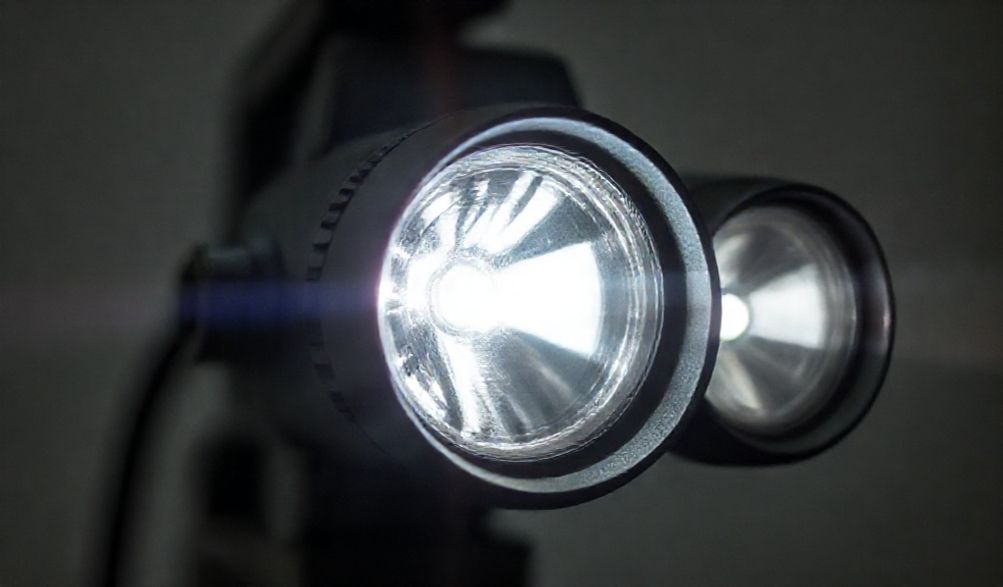
- LED headlight: This is a high-quality light source, typically mounted centrally on the same frame or headband as the loupes. It projects a bright, cool, and focused beam of light directly into your field of view, co-axial with your line of sight.
The magic is in the integration. The light and magnification are perfectly aligned, eliminating the shadows your own head or hands create. This creates a brilliantly illuminated, magnified field, allowing you to see details with contrast and clarity that are impossible under overhead or handheld light.
Primary Professions and Hobbies That Rely on Loupes Headlights
While perhaps most visible in healthcare, the utility of loupes headlights spans any discipline where precision is paramount.
- Dentists & Dental Hygienists: This is a cornerstone tool. From detecting early caries and calculus, to performing precise margin preparations for crowns, to intricate endodontic procedures, a loupes headlight is essential for accuracy, ergonomics, and improved patient outcomes.
- Surgeons & Medical Professionals: In fields like microsurgery, ophthalmology, otolaryngology (ENT), and plastic surgery, the enhanced visualization reduces tissue trauma, improves surgical accuracy, and can shorten operation times.
- Watchmakers, Jewelers, and Engravers: Working with gears smaller than a pinhead, setting microscopic gemstones, or engraving fine details on metal demands flawless vision. A loupes headlight provides the steady, magnified view necessary for this artistry.
- Electronics Technicians and PCB Assemblers: Soldering modern surface-mount devices (SMDs), inspecting circuit boards for flaws, or repairing tiny connectors requires seeing leads and traces measured in microns. Proper illumination prevents soldering errors and diagnostic mistakes.
- Artists and Hobbyists: For miniature painters, model builders, luthiers (guitar makers), and even those doing fine needlework, a loupes headlight can elevate the level of detail and reduce eye strain during long creative sessions.
The Critical Benefits: Why Invest in a Quality Loupes Headlight System?
Investing in a professional loupes headlight system is an investment in your capability, your health, and the quality of your work. The benefits are interconnected and profound.
Unmatched Visual Clarity and Precision
The primary function is, of course, to see better. Magnification allows you to identify details invisible to the naked eye—a micro-fracture, a subgingival margin, a tiny crack in a jewel. When paired with a high-CRI (Color Rendering Index) headlight, colors are rendered truly, and contrast is dramatically improved. The focused, shadow-free light eliminates visual “noise,” allowing you to concentrate solely on the task. This isn’t just about seeing bigger; it’s about seeing more accurately.
Profound Ergonomic and Health Advantages
This is arguably the most significant long-term benefit. Without loupes, the natural inclination is to hunch forward, bringing your eyes closer to the work. This “turtle posture” places immense strain on the cervical spine (neck) and lumbar spine (back), leading to chronic pain and potential injury.
A properly fitted loupes headlight system enforces an ergonomic posture. By setting the correct working distance (e.g., 14-18 inches for dentistry), you are forced to sit or stand upright with your back straight and your arms comfortably at your sides. Your head is in a neutral position. This single change can prevent a career-ending musculoskeletal disorder. Furthermore, by providing a clear image without forcing your eyes to constantly accommodate and converge, it drastically reduces eye fatigue, dryness, and the headaches that often follow a long day of detailed work.
Enhanced Productivity and Work Quality
Clarity and comfort directly translate to efficiency and excellence. With a loupes headlight, you work with greater confidence and speed because you can see exactly what you’re doing. This leads to fewer errors, less need for rework, and more consistent, high-quality results. In clinical settings, this can mean shorter procedure times and better prognoses. In technical fields, it means fewer faulty assemblies and higher reliability. The tool pays for itself by elevating the standard of your output.
Key Features to Consider When Choosing a Loupes Headlight
Navigating the specifications is key to finding the right system. Here’s what each term means and why it matters.
Loupes Specifications: The Magnification Component
- Magnification Power (e.g., 2.5x, 3.5x, 5.0x): Higher power isn’t always better. Increased magnification comes with a reduced field of view and shorter depth of field. For general dentistry or electronics, 2.5x to 3.5x is common. For microsurgery or intricate jewelry work, 4.5x and above may be necessary. It’s a trade-off between detail and context.
- Working Distance: This is the critical distance from your eye to the working plane (the patient’s mouth, the circuit board) where the image is in perfect focus. It is measured during a professional fitting and is based on your posture and arm length. An incorrect working distance will force you back into poor ergonomics.
- Depth of Field: This is the “forgiveness zone”—the range in front of and behind the focal plane that remains acceptably clear. A wider depth of field is highly desirable, as it reduces the need for constant, minute head movements to refocus, decreasing fatigue.
- Optical Quality & Design: There are two main types:
- Galilean (Simple): Typically 2x-3.5x magnification. Lighter, more affordable, but with a narrower field of view.
- Prismatic (Keplerian/Telescopic): Offers higher magnifications (3.5x and above) with a significantly wider field of view and superior depth of field. They are generally heavier and more expensive but are the choice for high-precision professionals.
Headlight Specifications: The Illumination Component
- Light Source (LED Type): Modern systems use LEDs exclusively. Pay attention to:
- Color Temperature: Measured in Kelvins (K). “Daylight” white (~5500K) is the standard, as it provides neutral, bright illumination that allows for true color discrimination—vital for distinguishing tissue health or solder joint quality.
- Color Rendering Index (CRI): A scale (0-100) of how accurately a light source reveals the true colors of objects. Aim for a CRI of 90+ for the most accurate visual information.
- Brightness & Focus: Brightness is measured in lumens. A range of 20,000 to 100,000+ lux at the working plane is common. More important than maximum output is adjustability and a focused, even beam with minimal “hot spots.” A good system allows you to dim the light to suit the task and avoid glare.
- Battery System: You have two main choices:
- Rechargeable Battery Pack: A belt- or waist-clip pack powering a corded light. Offers long, uninterrupted runtime (often 4-8 hours) but has the minor inconvenience of a cord.
- Integrated/On-Head Battery: A lighter, cordless system with a battery mounted on the headband. More freedom of movement but typically has a shorter runtime (2-4 hours) and can affect front-heaviness.
Fit, Comfort, and Customization
This is non-negotiable. A loupes headlight is a personal tool.
* Professional Fitting: This process measures your interpupillary distance (IPD), working distance, and declination angle. Never buy “off-the-shelf” loupes without a fit.
* Frame Styles: Options include through-the-lens (TTL, where loupes are permanently mounted in your prescription or safety glasses), flip-up (loupes hinge up when not in use), and frames-mounted. Weight, adjustability, and compatibility with your own eyewear are key considerations.
How to Select the Right System: A Step-by-Step Decision Framework
Step 1: Assess Your Primary Use Case and Requirements
Ask yourself: What is my primary task? What is the smallest detail I need to resolve? What is my typical working environment? How long are my continuous work sessions? Your answers will guide the needed magnification, light power, and battery life.
Step 2: Get a Professional Consultation and Fit
This is the most critical step and a core principle of Expertise, Authoritativeness, and Trustworthiness (E-E-A-T) in this field. Seek out reputable suppliers, manufacturers, or independent consultants who offer live or virtual fitting services. An expert will ensure the optics are aligned correctly for your eyes, preventing strain and maximizing the tool’s benefit. This is not an area for guesswork.
Step 3: Test and Compare (If Possible)
If you have the opportunity, try different systems. Wear them for more than a minute. Check for a clear, wide, and undistorted field of view from edge to edge. Test the light at different brightness levels. Assess the comfort and balance of the headband.
Step 4: Evaluate Budget and Long-Term Value
A quality loupes headlight system is a significant investment, often ranging from $1,000 to over $5,000. Frame this not as a cost, but as a long-term investment in your professional capability, your physical health, and the quality of your work. Consider the warranty, availability of service, and potential for future upgrades (like a new light module on existing loupes).
Best Practices for Using and Maintaining Your Loupes Headlight
Daily Use and Adjustment Tips
- Always don the headband first, then adjust the loupes into position. Ensure the light beam is centered in your field of view.
- Consciously practice maintaining your prescribed working distance. Use a reference, like a marked tool, to recalibrate your posture periodically.
- Take short breaks to look into the distance, allowing your eye muscles to relax.
Cleaning and Care for Longevity
- Lenses: Clean only with a clean, dry microfiber cloth. For smudges, use a lens cleaner specifically designed for coated optics. Never use clothing, paper towels, or harsh chemicals.
- Handling: Always store your loupes in a hard, protective case. Never place them lens-down on a surface.
- Battery: Follow the manufacturer’s charging guidelines. For lithium-ion batteries, avoid fully depleting them regularly; partial discharges are better for long-term health.
Knowing When to Upgrade or Service
- If your posture feels off, or you experience new eye strain, your fit may have changed, or the loupes may be out of alignment.
- If the light output dims significantly or changes color, the LED module or battery may need service.
- As technology improves, upgrading just your headlight to a newer, brighter, more efficient model can breathe new life into your existing loupes.
Frequently Asked Questions (FAQ) About Loupes Headlights
Q: Are loupes headlights only for medical professionals?
A: Absolutely not. While they are a standard of care in medicine and dentistry, they are invaluable for any technician, artisan, or hobbyist whose work demands extreme visual detail and ergonomic support—from watchmakers and jewelers to electronics assemblers and fine artists.
Q: What is the typical cost range for a good loupes headlight system?
A: Prices vary dramatically based on customization and features. A basic, entry-level flip-up system may start around $800. A fully customized, high-magnification prismatic loupe with a premium LED headlight and professional fitting can range from $2,500 to $5,000+. It is a professional investment akin to buying a quality toolset or instrument.
Q: Can I buy the loupes and headlight separately from different brands?
A: It is technically possible but generally not recommended for optimal performance. Integrated systems are engineered to have balanced weight distribution and ensure the light path is perfectly co-axial with the optical path. Mixing brands can lead to compatibility issues, subpar illumination, and an uncomfortable fit. For best results, choose a designed pair from one manufacturer or consult an expert on compatible combinations.
Q: How long does it take to get used to working with loupes?
A: There is an adaptation period, typically ranging from a few hours to two weeks. Start by using them for short, non-critical tasks to build muscle memory for the new working distance and to allow your brain to adapt to the magnified, moving field of view. A proper professional fitting drastically shortens and eases this transition.
Q: How often do the bulbs/LEDs need replacing?
A: Modern LED modules have exceptionally long lifespans, often rated at 50,000 hours or more. You are more likely to upgrade the entire light unit for better technology or need to replace the rechargeable battery pack long before the LED itself fails. Always refer to the manufacturer’s specifications for the expected lifespan of components.
Conclusion
A loupes headlight is far more than an accessory; it is a transformative tool that redefines the interface between the professional and their craft. By synergistically combining magnification and illumination, it unlocks a level of visual precision and ergonomic freedom that is simply unattainable otherwise. It is an investment in seeing the unseen and working in a way that sustains your body rather than strains it.
As this guide has emphasized, the cornerstone of a successful investment is professional guidance. Prioritize a proper fitting and consultation from a reputable expert. This ensures the tool is tailored to you, maximizing its benefits for your health and your work’s quality. Look beyond the initial price tag and see the value in a system that will support your precision, productivity, and physical well-being for years to come.
Ultimately, choosing a loupes headlight is a commitment—a commitment to the excellence of your output, the longevity of your career, and the meticulous standard of your craft. Use the framework provided here to define your needs, research diligently, and take the next step toward a clearer, more comfortable, and more capable future in your detailed work.
p>