
The Ultimate Guide to Loupes Headlights: Enhancing Precision in Detail Work
You’re hunched over a intricate task. Your neck aches, your eyes burn from squinting, and despite your best efforts, you just missed a critical detail—a tiny fracture in a tooth, a nearly invisible solder bridge, a flaw in a delicate gemstone setting. The frustration is palpable, and the cost of that missed detail could be time, money, or the quality of your work. This scenario is all too common for anyone whose livelihood or passion depends on seeing the unseen.
The solution isn’t just to “look closer.” It’s to see better. Enter the loupes headlight: the integrated, game-changing tool that fuses magnification with powerful, hands-free illumination. It’s not merely an accessory; for many professionals, it’s the cornerstone of precision.
This comprehensive guide is designed to demystify loupes headlights. Whether you’re a dentist, surgeon, jeweler, electronics technician, or dedicated hobbyist, we’ll walk you through everything you need to know. We’ll explore how they work, their profound benefits, the critical features to consider, and how to use them effectively. Our goal is to empower you to make an informed investment that will elevate your work quality, protect your long-term health, and boost your efficiency. This guide synthesizes insights from optometric principles, ergonomic research, and real-world user experiences to give you a trustworthy, actionable resource.
What Are Loupes Headlights? Combining Vision and Illumination
At its core, a loupes headlight system is an ergonomic wearable that combines two essential tools: optical loupes and a head-mounted light. While each component is powerful on its own, their integration creates a synergistic effect that is greater than the sum of its parts.
Defining the Core Components: Loupes (Magnification) vs. Headlight (Illumination)
- Loupes (The Magnifiers): These are not simple magnifying glasses. Professional loupes are precision-ground, multi-lens optical systems (often Galilean or prismatic) that provide a magnified, distortion-free view of your work area. They are characterized by their magnification power (e.g., 2.5x, 3.5x), working distance (the fixed distance from your eye to the object in focus), and field of view (the width of the area you can see clearly).
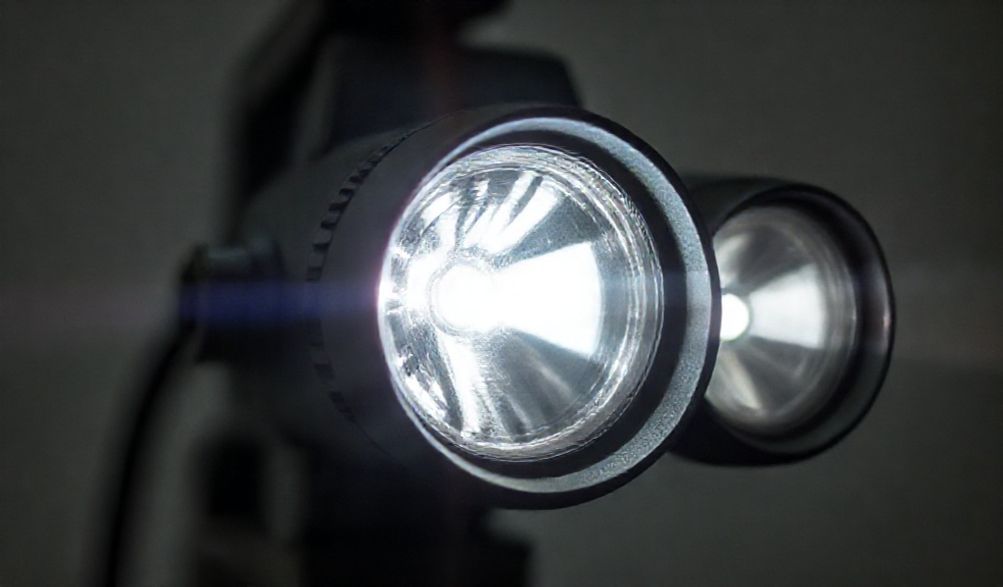
- Headlight (The Illuminator): This is a high-intensity, focused light source—almost always LED-based—mounted directly onto the loupes frame or headband. It projects a bright, cool beam of light exactly where you are looking, eliminating shadows cast by your head or hands and flooding the magnified field with clarity.
The Synergistic Benefit: Why Light and Magnification Work Better Together
Magnification alone has a limitation: it amplifies shadows and can reduce the amount of ambient light reaching your eye. A headlight alone illuminates a general area but doesn’t help you resolve fine details. Together, they solve each other’s problems:
1. The headlight delivers intense, shadow-free light directly into the magnified field of view.
2. The loupes allow you to resolve the minute details now brilliantly illuminated.
The result is a perfectly lit, crystal-clear “window” into your workspace, revealing textures, margins, and structures that were previously invisible.
Primary Applications: Who Uses Loupes Headlights?
While famously used in healthcare, the applications are vast:
* Medical & Dental Fields: Dentists, dental hygienists, oral surgeons, veterinarians, and surgeons for procedures requiring extreme precision.
* Technical & Repair Trades: Watchmakers, electronics engineers (for SMD soldering and PCB inspection), micro-mechanics, and aviation technicians.
* Artisan & Creative Professions: Jewelers, gemologists, engravers, and artists working on miniatures or fine details.
* Hobbyists & Modelers: Anyone building detailed scale models, painting miniatures, or engaging in intricate crafts.
Key Benefits of Using a Loupes Headlight System
Investing in a loupes headlight is an investment in your craft and your well-being. The benefits extend far beyond simply “seeing better.”
Unmatched Precision and Accuracy: Seeing Critical Details
This is the most immediate benefit. A loupes headlight transforms your perception of the work area. In dentistry, this means perfectly distinguishing between tooth and restoration margin. In electronics, it means seeing the individual pins on a microchip. This leap in visual information directly translates to higher accuracy, fewer errors, and a superior final product.
Reducing Eye Strain and Fatigue: Promoting Long-Term Occupational Health
Squinting and straining to focus on small objects for hours places immense stress on your ciliary muscles, leading to headaches, blurred vision, and dry eyes. Loupes bring the object into easy, relaxed focus, significantly reducing this muscular effort. The proper, shadow-free illumination from the headlight further reduces pupil constriction and strain. This isn’t just about comfort—it’s about preserving your vision for a long career.
Improving Posture and Ergonomics: A Step Toward Preventing Neck and Back Pain
Perhaps the most profound long-term benefit is postural. Without magnification, we instinctively hunch forward, craning our necks to get closer to our work—a posture nicknamed “the turtle.” Loupes with a correct working distance and declination angle force you to sit upright, with your back straight and your head in a neutral position. The work comes into focus only when you are in an ergonomically sound posture. Over years, this can prevent chronic neck, shoulder, and back pain.
Enhancing Overall Work Quality and Efficiency
With enhanced vision and comfort, your workflow improves. Tasks are completed more quickly because you see what you’re doing immediately. There’s less need for rework due to missed details. The reduction in physical and visual fatigue means you can maintain a high standard of work for longer periods. The system pays for itself through improved outcomes and productivity.
Critical Features to Consider When Choosing a Loupes Headlight
Not all loupes headlights are created equal. Choosing the right system requires matching its specifications to your specific needs.
Magnification Power and Field of View: Matching to Your Task
- Lower Magnification (2.0x – 3.0x): Offers a wider field of view and greater depth of field. Ideal for beginners, procedures requiring more peripheral awareness (like dental hygiene), or larger detailed work.
- Higher Magnification (3.5x – 6.0x+): Provides extreme detail but with a narrower field and shallower depth of field. Essential for micro-surgery, endodontics, or intricate soldering. Higher is not always better—it must suit your task.
Depth of Field: Understanding the “Working Zone” of Clarity
Depth of Field (DoF) is the range within which objects appear sharp without needing to refocus. Higher magnification typically reduces DoF. A good system offers a usable DoF that matches your working style. Prismatic (through-the-lens) loupes generally offer a better DoF than Galilean models at equivalent magnification.
Light Source Technology: LED Types, Color Temperature, and CRI
- LED Type: Modern systems use powerful, cool-running LEDs. Look for a high Lumen output for brightness.
- Color Temperature: Measured in Kelvin (K). ~4500K-5500K is a “daylight white” that offers excellent contrast and is easy on the eyes for long periods. Some systems offer adjustable color temps.
- CRI (Color Rendering Index): A measure of how accurately the light reveals true colors. A CRI >90 is excellent and crucial for tasks like distinguishing tissue types or gemstone colors.
Brightness Levels and Beam Patterns: Adjustable Focus for Different Procedures
Variable brightness settings allow you to dial in the perfect light for the task—lower for inspection, maximum for deep cavities. Some advanced headlights offer adjustable beam patterns, from a wide flood for a larger area to a focused “spot” for deep, narrow workspaces.
Comfort & Fit: Weight Distribution, Headband Styles, and Adjustability
You’ll wear this for hours. A lightweight system with a well-padded, adjustable headband (often with a ratcheting dial for a secure fit) is essential. The weight should be balanced to prevent slipping or forward pull. Consider if you wear it over a surgical cap or with eyeglasses.
Power Source: Rechargeable Battery Life and Convenience
A reliable, long-lasting rechargeable battery pack is non-negotiable. Look for systems offering 6+ hours of runtime on a single charge at a medium brightness. The battery should be lightweight and easily mounted on a waistband or pocket. Quick-charge capabilities are a valuable bonus.
How to Properly Set Up and Use Your Loupes Headlight
A perfectly designed system is useless if it’s not fitted correctly. Proper setup is paramount.
The Fitting Process: Achieving the Correct Working Distance and Declination Angle
This is the most critical step, especially for high-magnification loupes. It is highly recommended to get a professional fitting, often done by the vendor or a certified optician.
* Working Distance: This is the fixed distance from your eye to the plane where the image is sharpest. It is determined by measuring your typical working posture.
* Declination Angle: This is the downward tilt of the loupes, ensuring you are looking through the optical center while maintaining an upright, neutral spine posture.
Calibrating the Light: Positioning and Angle for Optimal Shadow Reduction
The light head should be positioned so its beam is coaxial (aligned) with your line of sight through the loupes. This minimizes shadows created by your instruments or fingers. Fine-tune the angle so the hotspot of the beam fills your magnified field of view without glare.
Daily Use Tips: Maintenance, Cleaning Lenses, and Battery Care
- Cleaning: Always use a soft, lint-free microfiber cloth and approved lens cleaner (or a drop of dish soap and water). Never use paper towels or harsh chemicals, as they can scratch coatings.
- Storage: Keep the system in a hard protective case when not in use.
- Battery: Follow manufacturer guidelines. Avoid fully draining lithium-ion batteries; partial discharges are better. Store in a cool, dry place.
Safety First: Important Precautions
- Never look directly at the activated light source, especially at close range. The intense beam can cause retinal damage.
- Do not use the headlight as a general flashlight. Its focused beam is designed for a specific working distance.
- Ensure the system does not obstruct your general vision when moving around the workspace.
Loupes Headlight FAQs: Expert Answers to Common Questions
Q: What’s the typical cost range for a good quality loupes headlight system?
A: Prices vary widely. A basic, entry-level LED headlight with flip-up loupes can start around $200-$500. Mid-range, custom-fit systems for professionals typically range from $1,000 to $2,500. High-end, fully customized surgical or dental systems with premium optics and lights can exceed $3,500.
Q: Can I use my existing dental or surgical loupes with a separate headlight?
A: Often, yes. Many manufacturers sell compatible headlights that can clip onto existing loupes frames. However, for optimal coaxial alignment and balance, an integrated system designed from the ground up is usually superior.
Q: How long does the battery typically last on a single charge?
A: This depends on brightness setting. On a medium setting, most professional-grade systems last 6-10 hours on a charge—enough for a full workday. Always check the manufacturer’s specifications.
Q: Are loupes headlights difficult to get used to? What is the adaptation period?
A: There is an adaptation period, typically 1-3 weeks. Your brain needs to adjust to the magnified, fixed-focus view and learn new hand-eye coordination. Start by using them for short, non-critical tasks and gradually increase usage. The postural change alone can feel strange at first but soon becomes natural and relieving.
Q: How do I clean and maintain the optical lenses and the light head?
A: As mentioned, use a microfiber cloth and lens spray. For the light head’s lens/cover, a gentle wipe with an alcohol pad can remove debris. Never submerge the electronic components. Refer to your user manual.
Q: Is a higher magnification power always better?
A: Absolutely not. Higher power means a smaller field of view, shallower depth of field, and a longer, more challenging adaptation period. Choose the lowest magnification that allows you to see the necessary detail for your most common task. It’s about appropriate tool selection.
Conclusion
A loupes headlight is far more than a simple tool; it is a significant investment in the precision of your work, the sustainability of your practice, and the long-term health of your eyes and spine. By combining targeted illumination with optical magnification, it unlocks a level of clarity and comfort that can fundamentally redefine how you approach detail-oriented tasks.
The best system for you depends on a careful, honest assessment of your specific applications, your ergonomic needs, and your budget. We strongly encourage you to try different models if possible, as fit and feel are highly personal.
In closing, consider this: the finest craftspeople in the world don’t struggle against their tools; they are empowered by them. A properly fitted, high-quality loupes headlight becomes an extension of your senses, allowing you to work with confidence, reduce fatigue, and achieve results that truly reflect your skill. For the sake of your craft and your well-being, it’s an upgrade worth serious consideration. For medical and dental applications, always consult with a certified optician or equipment specialist for a professional fitting to ensure optimal performance, safety, and a return on your investment that is measured in both quality of work and quality of life.
p>