
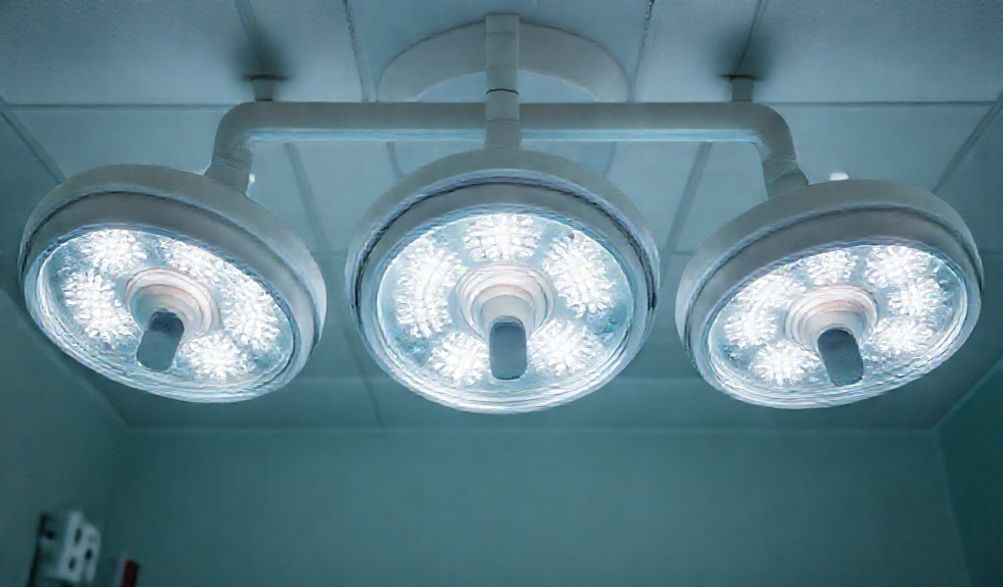
Comprehensive Guide to Medical Exam Lights: Choosing the Right Illumination for Clinical Accuracy
In the precise world of medical diagnostics, the quality of illumination is not merely a convenience—it is a critical component of patient care and clinical accuracy. medical exam lights, often overlooked, play a foundational role in enabling healthcare professionals to observe subtle symptoms, assess tissue health, and perform intricate procedures. From a routine throat examination in a family practice to a complex surgical intervention in an operating theater, the right light directly impacts diagnostic confidence and patient outcomes. This guide, grounded in clinical expertise and engineering principles, will illuminate the key factors, technologies, and considerations necessary for selecting the optimal medical lighting solution for any healthcare environment, ensuring both practitioner efficacy and patient comfort.
Understanding Medical Exam Lights: Core Principles and Importance
The Role of Lighting in Clinical Diagnosis
Light in a clinical setting is a diagnostic tool as fundamental as a stethoscope. Its primary role is to extend and refine the clinician’s vision, transforming observation into actionable insight.
- Visual Acuity and Color Rendering: This is arguably the most critical function. The human eye relies on subtle variations in color and texture to identify pathology. A high Color Rendering Index (CRI), measured on a scale up to 100, indicates how accurately a light source reveals the true colors of an object compared to natural daylight. For medical exam lights, a CRI of 90+ is essential. It allows for the confident identification of cyanosis (bluish skin from poor oxygenation), jaundice (yellowing from liver issues), the subtle erythema of an infection, or the specific hue of a rash. A light with poor CRI can mask these signs, leading to missed or delayed diagnoses.
- Shadow Reduction and Depth Perception: Effective medical lighting must illuminate, not obstruct. Harsh, single-point shadows from a practitioner’s head or instruments can hide crucial details within a wound, oral cavity, or ear canal. Advanced exam lights employ optical designs—such as multiple LED arrays, ring lights, or specially engineered reflectors—to fill in these shadows. This provides a clear, evenly lit, and three-dimensional view, essential for assessing depth, texture, and contour during procedures and examinations.
- Impact on Diagnostic Accuracy: The correlation is direct. Studies in fields like dermatology, wound care, and surgery consistently show that improved illumination reduces diagnostic uncertainty and procedural error rates. Proper lighting minimizes eye strain for the clinician, allowing for longer, more focused observation. It is the difference between seeing and truly assessing.
Key Technical Specifications Explained
Navigating product specifications is key to an informed purchase. Here are the core metrics:
- Lux and Luminance (Brightness): Lux measures illuminance—how much light falls on a surface. Different tasks require different levels. A broad dermatological scan might need 1,000-2,000 lux for general assessment, while a focused otoscopic exam of the ear canal may require 5,000+ lux for deep, shadow-free penetration. The best medical exam lights offer adjustable brightness to cater to various needs without causing patient glare or clinician discomfort.
- Color Temperature (Kelvin): Measured in Kelvins (K), this describes the “warmth” or “coolness” of light. Warm white (2700K-3500K) is relaxing but can distort color. Neutral to cool white (4000K-6000K) mimics bright daylight, promoting alertness and providing the most accurate color perception for clinical work. Most modern medical LED exam lights are calibrated between 4500K and 5500K for optimal diagnostic clarity.
- Beam Focus and Field Diameter: Flexibility is crucial. A light should offer adjustable focus from a tight “spot” beam for intensely illuminating a small area (e.g., a single tooth, a minor lesion) to a wide “flood” beam for assessing larger areas (e.g., a patient’s back, an entire limb). This adjustability ensures the right amount of light is delivered precisely where it’s needed.
Types of Medical Exam Lights and Their Applications
The healthcare environment dictates the form factor. Understanding the options ensures the light fits the workflow.
Overhead Examination Lights
- Ceiling-Mounted Procedure Lights: These are workhorses for rooms dedicated to procedures. Fixed to the ceiling, they provide powerful, shadow-reduced illumination directly over an exam table or minor surgery site. They are ideal for emergency rooms, procedure rooms for suturing or wound care, and outpatient surgery centers. Modern versions often feature sterile handles for easy intraoperative repositioning.
- Track-Mounted Systems: Offering superior flexibility, these lights are mounted on a ceiling track, allowing them to be slid and positioned anywhere along its length. This is perfect for multi-purpose exam rooms, clinics, and counseling spaces where the room layout or procedure type may change. A single track can often support multiple light heads.
Portable and Diagnostic Lights
- Wall-Mounted Articulating Arms: A staple in standard exam rooms, these lights are mounted on a wall or cabinet. Their multi-jointed arms provide an extensive range of motion, allowing the light to be smoothly positioned exactly where the clinician needs it, then swung out of the way when not in use. They offer an excellent balance of power, flexibility, and space-saving design for general practice, pediatrics, and dentistry.
- Handheld Penlights and Otoscope/Ophthalmoscope Lights: These are specialized, focused diagnostic tools. A penlight is indispensable for checking pupil reactivity (PEARL) and performing quick oral exams. Otoscope and ophthalmoscope lights are engineered for deep cavity illumination of the ear and eye, respectively, with precise beams and often magnification.
- Specialty Lights: Certain disciplines require specific wavelengths. Wood’s lamps emit long-wave UV light to diagnose fungal and bacterial skin infections (which fluoresce) and pigment disorders. Transillumination lights use bright, cool light to illuminate body cavities (e.g., sinuses in infants) or to assess vascular structures.
Critical Factors for Selecting the Right Medical Exam Light
Choosing a light requires a holistic view that blends clinical need with practical reality.
Clinical Requirements and Specialty Needs
- Matching Light to Medical Specialty:
- General Practice/Family Medicine: Versatility is key. A wall-mounted articulating arm light with high CRI, good shadow reduction, and adjustable brightness/spread handles everything from throat exams to skin checks.
- Dermatology: Exceptional color accuracy (CRI >95) and even, bright illumination for full-body scans are paramount. Overhead or track-mounted systems with wide, uniform fields are common.
- Dentistry: Requires intense, focused, shadow-free illumination into the oral cavity. Overhead surgical lights or dedicated dental lights with multiple LED arrays are standard.
- Surgery (Minor/Outpatient): Demands deep-cavity illumination with exceptional shadow control, often via multi-point source “cold” LED lights to prevent tissue drying. Sterilisable handles are a must.
- Pediatrics: Brightness control and a “cool” light source (both in temperature and heat output) are important for patient comfort and cooperation.
- Procedure vs. Examination Lighting: Consider duration and depth. A 30-minute wound debridement needs a powerful, cool, shadow-reduced light that won’t fatigue the clinician or harm the tissue. A two-minute tonsil check needs quick, accurate illumination that’s easy to position and reposition.
Ergonomics, Safety, and Infection Control
- Maneuverability and Positioning: A light that is difficult to position leads to clinician strain and poor posture. Smooth articulation, adequate reach, easy-to-grip handles (often designed for use with an elbow or forearm), and secure locking mechanisms are non-negotiable for daily use.
- Heat Management (Cool Light Technology): This is where LED technology has revolutionized medical lighting. Traditional halogen bulbs emit significant infrared radiation, generating heat that can dry out tissues, cause patient discomfort, and pose a burn risk in prolonged procedures. LEDs produce minimal heat, directing energy almost entirely into visible light.
- Cleanability and Durability: Medical devices must withstand rigorous disinfection protocols. Look for lights with seamless, non-porous housings, no crevices where contaminants can hide, and materials compatible with hospital-grade disinfectants. The construction should feel robust to withstand frequent adjustment.
Economic and Operational Considerations
- Total Cost of Ownership (TCO): Look beyond the sticker price. While LED medical exam lights have a higher upfront cost than old halogen models, their TCO is lower. Factor in: Energy Savings (LEDs use 50-80% less power), Longevity (50,000-100,000 hours vs. 1,000-5,000 for halogen), and Minimal Maintenance (no bulb replacements, less downtime).
- Installation and Compliance: Ensure the light is classified as a medical device and complies with international safety standards like IEC 60601-1. This ensures electrical safety, electromagnetic compatibility, and mechanical robustness. Consider installation needs: electrical outlet location, ceiling strength for overhead lights, and the flexibility of track systems.
The Shift to LED Technology: Benefits and What to Look For
LED is now the unequivocal standard for medical exam lights, and for compelling reasons.
Advantages Over Traditional Lighting
- Superior Energy Efficiency and Lifespan: An LED module consumes a fraction of the energy of a halogen bulb to produce the same or greater light output (lumens). With lifespans exceeding 50,000 hours, an LED light used 8 hours a day, 5 days a week will last over 20 years before significant output degradation, eliminating the cost and hassle of frequent bulb changes.
- Enhanced Color Accuracy and Consistency: High-quality LEDs naturally produce light with excellent spectral properties, allowing for CRIs consistently above 90. Furthermore, unlike halogens whose color temperature shifts as they age, LEDs maintain consistent color output throughout their lifespan.
- Instant-On Capability and Dimming: LEDs reach full brightness instantly, with no warm-up time—a critical advantage in urgent situations. They also dim smoothly and flicker-free across their entire range, allowing precise adjustment for patient comfort and clinical need.
Selecting a Quality LED Medical Light
Not all LEDs are created equal. Quality hinges on a few key components:
* LED Chip and Driver Quality: The LED chip (often from brands like CREE, Osram, or Nichia) determines light quality and efficiency. The driver is the power regulator; a high-quality driver ensures stable current, prevents flicker, and is key to the light’s longevity.
* Thermal Management Design: LEDs are sensitive to heat. A well-designed light will have an effective heat sink—often aluminum fins—to draw heat away from the LED chip. Poor thermal management is the leading cause of premature LED failure.
* Warranty and Manufacturer Support: A reputable medical equipment manufacturer will stand behind their product with a robust warranty (often 3-5 years on the LED and driver). Access to knowledgeable technical support and service is crucial for a device that is integral to daily practice.
FAQ: Common Questions About Medical Exam Lights
Q1: What is the most important feature to look for in a general exam room light?
A: A high Color Rendering Index (CRI of 90+) is paramount for accurate visual assessment. Coupled with good maneuverability and cool, bright LED output, it forms the foundation for a reliable exam light.
Q2: Are all medical exam lights considered medical devices?
A: Yes, when intended for medical examination or diagnosis, they are classified as medical devices (typically Class I) and should be manufactured and tested according to relevant medical safety standards, such as IEC 60601.
Q3: How often do medical LED lights need to be replaced?
A: High-quality LED modules can last 50,000 to 100,000 hours. Under normal clinical use, this often translates to 10+ years before light output significantly degrades, making replacement infrequent.
Q4: Can I use a standard bright LED light from an office store for medical exams?
A: It is strongly discouraged. Commercial lights lack the necessary color accuracy (CRI), clinical-grade dimming, heat management, safety certifications, and often the mechanical durability required for reliable medical diagnosis and infection control.
Q5: What does “shadow reduction” mean in light specifications?
A: It refers to optical designs (like multiple LED arrays or reflector systems) that minimize harsh, obstructive shadows cast by the practitioner’s hands or tools, creating more even illumination in cavities and wound sites.
Conclusion
Selecting the appropriate medical exam light is a decision that profoundly influences diagnostic clarity, procedural efficiency, and ultimately, the standard of patient care. It requires balancing clinical necessity—Expertise in knowing what your specialty demands—with practical considerations of safety, ergonomics, and value. By prioritizing Experience-driven features like true color rendering, adjustable intensity, and cool, shadow-reduced light, healthcare providers can invest in a tool that enhances their Authoritativeness at the point of care. As LED technology continues to set a new benchmark for performance and reliability, making an informed choice ensures your practice is equipped with illumination that meets the highest standards of modern medicine. Consult with reputable medical equipment suppliers and consider hands-on demonstrations to find the light that best serves your patients and your practice.
p>