
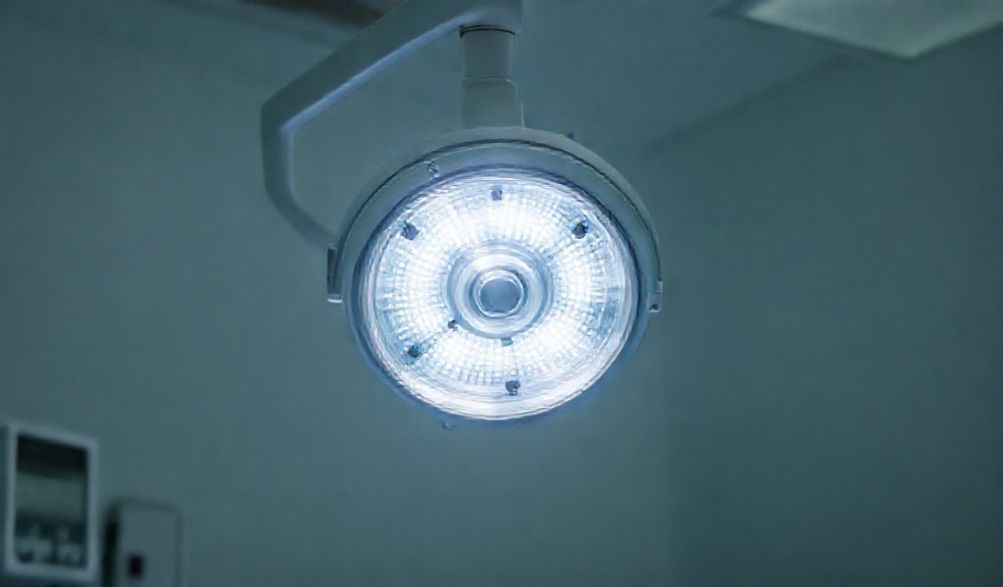
The Unsung Hero of Diagnosis: A Comprehensive Guide to Medical Examination Lights
When we picture a doctor’s toolkit, the stethoscope is the iconic star. Advanced imaging like MRI and CT scanners capture the imagination. Yet, there is a fundamental, omnipresent tool that is the very foundation of visual diagnosis: the medical examination light. This essential piece of equipment is far more than a simple lamp; it is a precision instrument engineered to reveal what the naked eye—aided only by ambient light—would miss. From spotting the subtle yellow hue of jaundice to assessing the granular tissue of a healing wound, proper illumination is a non-negotiable prerequisite for accurate patient assessment.
This guide delves into the critical role, diverse types, and nuanced selection criteria for medical examination lights. Grounded in clinical protocols and equipment standards, we will illuminate why choosing the right light is a direct investment in diagnostic accuracy, practitioner efficiency, and superior patient care.
1. What is a Medical Examination Light? Core Function and Importance
A medical examination light is a specialized illumination device designed to deliver bright, focused, and adjustable light to facilitate the visual inspection of a patient. Its core mission is to enhance the clinician’s ability to see anatomical details, colors, and textures with clarity and precision, transforming a routine look into a diagnostic observation.
1.1. The Role of Lighting in Accurate Diagnosis
The difference between adequate and optimal lighting can be the difference between a missed sign and a timely diagnosis.
* Enhancing Visual Acuity: Proper lighting reduces eye strain and fatigue for the practitioner during long clinical hours. More importantly, it illuminates critical details: the fine vascular patterns in a retina, the subtle border irregularity of a skin lesion, or the early redness around a wound. It brings minutiae into the diagnostic field.
* Color Rendering: This is perhaps the most crucial technical aspect. The Color Rendering Index (CRI) measures a light source’s ability to reveal the true colors of an object compared to natural light. A high CRI (90+) is vital for accurately assessing conditions like cyanosis (bluish skin), erythema (redness), pallor, jaundice (yellowness), and the healthy red granulation tissue of a wound versus pale slough.
* shadow control: Poor lighting casts shadows that can obscure details or create false appearances. Medical lights are designed, through lens systems and multiple LED arrays, to flood the examination area with even, shadow-reduced light, ensuring a clear and unobstructed view.
1.2. Key Features of a Standard Examination Light
While types vary, high-quality examination lights share several key features:
* Adjustable Intensity: Dimmable settings allow the clinician to tailor brightness to the task—softer light for a general exam, maximum brightness for a detailed wound inspection—and to accommodate patient light sensitivity.
* Maneuverability: Articulating arms with smooth, multi-jointed movement allow for precise positioning. The light should be easy to direct and then stay firmly in place without drifting.
* Cool Light Emission: Modern LED technology has revolutionized this field. LEDs produce intense brightness with minimal radiant heat, preventing discomfort for the patient (especially important during ENT or dermatological exams) and the clinician.
2. Main Types of Medical Examination Lights
The “right” light is dictated by the clinical setting and the specific procedure. Here are the primary categories.
2.1. Overhead Examination Lights (Ceiling-Mounted)
- Description & Best For: These units are mounted to the ceiling, often on a track system or a single pivot arm. They provide broad, area illumination and are the workhorses of general examination rooms, urgent care centers, emergency bay assessment areas, and minor procedure rooms.
- Pros and Cons:
- Advantages: They save crucial floor space, offer excellent maneuverability with a wide range of motion, and are designed to provide wide-field, shadow-minimized light perfect for full-body or regional exams.
- Disadvantages: They require professional installation and are fixed to a specific location within a room.
2.2. Procedural & Surgical Lights
- Description & Best For: These are high-stakes illumination tools designed for operating rooms and specialized procedure suites (e.g., for cystoscopy or laparoscopy). They provide extremely high-intensity, focused light, often with the ability to illuminate deep cavities.
- Key Characteristics: They offer exceptional brightness (often exceeding 100,000 lux), sterile handles for intraoperative adjustment, controlled color temperature to match tissue types, and frequently include a camera port for integration with surgical recording systems.
2.3. Portable Diagnostic Lights (Handheld)
- Description & Best For: These are compact, mobile devices. The most common is the penlight, used for checking pupil constriction (PEARL – Pupils Equal and Reactive to Light). This category also includes the lights integrated into otoscopes (for ears) and ophthalmoscopes (for eyes), as well as small, focused torches for bedside wound checks or oral exams.
- Common Uses: Neurological assessments, quick ENT examinations, dental checks, and rapid trauma surveys in emergency settings.
2.4. Specialized Examination Lights
- Headlights and Loupe Lights: Worn on the head, these provide brilliant, hands-free illumination that moves with the clinician’s gaze. They are indispensable for dentists, oral surgeons, plastic surgeons, and dermatologists who need concentrated light on a small, detailed field for extended periods. Surgical loupes often have integrated LED lights.
- Transilluminators: These devices are used to shine light through a body tissue or structure. For example, they can help visualize fluid in an infant’s skull, locate veins, or assess sinus or scrotal abnormalities by highlighting differences in tissue density.
3. Key Applications in Medical Practice
The medical examination light is a universal tool across disciplines.
3.1. Primary Care and General Practice
The frontline of diagnosis. Lights here are used for comprehensive physical exams, evaluating skin rashes or lesions, inspecting the throat for signs of strep, examining the ear canal, and monitoring wound healing from minor injuries.
3.2. Specialized Medical Fields
- Dermatology: The quintessential visual specialty. Dermatologists rely on bright, color-accurate, shadow-free light to assess the morphology of lesions, differentiate between benign and malignant growths, and evaluate skin textures and pigmentation with absolute precision.
- Dentistry: Every procedure starts with visualization. Dental lights illuminate the dark, confined oral cavity, allowing for accurate diagnosis of caries, performance of cleanings, and precise placement of restorations. Overhead dental lights are a specialized subset designed for patient comfort and clinician ergonomics.
- Surgery: From major OR suites to minor procedure rooms, surgical lights provide the lifeline of visibility. They must offer intense, deep-cavity illumination with virtually no shadows, all while remaining cool to avoid drying out tissues.
- Emergency Medicine: Speed and accuracy are paramount. ER lights must provide broad, instant illumination for trauma assessments (e.g., identifying bruising, lacerations) and focused light for procedures like suturing, foreign body removal, or vascular access.
3.3. Veterinary Medicine
The principles are identical. Veterinarians use examination lights for general animal check-ups, surgical procedures, and diagnosing conditions in skin, ears, and eyes across a vast range of species.
4. How to Choose the Right Medical Examination Light: A Buyer’s Guide
Selecting a light requires balancing technical specs, clinical needs, and practical workflow considerations.
4.1. Technical Specifications to Evaluate
- Luminance (Brightness): Measured in lux (lumens per square meter). A general exam room may require 2,000-5,000 lux at the examination point, while a surgical light will demand 40,000-160,000 lux or more for deep cavity illumination.
- Color Temperature & CRI: Color Temperature, measured in Kelvin (K), defines the “warmth” or “coolness” of white light. A range of 4000K to 5000K is generally considered ideal for clinical settings, mimicking neutral daylight and providing good contrast without causing eye strain. The CRI should be as high as possible, with >90 being excellent for true color discrimination.
- Light Source: LED is the unequivocal modern standard. Benefits include: extremely long lifespan (20,000-50,000 hours), high energy efficiency, minimal heat generation, instant full brightness, and consistent color output over time with no flicker.
- Field Diameter & Depth: Consider the size of the area you need to illuminate. A broad field (e.g., 30cm diameter) is great for general exams. A procedural light might have a smaller, more intense spot with greater depth of field to see into incisions or wounds.
4.2. Usability and Safety Considerations
- Ease of Positioning: Test the movement. Arms should move smoothly, require minimal force to reposition, and lock securely without sagging. Consider the “reach” needed to cover your exam table or chair.
- Infection Control: Surfaces should be seamless and made of materials that can withstand frequent wiping with hospital-grade disinfectants. The design should prevent the ingress of dust, fluids, and pathogens.
- Patient and Staff Comfort: Cool-to-the-touch LED heads are essential. The light should be flicker-free to prevent practitioner headaches. Motors or fans (if present) should be quiet.
- Safety Certifications: Ensure the device carries relevant approvals for your region, such as FDA registration (USA), CE marking (Europe), or other local medical device standards. ISO 13485 certification of the manufacturer is a strong indicator of quality management.
4.3. Cost and Operational Factors
- Total Cost of Ownership: Look beyond the sticker price. Factor in installation costs, expected energy consumption (LEDs save significantly here), and the long-term cost of replacement parts. LED modules rarely need replacement, unlike halogen bulbs.
- Warranty and Service: A strong warranty (e.g., 3-5 years on LEDs, 1-2 years on mechanical parts) reflects manufacturer confidence. Confirm the availability of local technical support or service partners.
5. FAQ: Common Questions About Medical Examination Lights
Q1: Why can’t I just use a bright desk lamp or room light for examinations?
A: General lighting is designed for ambient illumination, not diagnosis. It often creates harsh glare, deep shadows, and has poor color rendering (e.g., making skin tones look unnatural). Medical lights are engineered to provide even, focused, color-accurate light that reveals clinical signs, reducing diagnostic error.
Q2: Are LED medical lights really better than traditional halogen or fluorescent ones?
A: Yes, overwhelmingly. LEDs are more energy-efficient (cutting power costs), generate negligible heat (enhancing patient comfort), last 10-20 times longer than halogen bulbs (drastically reducing maintenance), and provide instant, consistent, flicker-free light ideal for clinical observation.
Q3: How often do I need to replace or maintain an LED examination light?
A: The LED light engine itself can last a decade or more under normal clinical use. Primary maintenance involves regular cleaning and disinfection of the housing and lenses. There are no consumable bulbs to stock and replace, a major operational advantage over older technologies.
Q4: What is the ideal color temperature for a general examination light?
A: A color temperature around 4500 Kelvin is widely recommended. This produces a clean, neutral white light that closely resembles daylight, offering an excellent balance of contrast for detail recognition and accurate color perception without a blue or yellow cast.
Q5: Can I use a surgical light for a standard exam room?
A: Technically yes, but it’s usually impractical and inefficient. Surgical lights are significantly more expensive, complex, and brighter than necessary for routine exams. Their size and intensity can be overpowering in a small room. A high-quality overhead or wall-mounted medical examination light is specifically designed to be the cost-effective and ergonomic solution for general diagnostic spaces.
Conclusion
The medical examination light is a foundational pillar of modern healthcare, quietly enabling the critical first step in most diagnostic journeys: seeing clearly. Its impact extends from the basic reassurance of a thorough check-up to the life-saving precision of a surgical intervention. Choosing the correct light is not an administrative task but a clinical decision.
It requires understanding the specific visual demands of your practice, prioritizing the technical triumvirate of LED technology, high CRI, and appropriate color temperature, and selecting a design that integrates seamlessly into a safe and efficient workflow. By applying the criteria outlined in this guide—based on established medical equipment standards—healthcare providers and facility managers can make an informed investment. This investment doesn’t just brighten a room; it illuminates the path to more accurate diagnoses, improved patient outcomes, and enhanced clinical confidence. For final selections tailored to your unique environment, always consult with clinical engineering professionals or reputable medical equipment suppliers.
p>