
The Complete Guide to Medical Examination Lights: Enhancing Diagnostic Accuracy & Patient Care
Introduction
Imagine a physician leaning in to assess a subtle rash, a nurse evaluating a wound for signs of infection, or an emergency room doctor checking a patient’s pupillary response. In each scenario, what is the single most important tool after their own trained eyes? The answer is often overlooked: the quality of the light. Studies suggest that in over 30% of physical examinations, inadequate lighting can contribute to missed visual cues, potentially delaying diagnosis or leading to oversight. In the high-stakes world of healthcare, where a millimeter’s detail or a slight change in hue can signal a critical condition, illumination is not a utility—it’s a fundamental component of the diagnostic process.
This comprehensive guide will explore medical examination lights—the specialized, precision instruments essential for modern healthcare. We will detail their various types, decode the key technical features, examine their wide-ranging applications, and provide a clear framework for selecting the right light for your practice. The ultimate goal is to empower medical practitioners, procurement officers, and facility managers with the knowledge to make informed decisions that ensure accurate diagnoses, improve procedural outcomes, and uphold the highest standards of patient safety and care.
Our purpose is to provide authoritative, experience-based information grounded in clinical best practices and industry standards. By understanding the engineering and ergonomics behind these tools, you can transform a routine examination into an act of precise observation.
What Are Medical Examination Lights & Why Are They Crucial?
Defining the Tool
A medical Examination Light is far more than a simple lamp. It is a specialized lighting device engineered to deliver optimal illumination for the visual inspection of a patient’s body. Unlike ambient room lighting, these lights are designed to provide intense, focused, shadow-reduced, and color-accurate light onto a specific anatomical area. They are the workhorses of the consultation room, the emergency bay, the nursing station, and the minor procedure suite, acting as an extension of the clinician’s senses.
The Impact on Clinical Outcomes
The correlation between proper lighting and clinical efficacy is direct and profound. Superior illumination directly enhances:
* Diagnostic Accuracy: The ability to detect jaundice (yellowing of sclera), cyanosis (bluish skin), pallor, subtle rashes, early-stage melanoma asymmetry, or vascular changes relies on true color representation and the elimination of shadows that can hide detail.
* Procedural Precision: During minor surgical procedures, wound debridement, suturing, or foreign body removal, even, glare-free light is crucial for depth perception and detail, reducing procedural time and improving outcomes.
* Examination Efficiency: A well-positioned, easily adjustable light streamlines the examination process, allowing the clinician to focus on the patient rather than struggling with poor visibility. This contributes to better workflow and reduces practitioner fatigue.
* Patient Safety: Accurate visual assessment is the first step in safe care. Missing a sign of infection or misjudging a wound’s granulation tissue due to poor light can lead to inappropriate treatment decisions.
Key Features and Technical Specifications to Evaluate
Choosing a medical examination light requires understanding its technical DNA. Here are the critical specifications to scrutinize.
Light Source and Technology
The heart of any light is its source. The evolution has moved decisively toward LED.
* LED (Light Emitting Diode): The current gold standard. LEDs offer cool operation (minimal heat radiation onto the patient), exceptionally long lifespan (often 50,000+ hours), superior energy efficiency, and instant full brightness. Most importantly, high-quality LEDs can achieve excellent Color Rendering Index (CRI) scores.
* Halogen: The previous generation. Halogens produce a bright, warm light but convert most energy into heat, which can be uncomfortable for patients and practitioners. They have a shorter lifespan and higher energy consumption.
* Fluorescent: Rarely used in modern dedicated exam lights due to poor color rendering, flicker potential, and the presence of mercury.
Verdict: LED technology is overwhelmingly the best choice for its combination of performance, safety, and total cost of ownership.
Brightness and Intensity Control
Brightness is measured in lumens (total light output) and lux (light intensity on a surface). A quality medical examination light should offer high, adjustable output (e.g., 5,000 to 30,000+ lux) to penetrate deep cavities or illuminate large surface areas. Dimmability is non-negotiable. The ability to smoothly adjust intensity allows a clinician to go from a bright setting for a detailed wound inspection to a softer light for a general abdominal exam, enhancing both diagnostic capability and patient comfort.
Color Temperature and Rendering Index (CRI)
This is arguably the most critical feature for diagnostic integrity.
* Color Temperature (measured in Kelvin, K): Defines how “warm” (yellowish, ~3000K) or “cool” (bluish, ~6500K) the light appears. A neutral white light in the 4000K to 5500K range is ideal for medical settings, as it most closely mimics natural daylight and provides a balanced, accurate view without color bias.
* Color Rendering Index (CRI): A scale from 0-100 that measures a light’s ability to reveal the true colors of objects compared to natural light. A CRI of 90 or above is essential for medical use. A low CRI can make healthy tissue look abnormal or mask subtle color variations in skin, mucosa, or fluids, leading to potential diagnostic errors.
Beam Focus and Field of Illumination
The light’s beam pattern determines its utility.
* Spot Focus: A concentrated, narrow beam for illuminating small, deep areas like the throat or ear canal.
* Flood Focus: A wide, diffuse beam for covering larger areas like the chest or back for a dermatological exam.
* Adjustability: Many lights offer a variable focus. The goal is even illumination across the entire field with minimal “hot spots” and sharp, defined edges to the light circle. Advanced optics are designed to minimize shadows cast by the clinician’s head or hands.
Primary Types of Medical Examination Lights
The clinical environment dictates the ideal form factor.
Overhead Examination Lights
These are the primary lights for examination and procedure rooms.
* Ceiling-Mounted: Fixed or with a limited swing arm, often used in designated exam rooms.
* Track-Mounted: Offer greater flexibility, allowing a single light to be moved along a ceiling track to serve multiple examination points in a room.
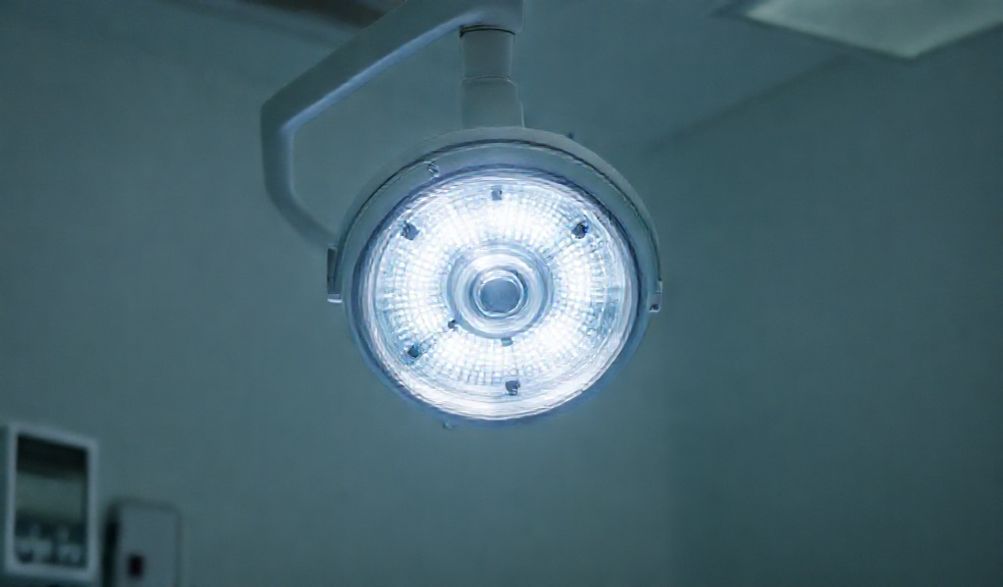
* Single or Double-Arm Articulating Lights: Mounted to a wall or cabinet, these provide extensive maneuverability with multiple joints, enabling precise positioning over the exam table. They are the most common type for general practice.
Portable and Diagnostic Lights
Mobility is key for these tools.
* Handheld Penlights: The quintessential tool for checking pupil constriction (accommodation) and response to light. Modern versions use bright, cool LEDs.
* Pocket-Sized LED Lights: Small but powerful lights used for quick exams in various settings, often featuring a cone for otoscopic/ophthalmoscopic use.
* Headband Lights: Provide completely hands-free, directed illumination, invaluable in emergency situations, delivery rooms, or for procedures where both of the clinician’s hands are occupied.
Specialized Procedure Lights
These lights are designed for specific tasks.
* High-Intensity Surgical Lights: While more complex systems for major surgery, their principles apply to minor procedure lights used in outpatient settings, offering extreme brightness, deep cavity penetration, and shadow reduction.
* Wound Care Cart Lights: Integrated into mobile carts, they provide optimal lighting for wound assessment and dressing changes at the patient’s bedside.
* Dermatology or ENT Lights: May include features like magnification, polarized light to reduce surface glare on skin, or specific angles for cavity illumination.
Selecting the Right Light for Your Medical Practice
Assessing Clinical Needs by Specialty
- General Practice/Family Medicine: A versatile, articulating overhead medical examination light with excellent CRI, dimmability, and a mix of spot and flood settings is ideal. It must accommodate everything from throat exams to dermatology checks.
- Dermatology: Color accuracy (CRI >95) is paramount. A bright, even flood light with neutral color temperature is essential for assessing lesions, rashes, and skin tones. A handheld light with magnification may also be useful.
- ENT/Oral Cavity: Requires a bright, focused spot light capable of illuminating deep into cavities without shadow. A light with a cool-to-the-touch head is critical for patient comfort during close-proximity exams.
- Emergency Room: Durability, versatility, and brightness are key. Track-mounted or highly maneuverable overhead lights, supplemented by portable and headband lights for trauma assessments, are necessary.
- Nursing/Home Care: Portability, battery life, and ease of disinfection are priorities. Lightweight, handheld, or portable stand lights are excellent for wound rounds and home visits.
Ergonomics and Usability
A light should aid, not hinder, the workflow.
* Ease of Sterilization: Surfaces should be seamless and made of materials that can withstand frequent wiping with hospital-grade disinfectants.
* Adjustability: Smooth, fluid movement in all joints. The light should stay firmly in position once placed, with no “droop.”
* Reach & Coverage: Ensure the arm length and range of motion are sufficient to cover the entire examination area from its mounting point.
* Intuitive Controls: Dimmers and focus switches should be easy to locate and operate, even while wearing gloves.
Safety and Regulatory Compliance
Never compromise on safety.
* Regulatory Marks: In the U.S., the light should be FDA-listed as a Class I or II medical device. Look for compliance with IEC 60601-1, the international standard for the safety of medical electrical equipment.
* Infection Control: The design must facilitate cleaning. No crevices where contaminants can lodge.
* Electrical Safety: Proper grounding, strain relief on cables, and thermal management to prevent overheating are essential.
Installation, Maintenance, and Best Practices
Optimal Placement and Setup
For overhead lights, position the mounting point so the light can be centered over the primary examination area. Ensure the arm has enough reach to illuminate a patient sitting on the exam table edge or lying down. Avoid placing lights where they will cast the clinician’s shadow onto the patient. Consider room layout and the location of other equipment.
Routine Cleaning and Care Protocols
- Always unplug the light or ensure it is powered off.
- Follow the manufacturer’s instructions precisely.
- Use a soft cloth dampened with an approved, non-abrasive disinfectant. Avoid spraying liquid directly onto the light head, joints, or controls to prevent seepage.
- Wipe all external surfaces, paying special attention to handles and frequently touched areas.
- Never use abrasive pads, scouring powders, or solvents like acetone or alcohol on lenses or plastic parts, as they can cause clouding or cracking.
Troubleshooting Common Issues
- Flickering/Dimming: Check connections and the power source first. For LED lights, this often indicates a driver or power supply issue. Do not attempt internal repairs.
- Overheating: Rare with LEDs. If occurring, ensure vents are not blocked. With halogen lights, overheating is normal; allow to cool.
- Stiff or Loose Joints: Some arms have tension adjustment screws. Refer to the manual for adjustment procedures.
- General Rule: For any electrical or mechanical fault, contact a qualified biomedical technician or the manufacturer. Tampering with medical equipment voids safety certifications and warranties.
FAQ Section
Q1: What is the most important feature in a medical exam light?
A: While multiple features are key, a high Color Rendering Index (CRI >90) is paramount for diagnostic accuracy, as it ensures colors of skin, tissue, and fluids are seen without distortion. This, combined with adjustable intensity, forms the foundation of a clinically useful light.
Q2: Are LED medical lights better than halogen?
A: Yes, LED lights are generally superior for most applications. They run cooler (reducing patient discomfort and burn risk), last significantly longer (years vs. months), consume less energy, and provide excellent, consistent light quality with minimal maintenance. The higher upfront cost is offset by lower long-term operating costs.
Q3: How often should a medical examination light be cleaned and inspected?
A: They should be cleaned and disinfected after every patient use per infection control guidelines. A full functional and safety inspection should be performed according to the manufacturer’s schedule, typically every 6-12 months as part of preventative maintenance, or immediately if any performance or safety issue is noticed.
Q4: Can a standard room light replace a dedicated medical exam light?
A: No. Standard ambient lights cause glare, create deep shadows, and have poor color rendering (often low CRI), which can obscure or distort critical visual details. Medical Exam Lights are engineered optical instruments designed to provide even, focused, shadow-reduced, and color-accurate illumination essential for proper patient assessment.
Q5: What should I look for to ensure patient comfort during examination?
A: Choose a light with smooth dimmability to avoid blinding the patient when first turned on. Ensure it remains cool to the touch (a key LED advantage), especially for head-mounted or close-proximity lights. Always position the light to illuminate the target area without shining directly into the patient’s eyes.
Conclusion
A medical examination light is a precision diagnostic instrument, not a mere accessory. Its selection should be given the same careful consideration as a stethoscope or otoscope. The right choice—prioritizing high CRI, adjustable and even illumination, appropriate type, and rigorous safety compliance—represents a direct and impactful investment in diagnostic quality, procedural efficiency, and overall patient care.
This commitment to optimal tools underscores a practice’s dedication to Expertise, Authoritativeness, and Trustworthiness. By relying on reputable manufacturers, certified equipment, and proper clinician training, healthcare providers demonstrate that they leave no stone unturned—or no detail in shadow—in their pursuit of accurate diagnoses and excellent patient outcomes.
Call to Action: Take a moment to audit the medical examination lights in your practice. Consult with your clinical staff about their daily challenges and needs. Are there shadows obscuring exams? Is color accuracy a concern? Reach out to qualified medical equipment suppliers to request demonstrations, detailed specifications, and clinical evidence. Investing in the right lighting solution is an investment in the very foundation of visual medicine.
p>