
The Ultimate Guide to Medical Headlamps: Illuminating Precision in Healthcare
Imagine a neurosurgeon navigating the intricate landscape of the brain, where a millimeter’s deviation carries profound consequences. Picture an emergency physician in a trauma bay, working against time to assess a critical injury under harsh, uneven light. Envision a dentist searching for the faintest margin line on a prepared tooth. In these moments and countless others across healthcare, vision is the primary sense guiding critical decisions. The quality of that vision depends entirely on one fundamental, yet often overlooked, factor: light.
In medical and healthcare settings, lighting is not a mere convenience; it is a foundational pillar of accuracy, safety, and ultimately, patient outcomes. Suboptimal illumination can lead to diagnostic uncertainty, procedural inefficiency, and eye strain for the provider. This is where the specialized medical headlamp transcends being a simple tool to become an essential extension of a clinician’s senses. Designed for the unique demands of clinical environments, a medical-grade headlamp delivers precise, hands-free illumination exactly where it’s needed.
This comprehensive guide is crafted to demystify the world of medical headlamps. Moving beyond marketing jargon, we will explore the technical specifications that matter, grounded in expert requirements, manufacturer engineering, and real-world user experience. Whether you are a surgeon, dentist, veterinarian, nurse, first responder, or a procurement specialist for a healthcare institution, this resource aims to empower you with the knowledge to make an informed, evidence-based decision for your practice.
What is a Medical Headlamp? Beyond a Standard Headlamp
At first glance, a medical headlamp might resemble its outdoor recreational cousin. However, the similarity is only superficial. The demands of a clinical environment impose non-negotiable standards that transform it into a precision instrument.
Defining the Critical Difference
A standard camping or DIY headlamp is engineered for general visibility—lighting a path, reading a map, or fixing a tent in the dark. Its priorities are battery life, ruggedness, and a high lumen output, often at the expense of color accuracy.
A medical headlamp, in contrast, is engineered for visual diagnosis and intervention. The key differentiators are:
- Sterility and Cleanability: It must withstand rigorous cleaning with hospital-grade disinfectants without degrading. Some components or entire units may even be autoclaveable.
- Optical Clarity and Color Fidelity: The light must reveal true tissue colors, not just white brightness. This requires advanced optics and high-quality LEDs with a high Color Rendering Index (CRI).
- Reliability and Consistency: Failure is not an option mid-procedure. Medical headlamps feature robust construction, secure battery systems, and predictable performance.
- Ergonomic Design for Extended Use: It must remain comfortable and stable during hours-long surgeries or clinical examinations, often while worn over surgical loupes or glasses.
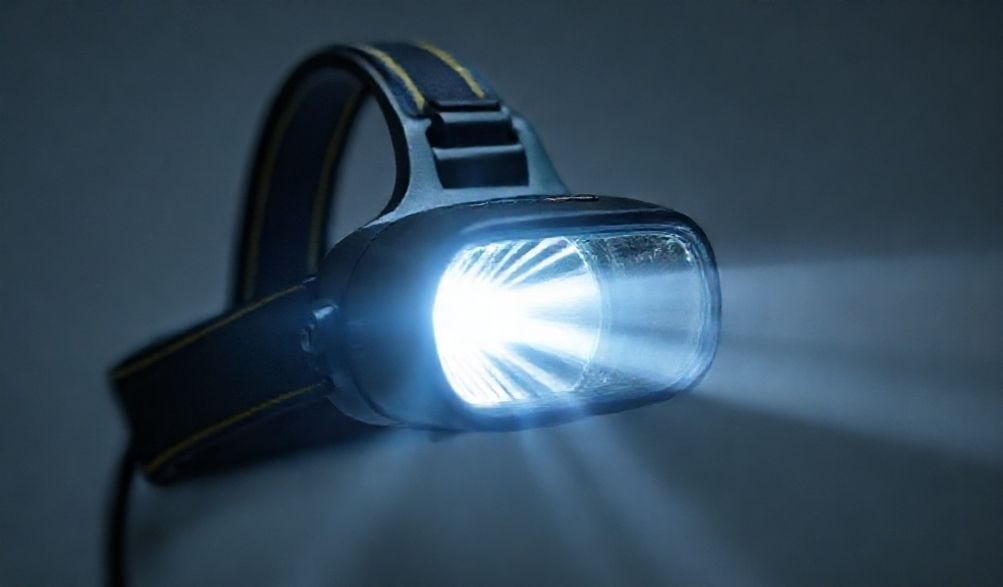
Core Components and Anatomy
Understanding the basic anatomy of a medical headlamp helps in evaluating its quality:
- Light Source: Almost exclusively high-performance LEDs. The quality, binning (sorting for consistency), and optical design around the LED are crucial.
- Power System: This includes the battery (often a rechargeable lithium-ion pack) and its housing. Considerations are runtime, recharge speed, and the availability of hot-swappable batteries for uninterrupted use.
- Headband: Designed for all-day comfort. Look for moisture-wicking, hypoallergenic materials, wide straps to distribute weight, and secure, adjustable fittings.
- Housing/Body: The casing that holds the electronics. It should be fluid-resistant (with an IPX rating), durable, and designed for easy cleaning without harboring pathogens.
Key Features to Consider When Choosing a Medical Headlamp
Selecting the right medical headlamp requires careful consideration of several technical and ergonomic factors. The “best” light is the one that best fits your specific clinical tasks.
Light Quality and Performance
This is the heart of a medical headlamp. More lumens are not always better; the quality of those lumens is paramount.
- Luminosity (Lumens) & Beam Distance: Lumens measure total light output. For most close-up medical work (dentistry, suturing, examination), a range of 200 to 600 lumens is often sufficient and prevents excessive glare or “light flooding.” For illuminating deeper cavities (in surgery or ENT), 600 to 1,200+ lumens may be necessary. Beam distance is less critical than even, focused illumination at a working distance of 10-20 inches.
- Color Temperature (Kelvin): Measured in Kelvins (K), this describes the “warmth” or “coolness” of light. Daylight-balanced light (5000K to 6000K) is the medical standard. It provides a neutral white light that reduces eye strain over long periods and, most importantly, allows for accurate color perception of tissues, blood, and mucosa.
- Beam Type & Focus: A tight spot beam is ideal for focused tasks like locating a small vessel or canal. A flood beam provides wider, even illumination for surface exams or larger operative fields. Many premium medical headlamps offer an adjustable focus, allowing you to seamlessly transition between the two.
- CRI (Color Rendering Index): This is arguably the most critical spec for medical use. CRI measures a light source’s ability to reveal the true colors of an object compared to natural sunlight (which has a CRI of 100). A CRI of 90 or above is essential. A low-CRI light can make erythema (redness) look dull, cyanosis (blueness) harder to detect, or tissue appear unnaturally gray, potentially masking vital diagnostic cues.
Ergonomics and Comfort for Long Procedures
A headlamp that causes discomfort will be a distraction and a liability.
- Weight Distribution: The lightest lamp isn’t always the best if it’s front-heavy. A well-designed medical headlamp uses a counterbalanced battery pack at the back of the headband to center the weight.
- Headband Design: Look for padded, adjustable straps made from breathable material. A secure, non-slip fit is vital to maintain a consistent beam angle without constant readjustment.
- Compatibility: Ensure the headband can accommodate wearing over surgical loupes, prescription glasses, or a surgical hood comfortably.
Power and Durability
Your light must be as dependable as you are.
- Battery Life & Runtime: Check the runtime at the brightness level you’ll use most. A 4-hour runtime at max power is less useful than an 8-hour runtime at a standard procedural setting. Specifications should be clear about these different levels.
- Rechargeable vs. Disposable: Modern medical headlamps predominantly use rechargeable lithium-ion batteries for cost-effectiveness and convenience. The best systems allow for hot-swapping—changing the battery without powering down—which is crucial for long surgeries.
- Build Quality and Resistance: Look for an IPX rating (Ingress Protection) indicating resistance to fluids and dust. IPX4 (splash-resistant) is common, while IPX7 can withstand immersion. Verify the manufacturer’s instructions for approved cleaning agents and, if needed, autoclave compatibility.
Primary Applications and User Profiles
The ideal medical headlamp varies significantly by specialty. Here’s how needs differ across the field:
Surgery & Operative Fields (General, Dental, Veterinary)
- Needs: Maximum shadow reduction, deep-cavity illumination (e.g., abdominal, oral), perfect color rendition for tissue differentiation, and seamless integration with surgical loupes.
- Spec Focus: High CRI (>93), adjustable spot-to-flood beam, high lumen output (600+), comfortable headband for marathon procedures, and often a dedicated, powerful battery pack.
Clinical Examination & Diagnostics
- Specialties: Emergency Room, Primary Care, Dermatology, ENT, Ophthalmology.
- Needs: Hands-free light for otoscopic/ophthalmoscopic exams, wound assessment, skin lesion evaluation, and general patient observation.
- Spec Focus: Excellent color accuracy (CRI >90), a mix of spot and flood light, lightweight design for frequent on/off use, and good battery life for a full clinical shift.
Emergency Medicine & First Response
- Needs: Ruggedness, reliability, instant-on functionality, long battery life, and performance in unpredictable environments (ambulances, accident scenes, low-light triage areas).
- Spec Focus: Durable, fluid-resistant construction (high IP rating), simple controls (often one-button), multiple brightness modes including a low-power setting for conservation, and potentially a power source compatible with vehicle chargers.
Other Healthcare Settings
- Midwifery/Nursing: For perineal assessment, IV insertion, and wound care during night rounds. Comfort and a gentle, wide flood beam are key.
- Medical Tattooing (e.g., Areola Restoration): Requires exceptional color accuracy to match pigments to skin tones perfectly.
- Laboratory/Pharmacy: For detailed sample inspection and compounding in hoods.
Top Medical Headlamp Brands and Models: A Comparative Overview
While we avoid endorsing specific products, here is a neutral, feature-based overview of several respected brands in the medical headlamp space. Remember, the best choice is dictated by your specific application.
| Brand (Example Models) | Key Strengths | Typical Lumen Range | Notable Feature Focus | Common Use Case |
| :— | :— | :— | :— | :— |
| Enova (Quantum, Illuminator) | High, uniform illumination; excellent loupes integration. | 10,000 – 40,000 Lux | Uniform light field, reduced glare, modular systems. | Surgery (especially with loupes), detailed procedural work. |
| Sunnex (Versalume, Starlite) | Versatility, adjustable focus, strong value. | 200 – 800+ Lumens | Adjustable spot-to-flood, variety of headband styles, good CRI. | General surgery, dentistry, veterinary, clinical exam. |
| Welch Allyn (KlearVision) | Diagnostic clarity, medical heritage. | 150 – 500+ Lumens | Optimized for exam & diagnosis, lightweight, medical-grade build. | Clinical examination, ENT, primary care, nursing. |
| Adroit (Helix, Aspect)* | Ergonomics, customizable systems. | 300 – 1,000+ Lumens | 360° rotating light engine, exceptional balance, modular design. | Long-duration surgery, microsurgery, specialties requiring perfect positioning. |
Note: Enova often uses Lux (illuminance at a surface) rather than Lumens (total output), emphasizing the usable light at the working distance.
The crucial takeaway: A medical headlamp with moderately high lumens but superb CRI, comfort, and beam quality will serve you better than the highest-lumen lamp with poor color rendering and an uncomfortable fit.
Maintenance, Safety, and Best Practices
Protecting your investment and ensuring patient safety requires proper care.
Proper Cleaning and Sterilization Protocols
- Always follow the manufacturer’s specific instructions. They are the authoritative source.
- For non-sterile use, wipe down the housing and headband with a hospital-grade disinfectant wipe after each use. Avoid submerging unless the unit is rated for it.
- For sterile procedures, some models have detachable, autoclavable light modules or protective sterile sleeves. Never autoclave a component unless explicitly certified by the manufacturer.
Battery Safety and Storage
- Use only the charger provided by the manufacturer.
- For lithium-ion batteries, avoid fully depleting them regularly. Partial discharges are better for long-term health.
- Store in a cool, dry place. For headlamps not in daily use, follow the manufacturer’s guidelines for long-term storage charge levels (often ~50%).
Avoiding User Fatigue and Eye Strain
- Adjust Properly: Position the light source centrally on your forehead and angle it to align with your natural line of sight. A wobbly or misaligned beam forces constant micro-adjustments and causes strain.
- Use Appropriate Brightness: Don’t default to the maximum setting. Use the lowest comfortable brightness for the task to reduce glare and reflection.
- Take Visual Breaks: During long procedures, consciously look away from the intensely lit field momentarily to relax your eye’s focusing muscles.
Frequently Asked Questions (FAQ)
Q: Can I use a regular camping headlamp for medical purposes?
A: It is strongly advised against. Recreational headlamps lack the high CRI necessary for accurate color diagnosis, often have a color temperature that distorts tissue appearance, and are not built to withstand clinical cleaning protocols or ensure sterility. They are a tool for visibility, not for precision medical visualization.
Q: How many lumens do I really need for surgical procedures?
A: There’s no single answer, as it depends on cavity depth and personal preference. However, for most procedures, a range of 400 to 800 lumens is common and effective. Focus on finding a lamp where the lumens are delivered with high CRI, even distribution, and minimal glare, rather than chasing the highest lumen count.
Q: Are rechargeable medical headlamps reliable?
A: Yes, absolutely. Modern medical-grade rechargeable systems using lithium-ion batteries are highly reliable, long-lasting, and provide consistent output. The benefits include lower long-term cost, convenience, and environmental friendliness. For critical, long procedures, choose a model with a swappable battery so you can change packs without interrupting your work.
Q: What does CRI mean, and why is it so important?
A: CRI (Color Rendering Index) is a scale from 0 to 100 that measures how accurately a light source reveals the true colors of objects compared to natural light. In medicine, a high CRI (90+) is vital because it allows you to see subtle differences in tissue color, inflammation, oxygenation of blood, and lesion borders. A low CRI can mask these critical visual clues.
Q: How do I properly adjust my headlamp to avoid shadows?
A: First, ensure the headband is snug and secure. Position the light module as centrally on your forehead as possible. Angle the beam so the hotspot falls where your natural gaze is focused at your working distance (typically 14-18 inches away). A stable, well-centered light source that moves with your head will minimize shadows caused by your own instruments or hands.
Conclusion
Choosing a medical headlamp is an investment in your professional capability and, more importantly, in the quality and safety of patient care. It is a decision that should prioritize precision optics and ergonomic design over raw power. The key takeaways are to seek out a daylight-balanced light with a Color Rendering Index (CRI) of 90 or higher, ensure the fit and comfort support your longest workdays, and select a system with the durability and reliability required for your clinical environment.
Let this guide serve as your foundational reference. The most informed choice comes from aligning these technical specifications with your specific daily tasks. Consult with colleagues about their experiences with different models, and always adhere to the manufacturer’s authoritative guidelines for use, cleaning, and maintenance. By carefully selecting the tool that brings critical details into perfect clarity, you illuminate the path to better diagnostics, more precise interventions, and optimal outcomes.
Call to Action: Before you begin your search, take a moment to define your needs. What is your primary specialty? What is your typical working distance? How long are your continuous procedures? Use the feature checklist from this guide to compare models, and seek out demonstrations or trial periods whenever possible to experience the difference that true medical-grade illumination can make.
p>