
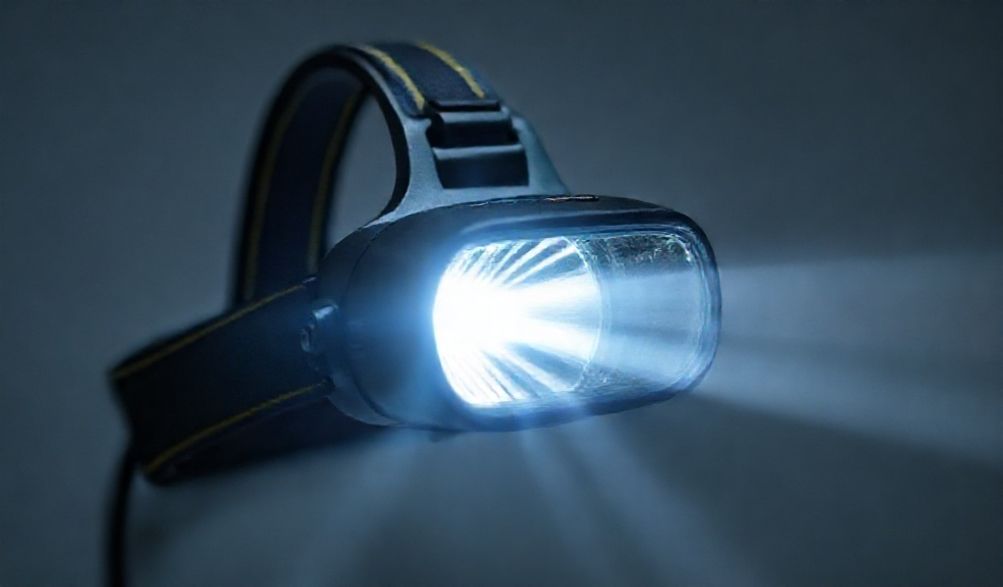
The Ultimate Guide to Medical Headlamps: Enhancing Precision in Healthcare
In the high-stakes world of healthcare, where a millimeter can be the difference between success and complication, clarity is non-negotiable. Whether performing an emergency intubation in a poorly lit ambulance, suturing a delicate laceration in the ER, or conducting a complex microsurgical procedure, the quality of light is a silent partner in every clinical decision and maneuver. Overhead lighting, while essential for ambient illumination, often casts frustrating shadows, creates glare on reflective surfaces, and fails to move with the practitioner’s focus. A generic flashlight, held in a busy hand, is a clumsy and inadequate substitute.
The solution lies in a tool engineered for this exact purpose: the medical headlamp. Far more sophisticated than its camping counterpart, a professional medical headlamp is a specialized, hands-free lighting system designed to meet the exacting demands of modern healthcare. This guide serves as an authoritative, experience-driven resource. We will distill clinical evidence, expert specifications, and practical wisdom to help surgeons, dentists, veterinarians, emergency responders, and clinicians of all specialties choose the right illumination tool. You will learn not just what features exist, but why they matter, how they apply to your specific field, and what to prioritize when making this critical investment in your practice.
What is a Medical Headlamp & Why is it Essential?
A Specialized Hands-Free Lighting Tool
A medical headlamp is a purpose-built illumination device worn on the head, typically via an adjustable strap, that projects light directly into the user’s field of view. Its core design principle is ergonomic liberation—freeing the user’s hands to perform intricate tasks while delivering optimal light exactly where it’s needed. Unlike consumer-grade headlamps, medical models are engineered with specific clinical parameters in mind: high-fidelity color rendering, adjustable and focused beam patterns, compatibility with sterile environments, and durability for daily professional use.
The Critical Role of Lighting in Medical Outcomes
Lighting is a foundational element of clinical practice, directly impacting safety, accuracy, and outcomes.
* Reduces Eye Strain and Fatigue: During long procedures, inconsistent or poor lighting forces the eye to constantly adjust, leading to fatigue, headaches, and decreased concentration. A stable, well-directed light source minimizes this strain.
* Improves Diagnostic Accuracy: Detecting subtle variations in tissue color, inflammation, jaundice, or capillary refill relies on true color representation. Inadequate light can mask critical diagnostic clues.
* Enhances Procedural Precision and Safety: In surgery, dentistry, or wound care, shadows can obscure anatomy, making precise incisions, suturing, or debris removal challenging and risky. A focused beam illuminates depth and detail, reducing the chance of error.
* Increases Efficiency: Hands-free operation eliminates the constant repositioning of overhead lights or the need for an assistant to hold a light, streamlining workflows especially in solo or resource-limited settings.
Key Advantages Over Conventional Lighting
- Hands-Free Operation: The paramount advantage. Both hands remain available for instruments, patient handling, or documentation.
- Superior Beam Focus and Control: Light is directed coaxially with the user’s vision, eliminating parallax error and illuminating deep cavities or wounds without shadow.
- Unmatched Portability and Mobility: The light source moves intuitively with the practitioner’s head, ideal for field medicine, bedside procedures, or moving around an operating table.
- Adaptability to Close-Range Work: Designed for working distances of 10-50 cm, providing intense illumination without the bulk or heat of larger surgical lights.
Key Features to Look for in a Medical Headlamp
Navigating the specifications of a medical headlamp requires understanding which features translate to clinical benefits.
Brightness & Lumens: Finding the Right Power
Brightness is measured in lumens (total light output). While it’s tempting to seek the highest number, context is everything.
* Lumen Ranges: For most close-up clinical work (examinations, dental work, minor surgery), 200-500 lumens is often sufficient. For deep-cavity surgery or procedures requiring extreme detail, 1000+ lumens may be necessary. The key is adjustability—a headlamp with multiple brightness settings allows you to tailor the intensity to the task, conserving battery and reducing glare during less demanding moments.
* Lux is Also Key: For surgical applications, illuminance (lux) at a specific working distance is a critical metric. Many high-end surgical headlamps specify a lux rating (e.g., 40,000 lux at 400mm), which gives a more accurate picture of the intensity on the surgical field than lumens alone.
Beam Type & Focus: Spot vs. Flood
The beam pattern determines how the light is distributed.
* Spot Beam: A concentrated, focused circle of light. Essential for tasks requiring high detail and depth illumination, such as surgery, dentistry, or microsuturing. It provides maximum intensity in a small area.
* Flood Beam: A wider, more diffuse light that covers a broader area. Ideal for general examinations, wound assessment, triage, and veterinary checks where a larger field needs even illumination.
* Adjustable Focus: The most versatile option. A zoomable or interchangeable optic allows you to seamlessly transition from a wide flood for assessment to a tight spot for intervention.
Color Temperature & CRI (Color Rendering Index)
This is where a medical headlamp truly separates itself from consumer models.
* Color Temperature: Measured in Kelvins (K), it describes the “warmth” or “coolness” of the light. A neutral white light (4500K-5500K) is generally preferred as it mimics daylight and reduces color distortion.
* CRI (Color Rendering Index): This is the most critical spec for medical use. CRI measures a light source’s ability to reveal the true colors of objects compared to natural light. Scale is 0-100.
* Why High CRI (>90) is Non-Negotiable: Accurate differentiation between arterial and venous blood, identifying tissue viability (pink vs. pale vs. cyanotic), detecting subtle rashes, and matching dental shades all depend on perfect color fidelity. A low-CRI light can make tissues appear washed out or alter hue perception, posing a direct risk to diagnostic and procedural accuracy.
Comfort & Ergonomics for Long Procedures
A headlamp that causes discomfort will be left unused. Key ergonomic factors include:
* Weight Distribution: The best designs are balanced, often with a rear counterweight or a separate battery pack placed at the back of the headband. This prevents the unit from tipping forward.
* Headband Design: Look for padded, moisture-wicking, and fully adjustable straps. A secure, comfortable fit is crucial for multi-hour surgeries or long shifts.
* Tilt Mechanism: The lamp housing should tilt smoothly and stay securely in position, allowing you to aim the beam without moving your head.
Power Source & Battery Life
Reliability is paramount.
* Rechargeable Li-ion: The standard for professional use. They offer long runtimes, consistent power output, and lower long-term cost. Look for models with a battery life that exceeds your typical procedure length.
* Disposable Batteries: Offer the advantage of instant replacement if power fails, but are less economical and eco-friendly. Some systems offer dual power options.
* Runtime & Indicators: Always check the runtime at the brightness level you’ll use most. A clear low-battery indicator (visual or audible) is essential to avoid mid-procedure blackouts.
Top Applications for Medical Headlamps by Specialty
Surgery & Operating Rooms
- Requirements: Very high brightness (lux) and adjustable focus for deep cavities; often a cool, pure white light with CRI >95; must be compatible with sterile protocols (often via disposable, sterile lens covers or sleeves); the light source must remain cool to avoid heating the surgeon’s forehead or the sterile field.
Dentistry & Oral Surgery
- Requirements: A very focused spot beam to illuminate the dark oral cavity; exceptionally high CRI (>95) for accurate shade matching in restorative work and detecting caries; excellent water resistance (IPX4 or higher) to withstand sprays and fluids; lightweight comfort for hours of use.
Veterinary Medicine
- Requirements: Durability and often a wider flood beam for examining larger animals; hands-free operation is critical when restraining or handling patients; may need higher lumen output for poorly lit barns or field settings; easy-to-clean surfaces for hygiene.
Emergency Medicine & First Response
- Requirements: Rugged, shock-resistant construction; reliable performance in all weather conditions (rain, cold); very long battery life or easy battery swaps; a versatile beam (often adjustable from spot to flood) for everything from vehicle extrication to wound care; simple, intuitive controls that can be operated with gloves.
Clinical Examinations & Wound Care
- Requirements: A good, even flood light for assessing larger skin areas; comfortable for close patient proximity; high CRI to evaluate wound bed color (granulation vs. necrotic tissue); easy to disinfect between patients.
How to Choose the Best Medical Headlamp: A Buyer’s Checklist
- Assess Your Primary Use Case: Refer to the specialty applications above. Are you doing 8-hour spinal surgeries or 15-minute wound checks? Your core task defines your core needs.
- Prioritize Must-Have Features vs. Nice-to-Haves:
- Must-Haves: High CRI (>90), adjustable brightness, a beam type suitable for your work (spot/flood/adjustable), professional-grade comfort.
- Nice-to-Haves: Multiple color modes (e.g., red for night vision preservation), wireless operation, integrated camera, specific sterile barrier systems.
- Consider Hygiene and Maintenance: How will you clean it? Can it withstand hospital-grade disinfectants? Are there disposable lens covers available? For the OR, is there a validated sterile protocol? This is a critical and often overlooked factor.
- Set a Realistic Budget: Professional medical headlamps range from around \$200 for reliable clinical models to several thousand for advanced surgical systems. View this as a long-term investment in your precision and efficiency. Balance cost with the value of durability, warranty, and manufacturer support.
Safety, Maintenance, and Best Practices
Ensuring Patient and Practitioner Safety
- Heat Management: Modern LED headlamps run very cool, but ensure the design dissipates heat away from the user’s skin and the sterile field.
- Patient Eye Safety: Avoid shining the beam directly into a conscious patient’s eyes. Some models have a diffuser setting for this purpose.
- Electrical Safety: Use only manufacturer-approved chargers and batteries. Ensure the device has appropriate safety certifications for clinical use.
Cleaning and Disinfection Protocols
- Always follow the manufacturer’s specific instructions.
- General Steps: Remove the battery. Wipe down non-optical surfaces with a soft cloth dampened with an approved hospital disinfectant (e.g., 70% isopropyl alcohol or a quaternary ammonium compound). Avoid abrasive cleaners or submerging the unit unless it’s rated for such. Use disposable, sterile plastic barriers over the light head for procedures requiring a sterile field.
Maximizing Battery Life and Longevity
- Avoid completely draining Li-ion batteries; recharge when the indicator shows low.
- Store the headlamp and batteries in a cool, dry place.
- If not using for an extended period, store the battery at a partial charge (around 50%).
Frequently Asked Questions (FAQ)
Q1: What is the ideal CRI for a medical headlamp?
A: A CRI of 90 or higher is the benchmark for serious medical use. For color-critical work like surgery, dentistry, or dermatology, aim for CRI 95+.
Q2: Can I use a regular outdoor headlamp for medical purposes?
A: It is strongly discouraged. Outdoor headlamps prioritize brightness and battery life over color accuracy (often have low CRI), lack the appropriate beam focus for close work, and are not designed for clinical hygiene or safety standards.
Q3: How many lumens do I need for surgical procedures?
A: Lumens tell part of the story. For surgery, pay closer attention to the lux rating at a specified distance (e.g., 100,000 lux at 30cm). This indicates the intensity on the target. Look for adjustable surgical headlamps that provide sufficient intensity without causing glare or “hot spots.”
Q4: Are medical headlamps waterproof?
A: Many are water-resistant for cleaning and splashes. Check the IP (Ingress Protection) rating. An IPX4 rating means it’s resistant to water splashes from any direction, which is suitable for most clinical environments. For wet specialties like dentistry, a higher rating is beneficial.
Q5: How do I ensure a comfortable fit for long shifts?
A: Prioritize models with a padded, adjustable headband and a balanced design (often with a rear battery pack). The weight should be distributed evenly around your head, not pulling forward. An adjustable tilt mechanism also helps you direct light without straining your neck.
Conclusion
A medical headlamp is far more than a convenience; it is a fundamental investment in clinical precision, practitioner safety, and ultimately, patient outcomes. The choice hinges on a core trio of features: sufficient and adjustable Brightness, the correct Beam Quality for your task, and an uncompromisingly High CRI for true color vision. These are supported by the pillars of all-day Comfort and professional Durability.
Before purchasing, clearly define the demands of your clinical environment. Consult with colleagues, review institutional guidelines if applicable, and prioritize products from reputable manufacturers with a proven track record in medical lighting. Whenever possible, request a demonstration or trial to experience the fit, beam quality, and controls firsthand. In the intricate dance of healthcare, where every detail matters, equipping yourself with the right light is a step toward mastering your craft.
p>