
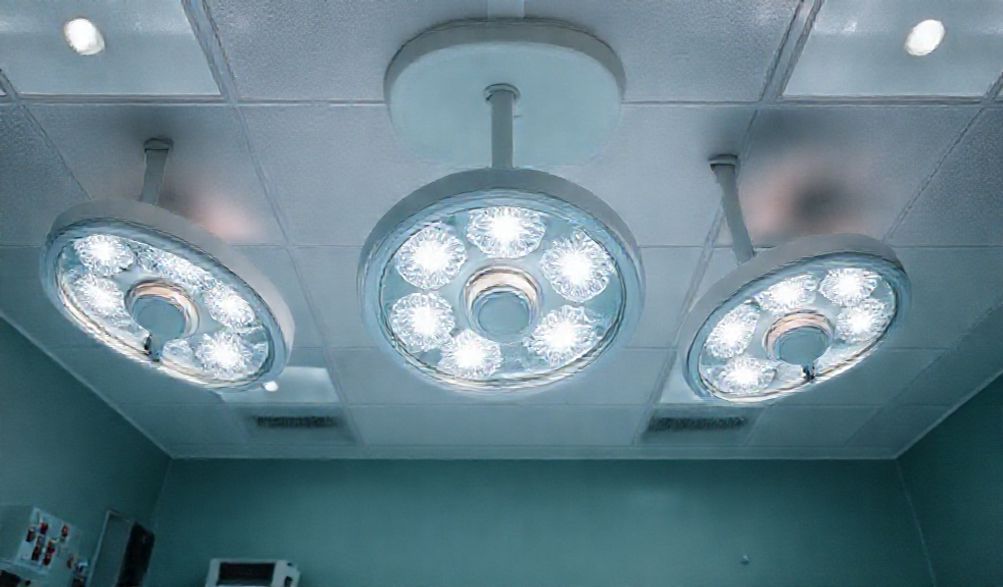
Operating Room Lights: A Comprehensive Guide to Surgical Lighting Technology
In the high-stakes environment of an operating theater, success hinges on a triad of factors: the surgeon’s skill, the team’s coordination, and the clarity of the surgical field. While the first two are human elements, the third is profoundly dependent on technology—specifically, the quality of illumination. Imagine a cardiac surgeon differentiating between arterial and venous tissue, a neurosurgeon navigating delicate neural pathways, or an orthopedic team assessing bone integrity. In each scenario, subpar lighting isn’t just an inconvenience; it’s a direct threat to precision, efficiency, and ultimately, patient safety.
This guide is built on a foundation of expert knowledge, synthesizing principles from biomedical engineering, clinical surgical standards, and facility management protocols. It is designed to address the core informational needs of surgeons, hospital procurement committees, OR facility managers, and medical students who seek a deep, practical understanding of modern surgical lighting systems. We will move beyond basic specifications to explore how cutting-edge operating room lights function as a critical tool, directly impacting surgical outcomes, ergonomics, and operational efficiency. This comprehensive overview will detail the technology, essential features, and key considerations for selecting and maintaining the optimal lighting system for any surgical environment.
The Critical Role of Lighting in Modern Surgery
Surgical lighting has evolved from a simple tool to “see” into a sophisticated environmental system designed to support the complex visual and physical demands of modern surgery. Its role is foundational, not ancillary.
Beyond Illumination: How Lighting Impacts Surgical Outcomes
The right lighting system contributes directly to positive surgical outcomes in several tangible ways:
- Reducing Surgeon Eye Strain and Fatigue: Long procedures under poor lighting—characterized by glare, insufficient intensity, or incorrect color—force the ocular muscles to work harder, leading to headaches, fatigue, and decreased concentration. Optimal lighting minimizes this cognitive and physical load, helping to maintain peak surgeon performance throughout lengthy operations.
- Enhancing Tissue Differentiation and Color Rendition: Accurate visual assessment is paramount. Surgeons must distinguish between subtle shades of red in vascular tissue, identify the pale hue of a nerve, or recognize the cyanotic blue of hypoxic tissue. Lighting with superior color rendering is essential for these critical judgments, reducing diagnostic uncertainty.
- Minimizing Shadows in Deep Cavities: The human head and hands, along with surgical instruments, naturally create shadows. In deep cavity surgeries (e.g., pelvic, thoracic, or spinal procedures), these shadows can obscure the operative site. Advanced lighting systems are engineered specifically to penetrate cavities and fill shadows, ensuring a consistently clear view.
Core Requirements: The Standards for Surgical Luminaires
To ensure safety and efficacy, surgical lights are governed by stringent international standards. The most prominent is IEC 60601-2-41 (with regional equivalents like DIN VDE 0750-241 in Europe), which specifies essential performance and safety requirements. Key parameters defined include:
- Illuminance (Lux Intensity): The amount of light falling on the surgical field. Standards typically require a minimum of 40,000 lux to 160,000 lux at the center of the field, adjustable to suit different procedures.
- Depth of Illumination: A measure of how effectively the light penetrates into cavities. It indicates how much the light intensity decreases as a surgeon works deeper (e.g., 20 cm below the nominal focus point). A high depth of illumination is critical for deep surgery.
- Field Diameter: The size of the illuminated area at a specific distance. Lights often allow adjustment from a focused “spot” for precision work to a wide “flood” for larger incisions.
Anatomy of a Modern Operating Room Light
Today’s surgical light is a marvel of integrated engineering, combining optics, mechanics, and electronics into a single, reliable tool.
Light Source Evolution: From Halogen to LED
The journey of surgical light sources reflects a pursuit of better performance and efficiency:
- Halogen: The long-standing workhorse, offering good color rendering. However, halogen bulbs generate intense infrared (IR) heat, have short lifespans (1,000-2,000 hours), and consume significant energy.
- Metal Halide: An improvement offering brighter, whiter light than halogen with better efficiency, but still burdened by heat output, shorter life than LED, and complex disposal due to mercury content.
- LED (Light Emitting Diode): The undisputed modern standard. LEDs have revolutionized OR lighting by providing:
- Exceptional Longevity: 40,000 to 60,000+ hours of use, drastically reducing replacement frequency and costs.
- Superior Color Control: Precise tuning of Color Temperature and high Color Rendering Index (CRI).
- Minimal Heat Radiation: LEDs emit very little IR heat, enhancing patient safety (reduced tissue drying) and staff comfort.
- High Energy Efficiency: Consuming up to 75% less power than halogen systems for equivalent or better light output.
- Instant On/Off & Dimming: No warm-up time and seamless, flicker-free dimming.
Key Components and Their Functions
A modern surgical light head is a symphony of subsystems:
-
The Optical System: This is the “heart” of the light.
- LED Clusters: An array of dozens to hundreds of individual LEDs, often arranged in concentric rings or specific geometric patterns to create a multi-point source for shadow reduction.
- Reflectors & Lenses: Precision optics that collect, direct, and focus the LED light. They shape the light beam and ensure homogeneity.
- Filters: While LEDs produce little IR, advanced systems may still incorporate filters to eliminate any residual heat radiation.
-
The Mechanical System: This is the “body” that delivers the light where it’s needed.
- Suspension & Arms: Typically a ceiling-mounted system with multiple articulated arms (e.g., 2 to 4) providing extensive reach and maneuverability. High-quality counterbalance systems allow effortless, fluid positioning that stays exactly where the surgeon places it.
- Sterile Handles: Designed for easy, aseptic handling. Options include single-use sterile handles, autoclavable handles, or touch-free control via foot pedals or voice commands.
-
The Control System: This is the “brain” of the light.
- User Interface: Intuitive touch panels or control panels on the light head or a separate terminal. These allow adjustment of intensity, color temperature (on some models), and field size.
- Integration Capabilities: Modern “smart” lights can connect to the hospital network or OR integration system, enabling control from a central touchscreen, saving lighting presets for specific procedures, and linking light status to surgical documentation.
Essential Features to Evaluate in OR Lights
When comparing systems, look beyond basic brightness. These quality metrics define performance.
Illumination Quality Metrics
- Color Rendering Index (CRI): Measured on a scale of 0-100 (Ra), CRI indicates how accurately a light source reveals the true colors of objects compared to natural daylight. For surgery, a CRI >90 Ra is essential. A CRI of 95+ is considered excellent and critical for specialties like plastic surgery, organ transplantation, and any procedure where subtle tissue differentiation is vital.
- Color Temperature: Measured in Kelvin (K), this describes the hue of the “white” light. The clinically preferred range is 4000K to 5000K (cool white). This temperature provides a bright, alerting environment that enhances contrast and reduces the yellowish tint that can mask cyanosis or jaundice. Some advanced systems offer tunable color temperature.
- Homogeneity & Shadow Reduction: Uniform light across the entire field is crucial. Look for systems that achieve high homogeneity (e.g., >80% across the central field). Shadow reduction is accomplished through multi-point source designs (multiple LED clusters) that cast overlapping light beams, filling in shadows from multiple angles. Some lights feature a central aperture for a column of “cold light” that can shine directly into deep wounds with minimal obstruction.
Ergonomic and Functional Design
- Maneuverability: The system should have a wide reach to cover any position on the operating table and move with fluid, effortless motion. Check the articulation of the arms and the quality of the counterbalance—it should hold position securely without drift.
- Sterility: The light head must have a completely sealed, smooth exterior that can withstand rigorous cleaning and disinfection with hospital-grade chemicals. No crevices should harbor pathogens.
- Redundancy & Safety:
- Backup System: In the event of a primary power failure, a backup light (often a central cluster of LEDs) must instantly illuminate, maintaining a safe minimum light level to conclude the procedure.
- Thermal Management: Effective heat sinks and ventilation ensure the light head surface remains cool to the touch, preventing burns.
- Mechanical Safety: Fail-safe brakes and locks prevent arms from accidentally lowering onto the surgical field.
Selecting the Right System for Your Operating Theater
Choosing OR lights is not a one-size-fits-all decision. It requires a careful assessment of clinical needs and long-term value.
Assessing Surgical Specialty Needs
Different specialties have unique visual demands:
- General & Abdominal Surgery: Require a large, homogeneous field with excellent depth of illumination for deep cavities.
- Neurosurgery & Spinal Surgery: Demand extremely high intensity and shadow-free illumination for precision work in confined spaces. High CRI is critical for nerve identification.
- Cardiac & Thoracic Surgery: Need a combination of wide-field illumination and deep-cavity capability, often with excellent red tissue differentiation.
- Orthopedic Surgery: Benefit from very bright, white light to assess bone color and texture, often during procedures with large open incisions.
- Minimally Invasive Surgery (MIS) & Hybrid ORs: While monitors are primary, room lighting must be dynamically adjustable—dimmed for screen visibility but instantly bright for open phases or emergencies. Integration with room control systems is highly valuable here.
Procurement Considerations: Total Cost of Ownership (TCO)
Look beyond the initial purchase price. The TCO analysis reveals the true value:
- Upfront Cost vs. Long-Term Savings: LED systems have a higher initial cost but offer massive savings in bulb replacements (virtually eliminated for years) and energy consumption (often cutting power use by more than half).
- Maintenance & Serviceability: Inquire about mean time between failures (MTBF), warranty terms, and the availability of local service technicians. Modular designs that allow easy component replacement are advantageous.
- Compatibility & Future-Proofing: Ensure the new system is compatible with your OR’s ceiling infrastructure, electrical supply, and control systems. Consider lights with software-upgradable features to adapt to future needs.
Installation, Maintenance, and Best Practices
Optimal performance depends on correct installation and diligent upkeep.
Ensuring Optimal Performance Post-Installation
- Installation: Must be performed by certified technicians. Ceiling mounts must be structurally sound. The system’s range of motion should be mapped to ensure full coverage of the operating table and potential equipment positions.
- Routine Cleaning: Follow the manufacturer’s disinfection protocol precisely. Use only recommended, non-corrosive cleaners. Wipe gently to avoid scratching optical components. This is a daily necessity for infection control.
Scheduled Maintenance and Calibration
- Regular Checks: Biomedical engineering teams should perform scheduled inspections (e.g., annually). These verify illuminance and color temperature are within specification, check the function of the backup system, and test the smoothness and balance of the mechanical arms.
- Documentation: Keep detailed records of all maintenance, calibration, and repairs. This is crucial for compliance with safety standards (like The Joint Commission) and for asset management.
Frequently Asked Questions (FAQ)
Q1: What is the typical lifespan of LED surgical lights compared to traditional halogen?
A: LED surgical lights typically offer 40,000 to 60,000 hours of use, vastly outperforming halogen bulbs (1,000-2,000 hours), significantly reducing replacement costs and OR downtime.
Q2: Why is a high Color Rendering Index (CRI) so important in an operating room?
A: A CRI >90 Ra ensures that the colors of tissues, organs, and blood are rendered as accurately as possible under artificial light. This is critical for distinguishing between subtle tissue variations, identifying anatomical structures, and monitoring patient oxygenation, directly impacting diagnostic and surgical precision.
Q3: Can operating room lights be integrated with other OR systems?
A: Yes, many modern “smart” OR lights offer integration with OR control systems, surgical video recorders, and hospital networks. This allows for control via touch panels, lighting presets for different procedures, and documentation linkage.
Q4: How do surgical lights minimize shadows during procedures?
A: Advanced systems use multiple LED clusters arranged in a specific geometry. This creates a “multipoint” light source that fills in shadows from instruments and hands from several angles. Some also feature a central “cold light” aperture for deep-cavity illumination with minimal obstruction.
Q5: What are the key safety features to look for?
A: Essential safety features include a backup power system that activates immediately if the main light fails, thermal management to prevent patient or staff burns, and a secure mechanical design with fail-safe brakes to prevent drooping or falling.
Conclusion
The evolution from hot, inefficient halogen bulbs to cool, intelligent LED systems represents a transformative leap in surgical technology. Modern operating room lights are no longer simple fixtures; they are sophisticated environmental tools that directly enhance clinical outcomes by reducing visual fatigue, enabling unparalleled tissue discrimination, and ensuring a consistently clear surgical field. Their ergonomic design supports the surgical team’s physical workflow, while their efficiency and durability benefit the facility’s operational bottom line.
Selecting the right surgical lighting is a critical, evidence-based decision that requires balancing technical specifications—like CRI >90, optimal color temperature, and depth of illumination—with the practical realities of clinical workflow and total cost of ownership. It is a foundational investment in the pursuit of surgical excellence.
Therefore, view modern OR lights not merely as purchased equipment, but as a core, enabling technology for enhanced patient care. To make the best choice for your facility, we recommend consulting closely with clinical stakeholders, engaging with experienced biomedical engineers, and requesting hands-on demonstrations from vendors to see these advanced systems in action.
p>