
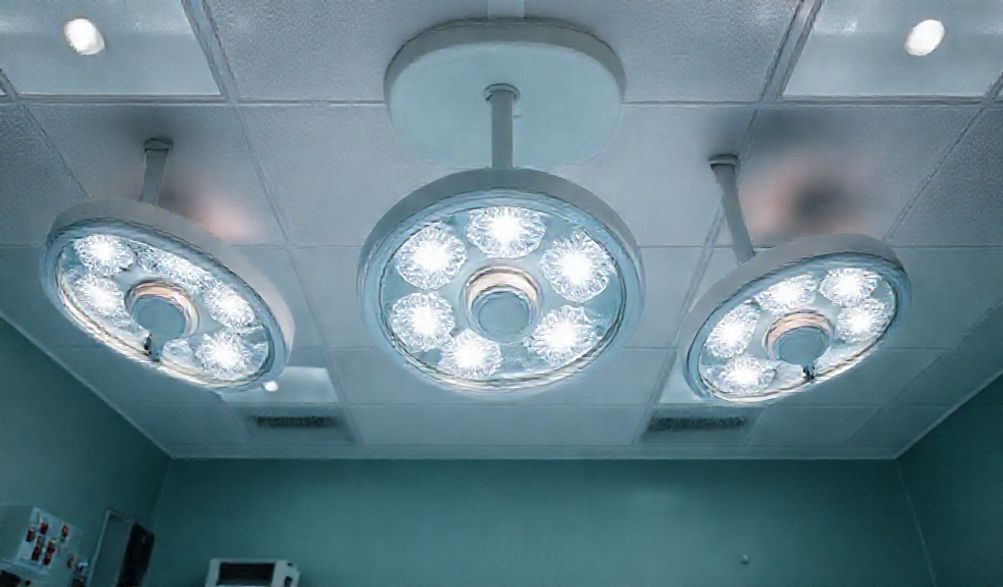
Operating Room Lights: A Comprehensive Guide to Surgical Lighting Technology
In the high-stakes environment of an operating room, where millimeters can determine outcomes, every tool is critical. Yet, one of the most fundamental is often overlooked until it fails: the surgical light. More than just a lamp, modern operating room (OR) lighting is a sophisticated, life-supporting technology system. Its quality directly influences a surgeon’s ability to discern subtle tissue variations, identify critical structures, and perform with precision over long hours. Poor lighting can lead to visual fatigue, increased error rates, and compromised patient safety.
This guide is designed to be an authoritative, experience-based resource for surgeons, clinical directors, hospital procurement teams, and biomedical engineering students. We will move beyond basic specifications to explore why surgical lighting matters, dissect the technology that powers it, and provide a practical framework for selection and maintenance. By the end, you will understand how to evaluate OR lights not just as an equipment purchase, but as a long-term investment in surgical efficacy, team performance, and, ultimately, patient outcomes.
The Critical Role of Surgical Lighting in Modern Medicine
Surgical lighting has evolved from simple shadow-casting lamps to being an active participant in the surgical process. Its impact is quantifiable, touching everything from the surgeon’s physiological state to the sterility of the field.
Impact on Surgical Outcomes: Reducing Error and Fatigue
The primary mission of an OR light is to render the surgical site with impeccable clarity. This is achieved through a combination of factors:
* shadow reduction and Homogeneous Illumination: Modern lights use multiple LED point sources arranged in reflector systems to produce overlapping beams. This “depth of illumination” fills cavities and minimizes the obstructive shadows cast by surgeons’ heads and hands, a common flaw in older designs. Consistent light across the entire field prevents eye strain from constantly adjusting to varying brightness.
* Color Rendering Index (CRI): A high CRI (≥90, with ≥95 being ideal) is non-negotiable. It ensures that tissue colors—the subtle difference between arterial oxygenated blood, venous blood, bile, or necrotic tissue—are displayed accurately. Misinterpretation due to poor color fidelity can have dire consequences. Studies in fields like laparoscopy and plastic surgery have highlighted how lighting color temperature and rendering directly affect diagnostic confidence and procedural accuracy.
* Intensity and Control: Adequate, adjustable lux (illuminance) allows for visualization of deep, dark cavities without causing glare or “white-out” on superficial, reflective tissues. The ability to fine-tune intensity helps maintain a surgeon’s visual acuity over prolonged procedures, reducing cognitive fatigue. Research has consistently drawn a link between optimal lighting conditions and reduced rates of surgical error and operator exhaustion.
Beyond Illumination: Lighting as a Component of Patient Safety
Today’s OR lights are engineered with the entire surgical ecosystem in mind:
* Infection Control: LED modules produce significantly less radiant heat than old halogen or xenon bulbs. This “cool light” minimizes tissue drying and desiccation at the wound margins, promoting better healing. Furthermore, light heads are designed with seamless, sealed surfaces that can withstand rigorous cleaning and disinfection with hospital-grade agents without degrading.
* Ergonomics and Integration: Lights are no longer isolated units. Their articulation and control must support OR workflow. Sterile, intuitive handles allow for repositioning without breaking sterility. They must integrate physically and sometimes digitally with other room systems—retracting smoothly for C-arm access, mounting on surgical booms, or even interfacing with imaging overlays without causing electromagnetic interference.
Key Technologies and Features of Modern OR Lights
Understanding the components and metrics is essential for meaningful evaluation.
LED Technology: The New Standard
The shift from halogen/xenon to Light Emitting Diode (LED) technology has been transformative. LEDs are now the unequivocal standard, and for good reason:
* Longevity & Consistency: LED arrays last for tens of thousands of hours (often 50,000+), outlasting halogen bulbs by a factor of 20 or more. They maintain a consistent color temperature and intensity throughout their lifespan, with no gradual dimming or color shift.
* Cool Light Output: LEDs convert most energy to light, not heat. This dramatically reduces thermal radiation onto the surgical field, enhancing patient safety and surgeon comfort.
* Energy Efficiency: They consume a fraction of the power of older systems, leading to substantial cost savings and reduced cooling load on the OR HVAC.
* Instant On/Off & Dimming: Unlike halogens that needed warm-up time, LEDs provide full-intensity light instantly and allow for precise, flicker-free dimming.
Understanding Key Performance Metrics
When reviewing specifications, these are the critical numbers to scrutinize:
Lux and Illuminance: Measuring Light Intensity
Lux measures the amount of light (luminous flux) falling on a surface. For major surgery, a central illuminance of 40,000 to 160,000 lux is typical, with the ability to focus this intensity at a defined working distance (e.g., 1 meter). The light must maintain a large, uniform field (e.g., 30cm diameter) at this high intensity, not just a bright central hotspot.
Color Rendering Index (CRI): Why True Tissue Color Matters
CRI measures a light source’s ability to reveal the true colors of objects compared to natural light. A CRI of 95 or higher is the benchmark for critical visual tasks like surgery. Some systems also offer adjustable color temperature (measured in Kelvin), allowing surgeons to switch between a warmer light (e.g., 4000K) for better contrast in bloody fields and a cooler, daylight-like light (e.g., 5500K) for standard visualization.
Depth of Illumination: Penetrating Deep Cavities
This is a measure of a light’s ability to provide adequate illumination deep within a cavity (like during open abdominal or pelvic surgery) without a corresponding increase in superficial glare. It’s a function of the optical design and is a key differentiator between basic and high-performance lights.
Ergonomic and Functional Design Elements
The best light is useless if it’s hard to position or control.
* Articulation: Multi-link arms with counterbalance systems provide a wide range of motion, allowing the light to be positioned precisely and then stay there without drift. The number of joints and the total reach are crucial for accommodating different table heights and surgeon positions.
* Sterile Handles & Controls: Handles must be designed for easy, one-handed manipulation by a gowned surgeon. Controls are often duplicated on the handle and a non-sterile base, allowing the circulating nurse to make adjustments.
* Backup Systems: Redundancy is vital. High-end systems feature redundant LED modules so that if one fails, others automatically compensate to prevent a sudden blackout. Backup battery systems ensure lights can be moved to a safe parked position in a power failure.
How to Choose the Right Operating Room Light: A Buyer’s Framework
Selecting OR lights requires a balance of clinical need, financial planning, and systems thinking.
Assessing Surgical Specialty Needs
One size does not fit all. The “ideal” light varies dramatically by procedure:
* General & Trauma Surgery: Requires high intensity, excellent depth of illumination, and a large field diameter for open cavities.
* Neurosurgery & Spinal Surgery: Demands extremely high, shadow-free illumination for deep, narrow wounds. Lights with multiple independent heads (e.g., a main and a satellite) are often preferred to illuminate from different angles.
* Cardiac Surgery: Similar needs to general surgery, with added consideration for integration with large OR teams and equipment like heart-lung machines.
* Minimally Invasive/Endoscopic Surgery: While the camera provides internal light, overhead lights are still crucial for external incisions, instrument handling, and safety. Their role shifts more towards ambient OR lighting and backup.
* Teaching Hospitals: Must prioritize lights with excellent shadow reduction and large, homogeneous fields to ensure both the primary surgeon and assistants/observers have an optimal view.
Evaluating Total Cost of Ownership (TCO)
Look beyond the initial price tag.
* Initial vs. Long-Term Cost: While LED lights have a higher upfront cost than some legacy systems, their 10-15 year lifespan and minimal energy consumption lead to massive savings. Eliminate the recurring cost and labor of replacing halogen bulbs every few months.
* Service & Maintenance: Inquire about warranty length, service network availability, and the cost of preventative maintenance contracts. Modular designs that allow for easy component replacement can reduce long-term service costs.
Compatibility and Integration with the OR Ecosystem
The light must fit the room, not the other way around.
* Mounting: Ceiling-mounted single lights, track-mounted systems for multi-room coverage, or portable floor stands? The decision depends on OR layout, ceiling height, and flexibility needs.
* Room Size & Layout: The light’s reach and articulation must cover the entire potential range of the surgical table, accounting for possible tilts or breaks in the table.
* System Integration: Will the light be mounted on a separate ceiling column or integrated into a larger equipment boom? Ensure the mounting interface is compatible and that the weight is within the boom’s capacity.
Installation, Maintenance, and Best Practices
Proper stewardship of this critical asset ensures performance and longevity.
Proper Installation for Optimal Performance and Safety
Installation is not a DIY project. It must be performed by certified biomedical or clinical engineering technicians. They ensure correct mounting to structural supports, proper electrical connection with emergency circuit compliance, calibration of counterbalance systems for smooth, drift-free movement, and verification of all safety features.
Routine Maintenance and Cleaning Protocols
A strict regimen is essential:
* Cleaning: After every procedure, the light head and handles should be disinfected according to the manufacturer’s instructions and hospital infection control policy, using only approved agents that won’t damage seals or surfaces.
* Inspection: Clinical engineering should perform regular inspections (semi-annually or annually) to check for arm movement smoothness, balance calibration, intensity output, color temperature, and the integrity of sterile handles and covers.
* Preventative Maintenance: This includes checking electrical connections, lubricating joints per manufacturer specs, and verifying backup system operation.
Troubleshooting Common Issues
- Dimming or Flickering: Usually indicates a failing power supply or driver for an LED module. Check connections first, then module output.
- Erratic or Stiff Movement: Often a sign of failing bearings in the arm joints or an out-of-calibration counterbalance system. Requires professional service.
- Failure to Hold Position: The brake mechanism within the arm joints may be worn and need adjustment or replacement.
- Uneven Light Field or Dark Spots: Could signal the failure of individual LED elements within an array. Most systems are designed so the overall light compensates, but the module may eventually need replacement.
FAQ Section
What is the typical lifespan of an LED surgical light?
Modern LED surgical lights are typically rated for 50,000 to 60,000 hours of use. In a high-use operating room, this translates to a functional lifespan of 10-15 years before a significant drop in performance.
How often should surgical lights be serviced or inspected?
A thorough inspection and preventative maintenance check by clinical engineering should be performed at least annually. Additionally, the surgical team should perform a basic functional check (movement, intensity, backup lights) as part of daily or pre-procedure room setup.
Can older halogen light systems be upgraded to LED?
Sometimes. Many manufacturers offer retrofit kits to replace halogen lamp assemblies with LED modules in existing light heads and arms. This can be a cost-effective way to gain LED benefits without a full system replacement, but it depends on the age and compatibility of your existing infrastructure.
What is the most important feature in a surgical light for a teaching hospital?
Superior shadow reduction and a large, homogeneous light field. This ensures that residents, assistants, and observers standing at various angles around the table all have a clear, unobstructed view of the surgical site, which is essential for effective teaching and team-based care.
How do we prevent shadows during multi-surgeon procedures?
The solution is a multi-point light source system. This can be a single light head with a complex reflector/LED array designed to eliminate shadows, or a system with two or more independent light heads (e.g., a primary and a satellite) that can be positioned to illuminate the wound from different angles, effectively “filling in” shadows cast by one surgeon from the perspective of another.
Are there specific standards that OR lights must meet?
Yes. The key international standard is IEC 60601-2-41, which specifies safety and essential performance requirements for surgical luminaires and diagnostic luminaires. Compliance with this standard (and regional equivalents like UL/CSA) is mandatory. It covers electrical safety, mechanical safety (including arm strength and balance), temperature limits, light output characteristics, and backup system requirements.
Conclusion
Operating room lights are far more than simple illumination devices; they are foundational pillars of surgical precision, safety, and efficiency. The transition to LED technology, coupled with advanced ergonomic and optical design, has made them a critical tool in the modern surgeon’s arsenal. Selecting the right system requires a careful analysis of clinical needs, a clear-eyed view of total cost of ownership, and an understanding of how the light integrates into the broader OR environment.
As you evaluate options for your facility, remember that specifications on paper are only part of the story. Prioritize hands-on evaluation. Request live demonstrations in a mock OR setting. Involve your surgeons, nurses, and clinical engineering team in the assessment process. Feel the smoothness of the articulation, observe the quality of the light field on a simulated cavity, and test the intuitive nature of the controls. By choosing a system that marries advanced technology with practical, user-centered design, you invest not just in equipment, but in the success and safety of every procedure performed under its light.
p>