
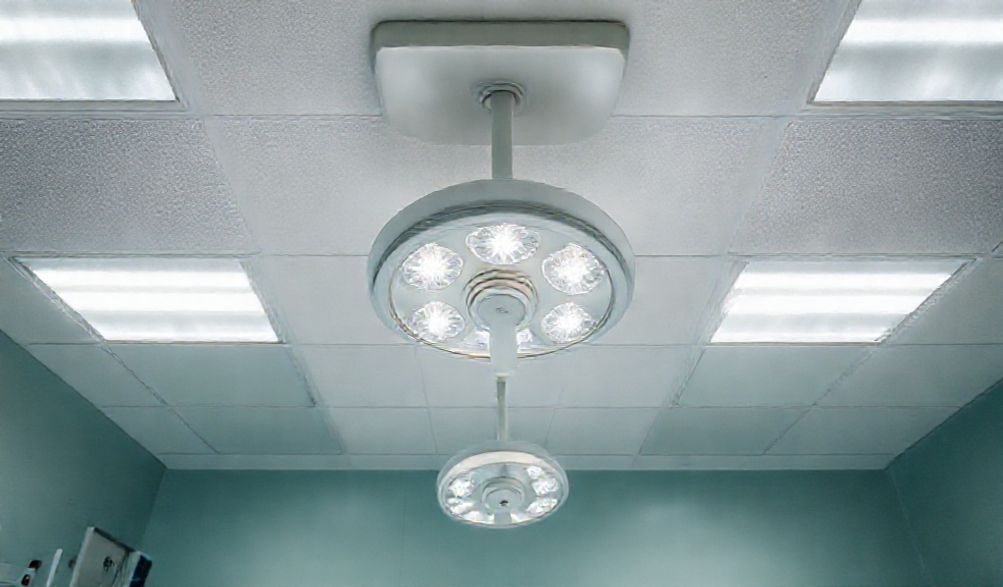
Operating Room Overhead Lights: A Guide to Technology, Safety, and Selection
Introduction
What if the single most important tool in an operating room isn’t wielded by a surgeon’s hand, but hangs from the ceiling? While scalpels, imaging, and skilled personnel rightfully command attention, the quality of illumination is a foundational pillar of surgical success. In the high-stakes environment of modern surgery, operating room overhead lights are far more than simple fixtures; they are sophisticated, life-critical medical devices. Poor lighting can obscure vital anatomy, increase procedural time, and contribute to surgical error, directly impacting patient outcomes.
This guide serves as a comprehensive, authoritative resource for healthcare administrators, facility managers, procurement specialists, and clinical staff tasked with the evaluation, specification, or purchase of OR lighting systems. Our goal is to demystify the technology, clarify the standards, and provide a structured framework for making an informed capital investment. We will journey through the evolution of surgical illumination, delve into the core technologies of modern systems, unpack the critical features that ensure safety and performance, and outline a practical approach to selection. By understanding the intricacies of shadow reduction, thermal management, and sterility compliance, you can empower your surgical teams with the clarity they need to perform at their best.
The Evolution of Surgical Lighting: From Shadow to Precision
The history of operating room lighting is a story of the relentless pursuit of clarity, a battle against shadows and heat to reveal the true landscape of the human body. Understanding this evolution underscores why today’s technology represents such a significant leap forward.
Early Days: The Challenge of Shadows and Heat
In the earliest days of surgery, natural light was the primary source. Operating theaters were designed with large windows and skylights, but this left procedures at the mercy of weather and time of day. The introduction of artificial light—first gas lamps, then early electric incandescent bulbs—brought surgery indoors but introduced new problems. These sources were dim, produced intense, desiccating heat that could damage tissue, and cast harsh, obstructive shadows from the surgeon’s own head and hands. The light field was often unfocused and inconsistent, making deep-cavity work particularly challenging.
The Halogen and Incandescent Era
The mid-20th century saw the adoption of halogen lamps, which represented a major improvement. They offered brighter, whiter light with better color rendering than standard incandescents. Surgeons benefited from increased intensity and slightly improved efficiency. However, fundamental issues remained. Halogen lights generated tremendous radiant heat, requiring complex filter systems to protect the patient. They also had short lifespans (typically 1,000-2,000 hours), leading to frequent, costly bulb changes and operational downtime. The light quality would also degrade over the bulb’s life.
The LED Revolution: Efficiency, Coolness, and Control
The advent of Light Emitting Diode (LED) technology has fundamentally transformed operating room overhead lights. LEDs represent a paradigm shift, directly addressing the historical shortcomings:
* Cool Operation: LEDs produce minimal infrared radiation, drastically reducing the heat directed at the surgical site. This protects delicate tissues and improves patient comfort.
* Exceptional Longevity: With lifespans often exceeding 50,000 hours, LED arrays can last for over a decade under normal use, virtually eliminating the hassle and cost of bulb replacements.
* Precision Control: Digital control allows for unparalleled adjustment of light intensity and, in some systems, even color temperature. Surgeons can tailor the light to specific procedures (e.g., warmer light for distinguishing vascular tissue).
* Energy Efficiency: LEDs consume a fraction of the power of halogen systems, leading to substantial long-term energy savings for the facility.
This evolution from a hot, shadow-prone light source to a cool, precise, and intelligent illumination tool sets the stage for understanding modern systems.
Core Technologies in Modern OR Overhead Lights
Today’s operating room overhead lights are marvels of medical engineering, integrating several advanced technologies to create optimal visual conditions. Compliance with international standards like IEC 60601-2-41 for surgical luminaires is a baseline requirement, ensuring electrical and basic safety.
LED Arrays: Understanding Lumens, Color Temperature, and CRI
The heart of a modern light is its LED array.
* Lumens: This measures the total quantity of visible light emitted. Modern surgical lights typically deliver between 40,000 and 160,000 lux at the center of the light field (at a defined distance, e.g., 1 meter). Sufficient lumens are crucial for illuminating deep cavities.
* Color Temperature: Measured in Kelvin (K), this describes the “warmth” or “coolness” of white light. A range of 3500K to 5000K is common in ORs. 4000K-4500K is often considered a neutral “daylight white” that provides excellent contrast without causing excessive eye strain.
* Color Rendering Index (CRI): Perhaps the most critical metric, CRI measures a light source’s ability to reveal the true colors of objects compared to natural light. A CRI of 90 or above (on a scale of 0-100) is essential in surgery. A high CRI allows surgeons to accurately distinguish between tissues—differentiating an artery from a vein, healthy tissue from necrotic, or subtle shades of cyanosis.
Light Field Design: Focus vs. Depth of Illumination
The physical design of the reflector and lens system shapes the light beam. Two key concepts are at play:
* Focus (Spot Size): The ability to concentrate light into a smaller, more intense spot. This is vital for procedures requiring extreme precision in a confined area.
* Depth of Illumination: This refers to how well the light penetrates into a cavity (e.g., the pelvis or chest) without creating a “hot spot” at the surface and leaving the depths in shadow. Advanced multi-reflector or lens systems create a parallel light beam, providing deep, even illumination where it’s needed most.
Handling and Movement: Articulating Arms, Balance, and Sterile Handles
A brilliant light is useless if it can’t be positioned effortlessly and maintained in a sterile field. Modern systems feature:
* Articulating Arms: These ceiling-mounted arms, often with multiple segments and rotational joints, provide a large “range of motion” to position the light head anywhere over the surgical table.
* Perfect Balance: High-quality lights use mechanical or gas-spring counterbalance systems. This allows the heavy light head to be moved with minimal finger pressure and to stay securely in its set position without drifting.
* Sterile Handles: The light head is equipped with handles that can be covered with disposable sterile sleeves or are themselves designed to be easily sterilized, allowing the surgical team to reposition the light during a procedure without breaking sterility.
Critical Features for Surgical Performance and Safety
Beyond basic illumination, specific features directly impact the success of the surgery and the safety of both patient and staff.
Shadow Reduction and Depth of Illumination
This is a primary performance differentiator. Advanced systems use two main techniques:
1. Multi-Source Design: Using several LED modules arranged in a ring or pattern. When a surgeon’s head or hand obstructs one module, the others fill in the shadow, dramatically reducing its density.
2. Parallel Beam Technology: As mentioned, sophisticated optical systems emit light in near-parallel rays. This minimizes light scatter and ensures the intensity remains consistent from the surface of a wound down to its deepest point, providing unparalleled clarity in deep-cavity surgery.
Thermal Management: Keeping the Surgical Site Cool
Even with cool LEDs, managing heat is critical. The best systems employ passive and active heat-sink designs to dissipate the minimal heat generated by the electronics away from the light beam. This prevents tissue desiccation and improves patient outcomes, especially in long procedures.
Fail-Safe Systems and Redundant Light Sources
In the middle of surgery, a light failure is unacceptable. Redundancy is key. High-end lights feature multiple, independently controlled LED modules. If one module fails, the others automatically compensate to maintain a usable, albeit slightly dimmer, light level, allowing the procedure to continue safely until a scheduled service.
Ease of Decontamination and Maintenance
The light is a frequent touchpoint in the OR and must withstand aggressive cleaning protocols. Key considerations include:
* Seamless, Smooth Surfaces: The light head should have no cracks, seams, or textured areas where contaminants can hide.
* Chemical Resistance: All surfaces must be resistant to harsh hospital-grade disinfectants without degrading, discoloring, or corroding.
* Serviceability: Modular designs allow for easy replacement of components like handles or control panels without removing the entire light from the ceiling, minimizing downtime.
Compliance, Standards, and Sterilization Protocols
Purchasing operating room overhead lights is a regulated activity. Demonstrating compliance is non-negotiable for patient safety and institutional liability.
Key Regulatory Standards (FDA, CE, ISO 13485)
In the United States, surgical lights are Class II medical devices requiring 510(k) clearance from the Food and Drug Administration (FDA). In the European Union and other markets, they must carry the CE mark, indicating conformity with health, safety, and environmental protection directives. Manufacturers should also be certified to ISO 13485, the international quality management standard specific to medical devices, which ensures consistent design, production, and post-market support.
Understanding IEC 60601-1 and -2-41 for Medical Electrical Equipment
The IEC 60601 series is the core set of safety and performance standards for medical electrical equipment.
* IEC 60601-1: The “general standard” covering basic safety and essential performance for all medical electrical equipment (e.g., protection from electric shock, mechanical hazards, and excessive temperatures).
* IEC 60601-2-41: The “particular standard” dedicated to the basic safety and essential performance of surgical luminaires and operating room lights. It specifies requirements for light intensity, field diameter, color rendering, shadow dilution, and handling safety.
Sterilization Compatibility: Withstanding Rigorous OR Cleaning Protocols
The light must be compatible with your facility’s specific infection control policies. Procurement teams must request and validate the manufacturer’s Instructions for Use (IFU), which will explicitly list the approved cleaning agents, methods, and cycle times. The device’s material compatibility must be verified to ensure daily cleaning will not damage the unit over its lifespan.
How to Select the Right OR Overhead Lighting System
Selecting the right system is a strategic process that balances clinical need, operational practicality, and fiscal responsibility.
Assessing Your Facility’s Needs: Surgical Specialties and Room Layout
Start with a clinical assessment. The needs of a cardiac surgery suite differ from those of an orthopedic or neurosurgery room. Consider:
* Procedure Types: Do you need exceptional depth of illumination for deep pelvic surgery, or a wider field for trauma?
* Room Configuration: The size of the room, table placement, and ceiling height will determine the required reach and mounting options (single central light, symmetrical two-light system, or track-mounted).
* Surgeon Preference: Involve key surgical staff in demonstrations. Their feedback on handle feel, control intuitiveness, and light quality is invaluable.
The Procurement Checklist: Key Specifications to Compare
Create a standardized matrix to evaluate vendors objectively. Compare:
* Central illuminance (Lux) & Field diameter (cm)
* Color Rendering Index (CRI) & Color Temperature (K)
* Shadow Dilution (as per IEC 60601-2-41 testing)
* Depth of Illumination performance data
* Range of motion and balancing force
* LED lifespan and warranty terms
Total Cost of Ownership: Initial Investment vs. Long-Term Maintenance
Look beyond the sticker price. Calculate the Total Cost of Ownership (TCO) over a 10-year period:
* Initial Purchase: Cost of lights, installation, and commissioning.
* Operational Costs: Energy consumption (LEDs can save thousands annually).
* Maintenance Costs: Filter changes (if applicable), preventive maintenance contracts, and cost of replacement parts (e.g., sterile handles).
* Downtime Costs: The value of a lost OR slot due to light failure or maintenance.
Integration with Other OR Technologies and Architecture
The light should not be an island. Consider:
* Integration with Surgical Video: Some lights offer built-in 4K camera mounts or light guides for endoscopic procedures.
* Control Systems: Can the light be linked to room control panels or touchscreens for preset lighting “scenes”?
* Aesthetic & Functional Design: The light should complement a modern, minimalist OR design, with cable management solutions to maintain a clean, uncluttered ceiling.
Frequently Asked Questions (FAQ)
What is the typical lifespan of LED surgical lights?
The LED arrays themselves typically have rated lifespans of 50,000 to 100,000 hours. In practical terms, with average OR use, this translates to 10-20 years before light output degrades to a point requiring replacement. Other mechanical components (motors, sensors) may require service sooner.
How often do surgical lights need to be serviced or calibrated?
Manufacturers recommend annual preventive maintenance (PM) performed by certified technicians. This PM includes checking mechanical balance, cleaning internal filters, verifying light output metrics (intensity, color), testing all safety functions, and inspecting for wear. Calibration of sensors and controls is part of this service.
Can older halogen light systems be retrofitted with LED?
Sometimes, but caution is advised. While retrofit kits exist, they may not integrate perfectly with the old light’s optics, heat management, or control systems, potentially compromising performance or safety. A full system upgrade is often a better long-term investment, ensuring full compliance and optimized performance.
What are the most important factors for preventing surgeon eye strain?
A combination of high CRI (≥90), adjustable intensity (to avoid excessive brightness), minimal glare from reflective surfaces, and excellent shadow control. The ability to slightly adjust color temperature can also help, as some surgeons find a warmer light less fatiguing during long procedures.
How do I ensure the lights comply with my hospital’s infection control policy?
Before purchase, provide the manufacturer with your facility’s approved list of cleaning agents and protocols. Request written, validated confirmation from the manufacturer that their device is compatible with those specific chemicals and methods. This documentation should be included in the device’s official IFU.
Conclusion
Operating room overhead lights are a critical, technology-driven investment that sits at the intersection of patient safety, surgical efficacy, and operational efficiency. They have evolved from simple illuminators to intelligent partners in the OR, providing cool, shadow-reduced, true-color light that empowers surgical teams to perform with confidence and precision.
The optimal selection is not merely about choosing the brightest or most feature-rich model. It is about finding the system that best balances cutting-edge optical technology with robust safety standards, reliable service support, and—most importantly—the specific procedural and ergonomic needs of your surgical staff. This requires a collaborative approach.
We encourage all decision-makers to consult closely with clinical teams, review procedural case studies and white papers from reputable manufacturers, and, crucially, request hands-on demonstrations and trials in a simulated or live environment. Seeing and feeling the light in action is the final, essential step in making a capital purchase that will illuminate success in your operating rooms for years to come.
p>