
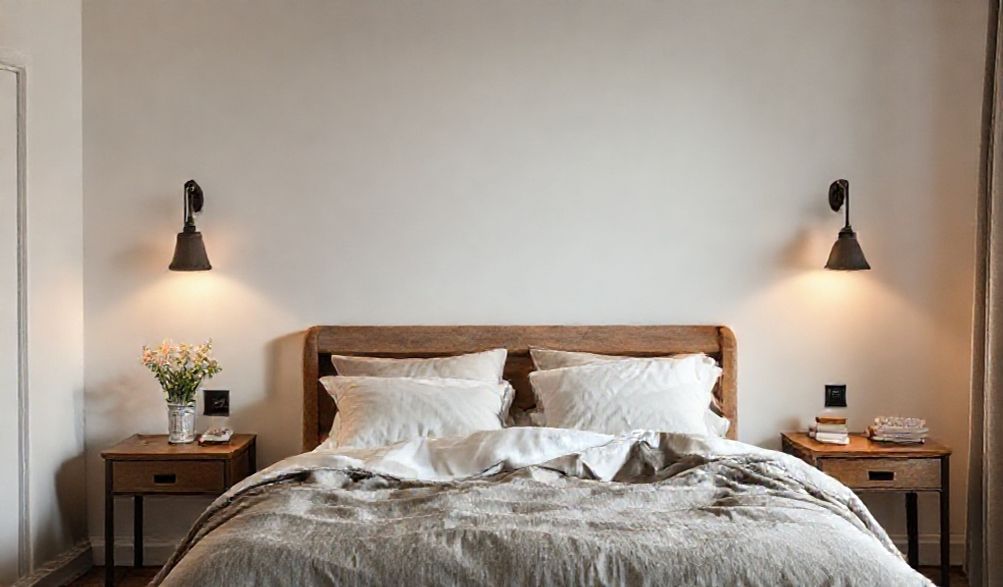
Over Bed Light Fixtures: A Complete Guide to Style, Safety, and Function
We’ve all been there. It’s late, you’re finally settled into bed with a good book, but the light from your nightstand lamp casts a frustrating shadow right across the page. Or perhaps you’re fumbling in the dark for the switch after a midnight trip to the kitchen, stubbing a toe on the bed frame. Your bedroom is your sanctuary, a place for rest, relaxation, and recharging. Yet, so often, the lighting is an afterthought—a single, harsh overhead fixture that does little to serve the room’s true purpose.
This is where the magic of over-bed lighting comes in. More than just a source of illumination, a well-chosen fixture above your bed is a transformative design element that blends critical function with personal style. But navigating the world of wall sconces, pendants, and track lighting can be daunting. How do you ensure it’s safe? What size is right? Will it provide enough light for reading without destroying the cozy vibe?
Drawing on years of interior design experience and a firm understanding of residential electrical standards, this guide is crafted to be your comprehensive resource. We’ll move beyond mere aesthetics to explore the crucial “why” and “how” of over-bed lighting. Whether you’re a renter looking for a non-permanent solution or a homeowner planning a full renovation, you’ll find the expert knowledge and practical advice here to make an informed, confident decision for your space.
Why Over-Bed Lighting is Essential for Your Bedroom
Before we dive into fixture types, let’s establish why dedicating thought to this specific lighting zone is a game-changer for your bedroom’s functionality and feel.
Task Lighting for Reading and Hobbies
The primary practical reason for over-bed lighting is task illumination. A lamp on a nightstand often places the light source below your eye line, causing glare and shadows when you’re reading, knitting, or working on a laptop. A properly positioned wall sconce or adjustable pendant places light above and slightly behind your shoulder, directing a clear, focused beam onto your book or project without shining in your eyes. This dramatically reduces eye strain and creates a more comfortable, focused environment for your pre-sleep rituals or lazy Sunday morning hobbies.
Ambient Lighting for Mood and Relaxation
Your bedroom should be a haven from the bright, stimulating lights of the rest of your home and the world. The harsh, all-revealing light of a central ceiling fixture is the enemy of ambiance. Over-bed fixtures, especially those with fabric shades, frosted glass, or aimed upwards, provide a softer, more diffused glow. This ambient light can replace the need for the “big light” entirely, casting a warm, inviting pool of illumination that defines the bed area and signals to your brain that it’s time to unwind. It’s the perfect light for quiet conversation, listening to music, or simply decompressing at the end of the day.
Space-Saving and Style Solutions
In smaller bedrooms or for those who prefer a minimalist look, nightstand real estate is precious. A table lamp can take up valuable space needed for a glass of water, your phone, or a treasured book. Wall-mounted or ceiling-mounted over-bed lights solve this problem elegantly, freeing up your surfaces. Furthermore, these fixtures act as key architectural or decorative elements. They can frame your bed like jewelry, introduce texture and metallic finishes, and become a focal point that elevates the entire room’s design from standard to styled.
Types of Over Bed Light Fixtures: Find Your Perfect Match
The right fixture for you depends on your needs, your bedroom’s architecture, and your personal style. Let’s break down the most popular categories.
Wall Sconces: The Versatile Classic
Wall sconces are the most popular and versatile choice for over-bed lighting, and for good reason.
* Swing-Arm vs. Fixed-Arm: This is the key decision. Swing-arm sconces offer maximum flexibility; you can adjust the arm to direct light exactly where you need it for reading, then push it back against the wall when not in use. Fixed-arm sconces provide a cleaner, more sculptural look and are ideal for ambient light.
* Plug-In vs. Hardwired: This is crucial for installation ease. Plug-in sconces are a renter’s best friend and a simple DIY project for anyone. They simply plug into a nearby outlet, often with a cord that can be discreetly run down the wall. Hardwired sconces require electrical work but offer the cleanest, most permanent look with no visible cords.
* Ideal Placement: A standard rule is to install the sconce so its bottom is 48-52 inches from the finished floor. More precisely, aim for the light source (the bulb or shade’s center) to be about 20-30 inches above the top of your mattress. This prevents glare when you’re sitting up.
Pendant Lights: Making a Statement
A pendant light suspended from the ceiling over the center of your bed makes a bold design declaration.
* Single vs. Multi-Pendant Clusters: A single, large pendant works beautifully over a standard or queen bed. For a king bed or a more dramatic effect, consider a linear multi-light pendant or a cluster of smaller pendants.
* Considerations for Scale: Ceiling height is paramount. In rooms with standard 8-foot ceilings, keep pendants short or use a semi-flush mount style to avoid feeling cramped. In rooms with higher ceilings, you have more freedom to let the fixture drop. The fixture’s width should generally be one-third to one-half the width of your bed.
* Defining Space: In studio apartments or bedrooms that also function as an office, a pendant centered over the bed visually defines the sleeping zone, creating a sense of separation and intimacy.
Track Lighting and Monorails: Flexible and Modern
For a sleek, contemporary look with unparalleled adjustability, consider track or monorail systems.
* Customizable Task Lighting: You can install a track or monorail above the bed and fit it with multiple adjustable heads. Each head can be aimed independently—one for each side of the bed for reading, others washed up the wall for ambient light. This is a highly functional solution for partners with different lighting needs.
* Modern Aesthetic: With minimalist heads and clean lines, these systems suit modern, industrial, and Scandinavian bedroom designs perfectly. They feel architectural and intentional.
Mounted Reading Lights (Hotel-Style)
Inspired by luxury hotels, these are the ultimate in dedicated task lighting. They typically feature a long, slender arm that extends from a small wall-mounted base, with a focused shade at the end.
* Ultra-Functional: Their sole purpose is to provide excellent, directable light for reading without disturbing a sleeping partner. Many modern versions come with integrated USB charging ports and touch or pull-cord dimmers built right into the fixture.
* Sleek Profile: They have a very low visual profile when not in use, keeping the wall looking tidy and uncluttered.
Key Considerations Before You Buy or Install
Now that you know the options, let’s talk about the non-negotiable factors that ensure your choice is safe, proportional, and functional.
Safety First: Electrical Codes and Best Practices
This cannot be overstated. Electricity is not a DIY arena for the uninitiated.
* Hire a Licensed Electrician: For any new hardwired fixture, switch, or dimmer installation, always hire a qualified, licensed electrician. They ensure the work meets National Electrical Code (NEC) standards, which include rules about placement near tubs, showers, and yes—beds. This protects your home from fire risk and ensures your insurance remains valid.
* Plug-In Alternative Safety: If using plug-in sconces, never run cords under rugs or bedding where they can overheat. Use cord-hiding kits or paintable cord covers for a neater, safer look. Ensure the outlet you’re using is not overloaded.
Measurements and Scale: Getting the Proportions Right
A fixture that’s too small looks lost; one that’s too large is overwhelming.
* The Measuring Tape is Your Friend: Measure the width of your bed wall and the height from the top of your mattress to the ceiling. For sconces, measure out from the centerline of the bed to where you want the fixture—typically 28-36 inches apart, centered on each side of the bed.
* Rules of Thumb:
* Sconce Width: The fixture shouldn’t be wider than your nightstand.
* Pendant Width: As noted, 1/3 to 1/2 the bed width.
* Pendant Height: Leave at least 7 feet of clearance from the bottom of the fixture to the floor for walkability.
Light Quality: Understanding Bulbs and Dimmers
The fixture is the jewel, but the light it emits is the treasure.
* Color Temperature (Measured in Kelvins/K): For bedrooms, always choose warm white light (2700K-3000K). This mimics the cozy, orangey glow of sunset or candlelight, promoting relaxation and melatonin production. Avoid cool white (4000K+) or daylight (5000K+) bulbs in this space.
* Brightness (Measured in Lumens): For reading, aim for 400-800 lumens per fixture. For ambient-only sconces, 200-400 lumens may suffice.
* The Dimmer Switch Mandate: Installing a dimmer is the single best upgrade for bedroom lighting. It allows you to transition seamlessly from bright task lighting to a soft, romantic glow. Ensure your LED bulbs are dimmable and compatible with your chosen dimmer switch.
Styling Your Over-Bed Lights: From Minimalist to Luxe
With the technicalities covered, let’s have fun with design. Your fixtures should complement and enhance your bedroom’s aesthetic.
Matching Fixtures to Your Bedroom Style
- Modern/Contemporary: Look for sconces or pendants with clean lines, geometric shapes, and matte finishes (black, brass, white). Cylindrical metal sconces or globe pendants are perfect.
- Glam/Luxe: Crystal embellishments, polished chrome or gold, and drum shades with luxurious fabrics like velvet or silk create a dazzling focal point.
- Industrial: Embrace exposed bulbs (Edison-style), aged metals (iron, brushed nickel), and utilitarian shapes. Cage sconces or pipe-fitting pendants work well.
- Bohemian: Natural materials are key. Think woven rattan or bamboo pendants, ceramic sconces with organic textures, or macramé lamp shades.
- Traditional: Opt for sconces with classic shapes like hurricane glass, lantern styles, or polished brass with white linen shades.
Symmetry vs. Asymmetry: Design Dynamics
- Symmetry (Two Matching Fixtures): This is the classic, fail-safe approach. It provides balance, order, and is ideal for traditional, transitional, and most modern bedrooms. It’s especially practical for two-person beds.
- Asymmetry (One Statement Fixture): Hanging a single, stunning pendant or chandelier centered over the bed creates a dynamic, modern focal point. This works well in bedrooms where the bed is anchored by a dramatic headboard or in rooms with an eclectic vibe. You can balance the visual weight with substantial nightstand lamps on both sides.
Layering Light for a Professional Finish
Professional designers never rely on a single light source. Your over-bed lights should be one layer in a system:
* Ambient Layer: This is the general illumination, which your over-bed lights can provide if they are ambient-focused (e.g., uplight sconces, a fabric-shaded pendant).
* Task Layer: Your reading sconces or adjustable pendants.
* Accent Layer: This could be a small picture light over art, LED strip lighting under the bed frame, or a floor lamp in a corner.
Combine these layers with separate controls (dimmers, separate switches) to create a bedroom that can adapt to any mood or need.
Frequently Asked Questions (FAQ)
Q: What is the ideal height to install wall sconces above the bed?
A: The most common guideline is to install them so the bottom of the sconce is 48 to 52 inches from the floor. For a more bed-specific measurement, position the light source (center of the bulb/shade) approximately 20 to 30 inches above the top of your mattress. This prevents glare when you’re sitting up reading.
Q: Can I install over-bed lighting myself?
A: It depends. For plug-in sconces—absolutely; it’s a straightforward DIY of mounting the bracket and managing the cord. However, for any hardwired fixture (requiring new electrical wiring, a new wall switch, or moving an existing box), we cannot overstate the importance of hiring a licensed electrician. This ensures the installation is safe, meets all electrical codes, and protects your home and family.
Q: How wide should a pendant light be over my bed?
A: A good rule of thumb is to select a pendant that is roughly one-third to one-half the width of your bed frame. For example, over a standard queen bed (60” wide), look for a fixture between 20” and 30” in diameter. Over a king bed (76” wide), a fixture 25” to 38” wide would be proportionate.
Q: What type of bulb is best for bedtime reading?
A: For the most comfortable reading experience, choose an LED bulb with a warm white color temperature (2700K-3000K). Look for a high CRI (Color Rendering Index) of 90+ for better color clarity and reduced eye strain. Always pair it with a dimmer switch to fine-tune the brightness to your exact preference.
Q: Are there good options for renters who can’t hardwire?
A: Yes, there are excellent non-permanent solutions! Seek out stylish plug-in wall sconces. You can run the cord neatly down the wall using a paintable cord cover that blends in. Another great option is a swag pendant light, which plugs into an outlet and hangs from a ceiling hook—no hardwiring required.
Conclusion
Choosing the perfect over-bed light fixture is more than a decorating decision; it’s an investment in your daily comfort and the overall ambiance of your personal retreat. By thoughtfully considering your needs—be it for focused task lighting, soothing ambient glow, or a striking style statement—and adhering to the essential safety and sizing guidelines outlined here, you can move forward with confidence.
Remember, the best lighting feels intuitive. It should make your space not only more beautiful but also more functional and uniquely attuned to the rhythm of your life. Start by looking at your bedroom with fresh eyes: assess its layout, measure your space, and define your style. Use this guide as your trusted roadmap to finding the ideal illumination that will hang, beautifully and purposefully, above your bed for years to come.
p>