
Overhead Surgical Lights: A Comprehensive Guide to Technology, Selection, and Safety
Introduction
In the high-stakes environment of the operating room, where precision is measured in millimeters, what is the single most important tool for visual clarity? While advanced imaging and robotic systems capture headlines, the foundation of every successful procedure is something more fundamental: optimal illumination. Overhead surgical lights are not mere room fixtures; they are sophisticated, life-critical medical devices that directly influence surgical accuracy, surgeon ergonomics, and ultimately, patient outcomes. A poorly lit field can mean the difference between identifying a critical vessel or nerve and missing it entirely.
This comprehensive guide is designed as an essential, evidence-based resource for healthcare administrators, surgeons, procurement specialists, and biomedical engineers tasked with specifying, purchasing, or maintaining this vital equipment. We synthesize information from clinical studies, international manufacturer specifications, and rigorous industry standards like IEC 60601-2-41 to cut through marketing jargon. Our goal is to address your core needs: understanding the technological features that matter, making informed capital investment decisions, ensuring regulatory compliance, and implementing effective maintenance protocols.
We will trace the evolution of surgical lighting from its rudimentary beginnings to today’s LED marvels, break down the key features to evaluate during procurement, delve into the critical realm of safety standards and compliance, and offer practical advice on installation and maintenance. Finally, we’ll explore the horizon with future trends that are integrating lighting into the digital OR ecosystem.
The Evolution of Surgical Lighting: From Shadow to Clarity
The journey of surgical illumination is a story of the relentless pursuit of visual truth—eliminating shadows, revealing true color, and banishing fatigue. Understanding this progression underscores why modern specifications are not just “nice-to-haves” but essential requirements for safe surgery.
Early Incandescent Systems and Their Limitations
The earliest dedicated surgical lights, emerging in the late 19th and early 20th centuries, were simple incandescent lamps. While a vast improvement over operating near a window, they presented significant challenges. The light was intensely warm, both in color and physically, generating substantial radiant heat that could dry out tissues and discomfort the surgical team. These single-point sources created harsh, defined shadows, forcing surgeons to constantly adjust their position. Furthermore, intensity was often inadequate for deep-cavity procedures, and the color spectrum was heavily skewed toward red and yellow, distorting the appearance of tissue and blood.
The Halogen Revolution
The introduction of halogen lamps in the latter half of the 20th century marked a major step forward. Halogen bulbs offered a whiter, brighter light with a higher color temperature (around 3500-4500K), which improved contrast and detail recognition. They were more efficient and compact than their incandescent predecessors, allowing for better optical control within the lighthead. However, they still generated considerable heat (most of it infrared radiation directed toward the surgical field), had a relatively short lifespan requiring frequent and costly bulb replacements, and remained a point source that necessitated complex reflector systems to mitigate shadows.
LED Technology: The Modern Standard
The adoption of Light Emitting Diode (LED) technology represents a paradigm shift, establishing the current gold standard. LEDs deliver a quantum leap in performance:
* Cool Light: They emit minimal infrared radiation, drastically reducing the risk of tissue thermal injury and improving comfort in the OR.
* Energy Efficiency & Longevity: LEDs consume far less power and boast lifespans measured in tens of thousands of hours, eliminating the recurring cost and downtime of bulb changes.
* Superior Color Rendering: Advanced LED arrays can achieve a Color Rendering Index (CRI) exceeding 95, closely mimicking natural sunlight and allowing for exceptional differentiation between tissues, organs, and fluids.
* Design Flexibility: Their small size enables innovative multi-source configurations within a single lighthead for unparalleled shadow reduction and allows for sleek, ergonomic designs.
Key Features to Evaluate When Selecting Overhead Surgical Lights
Selecting an overhead surgical light is a major capital decision. Moving beyond brand names, a rigorous evaluation based on the following technical and practical criteria is essential.
Illumination Quality: Beyond Brightness
“Brightness” is a subjective term. Objective metrics are crucial:
* Luminance (Lux) and Depth of Illumination: Look for a high central illuminance (e.g., 160,000+ lux) that remains consistent across a defined depth (e.g., 1200mm to 600mm). This ensures a bright, even field whether working on the surface or deep within a cavity.
* Color Temperature (Kelvin): Measured in Kelvins (K), this describes the “warmth” or “coolness” of light. A neutral white light around 4000K-4500K is generally preferred, as it provides high contrast without causing blue-light fatigue. Some systems offer adjustable color temperature.
* Color Rendering Index (CRI): Perhaps the most critical metric after intensity. CRI measures a light source’s ability to reveal the true colors of objects compared to natural light. A CRI >90 is essential; a CRI >95 is ideal for specialties like plastic, reconstructive, and organ transplant surgery where subtle differences in tissue hue are critical.
Design and Maneuverability for Surgical Workflow
A light that can’t be positioned intuitively is a hindrance.
* Lighthead Diameter and Pattern: Diameter affects the spread of light. Larger lightheads (e.g., 600mm+) often provide better peripheral coverage and shadow dilution. The light pattern—the balance between intense central light and wider peripheral illumination—should match your procedural mix.
* Articulation and Reach: Evaluate the boom’s range of motion, number of friction points or joints, and the effort required to position the light. It should move effortlessly, stay precisely where placed (via electromagnetic or mechanical brakes), and have sufficient reach to cover the entire table without obstructing staff or equipment.
* Sterility Considerations: Examine the handle design. Are they easily draped? Are there crevices that could harbor contaminants? Smooth, seamless surfaces and handles designed for single-use sterile covers are vital for infection control.
System Reliability and Total Cost of Ownership (TCO)
The purchase price is just the beginning.
* LED Lifespan vs. Operating Costs: While the upfront cost of LED systems is higher, their 50,000-60,000 hour lifespan (often defined as the point where light output degrades to 70% of initial luminance) means decades of operation without bulb replacement costs or associated labor.
* Heat Dissipation: Verify how the system manages the heat generated by its electronics and drivers. Effective thermal management protects internal components, ensures stable light output, and prevents unwanted heat from affecting the OR environment.
* Serviceability and Warranty: Review warranty terms (parts, labor, duration) and the manufacturer’s service network. Modular designs that allow for easy component replacement can minimize downtime.
Safety, Standards, and Compliance in Surgical Lighting
Surgical lights are Class I medical devices with direct patient contact implications. Compliance isn’t optional—it’s a cornerstone of patient safety.
Understanding Essential Electrical and Medical Standards
All surgical lights must comply with a framework of international standards.
* IEC 60601-2-41: This is the paramount standard specifying the particular requirements for the basic safety and essential performance of surgical luminaires and luminaires for diagnosis. It covers everything from maximum allowable surface temperatures and light field homogeneity to mechanical stability and electrical safety.
* Regional Certifications: Depending on your location, look for marks like the FDA clearance (USA), CE Marking (Europe under MDR), and evidence that the manufacturer’s quality management system is certified to ISO 13485.
Mitigating Clinical Risks: Heat and Shadow Management
Standards exist to mitigate tangible risks.
* Tissue Thermal Injury: The primary safety function is limiting the heat delivered to the surgical site. Modern LED lights, combined with infrared filters in the optical path, must keep the temperature rise on the illuminated tissue below strict limits defined in IEC 60601-2-41.
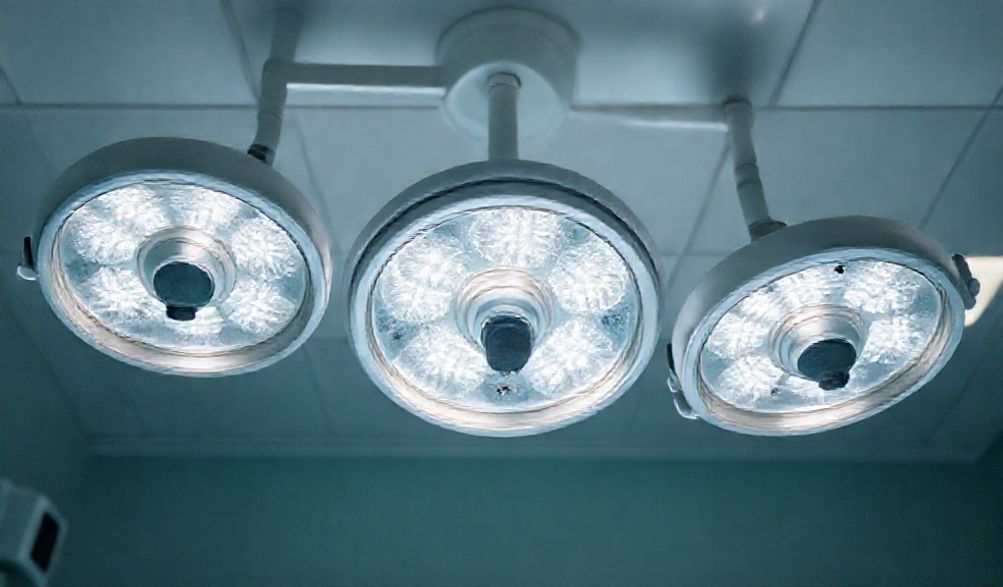
* Shadow Dilution: A single light source creates obstructive shadows. Modern systems use multiple LED modules arranged in concentric circles. When a surgeon’s head or hand obstructs some modules, the remaining ones automatically increase intensity to “dilute” the shadow, maintaining a uniformly lit field. This is a key performance feature to verify.
Infection Control and Cleaning Protocols
The light is a frequent touch-point in the OR.
* Cleaning and Disinfection: Strictly adhere to the manufacturer’s Instructions for Use (IFU). They will specify which cleaning agents are compatible (and which are not) with the lighthead’s materials (often anodized aluminum or high-grade plastics with antimicrobial coatings). Using the wrong chemical can damage surfaces, degrade light transmission, or void warranties.
* Design for Cleanability: The best lights have smooth, monolithic surfaces without gaps or seams where biological debris can accumulate.
Installation, Maintenance, and Best Practices
Proper implementation is as important as the selection itself.
Pre-Installation Planning: Ceiling Structure and OR Layout
Engage facilities management and clinical engineering early.
* Structural Requirements: Surgical lights, especially large multi-arm systems, are heavy. The ceiling must support the dynamic (moving) and static load. Reinforcement may be necessary.
* Boom vs. Track Systems: Single-boom lights offer simplicity. Track systems allow multiple lightheads to be shared between tables or positioned with greater flexibility. The choice depends on OR size, ceiling height, and procedural workflow.
* Optimal Placement: The light’s mounting point should be centered over the surgical table, allowing the boom to cover the entire table surface and position the lighthead at the recommended working distance (typically 1 meter).
Routine Preventive Maintenance Schedule
Proactive care prevents failures. A sample checklist includes:
* Monthly/Quarterly: Inspect all articulation joints for smooth movement and secure braking. Wipe down external surfaces with approved disinfectant. Check for any physical damage.
* Semi-Annually/Annually: Perform a formal performance verification, measuring central and peripheral illuminance (lux) and color temperature using a calibrated light meter. Check the function of backup power systems if equipped. Clean internal air filters (if applicable) to ensure proper cooling.
Troubleshooting Common Issues
- Flickering or Reduced Intensity: First, check for simple obstructions on the lighthead surface. Then, verify power connections. If problems persist, it may indicate a failing LED driver or module—contact certified service.
- Stiff Movement or Drifting: Check the tension settings on articulation joints per the manual. If brakes are failing to hold position, service is required immediately.
- Alarm Codes: Consult the user manual for specific alarm meanings. Common alarms indicate overheating, internal communication errors, or power supply issues.
The Future of Surgical Illumination
The surgical light is evolving from a passive illuminator to an intelligent node in the digital operating room.
Integration with Digital Operating Rooms
Modern lightheads now often incorporate high-resolution 4K cameras directly in their center. This allows for seamless, unobstructed recording of the surgical field for documentation, training, tele-proctoring, and live broadcasting to monitors around the OR or to remote specialists.
Advanced Imaging and Guidance
Surgical lights are becoming platforms for advanced imaging. Integration of fluorescence imaging capabilities (like Indocyanine Green angiography) allows surgeons to switch, with a button press, from white light to near-infrared light to assess blood flow, identify cancerous margins, or visualize lymphatic vessels—all through the same optical path.
Smart Systems and Automation
Connectivity and intelligence are on the rise. Future systems may feature:
* Voice Control: For hands-free adjustment of intensity and position.
* Preset Lighting Modes: Automated settings optimized for specific procedures (e.g., “cardiac,” “neuro,” “laparoscopic”).
* Predictive Maintenance: IoT sensors that monitor performance data and predict component failures before they occur, scheduling service during planned downtime.
FAQ Section
Q: What is the typical lifespan of LED surgical lights?
A: High-quality LED surgical lights are typically rated for 50,000 to 60,000 hours of operation. It’s crucial to understand that “lifespan” in this context usually refers to the point at which the light output depreciates to 70% of its initial luminance (L70), not complete failure. This can equate to 15-20 years of normal use.
Q: How often should surgical light output be formally tested?
A: Clinical engineering best practices, aligned with standards like NFPA 99 and JC guidelines, recommend annual performance verification as part of a facility’s Medical Equipment Management Program. This formal test should measure illuminance (lux), light field diameter, and color temperature using calibrated equipment.
Q: Can older halogen surgical light systems be upgraded to LED?
A: Some manufacturers offer LED retrofit kits for their older models. However, this is not a universal solution. Critical factors include electrical compatibility, the retrofit module’s ability to manage heat within the existing housing, and whether the upgraded system will still meet all requirements of IEC 60601-2-41. This evaluation must be performed by a qualified biomedical engineer.
Q: What is the most important factor for reducing surgeon eye strain and fatigue?
A: It is the combination of factors: high, even illumination without hotspots or glare, an excellent Color Rendering Index (CRI >95) to minimize color distortion and cognitive load, and a neutral color temperature (~4000-4500K) that provides contrast without being harsh. Proper shadow dilution also reduces the need for constant refocusing.
Q: Are there specific lights recommended for specialized procedures like neurosurgery or plastic surgery?
A: Yes, needs can vary. Neurosurgery and spinal surgery often benefit from lights with very high depth of illumination and coaxial lighting options to illuminate deep, narrow cavities. Plastic, reconstructive, and transplant surgery prioritizes the highest possible CRI (98+) and homogeneous color temperature across the entire field to accurately assess tissue perfusion, graft viability, and subtle tissue tones. Always involve the clinical end-users in evaluation demos.
Conclusion
Overhead surgical lights have transcended their role as simple illuminators to become sophisticated, life-critical instruments where advanced technology directly impacts patient safety and surgical efficacy. The selection process must balance rigorous technical specifications—luminance, CRI, shadow management—with unwavering adherence to international safety standards and a deep understanding of real-world clinical workflow.
This investment decision should not be made in isolation. We strongly encourage procurement teams to conduct hands-on evaluations with the surgeons and staff who will use the lights daily, request and scrutinize detailed test reports against IEC 60601-2-41, and engage your facility’s clinical engineering department early to assess installation feasibility and long-term service support. In the illuminated field of modern surgery, clarity in your purchasing process leads to clarity at the operative site.
p>