
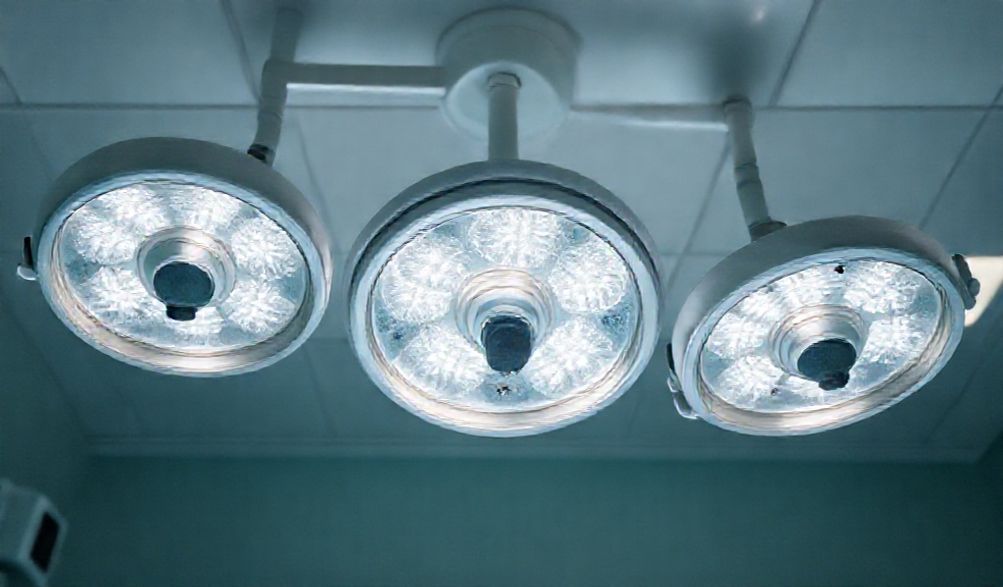
The Complete Guide to Overhead Surgical Lights: Technology, Selection & Safety
Introduction
In the high-stakes environment of an operating room, every detail matters. Yet, one of the most fundamental—and often underestimated—factors in surgical success is something we often take for granted: light. Optimal visualization is the cornerstone of precision, safety, and efficiency in any procedure. While the surgeon’s skill is paramount, that skill is exercised through sight. Inadequate or poor-quality lighting can obscure critical anatomical details, increase surgeon eye strain and fatigue, and potentially lead to errors. Some studies suggest that a significant portion of intraoperative challenges and even preventable complications can be traced back to suboptimal visualization.
This guide is designed to be your definitive resource on overhead surgical lights. Whether you are a surgical director overseeing an OR suite renovation, a hospital procurement specialist evaluating capital equipment, or a biomedical engineer responsible for lifecycle management, making an informed decision requires a deep understanding of both technology and clinical need. You’re likely comparing evolving technologies, deciphering complex specifications, ensuring rigorous compliance, and aiming for a cost-effective, long-term investment.
We will navigate this complex landscape together. This comprehensive post will cover the core technology behind modern surgical lights, break down the key features and specifications you must evaluate, provide a structured framework for selection, outline essential maintenance protocols, and finally, explore the future trends set to redefine OR illumination.
Understanding Overhead Surgical Light Technology
The journey from the simple, hot, and shadow-prone lights of the past to today’s sophisticated systems is a story of technological innovation focused on improving patient outcomes and surgical workflow.
LED vs. Halogen: The Modern Standard
The shift from traditional halogen to Light Emitting Diode (LED) technology represents the most significant advance in surgical lighting in decades. The comparison is stark:
- Lifespan & Cost: A typical halogen bulb lasts about 1,000 hours, requiring frequent, costly replacements and posing a risk of failure during a procedure. Modern LED modules boast lifespans of 50,000 hours or more—effectively a decade or more of normal use—virtually eliminating intraoperative burnout.
- Energy Efficiency & Heat: Halogen lights are notoriously inefficient, converting most energy into heat. This radiant heat can dry out tissues, discomfort the surgical team, and increase room cooling loads. LEDs run cool, directing energy primarily as visible light, which enhances patient safety and staff comfort.
- Color Rendering: While halogen lights have good color quality, LEDs can be engineered to exceed them. Modern surgical LEDs provide exceptional color consistency over their entire lifespan, unlike halogens which dim and yellow with age.
LED is now the unequivocal standard, offering reliability, safety, and a lower total cost of ownership.
The Science of Shadow Reduction
Eliminating shadows is a primary goal of surgical light design. The key is multi-point source technology. Instead of one bright bulb, advanced lights use an array of dozens, even hundreds, of small LED modules arranged on a curved head. Each module projects light from a slightly different angle. Where one module’s light is obstructed (e.g., by a surgeon’s head or hand), light from other modules fills in, dramatically reducing the density and size of any shadow. This creates a phenomenon of “shadow dilution,” where obstructions cast only faint, diffuse shadows rather than dark voids.
Coupled with this is an impressive depth of field. High-quality lights are designed to maintain a consistent, focused light intensity across a range of distances from the patient (e.g., from 60cm to 120cm). This allows surgeons to move in and out of the field without constantly needing to refocus the light, maintaining optimal illumination whether performing delicate superficial dissection or working deep in a cavity.
Color Temperature & Tissue Differentiation
Light isn’t just about brightness; its quality is critical for distinguishing subtle differences in tissue.
- Correlated Color Temperature (CCT): Measured in Kelvin (K), CCT describes the hue of “white” light. A lower temperature (e.g., 3500K) appears “warm” or yellowish, while a higher temperature (e.g., 5000K) appears “cool” or bluish. For general surgery, a neutral white in the range of 4000K to 4500K is typically preferred. It provides a natural appearance that reduces eye strain over long procedures. Some systems offer adjustable CCT, allowing surgeons to switch to a cooler light for enhanced contrast in specific situations.
- Color Rendering Index (CRI): This is the crucial metric for accuracy. CRI (on a scale of 0-100) measures a light’s ability to reveal the true colors of objects compared to natural daylight. A CRI of 90 or above is essential in surgery. High CRI ensures that the subtle differences between arterial blood, venous blood, fatty tissue, fascia, and organs are rendered with clarity, enabling precise differentiation and reducing diagnostic uncertainty.
Key Features & Specifications to Evaluate
Beyond the core technology, several performance specifications and design features separate adequate lights from exceptional ones.
Illumination Metrics: Lux and Field Diameter
Understanding the units of measurement is key:
* Lumen: A measure of the total amount of visible light emitted by a source.
* Lux: A measure of illuminance—how much light actually falls on a surface (lumens per square meter). This is the critical number for surgery.
Industry benchmarks suggest major procedures require between 40,000 to 160,000 lux at the center of the illuminated field. However, maximum lux alone isn’t enough. The light must provide this intensity uniformly across a useful area. This leads to adjustable field diameter. A light should allow the surgeon to change the size of the illuminated spot—from a small, intense focus for microsurgery to a wide, uniform field for open abdominal procedures. The best lights maintain high, even lux levels across this range of diameters.
Ergonomic Design & Maneuverability
A light that provides perfect illumination is useless if it’s difficult to position or blocks the surgical team. Key ergonomic considerations include:
- Reach and Articulation: The light must cover the entire surgical table from its ceiling mount. Multiple, fluidly moving joints (often 4 or more) allow precise positioning.
- Balance Systems: Counterbalanced or friction-based systems enable the light head to stay securely in place once positioned, without drift or the need for locking levers that break sterility.
- Sterility: The entire handle system must be designed for easy and thorough cleaning. Seamless, closed designs prevent contamination buildup. Some systems offer sterile, single-use handles for the ultimate in aseptic control.
Integration & Smart Features
The modern surgical light is becoming an integrated OR hub.
* Camera Integration: Built-in or seamlessly attachable 4K cameras allow for recording, tele-mentoring, and live broadcasting without cluttering the sterile field with additional equipment.
* Touchless Control: Infrared or voice-activated controls allow surgeons to adjust intensity, color temperature, or camera functions without touching non-sterile interfaces.
* Preset Modes: Programmable settings can instantly configure the light for “Cardiac,” “Orthopedic,” “Endoscopy,” or other specialty-specific needs.
* OR Integration: Connectivity via protocols like ORi™ (Operating Room Integration) allows the light to interface with the room’s control system, enabling centralized command.
How to Select the Right Surgical Light for Your OR
Selection is a strategic process that must balance clinical requirements, operational efficiency, and financial prudence.
Assessing Needs by Surgical Specialty
A “one-size-fits-all” approach fails in the OR. Different specialties have unique demands:
| Surgical Specialty | Key Lighting Priorities | Notes |
| :— | :— | :— |
| General & Abdominal | Large, uniform field diameter; excellent depth of field for deep cavities; high lux for contrast in bloody fields. | The workhorse of the OR. Reliability and shadow reduction are paramount. |
| Neurosurgery & Spine | Extremely high, focused center lux; cool color temperature (4500K+) for optimal contrast on white neural tissue; minimal heat emission. | Precision is critical. Lights often have smaller, intense focal points. |
| Orthopedic Surgery | Deep shadow reduction to illuminate within joints and canals; robust construction to withstand potential impacts. | May require specialized retractor lights for deep wound illumination. |
| Minimally Invasive / Endoscopic | Lower overall intensity to reduce monitor glare; warmer color temperature to ease eye transition between field and screen. | “Endo mode” presets are valuable. The light often plays a secondary role to the tower. |
| Ophthalmic | Extremely high, even illumination without hotspots; often integrated into the surgical microscope. | Governed by specific ISO standards (ISO 15004). |
Total Cost of Ownership (TCO) Analysis
The purchase price is just the entry fee. A true financial analysis includes:
1. Initial Cost: Equipment and installation.
2. Consumables: Halogen bulbs (frequent) vs. LED modules (rare).
3. Energy Consumption: LED systems consume 50-70% less power than halogen.
4. Maintenance & Downtime: Cost of service contracts, parts, and the revenue lost if an OR is down.
5. Sterilization Labor: Designs that are easy to clean reduce FTEs required for turnover.
While LED systems have a higher upfront cost, their TCO over 7-10 years is almost always lower due to massive savings in bulbs, energy, and avoided downtime.
Compliance and Safety Standards
This is non-negotiable. Any light considered must carry essential certifications that validate its safety and performance for medical use.
* IEC 60601-1: The international standard for basic safety and essential performance of medical electrical equipment.
* IEC 60601-2-41: The particular standard for the basic safety and essential performance of surgical luminaires and luminaires for diagnosis.
* FDA Clearance: In the U.S., surgical lights are Class II medical devices requiring 510(k) clearance.
* ISO 15004: For ophthalmic instruments, if applicable.
Always verify certifications directly and ensure they are current.
Installation, Maintenance & Sterilization Protocols
Proper implementation is as important as the selection itself.
Optimal OR Layout and Ceiling Mount Considerations
A site assessment by the manufacturer or a qualified engineer is essential. Considerations include:
* Ceiling Load Capacity: Ensuring the structure can support the weight of the light, especially during movement.
* Clearance: Verifying the light’s range of motion covers the entire table and anesthesia zone without interfering with booms, monitors, or other equipment.
* Mounting Points: Planning for single-point (pendant) or multi-point (track) systems based on OR flexibility needs.
Routine Cleaning and Disinfection
Protocols must follow both the manufacturer’s Instructions for Use (IFU) and institutional guidelines (e.g., AORN, APIC).
1. Daily/Post-Procedure: Wipe down all accessible surfaces, especially handles and control panels, with a hospital-grade disinfectant compatible with the materials (e.g., plastics, anodized aluminum). Avoid abrasive cleaners or bleach-based solutions that can damage coatings.
2. Weekly/Periodic: A more thorough cleaning of the light head housing and joints.
3. Key Principle: Never spray disinfectant directly onto the light. Spray onto a cloth first to prevent fluid ingress into vents or electrical components.
Preventive Maintenance and Troubleshooting
A proactive PM schedule prevents failures:
* Daily: Visual check for smooth movement and full functionality.
* Monthly: Check balance and braking systems; inspect for physical damage.
* Annually: Professional inspection and calibration of light intensity and color metrics by biomedical engineering or a service technician.
Common Issues:
* Flickering: Often a loose connection or failing power supply. Check connections first.
* Stiff Movement: May require re-balancing or lubrication (per IFU).
* Reduced Intensity: For LED, this is rare but could indicate driver failure. For halogen, simply replace the bulb.
The Future of Surgical Lighting
The evolution continues, driven by digital integration and data.
Adaptive and AI-Enhanced Lighting
Imagine a light that automatically adjusts its spectrum and intensity based on the tissue being viewed or the phase of the operation. Early research involves lights with tunable LEDs that can enhance vascular contrast or highlight tumor margins based on specific spectral signatures, potentially guided by AI analysis of the surgical field.
Advanced Visualization Integration
The surgical light, positioned perfectly over the field, is the ideal platform for augmented reality (AR). Future systems may project pre-operative MRI or CT scan data directly onto the patient’s anatomy, giving the surgeon “X-ray vision” to navigate around critical structures.
Sustainability in the OR
The focus on green hospitals will intensify. Future trends include lights made from recyclable materials, designs that facilitate easy repair and component replacement (circular economy), and even greater leaps in energy efficiency, reducing the carbon footprint of the operating suite.
Frequently Asked Questions (FAQ)
Q1: How often do surgical lights need to be replaced?
A: With LED systems, the light engine itself is designed to last 10+ years. Full replacement is typically driven by technological obsolescence, desire for new features, or mechanical wear on the arms and joints, not by light source failure. Halogen systems require bulb replacement every few months.
Q2: What is the most important factor when choosing a surgical light?
A: There is no single factor. The foundation is a triumvirate: 1) Adequate and Uniform Illuminance (meeting lux benchmarks across the field), 2) Exceptional Shadow Reduction, and 3) Full Compliance with Safety Standards. The “best” light is the one that optimally balances these fundamentals with the specific ergonomic and integration needs of your surgical teams.
Q3: Can overhead surgical lights be retrofitted into older operating rooms?
A: Yes, retrofits are very common. However, they require a professional site assessment. This must verify ceiling load capacity, the condition and compatibility of electrical infrastructure, and the structural feasibility of installing the new mounting system. Never assume an old mount will suit a new, potentially heavier light.
Q4: Are there specific lights for minimally invasive or endoscopic surgery?
A: While standard overhead lights are used, the requirements differ. Since the surgeon’s primary visual feedback is from a monitor, lights with lower overall intensity and warmer color temperatures (e.g., 3500K) are beneficial to reduce glare and ease eye strain when looking away from the screen. Many modern lights feature a dedicated “Endoscopy” preset for this purpose.
Conclusion
Selecting overhead surgical lights is a critical, strategic decision that extends far beyond simple procurement. It is an investment in clinical outcomes, surgical team performance, workflow efficiency, and long-term financial stewardship of the operating room. The process must be collaborative, beginning with a cross-functional team—including surgeons, nurses, sterile processing staff, biomedical engineers, and facilities managers—clearly defining clinical and operational requirements before a single product brochure is reviewed.
This guide underscores the importance of partnering with reputable manufacturers who do not just sell equipment, but provide evidence-based technical data, comprehensive training for all users (clinical and technical), and a reliable, responsive service network. Their expertise is part of your risk mitigation strategy.
Your final call to action: Before making a decision, insist on hands-on demonstrations in a simulated OR environment. Have your actual surgical team manipulate the lights, test the controls, and assess the quality of illumination on realistic tissue models. Finally, request and meticulously compare detailed Total Cost of Ownership estimates from your shortlisted vendors. In the illuminated field of surgery, clarity in planning leads to excellence in execution.
p>