
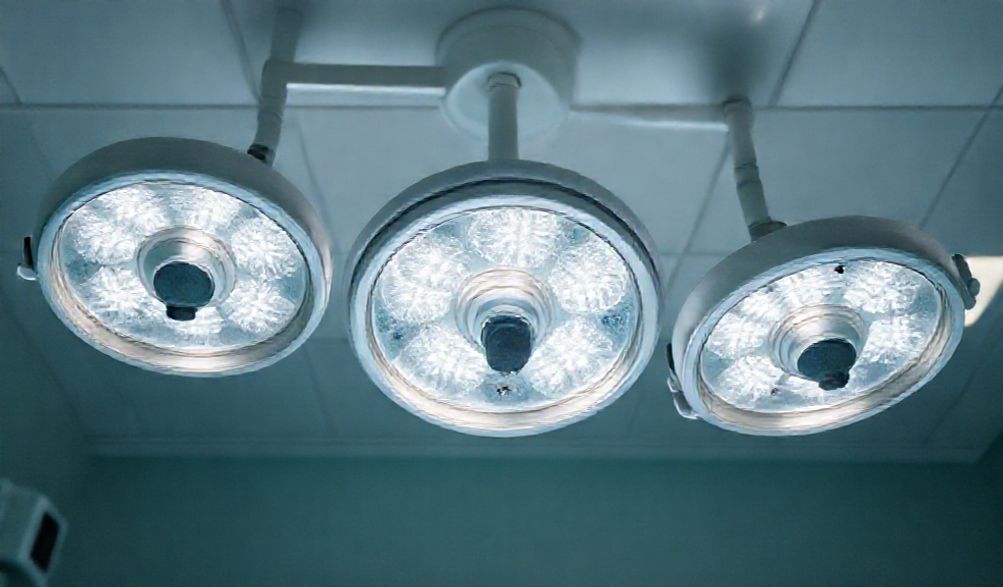
Overhead Surgical Lights: A Guide to Technology, Selection & Safety for Optimal Surgical Outcomes
What if a surgeon’s most vital tool isn’t in their hands, but hanging above the operating table? In the high-stakes theater of surgery, where millimeters matter and tissue differentiation is paramount, the quality of illumination is not a mere convenience—it is a foundational pillar of patient safety and surgical success. The modern overhead surgical light is a feat of clinical engineering, a sophisticated medical device designed to illuminate the surgical field with unprecedented clarity, consistency, and control.
This guide is crafted for the professionals who specify, manage, and rely on this critical equipment: hospital procurement teams evaluating capital investments, surgical facility managers ensuring operational readiness, head nurses advocating for their teams’ ergonomics, and medical students building their foundational knowledge. Grounded in clinical engineering principles, manufacturer guidelines, and surgical best practices, this comprehensive resource will demystify the technology behind modern overhead surgical lights, provide a clear framework for selection, outline essential safety protocols, and explore the horizon of future innovations. Our goal is to empower you to make informed decisions that directly contribute to optimal surgical outcomes.
The Critical Role of Overhead Surgical Lighting in Modern Surgery
Beyond Illumination: How Surgical Lights Impact Patient Safety & Surgical Precision
The primary function of surgical lighting is to provide optimal visibility, but its impact extends far beyond simple brightness. Superior illumination is directly linked to enhanced patient safety and surgical precision. Effective shadow control, for instance, is non-negotiable. Shadows can obscure anatomy, hide bleeders, and increase the risk of inadvertent injury. Modern lights are engineered to minimize these obstructions, allowing the surgeon to see depth and detail with confidence, thereby reducing error rates.
Furthermore, the strain of performing intricate tasks under poor lighting is a significant contributor to surgeon fatigue and eye strain, especially during marathon procedures. A light that delivers consistent, homogeneous illumination with excellent color fidelity reduces visual fatigue, helping to maintain a surgeon’s focus and dexterity from the first incision to the final suture. In this way, the surgical light acts as an ergonomic tool, safeguarding both the patient’s well-being and the surgeon’s long-term performance.
Key Performance Metrics: Understanding Lux, Color Temperature, and Shadow Management
To evaluate surgical lights objectively, one must understand the key metrics that define their performance:
- Lux (Illuminance): This measures the amount of light falling on the surgical field. It’s not about the light source’s power, but the useful light delivered where it matters. Superficial procedures may require 40,000 to 60,000 lux, while deep-cavity surgeries (e.g., neurosurgery, cardiothoracic) often demand 80,000 to 160,000 lux or more to penetrate and illuminate recessed anatomy effectively.
- Correlated Color Temperature (CCT): Measured in Kelvins (K), CCT describes the apparent “warmth” or “coolness” of light. For surgery, a neutral to cool white light in the range of 4000K to 5000K is standard. This range most closely mimics natural daylight, providing the truest color rendition of tissues, allowing surgeons to accurately distinguish between arteries, veins, nerves, and different organ structures.
- Shadow Management & Depth of Illumination: This is where advanced optical design shines. Traditional single-point lights create hard, obstructive shadows. Modern systems use multiple LED points arranged in a ring or array, combined with specially designed reflectors. This configuration ensures that if an instrument or a surgeon’s head blocks one light point, the others fill in the shadow from different angles, creating “shadow dilution” or virtually shadow-free illumination. Depth of illumination refers to how effectively this homogeneous light penetrates into a cavity without significant fall-off at the edges.
Core Technologies & Components of Surgical Lighting Systems
LED Dominance: Why LED Lights Are the New Standard
The shift from halogen and xenon to Light Emitting Diode (LED) technology represents the most significant evolution in surgical lighting in decades. LEDs have become the unequivocal standard for compelling reasons:
* Longevity & Reduced TCO: LED arrays can last 50,000-60,000 hours, dwarfing the 1,000-2,000 hour lifespan of halogen bulbs. This drastically reduces replacement costs and operational downtime.
* Cool Light Operation: LEDs emit minimal infrared radiation, meaning the light beam is remarkably “cool.” This minimizes the risk of thermal damage to exposed patient tissues and improves comfort for the surgical team.
* Energy Efficiency: LEDs consume significantly less power to produce equivalent or greater illuminance than older technologies, leading to substantial energy savings.
* Superior Control & Stability: LED output is instantly stable at full intensity, with no warm-up time. Their intensity is also digitally controllable without the color shift associated with dimming halogen bulbs.
Anatomy of a Surgical Light Head: Diodes, Reflectors, and Optics
A surgical light head is a carefully engineered system:
1. LED Arrays: Hundreds of individual LED diodes are arranged in a specific pattern (often concentric rings). Each diode is a precise point source.
2. Parabolic Reflectors: Positioned behind each LED, these mirrors are mathematically shaped to capture and redirect light rays. Their design is crucial for creating a parallel, columnated light beam that travels efficiently to the surgical field without dispersion.
3. Optical Filters & Lenses: Final optical elements, including filters and lenses, fine-tune the light. They can enhance color rendering, ensure homogeneity, and sometimes incorporate sterile, removable glass covers for infection control.
Mounting Systems: Ceiling, Track, and Portable Solutions
The mounting system determines the light’s flexibility and coverage:
* Single/Dual Ceiling Mounts: The most common installation. A single light is sufficient for many procedures, while a dual-head configuration (two independent lights on one mount) offers ultimate flexibility, allowing two fields to be illuminated or a single field from two angles for perfect shadow control.
* Track Systems: Multiple light heads are installed on ceiling-mounted tracks. This allows a single light to be shared between adjacent operating rooms or for lights to be repositioned within a large OR (like a hybrid suite) to accommodate varying equipment layouts.
* Portable (Mobile) Lights: Battery-powered or plug-in units on floor stands. These are vital for emergency procedures outside the OR, in minor procedure rooms, or as a supplemental light source.
How to Choose the Right Surgical Light: A Procurement Checklist
Assessing Clinical Needs by Surgical Specialty
A “one-size-fits-all” approach fails in surgical lighting. Procurement must start with the end-users:
* General & Orthopedic Surgery: Require versatile lights with good depth and a wide field diameter (e.g., 25-35 cm) for open procedures.
* Neurosurgery & Cardiothoracic Surgery: Demand very high central illuminance (100,000+ lux) and exceptional depth of illumination to see into deep, narrow cavities.
* Ophthalmology: Often uses microscopes with coaxial illumination, but overhead lights are needed for pre/post-op and certain procedures. Reduced heat emission is critical.
* Minimally Invasive Surgery (Laparoscopy/Robotic): While the camera provides the primary view, overhead lights are essential for port placement, instrument exchange, and any open conversion. Broad, even illumination that minimizes glare on monitors is key.
Technical Specifications to Scrutinize
Create a comparison matrix based on these non-negotiable specs:
* Central Illuminance (Lux): At a defined distance (e.g., 1 meter).
* Field Diameter: The size of the illuminated area at that distance.
* Color Rendering Index (CRI): Must be >90 (out of 100) for accurate tissue discrimination. Ra (a specific CRI metric) is often used.
* Depth of Illumination: Test data showing lux levels at various depths within a cavity simulator.
* Sterilization Compatibility: Can all touch surfaces (especially handles) withstand repeated cleaning with hospital-grade disinfectants? Are handle drapes easily applied?
Ergonomics, Usability, and Integration
The best light is useless if the staff finds it cumbersome.
* Handle Design: Should be intuitive, comfortable, and easily drapeable. Touchless control (sterile, infrared foot pedals or motion sensors) is a growing feature that enhances aseptic technique.
* Ease of Positioning: The balance system should allow smooth, effortless movement with minimal “drift” once positioned. Check the range of motion of the arms.
* OR Integration: Does the light have ports for attaching camera/video systems? Is it compatible with the planned layout of a hybrid OR, avoiding conflicts with imaging C-arms or robotic arms?
Safety, Maintenance, and Compliance Protocols
Infection Control: Cleaning, Disinfection, and Sterile Draping
Surgical lights are high-touch surfaces and a potential vector for healthcare-associated infections (HAIs).
* Daily Cleaning: All external surfaces, especially handles, must be wiped down with a hospital-approved disinfectant between every procedure.
* Terminal Disinfection: Follow the manufacturer’s Instructions for Use (IFU) for deeper cleaning protocols. Never use abrasive cleaners or sprays directly onto lenses or vents.
* Sterile Draping: Disposable sterile handles or plastic light handle drapes are mandatory for any procedure where the handle will be touched after the surgical scrub.
Preventative Maintenance and Safety Testing
Proactive maintenance is a safety imperative.
* Routine Checks: Clinical staff should perform weekly checks for stability (no loose arms or ceiling joints), consistent light output, and proper function of all controls.
* Biomedical Inspection: A qualified clinical engineer must perform annual (or per schedule) PM. This includes verifying electrical safety (leakage current), testing the battery backup system for emergency operation, checking the integrity of filters and reflectors, and calibrating the balance mechanisms.
* Compliance: Ensure the device and its maintenance program comply with relevant standards like ISO 60601-2-41 (the international standard for surgical lights) and regional regulations (FDA, CE Mark, etc.).
Staff Training for Optimal and Safe Use
Investing in training maximizes ROI and safety.
* Proper Positioning: Train staff to position the light at an optimal angle (typically 60-70 degrees from horizontal) to minimize glare and shadow.
* Thermal Safety: Even with cool LEDs, instruct teams to avoid focusing the light beam on a single spot of patient skin for prolonged periods, and to utilize the broad-field setting when possible.
* Handling: Teach proper technique for moving and balancing the light to prevent damage to the costly arms and ceiling infrastructure.
The Future of Surgical Illumination
Smart Integration and IoT Connectivity
The surgical light is evolving into an OR integration hub. Future and existing high-end models now feature:
* Built-in 4K cameras for documentation and teaching.
* Direct video streaming to monitors and recording systems.
* Connectivity to OR integration networks, allowing control from the surgical console or nurse’s station.
* Potential integration with AI systems that could analyze the surgical field.
Adaptive Lighting and Automated Control
Imagine a light that adjusts itself. Prototypes are exploring:
* Ambient light sensors that automatically adjust intensity based on room light.
* Voice-activated commands for hands-free control.
* Pre-set lighting “profiles” for different procedure phases (incision, dissection, closure).
Advancements in Imaging-Guided Surgery
The next frontier is lights that don’t just illuminate, but diagnose. Research is focused on integrating advanced imaging modalities:
* Hyperspectral Imaging: Lights that can assess tissue oxygenation and perfusion in real-time, potentially identifying compromised tissue before it is visible to the naked eye.
* Fluorescence Imaging: Lights with specific excitation wavelengths to activate fluorescent dyes used to highlight lymph nodes, bile ducts, or cancerous tissue.
FAQ Section
Q: What is the typical lifespan of an LED surgical light?
A: High-quality LED surgical light systems are rated for 50,000 to 60,000 hours of operation. This translates to over a decade of typical OR use, significantly reducing long-term total cost of ownership (TCO) compared to traditional halogen bulbs.
Q: How often should surgical lights be serviced?
A: A multi-tiered approach is essential: daily cleaning by OR staff after each procedure, weekly functional checks for stability and output, and a full preventative maintenance inspection by a biomedical engineer annually or as stipulated by the manufacturer’s schedule.
Q: Can surgical lights cause burns to patients?
A: While modern LED lights emit minimal infrared radiation, any intense light source can pose a thermal risk if focused directly on a small area of skin for a prolonged time. Proper training—using a broader field setting and repositioning the light as needed—effectively mitigates this risk.
Q: What does “color rendering index” (CRI) mean for surgery?
A: The Color Rendering Index (CRI, with Ra being a key value) measures a light source’s ability to reveal the true colors of objects compared to natural light. In surgery, a CRI >90 is critical for accurately distinguishing between subtle tissue shades, such as differentiating an artery from a vein or identifying ischemic tissue.
Q: Are there lights designed for minimally invasive and robotic surgery?
A: Yes. While the camera provides the primary view, specialized overhead lights for these suites offer broader, more diffuse illumination to reduce glare on screens and provide optimal light for the non-camera work (port placement, instrument handling). They are also designed with smaller profiles to fit into equipment-dense rooms.
Conclusion
Overhead surgical lights are far more than simple fixtures; they are sophisticated, life-critical medical devices that form the visual foundation of every operation. Their selection has a direct and profound impact on surgical efficiency, team ergonomics, and, most importantly, patient safety. The decision to invest in this technology should never be based on price alone.
As you evaluate options, let this guide serve as a framework. Prioritize a thorough assessment of your clinical needs, engage in rigorous technical evaluation against the key performance metrics, and insist on a robust, funded plan for training and maintenance. Consult with your clinical engineering team, request hands-on demonstrations from reputable manufacturers for your surgeons and staff, and always base your final decision on evidence-based specifications and the validated needs of the surgical teams who will use the light for thousands of hours to come. In the illuminated field of surgery, clarity of vision begins with the right light.
p>