
The Ultimate Guide to Patient Bed Lights: Enhancing Safety, Comfort, and Care
In the intricate ecosystem of a healthcare environment, attention is rightly lavished on high-tech scanners, monitoring equipment, and pharmaceutical protocols. Yet, one of the most profoundly impactful tools is often the most humble: the light above the patient’s bed. Far more than a simple bulb in a fixture, the modern patient bed light is a sophisticated instrument critical to safety, clinical accuracy, and human dignity. It operates in the quiet background of every shift, influencing outcomes from fall prevention to diagnostic precision.
This guide moves beyond cataloging fixtures to explore the why behind effective patient lighting. We synthesize insights from clinical studies, healthcare design principles, and the lived experiences of patients and staff to illuminate how this essential tool supports healing. Whether you are a facility manager overseeing a renovation, a nurse advocating for better resources, a designer shaping the care experience, or a family member preparing a home care space, understanding the nuances of patient bed lighting is fundamental to fostering environments where people can heal and caregivers can excel.
Why Patient Bed Lighting is a Critical Component of Care
To view a patient bed light as merely a source of illumination is to miss its true function. In clinical settings, light is a primary tool, a non-pharmacological intervention, and a cornerstone of environmental safety.
Supporting Patient Safety and Fall Prevention
Patient falls are among the most common and serious adverse events in hospitals and long-term care facilities, often leading to injury, extended stays, and increased costs. Darkness and poor lighting are significant contributing factors. A well-designed patient bed light is a first-line defense.
When a patient needs to navigate to the bathroom or adjust their position at night, sudden immersion in darkness causes disorientation. A dedicated, easily accessible bed light provides immediate, localized illumination without flooding the entire room and disturbing others. Crucially, this light must be glare-free and cast even, shadow-minimized light across the floor path and immediate surroundings. This allows patients to clearly see obstacles like IV poles, footstools, or personal items, enabling safer mobility. The simple act of providing controlled, patient-directed light empowers individuals, reduces anxiety associated with movement, and directly mitigates a major clinical risk.
Facilitating Clinical Accuracy for Medical Staff
For nurses and physicians, every visual assessment is a data point informing care. Inadequate lighting is not just an inconvenience; it is a potential source of medical error. The patient bed light serves as a primary task light for a myriad of critical procedures:
- Visual Assessments: Detecting subtle changes in skin color—such as the pallor of anemia, the yellow hue of jaundice, or the blue tinge of cyanosis—requires light with excellent color rendering. A high Color Rendering Index (CRI) is non-negotiable.
- Vascular Access: Checking an IV site for infiltration, phlebitis, or infection demands bright, focused light to see redness, swelling, or subtle discoloration.
- Wound Care: Dressing changes and wound assessment require intense, shadow-free illumination to evaluate granulation tissue, detect signs of infection, and measure healing progress accurately.
- Reading Documentation: Quickly and correctly reading patient charts, medication labels, and monitor screens at the bedside prevents dosage and identification errors.
A patient bed light that delivers bright, focused, and color-true light is as essential to clinical workflow as a stethoscope, ensuring observations are accurate and interventions are precise.
Promoting Patient Well-being and Circadian Rhythm
Healthcare environments are notoriously disruptive to natural sleep patterns, a phenomenon that can impede healing and increase patient stress. Lighting plays a pivotal role in regulating our circadian rhythms—the internal 24-hour clock that governs sleep-wake cycles.
Advanced patient bed lights now feature adjustable color temperature. During the day, a cooler, brighter white light (5000K-6500K) can promote alertness and align with the body’s natural cortisol cycle. In the evening, the ability to shift to a warm, amber-toned light (2700K-3000K) signals the brain to produce melatonin, the sleep hormone, helping patients wind down. This “human-centric” or “circadian” lighting strategy goes beyond comfort; it is a therapeutic intervention that can reduce delirium, improve mood, and support faster recovery by respecting the body’s biological needs.
Key Features to Look for in an Optimal Patient Bed Light
Not all lights are created equal. Selecting the right fixture requires evaluating a suite of features that together define performance, usability, and safety.
Adjustability and Control
A static light is of limited use in a dynamic care environment. Optimal adjustability encompasses:
- Physical Maneuverability: A multi-jointed arm with a generous reach (often 3-4 feet or more) allows the light to be positioned precisely where needed—over a patient’s lap for reading, angled toward a wound on a limb, or pulled back for broad room illumination. Smooth, tool-free adjustment is key.
- Intensity Dimmability: A wide dimming range, from a very low, soothing night light to a high-intensity exam level, allows the same fixture to meet diverse needs without causing visual shock or glare.
- Intuitive Controls: Interfaces must be accessible to all users. This means large, tactile buttons or easy-touch sensors that can be operated by a patient with limited dexterity, a nurse wearing gloves, or a caregiver assisting from the bedside. Controls should be logically placed, often directly on the light head or within easy reach on the headwall.
Light Quality and Technology
The era of harsh, flickering fluorescent tubes is over. Modern standards demand:
- LED Technology: Light Emitting Diodes (LEDs) are now the standard. They offer exceptional energy efficiency, extremely long lifespans (reducing maintenance), and minimal heat emission—a critical safety feature to prevent burns. They also allow for precise electronic control of color and intensity.
- High Color Rendering Index (CRI): CRI measures a light source’s ability to reveal the true colors of objects compared to natural light. For clinical settings, a CRI of 90+ is recommended to ensure accurate assessment of skin tone, tissue, and bodily fluids.
- Tunable White Spectrum: As discussed, the ability to adjust the color temperature from warm to cool white is a premium feature that supports both clinical tasks and patient circadian health.
Durability, Hygiene, and Compliance
The healthcare environment is demanding. Fixtures must be built to last and easy to keep clean.
- Hospital-Grade Construction: Look for robust materials like die-cast aluminum or high-impact polymers. Joints and mechanisms should withstand constant daily adjustment without becoming loose or failing.
- Seamless, Cleanable Design: Surfaces should be smooth, non-porous, and devoid of crevices where pathogens can hide. The design should facilitate rapid and effective disinfection between patients, a non-negotiable infection control requirement.
- Safety and Regulatory Compliance: Fixtures must be certified to relevant standards, such as UL (Underwriters Laboratories) in North America or IEC (International Electrotechnical Commission) standards globally. For lights integrated into medical electrical systems, compliance with standards like IEC 60601-1 may be required.
Types of Patient Bed Lights and Their Applications
The “right” light depends heavily on the care setting and specific needs.
Integrated Overbed Lights
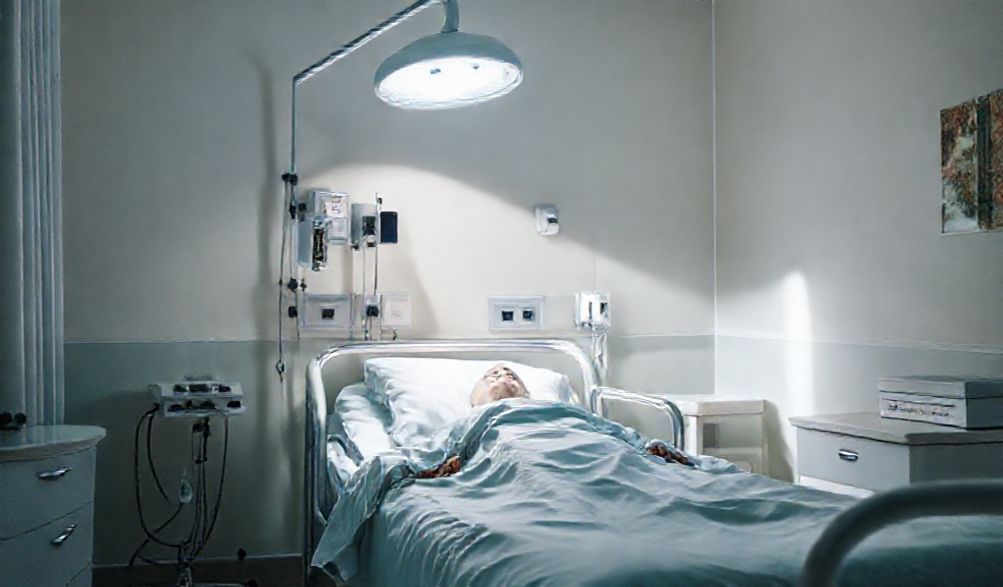
The classic hospital patient bed light is ceiling-mounted or on a track system directly over the bed. This design provides strong, downward-focused general illumination ideal for medical procedures and whole-bed visibility. It keeps the floor and bedside tables clear but requires careful positioning to avoid casting the caregiver’s shadow onto the patient during procedures.
Modular Headwall Lights
Increasingly common in modern hospital design, these lights are fully integrated into the patient headwall—the unit that also houses medical gases, electrical outlets, and nurse call systems. This approach offers a supremely streamlined, space-saving aesthetic. Headwall lights often combine a primary patient bed light with a separate, lower-intensity reading light for the patient, all controlled via a centralized panel. This integration creates a clean, uncluttered environment that is easier to sanitize.
Portable and Task-Specific Lights
Not all care happens at a fixed bed station. In home care, rehab facilities, or for specific tasks, portable options are vital.
- Clamp-On Lights: These can be attached to a bed rail, headboard, or table, offering flexible positioning where permanent installation isn’t possible.
- Gooseneck or Flexible Arm Lamps: Perfect for focused tasks like reading or detailed handiwork, these allow pin-point accuracy but may not offer the broad, clinical-grade light needed for examinations.
- Handheld Examination Lights: Sometimes a small, powerful, pen-like light is needed for extremely focused assessment, often used in conjunction with a broader room or bed light.
Implementing Best Practices for Patient Bed Lighting
Selecting the right fixture is only half the battle. Proper implementation ensures its benefits are fully realized.
Strategic Placement to Minimize Glare
Glare causes visual discomfort, reduces contrast, and can temporarily disable a night-adapted nurse’s vision. Position the primary patient bed light so its beam can be directed onto the task without shining directly into the eyes of a reclining patient. Also, consider the angle relative to computer screens on mobile workstations to avoid creating screen glare that can obscure patient data.
Creating a Patient-Centric Lighting Scheme
The bed light should not work in isolation. A layered lighting approach is best:
- Ambient Light: General, low-level room lighting (often indirect) provides baseline orientation.
- Task Light: The patient bed light serves as the primary, adjustable task light for both patient and staff needs.
- Accent/Night Light: A dedicated, very low-level night light (often warm-toned and floor-placed) provides safe pathway visibility without disrupting sleep.
This scheme allows each layer to be used independently or in concert, creating a highly adaptable and comfortable environment.
Maintenance and Safety Checks
A proactive maintenance protocol is essential. This should include:
* Regular cleaning and disinfection of all surfaces.
* Monthly checks of the mechanical arm for stability and smooth operation.
* Verification of all light levels, dimming functions, and color temperature settings.
* Inspection of cords, plugs, and mounts for any signs of wear or damage.
* Immediate replacement of any faulty unit to ensure no bed is without this critical tool.
Frequently Asked Questions (FAQ)
What is the ideal color temperature for a patient bed light?
The ideal system is tunable. For daytime hours and clinical tasks (e.g., 7 AM – 7 PM), a cooler white light (5000K-6500K) promotes alertness and visual acuity. For evening and night (7 PM – 7 AM), the ability to switch to a warm white light (2700K-3000K) supports melatonin production and relaxation. Fixed lights in patient rooms are often best at a neutral 4000K, but adjustable systems offer the greatest therapeutic benefit.
Can patient bed lights be used in home care settings?
Absolutely. When choosing for home care, prioritize user-friendliness. Look for lights with simple, intuitive controls, easy installation (like plug-in models or sturdy clamp-ons), energy-efficient LEDs, and a design aesthetic that feels less institutional and more residential. Adjustability remains key for comfort.
How does lighting affect elderly patients or those with dementia?
Proper lighting is crucial for these populations. It reduces confusion, minimizes “sundowning” symptoms, and dramatically lowers fall risk. The goal is consistent, even illumination that eliminates dark shadows and harsh contrasts, which can be misinterpreted as holes or obstacles. Night lights are essential, and avoiding blue-rich light in the evening is particularly important for supporting sleep.
Are there specific lights for reading vs. medical examination?
Yes, the requirements differ. A good reading light needs to be wide, diffuse, and glare-free to illuminate a book or tablet evenly without causing eye strain. A medical examination light needs to be extremely bright, intensely focused, and have a very high CRI (90+) to reveal fine details in tissue, wounds, or skin. Many high-quality patient bed lights are designed to fulfill both roles through a combination of a broad beam and a focused spot setting.
What are the latest innovations in patient bed lighting?
The field is rapidly evolving. Innovations include:
* Smart, Connected Systems: Lights integrated into IoT (Internet of Things) platforms, allowing control via bedside tablets, centralized nursing stations, or even pre-set circadian lighting schedules.
* Indirect/Uplighting Features: Some fixtures now incorporate upward-facing light that bounces off the ceiling, providing gentle ambient fill light that reduces contrast and glare from the primary task beam.
* Advanced Materials: The use of copper-infused or other antimicrobial coatings on high-touch surfaces to supplement cleaning protocols.
* Integrated Sensors: Motion sensors to gently raise light levels when a patient sits up or steps out of bed, enhancing safety.
Conclusion
The choice of a patient bed light is a decision that resonates through every aspect of the care experience. It is a tangible investment in patient safety, clinical accuracy, and human-centered healing. By moving beyond viewing it as a simple utility and recognizing it as a multifaceted tool, healthcare providers and individuals can make selections that profoundly impact well-being.
The core principles remain constant: seek out superior adjustability for personalized control, demand excellent light quality for visual truth, and insist on durable, hygienic design for safety and longevity. As technology advances, lighting continues its evolution from a passive fixture to an active, therapeutic element of the care environment.
Let this guide serve as your foundation. Evaluate your specific needs—be it for a bustling hospital ward, a quiet hospice room, or a loving home care setup. Consult with the end-users: the nurses who rely on it for precision and the patients who depend on it for comfort and safety. In doing so, you will choose a patient bed lighting solution that doesn’t just illuminate a space, but truly illuminates the path to better health outcomes and a more dignified, effective healing journey.
p>