
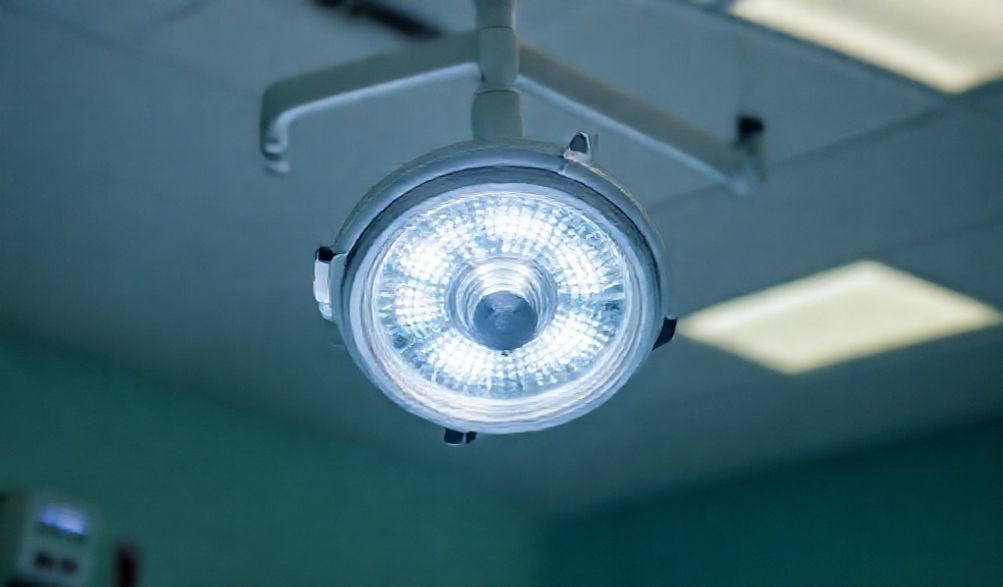
Procedure Lights: A Comprehensive Guide to Types, Uses, and Safety Standards
Whether you’re performing a delicate surgical procedure, inspecting a microscopic circuit board, or conducting a critical safety check in an aircraft cockpit, one factor remains constant: the absolute necessity of perfect illumination. In these high-stakes environments, standard overhead lighting simply doesn’t suffice. This is where the procedure light—a purpose-built tool for precision—becomes indispensable.
Professionals across medical, industrial, aviation, and technical fields search for “procedure light” with a clear intent: to find specific, reliable information that informs critical purchasing decisions and ensures safety compliance. This guide is designed to meet that need directly. Drawing from industry standards, manufacturer guidelines, and established safety protocols, we will provide a detailed, authoritative overview of procedure lights. Our focus is on practical application, helping you understand not just what a procedure light is, but how to select, use, and maintain the right one for your exacting requirements.
What is a Procedure Light? Core Function and Definition
At its core, a procedure light is a specialized illumination device engineered to provide optimal visibility for specific, detailed tasks. Unlike ambient lighting, which is designed for general visibility and comfort, a procedure light is a precision instrument.
The Primary Purpose: Illumination for Critical Tasks
The fundamental role of a procedure light is to eliminate uncertainty. It delivers intense, focused light exactly where it is needed, enabling professionals to see fine details, discern subtle color variations, and perform manipulations with a high degree of accuracy. The outcome of the task—be it a successful surgery, a flawless weld, or a correctly assembled component—often hinges on the quality of light provided. Procedure lights are therefore considered essential equipment, directly contributing to efficacy, safety, and quality control.
Key Distinguishing Features from Standard Lighting
What sets a procedure light apart from a standard lamp or overhead fixture? Several critical features:
- Focused, Controllable Beam: The light is directed and often focusable, creating a bright “pool” of illumination on the worksite without spilling excessive light into surrounding areas.
- Adjustable Intensity: Users can dim or brighten the light to suit the specific task, reducing eye strain and enhancing contrast as needed.
- High Color Rendering Index (CRI): Especially vital in medical and technical fields, a high CRI (typically >90, and often >95) ensures that colors are rendered accurately. This allows a surgeon to distinguish between healthy and ischemic tissue or a technician to identify correctly colored wiring.
- Minimal Shadow Casting: Advanced designs, particularly in surgical lights, use multiple LED arrays or reflector systems to minimize the shadows cast by the user’s head and hands.
- Cool Operation: Procedure lights are engineered to emit minimal heat at the illuminated site. This is crucial in medical settings to avoid tissue desiccation and in technical settings to prevent discomfort or damage to heat-sensitive materials.
Primary Applications and Industries for Procedure Lights
The utility of procedure lights spans numerous fields where precision is non-negotiable. Understanding these applications highlights the tailored design considerations for each industry.
Medical and Surgical Settings
This is one of the most demanding and well-known applications. Procedure lights here are pillars of patient safety and surgical success.
* Operating Rooms: Major surgical lights are complex systems offering deep cavity illumination, exceptional shadow reduction, and sterile fields. They feature high color temperature (4000K-5000K) for a bright, neutral white light and supreme color accuracy.
* Minor Procedure & Examination Rooms: Used for wound closure, biopsies, and exams, these lights are often ceiling-mounted or on portable stands, providing excellent illumination for superficial procedures.
* Dental Offices: Dental procedure lights are typically chair-mounted, offering a focused beam at a short working distance. They are designed for easy positioning and often include features like autoclavable handles.
Industrial and Manufacturing Applications
In the industrial realm, procedure lights are tools for quality and precision.
* Quality Control & Inspection: Used to examine products for defects, finish quality, or assembly accuracy under consistent, high-CRI light.
* Electronics and Micro-Assembly: For assembling tiny components like circuit boards or watch mechanisms, magnifying procedure lights with bright, shadow-free LED rings are common.
* Static-Sensitive Environments: Lights used for electronics work may be designed to be ESD (Electrostatic Discharge) safe to prevent damage to components.
Aviation, Automotive, and Technical Maintenance
In these fields, reliability and access are key.
* Cockpit & Pre-Flight Checks: Portable or mounted lights provide focused beams for reading instruments and checking controls in low-light conditions.
* Engine Bay and Undercarriage Work: Durable, often magnetic-based or clamp-mounted lights offer hands-free illumination in tight, dark spaces.
* Intricate Repair Procedures: Directional task lights are essential for working on small, complex mechanisms within larger machines.
Specialized Uses: Cinematography & Emergency Response
- Cinematography: On film sets, small, high-CRI LED procedure lights are invaluable for adding precise fill light to a subject’s face or highlighting a specific detail during close-up shots.
- Emergency & Field Medicine: Rugged, portable, and battery-powered procedure lights are used in ambulances, field triage, and mobile medical units to provide critical illumination for assessments and interventions outside traditional clinical settings.
Key Features to Consider When Selecting a Procedure Light
Choosing the right procedure light requires careful evaluation of several technical specifications. This decision directly impacts performance and safety.
Brightness and Beam Control (Lumens, Lux, Focus)
Understanding light metrics is crucial:
* Lumens: Measures total light output. A minor exam light may output 2,000-5,000 lumens, while a major surgical light can exceed 160,000 lumens to illuminate deep cavities.
* Lux: Measures light intensity on a surface (lumens/m²). This is more practical. A superficial procedure may require 20,000-40,000 lux at the center of the field, while deep-cavity surgery demands 80,000-160,000 lux or more.
* Focus & Field Diameter: Consider if you need a fixed spot, an adjustable focus, or a broad, even field. The diameter of the illuminated area at a typical working distance is a key practical metric.
Color Rendering Index (CRI) and Color Temperature
This is paramount for any color-critical task.
* Color Rendering Index (CRI): On a scale of 0-100, CRI measures a light’s ability to reveal the true colors of an object compared to natural light. For medical and technical work, a CRI of 95 or higher is strongly recommended and often required. A low CRI can make tissues or components appear misleading.
* Color Temperature: Measured in Kelvin (K), this describes the “warmth” or “coolness” of white light.
* 3000K: Warm white (yellowish).
* 4000K-5000K: Neutral white. This is the preferred range for most procedural tasks as it is bright, alerting, and color-neutral.
* 6000K+: Cool white (bluish).
Mobility and Positioning: Arms, Mounts, and Stands
The best light is useless if it can’t be positioned correctly.
* Ceiling-Mounted: Offers the largest range of motion, keeps the floor clear, and is ideal for permanent installations like ORs.
* Wall-Mounted: Saves space and provides good coverage for a defined area, common in exam rooms.
* Floor-Standing: Portable and flexible, perfect for multi-use rooms or facilities where fixed mounting isn’t possible. Look for a stable base with casters.
* Tabletop/Clamp-On: For highly localized work in labs, workshops, or studios.
* Articulation: Look for arms with multiple joints, smooth movement, and the ability to stay in position without drifting (often via gas spring or friction systems).
Safety and Compliance Certifications
This is the most critical consideration for establishing trust and ensuring safety. Never compromise on certifications.
* Medical Devices (IEC 60601-1): The international standard for the basic safety and essential performance of medical electrical equipment. Any light used in a patient-care environment must comply with this and relevant collateral standards (e.g., for electromagnetic compatibility).
* ISO Standards: ISO 9680 specifies requirements for dental operating lights; other ISO standards govern various medical device qualities.
* UL/CSA Listing: Indicates the product has been tested and meets safety standards in North America.
* IP Rating (Ingress Protection): e.g., IP44 (splash-resistant) or IP54 (dust and splash resistant). Important for lights used in environments where they might be exposed to fluids or dust.
* MRI Compatibility: Lights intended for use near MRI scanners must be explicitly labeled as MRI Safe (poses no known hazards) or MRI Conditional (safe under specific conditions), using non-ferromagnetic materials.
Maintenance, Safety, and Best Practices
Proper care ensures longevity, reliability, and user safety. Adhering to these practices demonstrates responsible ownership.
Routine Cleaning and Disinfection Protocols
- Follow Manufacturer Instructions: Always use the cleaning agents and methods specified in the user manual. Harsh chemicals can damage lenses, housings, and finishes.
- Clinical Environments: For lights in sterile fields, daily and between-patient cleaning with hospital-grade disinfectants is mandatory. Pay special attention to handles and frequently touched surfaces. Some lights have removable, autoclavable handles.
- General Cleaning: Use a soft, lint-free cloth. For lenses, a mild glass cleaner may be appropriate if approved by the manufacturer. Always power off and unplug the light before cleaning.
Common Troubleshooting and Longevity Tips
- Flickering or Dimming: Check connections and power sources first. For LED lights, this could indicate a failing driver or power supply. For older halogen lights, the bulb may be near end-of-life.
- Stiff or Drifting Arm: Arms may require re-tensioning or service by a qualified technician. Do not force a stiff joint, as this can damage internal mechanisms.
- Maximizing LED Lifespan: While LEDs last for tens of thousands of hours, their lifespan is extended by good thermal management. Ensure ventilation ports are not blocked and the light is operated within its specified ambient temperature range.
- Handle with Care: Avoid swinging on or putting excessive weight on the light arms. Position them gently.
Essential Safety Precautions for Operators
- Electrical Safety: Do not use a damaged light or cord. Ensure plugs and outlets are in good condition.
- Thermal Safety: Even LED lights generate some heat at the housing. Avoid covering ventilation slots and be cautious when adjusting recently used lights.
- Stability: For floor-standing models, ensure the base is fully deployed and weight is balanced to prevent tipping. Be mindful of cords as trip hazards.
- Visual Safety: Avoid looking directly into the LED array, as the intense beam can cause temporary flash blindness or discomfort.
Frequently Asked Questions (FAQ) About Procedure Lights
Q: What is the typical lifespan of an LED procedure light?
A: High-quality LED procedure lights often have a rated lifespan of 50,000 to 100,000 hours. However, this is a measure of LED degradation, not necessarily the entire system. Drivers, switches, and mechanical components may require service sooner. Actual lifespan depends heavily on usage cycles and environmental conditions.
Q: Can a standard surgical light be used for dental procedures?
A: While possible, it is often not optimal. Standard surgical lights are designed for a longer working distance (e.g., over an operating table). Dental lights are engineered for a much closer focal distance, frequently have smaller, more maneuverable heads, and are integrated into the dental chair unit for optimal ergonomics.
Q: How often should a procedure light be professionally serviced or calibrated?
A: Always refer to the manufacturer’s service manual. A common recommendation is a professional inspection and service every 1-2 years. This should include checking light output (lux), color metrics, mechanical tension, and electrical safety. Users should perform visual and functional checks before each use.
Q: Are there procedure lights designed for MRI or other high-interference environments?
A: Yes, absolutely. Standard lights are hazardous in MRI suites due to ferromagnetic materials. Explicitly labeled MRI Safe or MRI Conditional lights are constructed from non-ferromagnetic materials like aluminum, brass, and specific plastics, and are designed not to interfere with the magnetic field or imaging.
Q: What is the most important feature for a light used in color-critical tasks?
A: The Color Rendering Index (CRI) is paramount. For tasks where accurate color discrimination is vital—such as surgery, pathology, paint matching, or electronics—a CRI of 95 or higher is essential. This ensures the truest representation of colors, reducing the risk of error.
Conclusion
A procedure light is far more than a simple accessory; it is a fundamental precision instrument that directly impacts the accuracy, safety, and success of critical tasks across diverse professions. From the operating theater to the manufacturing floor, the choice of illumination can mean the difference between clarity and uncertainty, between success and complication.
When selecting a procedure light, let your specific application requirements and the non-negotiable demands of safety certification guide you. Prioritize high CRI, appropriate intensity, reliable positioning, and proven compliance with standards like IEC 60601-1. As technology advances, with trends like integration into digital operating rooms or adaptive lighting systems that automatically adjust to camera sensors, these core principles of clarity, safety, and reliability will remain the enduring benchmarks of excellence.
p>