
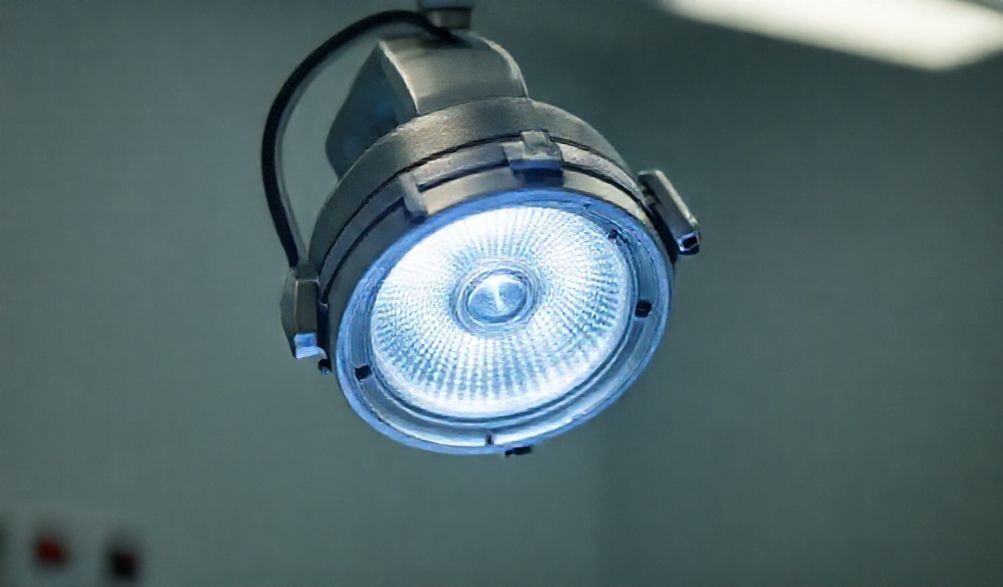
Surgical Head Lamps: A Surgeon’s Guide to Enhanced Precision, Safety, and Outcomes
Introduction
What separates a good surgical outcome from a great one? Skill, experience, and planning are the obvious answers. But what if the single biggest factor limiting a surgeon’s precision wasn’t a matter of skill, but of simple physics? What if it was light?
In the intricate dance of surgery, where millimeters matter and tissue planes must be respected, visualization is not just important—it is foundational. The human eye, remarkable as it is, cannot compensate for poor illumination. Shadows obscure critical anatomy, inaccurate color rendering can mask tissue ischemia, and eye strain from squinting into a dim cavity can lead to premature fatigue and error.
This guide is designed to cut through the marketing jargon and provide a comprehensive, unbiased resource for surgeons, surgical residents, and hospital procurement teams. Our purpose is to translate complex technological specifications into practical, clinical knowledge. We’ve synthesized insights from clinical studies, manufacturer engineering data, and surgical best practices to answer one core question: how do you choose and use a surgical head lamp to its fullest potential?
We will explore the undeniable link between advanced illumination and surgical outcomes, break down the key features of modern systems, and provide a clear framework for selection. Ultimately, this guide will demonstrate that a high-quality surgical head lamp is not merely an accessory; it is a fundamental tool for enhancing precision, ensuring safety, and improving ergonomics in the operating room.
The Critical Role of Illumination in Modern Surgery
Beyond Basic Visibility: Depth, Shadow Reduction, and Tissue Differentiation
The primary function of any light is to make things visible. A surgical head lamp, however, must do much more. It must create an optimal visual environment for decision-making and delicate manipulation.
- Depth Perception and Shadow Reduction: Overhead operating lights, while essential for general field illumination, often create harsh shadows in deep cavities—think of the spine, sinuses, or deep within the pelvis. A head-mounted light source moves with the surgeon’s gaze, casting light directly along the line of sight. This coaxial illumination dramatically reduces obstructive shadows and, crucially, enhances stereoscopic depth perception. The brain interprets subtle variations in light and shadow to construct a three-dimensional map; optimal, shadow-reduced light makes this map far more accurate, allowing for safer dissection and navigation.
- Color Temperature and Tissue Differentiation: Not all white light is the same. Light color is measured in Kelvin (K). Warm light (e.g., 3000K) has a yellowish hue, while cool light (e.g., 5500-6000K) appears bluish-white. The clinical gold standard for surgery is “daylight” temperature, around 5500K. Why? This spectrum most closely mimics natural noon sunlight, providing the highest level of color accuracy. This allows surgeons to better distinguish between subtle tissue variations: arterial from venous blood, healthy from ischemic tissue, or a nerve sheath from surrounding fascia. A high Color Rendering Index (CRI), a measure of a light’s ability to reveal true colors, is a non-negotiable feature for critical visualization.
The Link Between Lighting and Surgical Outcomes: What Studies Show
This isn’t just theoretical. Clinical evidence solidly links the quality of illumination to tangible surgical results. Studies have demonstrated that improved lighting correlates with:
- Reduced Error Rates: Better visualization leads to more accurate identification of anatomical structures and boundaries, minimizing the risk of iatrogenic injury.
- Increased Efficiency and Shorter Procedure Times: When you can see clearly, you work with more confidence and less hesitation. Time spent repositioning overhead lights or struggling to see is time saved.
- Improved Ergonomics and Reduced Surgeon Fatigue: Straining to see causes reflexive muscle tension in the neck, shoulders, and eyes. A well-positioned head lamp reduces this strain, allowing a surgeon to maintain focus and fine motor control for longer periods.
- Enhanced Patient Recovery: Precision leads to less tissue trauma, more accurate repairs, and potentially reduced post-operative complications.
These benefits are magnified in specialties where deep, narrow, or highly detailed work is the norm. A surgical head lamp is virtually indispensable in:
* Neurosurgery & Spine: Illuminating the depths of the cranium or spinal canal.
* Otolaryngology (ENT): Procedures in the nasal cavities, sinuses, and throat.
* Пластическая и реконструктивная хирургия: Where color accuracy and shadow-free light are critical for flap assessment and delicate suturing.
* Стоматология и челюстно-лицевая хирургия: Providing direct, focused light into the oral cavity.
* Microsurgery: Often used in conjunction with microscopes for additional targeted illumination.
Key Features and Technologies in Surgical Head Lamps
Understanding the technology behind the tool is key to making an informed choice. Modern surgical head lamps are sophisticated devices built around several core systems.
Light Source Evolution: Halogen vs. LED vs. Xenon
The heart of any lamp is its light source. The industry has seen a clear evolution:
- Галогенное: The long-standing traditional source. It produces a warm, acceptable light but has significant drawbacks: it generates intense heat, has a relatively short lifespan (typically 50-100 hours), and is less energy-efficient. While still available, it has been largely superseded.
- Xenon: Offered a brighter, whiter light than halogen with a longer lifespan. However, xenon bulbs also produce substantial heat and require complex, power-hungry ballasts. They were a high-performance step but have been eclipsed by LED technology.
- LED (Light Emitting Diode): The unequivocal modern standard. LEDs offer superior advantages:
- Efficiency & Cool Operation: They convert most energy into light, not heat, minimizing thermal risk to patient tissue and surgeon comfort.
- Исключительный срок службы: Rated for 50,000 hours or more, they often last the lifetime of the device, eliminating bulb replacement costs and downtime.
- Optimal Color Temperature: Easily engineered to produce perfect 5500K daylight.
- Robustness: Solid-state design is resistant to shock and vibration.
- Instant On/Off & Dimming: No warm-up time and precise intensity control.
Understanding Specifications: Lumens, Lux, and Beam Patterns
Cutting through spec sheets requires knowing what the numbers mean.
- Lumens: A measure of the total amount of visible light emitted by the source. Think of it as the “water flow” from a hose. More lumens mean a potentially brighter light, but the usefulness depends on focus.
- Lux: A measure of illuminance—how much light actually falls on a surface (lumens per square meter). This is the critical metric for surgeons. A 10,000-lumen light scattered widely may provide less useful light on a small surgical site (lower lux) than a 2,000-lumen light tightly focused (higher lux). Look for lux ratings at a specified distance (e.g., 100,000 lux at 400mm).
- Beam Pattern: This defines how the light is distributed.
- Spot Beam: A concentrated, focused circle of light. Ideal for deep-cavity work (neurosurgery, spine) where maximum light intensity is needed on a small area.
- Flood Beam: A wider, more diffuse spread of light. Perfect for surface work (plastic surgery, wound closure) where even illumination over a broader field is required.
- Adjustable Beam: Many high-end models allow the surgeon to vary the spot size, offering flexibility for different phases of a procedure.
Ergonomics and Wearability: Weight Distribution and Comfort Systems
A lamp that causes discomfort will not be used effectively. Ergonomics are paramount for long cases.
- Headband Design: Look for wide, padded headbands that distribute weight across the cranium, not just the forehead. Gel or foam padding improves comfort.
- Counterbalance Systems: The light source (or “lamp head”) is often the heaviest part. A well-designed counterweight at the back of the headband balances this load, preventing the lamp from tipping forward and reducing neck strain.
- Moisture Management: Breathable, moisture-wicking materials in the headband are essential for comfort during lengthy, intense procedures.
- Регулируемость: The lamp head should pivot easily to allow the beam to be precisely aligned with the surgeon’s visual axis, whether looking straight ahead or down.
Power Systems: Battery Packs, Rechargeability, and Runtime
Freedom of movement is a key advantage of a surgical head lamp.
- Cordless (Battery Pack): The most common and versatile configuration. A rechargeable lithium-ion battery pack is typically worn on the waist or integrated into the headband. Key considerations are runtime (4-8 hours on a full charge is standard for LED models) and charge time. Having a spare, charged battery is a best practice for long or back-to-back cases.
- Wired (Wall Plug): Some systems can be powered directly from an outlet, eliminating battery concerns for marathon procedures. This is less common for mobile head lamps but may be an option.
- Battery Indicators: Clear LED indicators on the battery pack or control module are essential to avoid mid-procedure power loss.
How to Choose the Right Surgical Head Lamp: A Buyer’s Checklist
Selecting a lamp is a balance of clinical need, personal preference, and practical constraints.
Assessing Your Surgical Specialty’s Requirements
| Specialty / Use Case | Recommended Priorities | Typical Beam Preference |
| :— | :— | :— |
| Neurosurgery / Spine | Very High Lux, Spot Beam, Long Runtime | Tight Spot |
| ENT / Sinus Surgery | High Lux, Good Depth Illumination, Lightweight | Spot to Adjustable |
| Plastic / Reconstructive | Excellent Color Accuracy (High CRI), Even Flood, Comfort | Wide Flood |
| Dentistry / Oral Surgery | High Lux, Cool Operation, Easy Sterilization | Focused Spot |
| General / Trauma | Versatility, Robustness, Good Runtime | Adjustable (Spot to Flood) |
| Use with Loupes | Low-Profile Mount, Adjustable Angle Light Guide | Dependent on Specialty |
Prioritizing Features: Must-Have vs. Nice-to-Have
Create your own decision matrix. For most surgeons, the Must-Have list includes:
* LED Light Source (5500K, High CRI)
* Adequate Lux for your deepest/common cavity work
* Comfortable, Balanced Headband for expected case length
* Reliable Battery System with sufficient runtime
* Compatibility with your loupes (if used)
Nice-to-Have features that add value:
* Wireless Intensity Control (a foot pedal or sterile handle)
* Integrated Cooling Fan in the headband
* Multiple Pre-set Light Modes
* Camera/Video Streaming Capability
Considering the Total Cost of Ownership
The initial purchase price is only part of the equation. Consider:
* Light Source Lifespan: LED modules rarely need replacement; halogen systems have ongoing bulb costs.
* Battery Longevity: Rechargeable batteries degrade over 2-3 years. What is the replacement cost?
* Гарантия и обслуживание: A comprehensive 3-year warranty that covers the light engine, battery, and workmanship indicates a quality product and protects your investment.
* Sterilization Compatibility: Ensure the lamp head or its disposable covers are compatible with your hospital’s sterilization protocols (e.g., autoclave, STERRAD, wipe-down).
Best Practices for Use, Maintenance, and Safety
A great tool is only as good as its user. Proper handling ensures performance, longevity, and safety.
Proper Fitting and Adjustment for Optimal Performance
- Balance the Headband: Attach the counterweight (if present). Place the headband on your head without the lamp head attached to get a feel for the balance.
- Position the Lamp Head: Attach the lamp head and adjust its pivot point so the light beam is centered in your field of view when looking straight ahead at your intended working distance.
- Fine-Tune the Focus: With the light on, aim at a target. Adjust the focus ring (if available) to get a sharp, defined circle of light with no blurry edges.
- Check for Shadows: Move your head through typical ranges of motion used in surgery. The beam should follow your gaze seamlessly without creating new shadows from your own head or instruments.
Cleaning, Sterilization, and Routine Maintenance Protocols
- Daily/Post-Procedure: Wipe down the lamp head and headband with a hospital-grade disinfectant wipe according to manufacturer instructions. Never immerse the electrical components.
- Стерилизация: Many systems use a disposable, sterile barrier sleeve that fits over the lamp head. This is the safest and most efficient method. For the lamp head itself, only sterilize if the manufacturer explicitly states it is autoclavable or compatible with low-temperature systems (e.g., hydrogen peroxide plasma).
- Уход за аккумулятором: Follow charging instructions. Avoid completely draining lithium-ion batteries. Store in a cool, dry place.
- Inspection: Regularly check cables for fraying and connectors for corrosion.
Important Safety Considerations
- Тепловая безопасность: Even cool-running LEDs generate some heat at the emitter. Never allow the lamp head to rest directly against patient tissue or drapes for an extended period.
- Электробезопасность: Inspect cords and plugs for damage. Do not use if the housing is cracked.
- Battery Safety: Use only manufacturer-approved batteries and chargers. Do not puncture or expose batteries to extreme heat.
Часто задаваемые вопросы (ЧЗВ)
Q1: What is the typical battery life for a cordless LED surgical head lamp?
О: Most modern systems offer 4 to 8 hours of runtime on a full charge at medium-to-high intensity settings. Always check the manufacturer’s specifications and have a freshly charged backup battery available for long or unexpected cases.
Q2: Can surgical head lamps be used with loupes?
О: Absolutely. In fact, they are highly complementary. Many surgical head lamp models are designed specifically for loupe integration, featuring low-profile mounts or adjustable light guides that clip onto your loupe frame, ensuring the light is perfectly aligned with your magnified field of view.
Q3: How often do the LED modules need to be replaced?
О: High-quality LED modules are rated for 50,000 hours or more. With typical OR use, this translates to decades of service, effectively making them a lifetime component. This is a major operational cost savings over halogen or xenon systems.
Q4: Are there specific head lamps recommended for minimally invasive or robotic surgery?
О: While the primary surgical field in laparoscopic or robotic surgery is illuminated internally, a surgical head lamp is invaluable for illuminating external port sites, assistant’s hands, and for any open steps of the procedure (e.g., extraction). Lightweight, focused models are ideal here.
В5: На что следует обращать внимание при выборе гарантии?
О: Ищите комплексную гарантию, которая покрывает дефекты материалов и изготовления для всей системы (оголовье, световой модуль, аккумулятор) минимум на 2-3 года. Надежная гарантия является прямым отражением уверенности производителя в долговечности и надежности своего продукта.
Заключение
Выбор surgical head lamp Это важное решение, выходящее за рамки простой покупки оборудования. Это инвестиция в ваши хирургические возможности, ваше физическое благополучие и, в конечном счете, в результат лечения вашего пациента. Как мы выяснили, современные светодиодные системы обеспечивают беспрецедентный уровень освещенности, цветопередачи и эргономичного комфорта, напрямую решая визуальные задачи, стоящие в основе сложных хирургических вмешательств.
Мы рекомендуем использовать это руководство в качестве основы для вашей оценки. Проконсультируйтесь с клинико-инженерной службой вашей больницы, запросите демонстрации у авторитетных поставщиков медицинского оборудования и, что наиболее важно, попросите провести практическое испытание. Оцените распределение веса, протестируйте световой луч в смоделированной среде и проверьте элементы управления.
Уделите время, чтобы проанализировать ваши самые сложные недавние случаи с точки зрения освещения. Могло ли лучшее освещение что-то изменить? Затем сделайте следующий шаг. Запланируйте демонстрацию, сравните технические характеристики с потребностями вашей специализации и оснастите себя инструментом, который действительно позволяет вам видеть — и работать — наилучшим образом. Будущее хирургического освещения может даже включать встроенную визуализацию и потоковую передачу данных, но все начинается с фундаментального, мощного луча правильно выбранной налобной лампы.
p>