
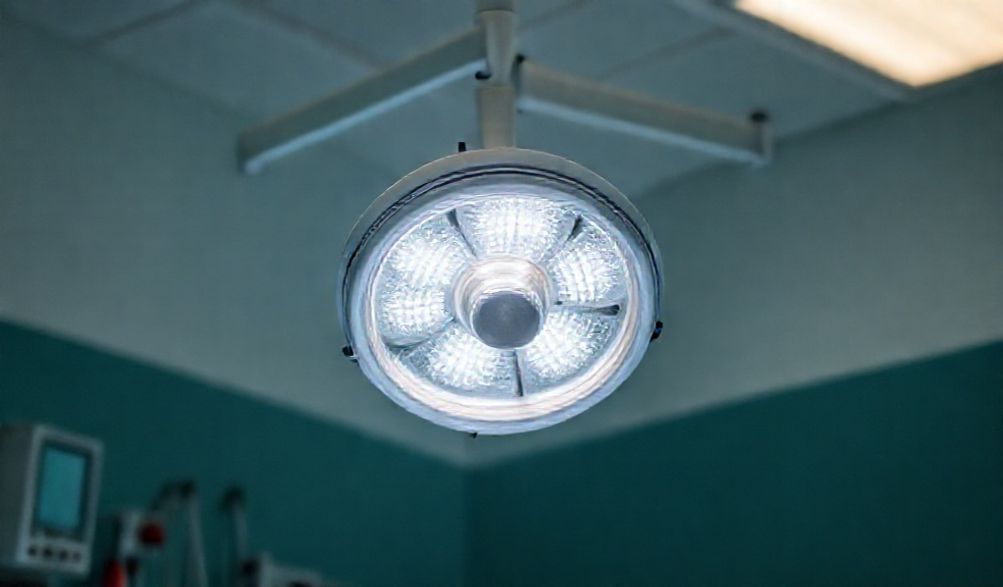
Illuminating Precision: A Comprehensive Guide to Operating Room Lamps
In the high-stakes environment of the modern operating room, every detail is calibrated for success. From the precision of a scalpel to the sterility of the field, each element plays a crucial role. Yet, one of the most fundamental tools is often the most overlooked: light. A single shadow obscuring a critical vessel, a glare masking tissue differentiation, or a flicker causing eye strain can be the subtle difference between a routine procedure and an unforeseen complication. The operating room lamp is far more than a simple light fixture; it is an extension of the surgeon’s vision and a foundational pillar of patient safety.
This guide is designed to be an authoritative, evidence-based resource for the professionals who depend on and manage this vital technology. Whether you are a surgeon or nurse seeking to understand your environment better, an OR manager or procurement specialist evaluating new equipment, a biomedical engineer maintaining systems, or an informed patient curious about your care setting, this article synthesizes manufacturer specifications, clinical studies, and industry standards. We will move beyond marketing claims to explore the core technologies, critical selection criteria, and best practices that define excellence in surgical lighting. Our journey will cover the evolution from rudimentary beginnings to today’s high-tech LED systems, dissect the key features that matter, provide a practical procurement checklist, and glimpse into the intelligent future of the illuminated sterile field.
The Evolution of Surgical Lighting: From Shadow to Sterile Field
The history of the operating room lamp is a story of the relentless pursuit of clarity, a battle against shadow and infection fought with advancing technology.
Early Days: Sunlight and Simple Lamps
For centuries, surgery was beholden to the sun. Procedures were scheduled for midday in rooms with large windows. When natural light failed, surgeons turned to oil lamps, candles, or gaslights. These sources were problematic: they cast deep, moving shadows from anyone who walked by; they produced intense heat that discomforted both patient and staff; and they introduced smoke and open flames into an environment we now recognize needed to be sterile. The risk of infection was extraordinarily high, and visual accuracy was severely limited.
The Incandescent Revolution and the “Shadowless” Ideal
The invention of the incandescent bulb in the late 19th century sparked the first revolution. The first dedicated surgical luminaires emerged, often as single, powerful bulbs. However, the problem of the surgeon’s head and hands casting a shadow remained. This led to the ingenious concept of the “shadowless” lamp, most famously realized in designs like the “Lübbe-Licht” and later the “Ceiling Dome.” The principle involved multiple light sources arranged in a ring or array. By positioning these points at different angles, the light from one source would fill in the shadow cast by another. While not truly shadow-free, this multi-point design dramatically reduced contrast shadows, creating a more uniformly illuminated field.
Halogen and Beyond: The Leap in Color Rendering
The introduction of halogen bulbs in the mid-20th century marked another leap forward. Halogen lights provided a brighter, whiter, and more consistent light than standard incandescents. This era brought a critical metric to the forefront: the Индекс цветопередачи (CRI). CRI measures a light source’s ability to reveal the true colors of objects compared to natural light. In surgery, a high CRI is non-negotiable. It allows surgeons to accurately distinguish between arterial blood (bright red), venous blood (darker red), fatty tissue (yellow), and delicate neural structures. Without accurate color, the risk of inadvertent injury increases.
The LED Era: Efficiency, Control, and Cool Operation
Today, Light Emitting Diode (LED) technology is the undisputed standard for the modern operating room lamp. This shift was driven by profound advantages:
* Minimal Heat Radiation: Unlike halogen bulbs that emit significant infrared radiation, LEDs are remarkably cool. This enhances patient safety (reducing the risk of tissue drying or burns) and dramatically improves staff comfort.
* Exceptional Energy Efficiency: LEDs consume a fraction of the electricity of older technologies, leading to substantial cost savings and a smaller environmental footprint.
* Long Lifespan: With operational lives of 20,000 to 50,000 hours, LED modules rarely need replacement, reducing maintenance downtime and costs.
* Superior Color Stability: LED color temperature and CRI remain consistent throughout their long lifespan, unlike halogens which dim and yellow over time.
* Advanced Control: Solid-state technology allows for precise, flicker-free dimming and, as we will see, enables smart features previously impossible.
Core Technology & Key Features of Modern OR Lamps
Understanding the specifications of a modern operating room lamp is key to evaluating its performance. Here are the core technological pillars.
Light Source & Color Quality
This is the foundation of visual accuracy.
* Color Temperature: Measured in Kelvin (K), this describes the “warmth” or “coolness” of the light. Surgical lighting typically falls in the 4000K to 5000K range, mimicking bright daylight. This cool white light promotes alertness and provides optimal contrast.
* Индекс цветопередачи (CRI): A scale from 0-100, with 100 being perfect color fidelity. For surgery, a CRI >90 is essential. More specifically, the Ra9 value is critical—it measures the accurate rendering of the color red. A high Ra9 is vital for distinguishing subtle differences in blood and tissue hue.
Illumination Performance Metrics
Brightness alone is not enough; it must be delivered effectively.
* Lux/Lumens: Illuminance (lux) measures the amount of light falling on a surface. Centerfield illuminance for major surgery typically ranges from 40,000 to over 160,000 lux. This intense, focused light is necessary for deep cavity work.
* Depth of Illumination: Perhaps the most crucial metric after color. This refers to the light’s ability to penetrate deep into a wound (e.g., in thoracic or spinal surgery) without causing excessive glare on the surface. It is achieved through sophisticated optical design and is a key differentiator between high-end and basic lamps.
* Равномерность освещения: This measures the uniformity of light across the entire illuminated field. The goal is a consistent light level with minimal “hot-spots” (areas of excessive brightness) or dark edges, which can cause visual fatigue.
Mechanical Design & Ergonomics
A light that provides perfect color but is difficult to position is useless.
* Articulation & Balance: Modern lamps feature multi-jointed arms with gas springs or electromagnetic systems. They must be effortlessly positionable by a sterile team member using a single handle, and then remain perfectly stable in that position without drift or sway.
* Sterility & Cleanability: The entire lamp, especially the handle, must be designed for rigorous disinfection. Surfaces are seamless, sealed, and resistant to harsh chemicals. Handle design often allows for disposable sterile sleeves.
* Field Diameter & Pattern: The size of the illuminated circle is adjustable, allowing surgeons to switch between a focused spot for precision and a wide field for overview. Some systems offer asymmetric or rectangular patterns to suit different procedural needs.
Advanced Functionality
— это не просто улучшение освещения; это фундаментальное усовершенствование самого критически важного инструмента хирурга — его зрения. Благодаря непревзойденной цветопередаче, бестеневому освещению и эргономичному комфорту эта технология напрямую способствует хирургической точности, снижает утомляемость во время операции и способствует положительным результатам для пациента. Переход от галогенных к светодиодным осветителям — это не просто смена оборудования, а стратегические инвестиции в клинические результаты и профессиональное благополучие. operating room lamp is becoming an integrated hub.
* Camera Integration: Many systems offer built-in 4K cameras or modular mounts, enabling recording for teaching, tele-mentoring, or documentation without obstructing the surgical field.
* Specialty Lights: Specific fields have unique needs. Neurosurgery lights may have a narrower, more intense beam. Endoscopy suites use lights designed to integrate with monitor displays, reducing ambient light interference.
How to Choose the Right Operating Room Lamp: A Procurement Checklist
Selecting a new operating room lamp is a significant capital investment. This checklist moves beyond brochures to practical evaluation.
Assessing Clinical and Procedural Needs
Start with the end-user: the surgical team.
* Surgical Specialty: A cardiac surgeon needs exceptional depth for working in the chest cavity. A trauma surgeon might prioritize a very wide field. Orthopedic procedures require homogeneous light over a large, shallow area.
* OR Layout & Workflow: Consider ceiling height, table placement, and typical team size. Will one light suffice, or is a two-head system (primary and secondary) needed for complex cases? Evaluate the lamp’s range of motion in your specific room mock-up.
Evaluating Total Cost of Ownership (TCO)
The purchase price is just the beginning.
* Потребление энергии: Calculate the annual cost difference between an LED system and an older technology. Savings can be substantial.
* Maintenance & Service: Inquire about the cost and schedule for preventive maintenance. LED systems have minimal bulb replacement costs, but mechanical parts may need service. Compare warranty terms and the availability of local, certified service engineers.
* Прочность: A robustly built light with a proven track record may have a higher upfront cost but a lower lifetime TCO due to reliability.
Compatibility and Integration
The lamp must work within your existing ecosystem.
* Infrastructure: Verify compatibility with your OR’s ceiling mounts, electrical outlets, and boom systems. Retrofitting can be expensive.
* Systems Integration: Consider how the light will interact with other OR systems. Does it generate less heat, reducing HVAC load? Can it be controlled from a central touch panel as part of a “digital OR” suite?
Безопасность и соответствие нормативным требованиям
This is non-negotiable.
* Сертификации: The device must have all required medical device approvals for your region (e.g., FDA 510(k) in the USA, CE Mark in Europe, IEC 60601-1 for electrical safety).
* Safety Features: Look for a backup battery system that provides at least 30 minutes of emergency light in a power failure. Fail-safe brakes and emergency manual override controls are essential.
Maintenance, Care, and Best Practices for Optimal Performance
A top-tier operating room lamp will only perform as designed with proper care.
Протоколы регулярной очистки и дезинфекции
- Follow the manufacturer’s instructions precisely. Typically, daily cleaning with a soft cloth and mild detergent is recommended for the body.
- The sterile handle and any touch surfaces require disinfection between every procedure using hospital-grade, approved disinfectants that will not damage seals or optical coatings.
- Never spray liquid directly onto the lamp head; apply it to the cloth first to prevent moisture ingress.
Scheduled Inspection and Preventive Maintenance
- Clinical Staff (Daily/Weekly): Visually check for physical damage. Test the smoothness of movement and balance. Note any flickering, dimming, or changes in color.
- Biomedical Engineering (Annual/Bi-annual): A certified technician should perform electrical safety tests, verify illuminance and color temperature output with a calibrated light meter, check all braking systems, and lubricate joints as specified.
Устранение распространённых проблем
- Light is Dim: Check if it is at maximum intensity setting. For LED systems, this is rarely a bulb issue; it may be a power supply or control module fault.
- Lamp Drifts or Won’t Hold Position: The balance system or brake may need adjustment or repair.
- Необычный шум: Grinding or clicking from the arms indicates a need for mechanical service.
- Критическое правило: Clinical and engineering staff should never attempt to open and repair the internal components of a surgical light. This invalidates certifications and poses serious electrical and safety risks. Always contact the manufacturer’s certified service.
The Future of Surgical Lighting: Smart ORs and Beyond
— это не просто улучшение освещения; это фундаментальное усовершенствование самого критически важного инструмента хирурга — его зрения. Благодаря непревзойденной цветопередаче, бестеневому освещению и эргономичному комфорту эта технология напрямую способствует хирургической точности, снижает утомляемость во время операции и способствует положительным результатам для пациента. Переход от галогенных к светодиодным осветителям — это не просто смена оборудования, а стратегические инвестиции в клинические результаты и профессиональное благополучие. operating room lamp is evolving from an illuminating device to an intelligent node in the digital operating room.
Integration with the Digital OR
Future lights will be fully networked. Surgeons may control intensity, field size, and color mode via touchscreen panels, voice commands, or even gesture control. Automated presets could instantly configure the light for “incision,” “deep cavity,” or “closure” phases of a procedure.
Enhanced Visualization: Overlay and Guidance
The next frontier is projection. Imagine a light that can project the outline of a tumor from a pre-operative CT scan directly onto the patient’s skin for incision planning. Or one that highlights critical anatomical structures in real-time. This technology, integrating with augmented reality (AR) headsets, could provide an information-rich, “X-ray vision” overlay onto the physical surgical field.
Adaptive and Responsive Lighting Systems
Research is underway into lights that “respond” to the surgery. Using hyperspectral imaging sensors, a light could analyze tissue oxygenation or perfusion and automatically adjust its spectrum to enhance contrast. It could track the surgeon’s focus and subtly adjust the field or intensity, or even sync with robotic surgical systems to provide optimal illumination for the endoscope’s view.
Часто задаваемые вопросы (ЧЗВ)
Q1: What is the most important factor when choosing an OR lamp?
О: There’s no single factor. A combination of отличная цветопередача (CRI/Ra9), достаточное и глубокое освещение, а также надежный, эргономичный механический дизайн имеет решающее значение. “Лучший” свет — это тот, который наилучшим образом соответствует вашим конкретным хирургическим процедурам и рабочему процессу.
В2: Как часто необходимо заменять или обслуживать операционные лампы?
О: Современные светодиодные лампы имеют срок службы 20 000–50 000 часов. Сам источник света может не требовать замены годами. Однако, ежегодное профессиональное профилактическое обслуживание крайне важно для безопасности и производительности, а механические части (например, ручки или шарниры) могут требовать обслуживания в зависимости от интенсивности использования.
В3: Можно ли полностью устранить тени во время операции?
О: Хотя современные системы “снижения теней”, использующие несколько кластеров светодиодов, высокоэффективны, полностью устранить все тени, особенно от рук хирурга и инструментов, невозможно. Цель — свести их к минимуму и обеспечить стабильно яркое, однородное поле.
В4: Все ли “медицинские” или “хирургические” лампы подходят для основных операционных процедур?
О: Нет. Лампы для малых процедурных кабинетов, смотровых или стоматологических кабинетов часто имеют другие стандарты интенсивности, глубины освещения и стерильности. Всегда проверяйте, соответствует ли лампа конкретным стандартам освещенности, глубины освещения и нормативным требованиям для основных инвазивных операций в больничной операционной.
В5: Как освещение в операционной влияет на утомляемость хирурга?
О: Значительно. Плохое освещение (блики, мерцание, низкая цветопередача) заставляет глаза и мозг работать интенсивнее, что приводит к зрительному напряжению и когнитивной усталости во время длительных процедур. Оптимальное освещение снижает это напряжение, потенциально улучшая концентрацию, производительность и снижая количество ошибок.
Заключение
— это не просто улучшение освещения; это фундаментальное усовершенствование самого критически важного инструмента хирурга — его зрения. Благодаря непревзойденной цветопередаче, бестеневому освещению и эргономичному комфорту эта технология напрямую способствует хирургической точности, снижает утомляемость во время операции и способствует положительным результатам для пациента. Переход от галогенных к светодиодным осветителям — это не просто смена оборудования, а стратегические инвестиции в клинические результаты и профессиональное благополучие. operating room lamp служит свидетельством того, как инженерия и медицина пересекаются для спасения жизней. Оно эволюционировало от простого источника света до сложного, жизненно важного устройства, где достижения в науке о цвете, оптике и эргономике напрямую влияют на клинические результаты. Хотя переход на светодиодные технологии принес значительные успехи в эффективности и комфорте, непреходящие принципы точной цветопередачи, глубокого и однородного освещения и безупречной надежности остаются краеугольным камнем хирургического освещения.
Для принятия обоснованного решения требуется сотрудничество. Тесно консультируйтесь с хирургическими бригадами, чтобы понять их клинические потребности, привлекайте отдел биомедицинской инженерии для оценки технических характеристик и совокупной стоимости владения (TCO), а также взаимодействуйте с надежными производителями, которые могут предоставить клинические доказательства и надежную поддержку. Инвестиции в превосходное хирургическое освещение — это не просто покупка оборудования; это прямая инвестиция в безопасность пациентов, хирургическую точность, операционную эффективность и долгосрочное благополучие вашего персонала.
Если заглянуть в будущее, роль света станет лишь более неотъемлемой. В эпоху малоинвазивной и визуализационно-направляемой хирургии будущее operating room lamp обещает стать адаптивным, интеллектуальным партнером — освещающим не только анатомию, но и путь к лучшим результатам.
p>