
LED Surgery Lights: The Complete Guide to Advanced Surgical Illumination
In the high-stakes environment of the operating room, success hinges on precision. Every incision, every suture, every delicate maneuver depends on one fundamental element: the surgeon’s ability to see. For decades, surgical teams relied on lighting that, while functional, came with significant compromises—scalding heat, distorting color, and constant maintenance. But what if the light source itself could become an active contributor to patient safety and surgical precision? What if illumination could be cooler, truer, and smarter?
This is the promise fulfilled by modern LED surgery lights. More than just a simple bulb replacement, LED technology represents a paradigm shift in surgical illumination. This guide will demonstrate how LED systems have moved beyond novelty to become the undisputed gold standard, offering a powerful combination of superior visualization, enhanced safety, and remarkable operational efficiency. Designed as a comprehensive resource for surgeons, hospital procurement teams, biomedical engineers, and medical students, we will explore the technology’s evolution, dissect its key advantages, provide a framework for selection, and glimpse into its future. Understanding LED surgical lighting is no longer optional; it’s essential for any modern healthcare institution committed to excellence.
The Evolution of Surgical Lighting: From Halogen to LED
The journey to today’s advanced lighting is a story of relentless pursuit of clarity and control.
The Era of Halogen and Tungsten Lights
For most of the 20th century, the operating room was illuminated by halogen or tungsten-halogen bulbs. These lights worked by passing electricity through a filament or a halogen gas, producing intense light as a byproduct of extreme heat. While they represented an improvement over earlier systems, their limitations were well-known:
* Excessive Heat Output: A significant portion of their energy was emitted as infrared radiation, leading to tissue desiccation (drying) at the surgical site and discomfort for the surgical team.
* Color Shift and Inconsistency: As bulbs aged, their color temperature would change, altering the appearance of tissues and making accurate differentiation more challenging.
* Short Lifespan and Frequent Maintenance: Halogen bulbs typically lasted only 1,000 to 2,000 hours, necessitating frequent, costly replacements and introducing downtime and sterility risks during changeovers.
The Advent of LED Technology in the OR
The introduction of Light Emitting Diodes (LEDs) marked a fundamental shift from thermal to electronic light generation. LEDs are solid-state devices that emit light when an electrical current passes through a semiconductor. Early medical-grade LEDs faced challenges with achieving sufficient intensity and the correct color spectrum. However, rapid advancements in materials science and optical design quickly overcame these hurdles, leading to systems that could not only match but surpass traditional sources.
Why LED is Now the Gold Standard
The transition to LED is not merely a trend; it is an inevitable technological upgrade. The inherent advantages of solid-state lighting—efficiency, controllability, and longevity—align perfectly with the demands of modern surgery. Having displaced halogen as the benchmark, LED technology now forms the foundation upon which the next generation of surgical visualization is being built.
Key Technical Features and Advantages of LED Surgery Lights
The superiority of LED systems is rooted in a suite of interconnected technical features that directly address the shortcomings of past technologies.
Superior Illumination Quality: Color Rendering and Shadow Control
Visual accuracy is paramount. LED lights excel in two critical areas:
* Exceptional Color Rendering Index (CRI): CRI measures a light source’s ability to reveal the true colors of objects compared to natural light. Medical-grade LED lights boast a CRI of 90 or higher (with many exceeding 95). This near-perfect color fidelity allows surgeons to distinguish between subtle tissue shades—differentiating arterial from venous blood, identifying bile ducts, or recognizing ischemic tissue—with unparalleled confidence.
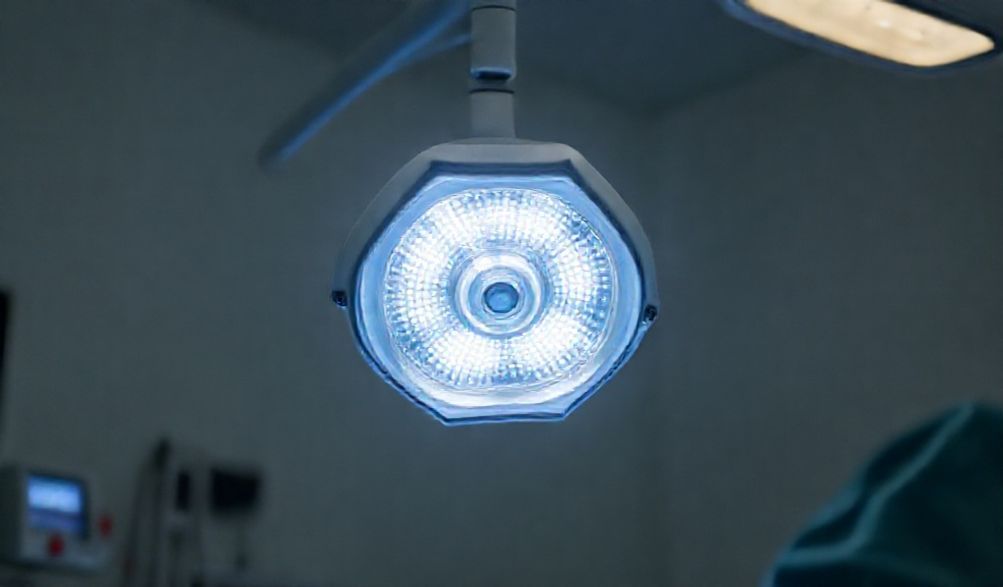
* Advanced Shadow Control: Traditional single-point light sources create harsh, distracting shadows. Modern LED systems use multi-point source designs, often with hundreds of individual LEDs arranged in concentric rings. This, combined with sophisticated reflectors and diffusers, fills in shadows and provides homogeneous illumination. Peripheral illumination rings further light the sides of deep cavities, such as in orthopedic or neurosurgical procedures, minimizing the “black hole” effect and providing consistent visibility at depth.
Enhanced Safety and Sterility
LED technology directly contributes to a safer operating environment.
* Low Heat Emission: LEDs produce minimal infrared radiation. The light is “cool” in the spectral sense, drastically reducing the thermal load on exposed tissue and minimizing the risk of iatrogenic thermal injury. This also creates a more comfortable environment for the surgical team, who no longer need to work under a blazing hot spotlight for hours.
* Facilitated Sterility: The cool operation enables innovative, hygienic design. LED light heads can be fully sealed with smooth, seamless housings devoid of vents or grilles that can trap contaminants. This makes cleaning and disinfection between procedures faster, more effective, and reduces potential infection vectors—a critical consideration in infection prevention protocols.
Unmatched Efficiency and Longevity
The operational benefits of LED lights translate directly to the hospital’s bottom line and workflow.
* Dramatically Reduced Energy Consumption: An LED surgical light typically consumes 50-70% less energy than an equivalent halogen system. For a busy operating suite with multiple rooms, this reduction in kWh usage amounts to substantial annual cost savings and a smaller environmental footprint.
* Extraordinary Lifespan and Reliability: Whereas halogen bulbs fail after hundreds of hours, high-quality medical LED modules are rated for 50,000 to 100,000 hours of operation. At 2,000 hours of use per year, an LED light can function for over 25 years without a major light source replacement. This eliminates the cost, inventory, and labor of frequent bulb changes, reduces operational downtime, and defines a new standard for total cost of ownership (TCO).
How to Choose the Right LED Surgical Light System
Selecting an LED surgery light requires a careful assessment of clinical needs, technical specifications, and ergonomic factors.
Assessing Clinical Needs by Specialty
One size does not fit all. Lighting requirements vary significantly across surgical disciplines:
* General & Abdominal Surgery: Requires a large, homogeneous light field with excellent depth of illumination and high intensity to cover open cavities.
* Neurosurgery & Spinal Surgery: Demands exceptional depth penetration and shadow-free illumination in deep, narrow surgical corridors. Smaller light field diameters with high lux levels are often preferred.
* Cardiac & Thoracic Surgery: Needs a blend of wide-field illumination and deep-cavity capability, with consistent color temperature to accurately assess tissue perfusion and oxygen saturation.
* Orthopedic Surgery: Benefits from intense, focused light to illuminate deep joint spaces, often during procedures with reflective instruments.
* Minimally Invasive & Endoscopic Surgery: While the primary light source is often the laparoscope, overhead LED lights provide crucial ambient illumination for monitor viewing, instrument handling, and potential conversion to open procedures.
Critical Specifications to Evaluate
When comparing systems, use this checklist of key performance metrics:
* Illuminance (Lux): The intensity of light at the surgical site. Common ranges are 40,000 lux (minimum for many standards) to 160,000+ lux for high-intensity needs. Ensure the intensity is adjustable.
* Light Field Diameter: The size of the illuminated area at a typical working distance (e.g., 100 cm). Ranges from small (10-15 cm) for focused work to large (25-30 cm) for open surgery.
* Индекс цветопередачи (CRI): Insist on a minimum of 90, with >95 being ideal for critical color differentiation.
* Depth of Illumination: A measure of how well the light maintains intensity as it penetrates into a cavity. A good system will maintain a high percentage of its lux value at significant depths.
* Color Temperature: Adjustable color temperature (e.g., from 3700K to 5000K) allows surgeons to tailor the light from “warm” to “cool” based on procedure or personal preference, aiding in tissue contrast.
Ergonomic and Operational Considerations
The best light is useless if it’s difficult to control or position.
* Maneuverability: The light head should move effortlessly via handles or touch controls, with excellent balance to stay in position without drift. Consider the reach and coverage of ceiling-mounted arms or track systems.
* Controls: Look for intuitive interfaces—sterile, tactile handles on the light head itself, touchscreen panels, or foot switches—that allow for easy adjustment of intensity and color temperature without breaking sterility.
* Integration & Redundancy: Evaluate compatibility with operating room infrastructure (mounts, track systems) and other technologies like camera systems. A robust backup power system that maintains illumination during a main power failure is a critical safety feature.
Addressing Common Concerns and Misconceptions
Despite their advantages, some questions persist around LED surgical lights.
“Are LED Lights Safe for Long Procedures?”
This concern often relates to blue light hazard. Reputable manufacturers design medical-grade LED systems to comply with the international safety standard for surgical luminaires, IEC 60601-2-41. This standard sets strict limits on photobiological risks, including blue light and retinal thermal hazards. When purchasing a system, compliance with this standard is non-negotiable and ensures the light is safe for prolonged use on sensitive tissues.
“Is the Initial Investment Worth It?”
While the upfront cost of an LED system can be higher than a halogen light, a Total Cost of Ownership (TCO) analysis reveals the true value. Factor in:
* Энергосбережение: 60%+ reduction in power consumption.
* Maintenance Savings: Elimination of bulb purchases and labor for replacements over 10+ years.
* Clinical & Operational Value: Potential for reduced procedure time due to better visualization, improved staff comfort, and enhanced sterility protocols.
Over a 5-10 year period, the LED system almost always proves to be the more economical and higher-performing choice.
“Can They Integrate with Existing OR Infrastructure?”
Most leading LED surgical lights are designed for compatibility with common ceiling mounts and track systems. The key is to involve your biomedical engineering team early in the evaluation process. They can assess structural requirements, electrical connections, and control interfaces to ensure a seamless integration, whether you are upgrading a single room or outfitting a new surgical suite.
Часто задаваемые вопросы (ЧЗВ) о хирургических светильниках
Q1: What is the main difference between LED and traditional surgical lights?
A: The core difference is the light source. LEDs are solid-state electronic devices that produce brighter, cooler, and more color-accurate light with far greater energy efficiency and lifespan than halogen or gas-filled bulbs.
Q2: How long do LED surgery lights typically last?
A: High-quality medical LED modules often have lifespans exceeding 50,000 hours, which translates to over a decade of typical operating room use before light output significantly degrades, compared to just a few hundred hours for halogen bulbs.
Q3: Do LED lights really improve surgical outcomes?
A: While the surgeon’s skill is paramount, LED lights directly support better outcomes by providing exceptional visual clarity, true tissue color representation, and excellent shadow control. This can enhance precision, reduce eye strain for the surgical team, and contribute to a safer operating environment.
Q4: Are there different types of LED lights for different surgeries?
A: Yes. Specialized lights exist for procedures like neurosurgery (deep-cavity illumination), endoscopy (light cable sources), and general surgery. Key specifications like light field size, intensity, and depth of illumination are tailored to the procedural need.
Q5: What certifications should I look for when purchasing LED surgery lights?
A: Always ensure the system has разрешение FDA, (or equivalent regional medical device approval) and complies with the IEC 60601-2-41 international standard specifically for surgical luminaires. UL/ETL listing for electrical safety is also essential.
Заключение
The illumination of the modern operating room has undergone a quiet revolution. LED surgery lights have transformed from an advanced alternative into the essential foundation for precision surgery. By delivering a powerful triad of benefits—enhanced visualization through superior color and shadow control, improved safety via cool, sterile operation, and operational efficiency through massive energy and maintenance savings—LED technology represents a smart, evidence-based investment for any forward-thinking institution.
This guide serves as a foundational resource, empowering clinical teams, engineers, and administrators to make informed decisions. The future of surgical lighting is already here, and it is bright, cool, and intelligent. Emerging trends point toward deeper integration—where LED systems seamlessly interface with 4K imaging overlays, AI algorithms that auto-adjust light based on the surgical field, and connected OR data ecosystems. Choosing a quality LED surgical light system is not just an upgrade to your equipment; it is an investment in the visual acuity of your surgical teams, the safety of your patients, and the technological platform that will define the next era of operative care.
Next Steps: Begin your evaluation by consulting with your clinical engineering department. Request detailed technical specifications and, most importantly, arrange for hands-on demonstrations or trial installations in a simulated environment. Engage with reputable manufacturers who can provide full clinical evidence and support a thorough, needs-based assessment.
p>