
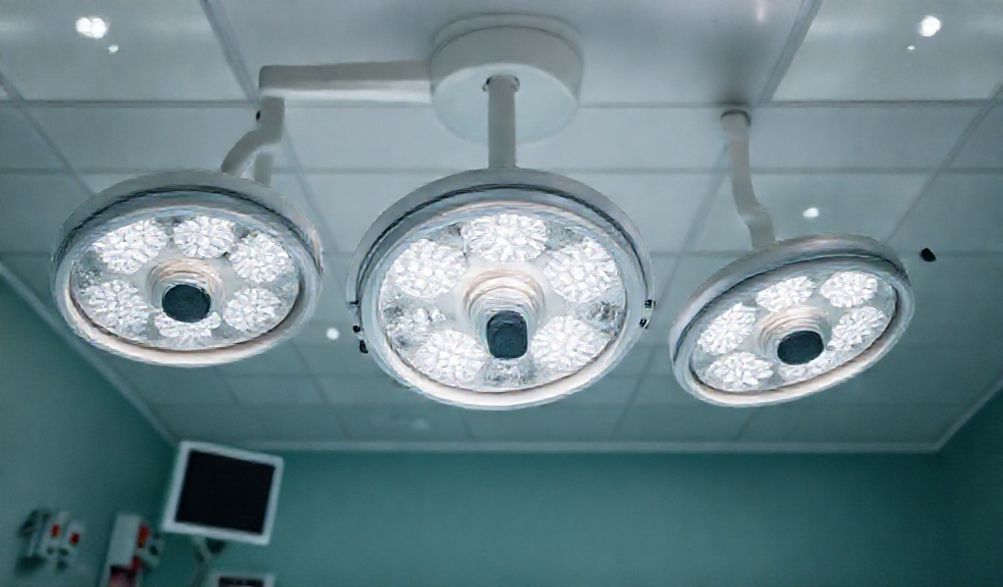
The Complete Guide to Buying Operating Room Lights for Your Medical Facility
Operating room (OR) lights are far more than simple fixtures; they are a critical, non-negotiable investment that forms the visual foundation of every surgical procedure. Their performance directly dictates a surgeon’s ability to discern subtle tissue variations, impacts staff ergonomics and fatigue levels, and, most importantly, influences patient safety and outcomes. Whether you’re outfitting a brand-new operating theater, upgrading aging and inefficient halogen systems, or expanding your facility’s surgical services, the purchase of an OR lighting system is a complex, high-stakes decision with significant long-term implications.
This comprehensive guide is designed to demystify the process for healthcare administrators, clinical engineers, and surgical directors. We’ll move beyond basic brochures to provide a detailed roadmap that combines deep technical knowledge with practical procurement strategy. Our goal is to empower you to make an informed, value-driven investment—one that meets stringent clinical demands, adheres to all compliance standards, and aligns with your facility’s budgetary and operational realities. Let’s illuminate the path to choosing the right OR lights for sale.
Core Technical Specifications and Performance Features
Understanding the engineering behind operating room lights is essential to evaluating their quality and suitability. Here, we break down the core specifications that separate adequate lighting from exceptional, surgery-enabling illumination.
Illumination Quality: Lux, Color Temperature, and Shadow Reduction
The primary purpose of an OR light is to render the surgical site with absolute clarity. This is governed by several key photometric properties:
- Lux Levels (Illuminance): This measures the intensity of light falling on the surgical field. Modern LED OR lights typically deliver between 40,000 to 160,000 lux at the center of the field, with premium models maintaining exceptionally high levels (e.g., 100,000+ lux) even at a distance. Adequate lux is non-negotiable for deep-cavity or microsurgical procedures.
- Color Rendering Index (CRI) and Correlated Color Temperature (CCT): CRI measures a light’s ability to reveal the true colors of objects compared to natural light. For surgery, a CRI of 90+ (out of 100) is essential for accurate differentiation between tissues, arteries, veins, and organs. CCT, measured in Kelvins (K), describes the light’s “warmth” or “coolness.” A CCT between 4000K and 4500K is generally preferred, offering a bright, neutral white that reduces eye strain and enhances contrast without distorting color.
- Shadow Reduction Technology: This is arguably the most critical advancement in surgical lighting. Traditional single-point sources create harsh, obstructive shadows. Modern systems use shadow dilution via multiple LED point sources arranged in a concentric pattern. When a surgeon’s hand or instrument blocks one point, light from the surrounding points fills in the shadow, dramatically improving visual continuity and depth perception. The design and number of these optical modules are central to a light’s performance.
Mechanical Design: Mobility, Articulation, and Sterility
A light must be as intelligent in its movement as it is in its illumination.
- Suspension Systems: The two primary types are ceiling-mounted (fixed to a single point) and track-mounted (able to slide along a ceiling rail). Track systems offer greater flexibility and coverage area, ideal for multi-disciplinary ORs. The suspension must provide counterbalanced, fluid, and effortless positioning.
- Articulation and Reach: The light head should have multiple, easy-to-maneuver joints (often with sterile handles) allowing it to be positioned precisely from almost any angle. Consider the “reach” from the mounting point—does it adequately cover the entire operating table and potential setup zones?
- Sterility-Conscious Design: Surfaces must be seamless, non-porous, and easy to clean with hospital-grade disinfectants. Handles are often designed to be easily draped or are themselves sterilizable. The absence of crevices where contaminants can accumulate is a mark of quality design.
Durability, Lifespan, and Total Cost of Ownership
An OR light is a long-term asset, and its value is measured over a decade or more.
- Build Quality and Lifespan: High-grade materials and robust construction are paramount. The star of the show is the LED module. Quality medical-grade LEDs have lifespans of 50,000 to 60,000 hours. For a typical OR schedule, this translates to 15-20 years of use before light output significantly degrades, a vast improvement over the 1,000-2,000 hour lifespan of halogen bulbs.
- Understanding Total Cost of Ownership (TCO): The upfront purchase price is just one component. TCO provides a holistic financial picture:
- Энергоэффективность: LED systems consume 50-70% less power than halogen or metal halide predecessors, leading to substantial annual utility savings.
- Maintenance Costs: LEDs eliminate frequent, costly bulb replacements. Evaluate the Mean Time Between Failures (MTBF) for electronic components.
- Service and Parts: Consider the long-term availability and cost of spare parts (like handles, joints, or control panels).
Navigating the Purchasing Process: New, Refurbished, and OEM
With technical specs in mind, the next step is navigating the marketplace. You have multiple pathways for acquisition, each with its own advantages.
Defining Your Clinical Requirements and Facility Assessment
Start with an internal audit. Engage surgeons, nurses, and biomed staff to create a needs-based specification:
- Хирургические специализации: Does the facility specialize in orthopedics, neurosurgery, cardiac, or general surgery? Each may have different depth-of-field and light intensity requirements.
- Room Architecture: Document ceiling height, type (hard lid vs. plenum), structural capacity, and the location of existing utilities.
- Integration Needs: Will the light need to integrate with a video/imaging system for hybrid ORs or teaching? Ensure compatibility with camera mounts and control systems.
- Workflow: How many surgical staff typically surround the table? This influences the ideal size and shadow control of the light.
Evaluating Suppliers: OEMs, Distributors, and Certified Refurbishers
- Original Equipment Manufacturers (OEMs): Purchasing directly from brands like Stryker, Steris, Getinge, or Dräger offers the assurance of the latest technology, full factory warranties, and direct access to manufacturer training and service. This is often the preferred route for new construction or when cutting-edge features are required.
- Authorized Medical Equipment Distributors: These partners sell and support OEM equipment. They can offer valuable comparative insights across brands, handle logistics, and may provide localized service support. They are a key channel for both new and sometimes refurbished equipment.
- Certified Refurbishers: This is a legitimate and cost-effective market for high-quality operating room lights for sale. Reputable refurbishers completely disassemble used lights, replace all wear items (handles, cables, lenses), upgrade to LED if applicable, recalibrate to original performance specifications, and repaint with medical-grade finishes. Crucially, they provide a new warranty (often 1-2 years) and regulatory documentation, such as an FDA 510(k) certification, confirming the device is legally marketable as a “substantially equivalent” medical device. Savings of 30-50% over new list price are common.
Budgeting, Financing, and Understanding the True Cost
- Price Ranges: A new, single-module, ceiling-mounted LED light from a major OEM can range from $15,000 to $40,000. Larger multi-module systems or those with advanced video integration can exceed $100,000. Refurbished models of previous-generation technology can start significantly lower.
- Financing Options: Most OEMs and large distributors offer financing plans or leasing options, which can help with capital budget management by turning a large capex into a predictable operating expense.
- The Complete Budget: Never budget for just the light unit. Always include line items for:
- Professional installation and calibration
- Freight/shipping
- Sales tax
- Staff training
- An initial spare parts kit or a multi-year service contract
Compliance, Safety, and Installation Considerations
This area is non-negotiable. Cutting corners on compliance or installation jeopardizes patient safety, legal standing, and equipment performance.
Essential Certifications and Regulatory Standards
Any operating room light sold must be legally marketed as a medical device. Key certifications include:
- FDA Clearance (USA): The device must have a 510(k) premarket notification (or be a pre-amendments device), proving it is substantially equivalent to a legally marketed predicate device.
- CE Marking (Europe): Указывает на соответствие стандартам здоровья, безопасности и охраны окружающей среды для Европейской экономической зоны.
- IEC 60601-1 Series: The international standard for the safety and essential performance of medical electrical equipment. Compliance is mandatory.
- Международный стандарт по безопасности и основным эксплуатационным характеристикам медицинского электрического оборудования. A quality management system certification for the manufacturer, indicating consistent processes.
- ISO 13485: The specific quality standard for medical devices, even more relevant than ISO 9001.
Planning for Professional Installation and Calibration
OR light installation is not a job for a general electrician or facilities crew. It requires specialized expertise:
1. Конструктивного анализа: A certified installer will assess the ceiling’s ability to bear the dynamic load of the light, especially during movement.
2. Medical-Grade Electrical Work: Installation must meet strict codes for hospital-grade power and isolation.
3. Precision Balancing and Calibration: The light must be perfectly balanced to move effortlessly and stay in position. Post-installation, its photometric output (lux, field diameter) must be calibrated to the manufacturer’s specifications. Improper installation can void warranties and create safety hazards.
Post-Purchase Support: Service Contracts and Parts Availability
The relationship with your supplier begins at purchase, but its value is proven over years of service.
* Сервисная сеть: Evaluate the responsiveness and coverage of the manufacturer’s or distributor’s service team. Is there a local biomedical technician trained on the equipment?
* Parts Availability: For equipment with a 15+ year lifespan, ensure the supplier has a commitment to long-term parts inventory. Ask about the policy for obsolete parts.
* Сервисные контракты: A comprehensive service contract is often a wise investment. It guarantees priority response, scheduled preventive maintenance, and covers repairs, minimizing unexpected downtime that can lead to costly surgical case cancellations.
Часто задаваемые вопросы (ЧЗВ)
В1: Каков типичный срок службы современного светодиодного операционного светильника?
О: High-quality LED OR lights typically have a lifespan of 50,000 to 60,000 hours for the LED modules. The mechanical assembly, with proper maintenance, can last 15+ years. This is a substantial improvement over older halogen systems, which required frequent bulb changes and had much shorter lifespans.
Q2: Is buying refurbished operating room lights a safe and reliable option?
О: Yes, «если», purchased from a reputable, certified refurbisher. Ensure the unit is fully reconditioned, comes with a comprehensive warranty (often 1-2 years), and has all necessary regulatory documentation (like FDA 510(k)) proving it meets original performance and safety standards. Avoid uncertified “used” equipment from non-specialist sellers.
Q3: How much does a standard single-module OR light cost?
О: Prices vary widely based on features and brand. A new, ceiling-mounted, single-module LED light from a major OEM can range from approximately $15,000 to $40,000. This typically does not include installation, shipping, or taxes. Certified refurbished models may offer significant savings of 30-50% off new list prices.
Какая характеристика является самой важной при выборе операционного светильника?
О: While all specifications are important, Качество освещения и контроль тени are paramount. A high Lux level with excellent shadow reduction (achieved through a multi-point source design) directly enhances the surgeon’s visual accuracy and depth perception, which is the core purpose of the device.
Q5: Can we install the lights ourselves with our facilities team?
О: Это strongly discouraged. Installation requires specific expertise in medical-grade electrical systems, structural ceiling support analysis, precise balancing, and photometric calibration. Improper installation can void warranties, create safety hazards (e.g., falling equipment), and lead to suboptimal performance that hinders surgery. Always use the manufacturer’s certified installers or highly qualified, experienced medical equipment installation specialists.
Заключение
Выбор и покупка operating room lights for sale is a significant decision that blends clinical necessity with technical acumen and financial planning. The ideal system is not merely the brightest or the most feature-rich; it is the one that delivers exceptional, consistent illumination to support surgical excellence, integrates seamlessly into your OR’s unique workflow and physical space, and is backed by dependable, long-term service support.
By thoroughly understanding your facility’s specific needs, rigorously evaluating both product specifications and supplier credibility, and prioritizing long-term value and safety over short-term cost savings, you can secure an OR lighting solution that serves your surgical team and patients reliably for years to come. Begin your process with a detailed internal assessment, consult closely with your clinical staff, and engage only with reputable suppliers who demonstrate an unambiguous commitment to compliance, quality, and ongoing partnership.
p>