
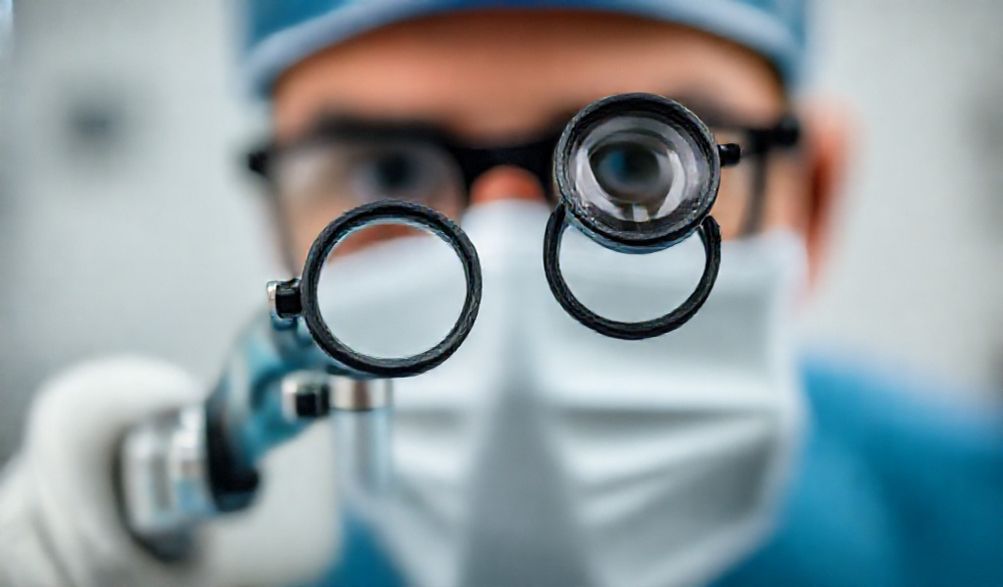
Surgical Loupes Price Guide 2024: Cost, Value & How to Choose
In the high-stakes world of surgery and dentistry, precision is everything. A fraction of a millimeter can be the difference between success and complication. At the heart of this precision is visualization. For decades, surgical loupes have been the fundamental tool for clinicians seeking to enhance their view, reduce strain, and elevate the standard of care. But stepping into the market to purchase your first—or next—pair can be a daunting experience. Prices swing wildly from a few hundred to several thousand dollars, leaving you with one burning question that goes beyond the sticker price: “What am I really paying for, and is it worth the investment?”
This guide is designed to demystify that exact question. We’ll move past the confusion and provide a clear, comprehensive breakdown of surgical loupes pricing in 2024. By synthesizing industry data, expert fitting principles, and practical advice, this post will empower you to make an informed, value-driven decision. We’ll dissect the cost factors, compare system types, and provide a framework to evaluate the true return on investment for your specific practice. By the end, you’ll know how to navigate the market, ask the right questions, and select a loupe system that offers the best long-term value for your career—not just the lowest initial price.
Understanding Surgical Loupes: More Than Just Magnification
Before we dive into dollars and cents, it’s crucial to understand what you’re buying. Surgical loupes are not simple magnifying glasses; they are sophisticated optical systems engineered for clinical precision and user ergonomics.
Core Components of a Loupe System
A loupe system is comprised of three key elements, each contributing to its performance and cost:
-
Optical Lenses (Galilean vs. Prismatic): This is the heart of the system.
- Galilean Systems: Use a simple lens configuration. They are lighter, more compact, and generally less expensive. They offer excellent clarity but typically have a more limited field of view and depth of field at higher magnifications (usually maxing out around 3.5x).
- Prismatic (Keplerian) Systems: Use a series of prisms to fold the light path. This allows for higher magnifications (4.5x to 8x and beyond), a significantly wider field of view, and greater depth of field. They are bulkier, heavier, and command a higher price.
-
Frame Materials & Ergonomics: The frame is your interface with the optics. Lightweight, adjustable materials like titanium or high-grade composites reduce neck strain. Ergonomics aren’t just about comfort; proper declination angle and fit prevent long-term musculoskeletal injuries. A well-designed frame is an investment in your physical health.
-
Light Source Integration (LOEs): A light source is no longer a luxury—it’s a necessity for shadow-free illumination. Loupe-mounted lights, or Light-Emitting Diodes (LEDs), have become integral. The quality, brightness (lumens), color temperature, and battery life of the light source are major price differentiators.
Primary Types & Their Typical Use Cases
- Through-the-Lens (TTL) vs. Flip-Up Loupes: TTL loupes have the lenses permanently mounted in the carrier lens, offering a lighter weight and perfectly aligned optical path. They are custom-made for the user. Flip-up loupes have a hinged mechanism, allowing you to look under the magnification. They are often more adjustable and can be shared, but may be slightly heavier.
- Dental vs. Surgical Loupes: While the technology overlaps, dental loupes are often optimized for a seated posture and the specific working distances of the oral cavity. Surgical loupes may prioritize a wider field of view for larger operative sites and are built to withstand OR environments.
- Customization Level: Off-the-shelf loupes offer basic adjustments and are the most affordable. Fully custom loupes are built to your exact measurements—Interpupillary Distance (IPD), Working Distance (WD), and Declination Angle—providing optimal ergonomics and clarity. This customization is a primary driver of cost and value.
Key Factors That Influence Surgical Loupes Price
Now, let’s unpack the “why” behind the price tags. Understanding these factors will help you see where your money is going and identify what matters most for your practice.
Optical Quality & Magnification
You are paying for precision engineering. Higher-quality glass or composite lenses provide superior clarity, color fidelity, and edge-to-edge sharpness, reducing eye strain during long procedures. As magnification increases, the optical complexity required to maintain a wide field of view and sufficient depth of field skyrockets. A jump from 3.0x to 4.5x prismatic loupes isn’t linear; it represents a significant leap in optical design and cost.
Level of Customization
This is arguably the most critical factor. A loupe that is not fitted correctly is worse than useless—it can cause pain and injury. The process of measuring your Рабочее расстояние (the space from your eyes to your hands), Declination Angle (how far down your head naturally tilts), and Interpupillary Distance (the space between your pupils) requires a trained consultant. This bespoke service, which ensures the loupes become a seamless extension of your posture, is a substantial part of the value and cost of a professional system.
Integrated Lighting Systems
Adding a high-quality LED light source can easily add $800 to $2,500+ to the total cost. What justifies this? Consider the light’s output (brightness measured in lumens), its beam pattern (wide vs. focused), color rendering index (how true colors appear), and battery life/technology. A cordless system with a lightweight, long-lasting battery and a quick-charge dock represents a significant convenience and performance upgrade over older, corded, or dimmer models.
Brand Reputation, Warranty & Service
Established brands like Orascoptic, Zeiss, SurgiTel, Designs for Vision и Heine, have built their reputations on decades of optical excellence, research, and clinical validation. This heritage often comes at a premium. More importantly, you’re investing in their support network. A comprehensive warranty (often lifetime on frames and optics), access to expert re-adjustments, responsive customer service, and reliable repair channels are invaluable over the 5-10 year lifespan of your loupes. A cheaper, no-name brand may lack this critical safety net.
Surgical Loupes Price Ranges: A Realistic Breakdown (2024)
Let’s translate these factors into concrete numbers. Remember, these are approximate ranges, and final pricing depends on configuration, add-ons, and geographic market.
Entry-Level & Basic Systems ($200 – $800)
- которые помогают справляться с потом во время многочасовых операций, повышая комфорт медицинской команды. This tier typically includes basic flip-up loupes or simple TTL systems with lower magnification (2.0x – 2.5x). Customization is minimal, often limited to basic IPD adjustment. Frames are functional but may use heavier materials. Integrated lighting is usually not included or is a basic add-on.
- Best For: Students on a strict budget, or professionals who want to experiment with magnification for very short periods to see if it suits them. It’s a low-risk entry point, but with significant ergonomic and performance limitations for full-time use.
Mid-Range Professional Systems ($1,500 – $3,500)
- которые помогают справляться с потом во время многочасовых операций, повышая комфорт медицинской команды. This is the sweet spot for most practicing clinicians. Here, you get fully custom-fitted TTL or advanced flip-up loupes with good-quality Galilean or entry-level prismatic optics at common magnifications (2.5x, 3.0x, 3.5x). Frames are lightweight and ergonomic. A good-quality, cordless LED light source is often included in the higher end of this range. This tier represents the core “value for money” proposition.
- Best For: General dentists, dental hygienists, surgical residents, and many general surgeons who rely on their loupes daily. It offers an excellent balance of performance, comfort, and durability.
High-End & Fully Integrated Systems ($4,000 – $10,000+)
- которые помогают справляться с потом во время многочасовых операций, повышая комфорт медицинской команды. This tier is for peak performance. It features high-magnification (4.5x and above) prismatic loupes with expansive fields of view. Frames are ultra-lightweight (e.g., titanium). The integrated lighting is top-tier: ultra-bright, with perfect color temperature and advanced battery systems. This range also includes sophisticated surgical microscope loupes or exoscope systems for microsurgery.
- Best For: Specialists performing intricate procedures—periodontists, endodontists, oral surgeons, plastic surgeons, neurosurgeons, and ophthalmologists. The investment is justified by the unparalleled visualization, ergonomic protection, and procedural efficiency gains.
How to Evaluate Value: Beyond the Sticker Price
Shifting your mindset from “cost” to “investment” is key. The right loupes should pay for themselves many times over.
Calculating Your Return on Investment (ROI)
Think about value in these terms:
* Clinical Outcomes: Enhanced visualization leads to more accurate margin detection, better caries removal, and more precise suturing. This can reduce revision rates and improve patient outcomes—which is priceless.
* Ergonomics & Career Longevity: Chronic neck and back pain are epidemic among clinicians. Properly fitted loupes promote a neutral spine, potentially preventing debilitating injuries that could shorten your career. The value of working pain-free for decades is immense.
* Эффективность: Seeing better often means working faster and with more confidence. Saving even a few minutes per procedure adds up over a week, increasing practice throughput and reducing fatigue.
The True Cost of a Poor Fit
A cheap, ill-fitting loupe has a hidden price tag: discomfort, accelerated fatigue, and poor posture that can lead to early career burnout or the need for physical therapy. You may end up needing to replace them within a year or two, making the initial “savings” a false economy. The right fit is non-negotiable.
Trial Periods, Demonstrations & Consultations
Never buy loupes sight-unseen. Reputable companies and distributors offer live demos or trial periods. Insist on this. Wear them, move around, simulate a procedure. A knowledgeable sales representative is not just a seller; they are a fitting consultant who will ensure your measurements are correct. This service is part of what you pay for.
A Step-by-Step Guide to Making Your Purchase Decision
Follow this actionable pathway to a confident purchase.
Step 1: Assess Your Clinical Needs & Budget
List your most common procedures. What working distance do you use? Do you need a wide field or high magnification? Be realistic about your budget, but remember this is a long-term tool. Many companies offer financing plans, making higher-tier systems more accessible.
Step 2: Research & Shortlist Reputable Brands
Look beyond marketing. Seek out clinical studies, peer reviews in professional forums, and recommendations from colleagues you trust. Narrow your list to 2-3 brands known for quality and service in your specialty.
Step 3: Schedule Live Demos & Compare
Contact representatives for your shortlisted brands. Create a simple comparison chart:
| Feature | Brand A Model X | Brand B Model Y |
| :— | :— | :— |
| Total Price | | |
| Magnification & Type | 3.5x Galilean | 3.0x Prismatic |
| Field of View | XX mm | XX mm |
| Weight | XX g | XX g |
| Light Source | Brand, Lumens, Battery Life | Brand, Lumens, Battery Life |
| Warranty | Frame/Optics/Light | Frame/Optics/Light |
| Adjustment Policy | | |
Prepare questions about service turnaround, upgrade options, and what the final quote includes (case, charger, etc.).
Step 4: Final Fitting & Order Placement
Ensure your final measurements are taken by a certified professional, ideally in the posture you use most. Understand the lead time for custom manufacturing. Review the order form carefully before submitting.
Раздел Часто задаваемых вопросов (ЧАВО)
Q: What is the average price for a good pair of surgical loupes?
О: For a quality, custom-fitted system for a practicing professional, expect to invest between $1,500 and $3,500. This range typically includes a reliable optical system with standard magnification and may include a basic light.
Q: Are expensive loupes worth it?
О: For professionals who use them daily, да. Higher-priced loupes often offer superior optics, wider fields of view, better ergonomics, and integrated lighting. This reduces physical strain and enhances precision, paying for itself in career longevity and improved outcomes.
Q: Can I buy used surgical loupes to save money?
О: We generally do not recommend it. Loupes are custom-fitted to another individual’s unique measurements (IPD, working distance). Using them can cause significant discomfort, poor posture, and injury. They also likely lack a valid warranty.
В: Покрывает ли страховка стоимость хирургических луп?
О: Как правило, нет.. Medical/dental insurance rarely covers loupes as they are considered professional tools. However, they are almost always a tax-deductible business expense. Some employers or practices may offer stipends or financing assistance.
Q: How often should I replace my surgical loupes?
О: With proper care, a high-quality pair can last 5–10 лет или более. Reasons for replacement include a change in your vision prescription, a significant shift in your practice focus requiring different magnification, or physical damage to the optics.
Заключение
The price of surgical loupes is a direct reflection of optical engineering, meticulous customization, and ergonomic design. The goal of your search should not be to find the cheapest option, but to identify the system that delivers the greatest value for your specific clinical life. Remember the core advice: a professional fitting and live demonstration are non-negotiable steps. Your loupes are an extension of your skill and senses; they should feel intuitive and comfortable.
Investing in the right loupes is, fundamentally, an investment in three things: your clinical capability, your physical well-being, and the quality of care you provide to your patients. It’s a decision that pays dividends for years to come.
Готовы увидеть разницу? Начните с выбора 2-3 проверенных брендов из этого руководства и свяжитесь с ними, чтобы назначить консультацию или личную демонстрацию. Ваше будущее «я» — и ваши пациенты — будут благодарны за полученную ясность.
p>