
The Essential Guide to Medical Lighting: Enhancing Patient Care and Clinical Outcomes
In the high-stakes environment of modern healthcare, every detail matters. From the precision of surgical instruments to the protocols for infection control, each element is meticulously engineered for optimal outcomes. Yet, one critical component is often relegated to a mere afterthought: the lighting. Medical lighting is far more than a utility; it is a sophisticated, purpose-built tool that directly influences diagnostic accuracy, surgical success, patient recovery, and clinician well-being. This essential guide delves into the science, technology, and strategic considerations behind medical-grade illumination, providing healthcare administrators, facility planners, and medical professionals with the knowledge to make informed decisions that enhance both safety and care quality.
Understanding Medical Lighting: More Than Just Brightness
Unlike general ambient lighting, medical lighting is a precision instrument. Its primary role is not simply to illuminate a space, but to reveal critical information—the subtle color variation in tissue, the depth of a cavity, or the precise border of a lesion. It must perform flawlessly under demanding conditions, from the tense hours of an open-heart surgery to the quiet examination of a newborn. This specialized function demands a set of performance metrics that go far beyond the specifications of commercial or residential lighting.
Key Performance Metrics: Illuminance, Color Rendering, and Glare Control
To evaluate a medical light, one must understand the language of photometrics. Three key metrics are paramount:
- Illuminance (Lux): This measures the amount of light falling on a surface. In medical contexts, recommended lux levels are exceptionally high and task-specific. For example, a general examination may require 1,000 lux, while a major surgical site demands 40,000 to 160,000 lux to ensure deep-cavity illumination. Guidelines from organizations like the Illuminating Engineering Society of North America (IESNA) provide detailed benchmarks for different clinical areas.
- Индекс цветопередачи (CRI): Perhaps the most critical metric for diagnosis and surgery, CRI measures a light source’s ability to reveal the true colors of objects compared to natural light. A high CRI (90+ and ideally 95+) is non-negotiable. It allows clinicians to accurately distinguish between arterial and venous blood, identify tissue oxygenation levels, and detect subtle jaundice or cyanosis. Poor color rendering can lead to diagnostic errors.
- Unified Glare Rating (UGR) & Shadow Management: Glare causes visual fatigue, headaches, and impaired performance. Medical lights, especially surgical systems, are engineered to minimize direct and reflected glare through sophisticated optical designs, diffusers, and positioning. Equally important is shadow reduction. Advanced surgical lights use multiple LED clusters from different angles to “fill in” shadows cast by a surgeon’s head or hands, ensuring a consistently clear field of view.
The Impact on Human Physiology: Clinicians and Patients
The biological impact of light is profound. For clinicians, especially surgeons and proceduralists, hours of intense visual focus under inadequate lighting lead to eye strain, fatigue, and decreased concentration—factors that can impact performance. Proper medical lighting mitigates this by providing stable, high-quality illumination that reduces the eye’s need to constantly adjust.
For patients, lighting affects physiology and psychology. In patient rooms, constant bright light disrupts circadian rhythms, impairing sleep and potentially delaying healing. Conversely, lighting that mimics natural diurnal patterns can help regulate melatonin production, improve sleep quality, and reduce confusion, particularly in ICU or elderly care settings. The psychological benefit of a patient having control over their ambient light should not be underestimated, contributing to a greater sense of comfort and autonomy.
Primary Types of Medical Lighting and Their Clinical Applications
Medical lighting is not a one-size-fits-all solution. It is a family of specialized tools, each designed for a specific clinical purpose.
Surgical Lighting Systems: Precision in the Operating Room
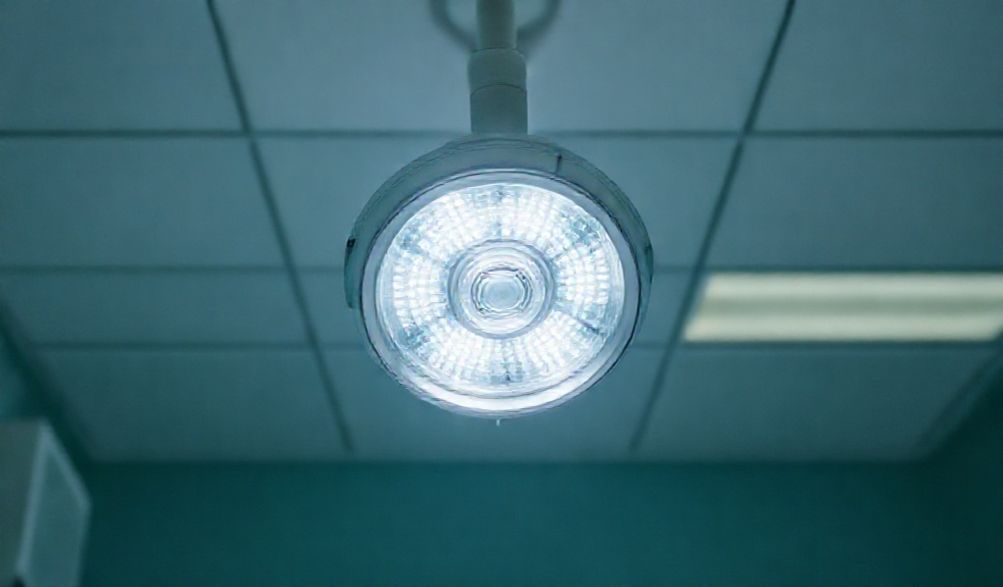
The surgical light is the pinnacle of medical lighting technology. Modern systems, predominantly LED-based, are marvels of engineering. Key features include:
* Deep-Cavity Illumination: The ability to deliver intense, uniform light into deep surgical sites without excessive heat.
* Advanced Shadow Reduction: Achieved through multi-point source designs (often with hundreds of individual LEDs) that create overlapping fields of light.
* Color Temperature Control: Some systems allow adjustment of color temperature (e.g., from cool 4500K to warm 3500K) to optimize contrast for different tissue types.
* Sterilization & Integration: Designed with seamless, cleanable surfaces and often capable of integration with imaging systems, video overlays, and room controls in a hybrid operating room.
Examination and Diagnostic Lighting
This category encompasses the lights used in clinics, emergency departments, and bedside examinations.
* Overhead Exam Lights: Provide high-CRI, adjustable illumination for general physical assessments.
* Specialized Diagnostic Lights: Include dermatological lights for assessing skin lesions, transilluminators, and the integrated lights in devices like otoscopes and ophthalmoscopes. These are tuned to specific wavelengths to enhance visualization of particular conditions.
Ambient and Patient-Room Lighting
Here, the focus shifts from procedural precision to therapeutic environment. Principles of Evidence-Based Design guide this category:
* Circadian Lighting Systems: These automatically adjust color temperature and intensity throughout the day—bright, cool light in the morning; warm, dim light in the evening—to support patient and staff circadian health.
* Patient-Centered Controls: Bedside lights with multiple intensity settings and color options give patients control, reducing stress.
* Safety-Focused Design: Integrated night lights, path lighting, and glare-free fixtures ensure safe mobility for patients and staff during nighttime hours.
Critical Factors in Selecting Medical Lighting
Choosing the right system requires a balance of clinical need, safety, and operational pragmatism.
Safety and Regulatory Compliance (IEC 60601-1, etc.)
This is the absolute baseline. Any device used in patient care must comply with stringent international standards. The IEC 60601-1 series is the global benchmark for the safety and essential performance of medical electrical equipment. Compliance ensures protection against electric shock, mechanical hazards, excessive radiation, and electromagnetic interference. Furthermore, fixtures must be designed for infection control—with smooth, crevice-free surfaces that can withstand repeated cleaning with harsh disinfectants.
Technological Considerations: LED Dominance and Smart Features
LED technology has revolutionized medical lighting and is now the undisputed standard. Benefits include:
* Superior Efficiency & Lifespan: LEDs consume up to 80% less energy than halogen and last for 20,000-50,000 hours, slashing energy and maintenance costs.
* Minimal Heat Emission: Critical for patient and clinician comfort, especially in surgical settings.
* Instant On & Dimming: Provides full intensity immediately with flicker-free dimming.
* Smart System Integration: Modern systems can be part of a networked building management system, allowing for pre-programmed lighting “scenes” for different procedures, usage tracking, and predictive maintenance alerts.
Ergonomics, Durability, and Total Cost of Ownership
A light is only as good as its usability. Evaluate:
* Эргономика: Are handles intuitive? Is the movement smooth and effortless? Can it be positioned and locked precisely without drift?
* Прочность: The system must withstand years of constant adjustment, potential impacts, and aggressive cleaning. Look for robust construction and warranty terms.
* Общая стоимость владения (TCO): Look beyond the purchase price. Calculate long-term savings from LED energy efficiency, reduced bulb replacements, and lower HVAC loads (due to less heat output). A higher-quality, more efficient system often has a lower TCO over a 10-year period.
The Evolving Future of Medical Lighting
Граница возможностей медицинского освещения — это интеллектуальность, адаптивность и глубокая интеграция.
Интеграция с цифровой хирургией и визуализацией
Освещение становится динамической точкой данных в цифровой операционной. В гибридных операционных уровень освещения может автоматически регулироваться при переходе от открытой хирургии к рентгеноскопической визуализации. Будущие системы могут напрямую взаимодействовать с хирургической навигацией и платформами искусственного интеллекта, где световой спектр может настраиваться в реальном времени для улучшения видимости раковой ткани, отмеченной системой визуализации в реальном времени.
Биологически и психологически адаптированное освещение и биофильный дизайн
Будущее — за психологически настроенным освещением. Системы биологически адаптированного освещения (HCL) будут активно управлять спектральным выходом, чтобы повысить бдительность персонала в ночную смену или способствовать расслаблению пациентов перед операцией. Принципы биофильного дизайна будут использовать свет для создания связи с природой, например, имитируя медленные цветовые переходы рассвета или проецируя успокаивающие природные узоры, чтобы снизить стресс и поддержать целостное исцеление.
Раздел Часто задаваемых вопросов (ЧАВО)
В1: Какая характеристика является самой важной при выборе хирургического света?
О: Хотя многие характеристики важны, равномерное уменьшение теней имеет первостепенное значение. Это обеспечивает постоянное и четкое освещение операционного поля с нескольких углов, предотвращая визуальные помехи, которые могут поставить под угрозу безопасность и эффективность процедуры. Это ключевая характеристика, выделяемая в клинических оценках оборудования операционных.
В2: Все ли светодиодные светильники подходят для медицинского применения?
О: Нет. Светодиодные светильники медицинского класса должны соответствовать строгим нормативным стандартам (таким как IEC 60601-1) в отношении электробезопасности, электромагнитных излучений и механической прочности. Их цветовая стабильность и передача также должны быть клинически валидированы. Светодиоды потребительского класса не имеют этих сертификаций и контроля, что делает их непригодными для диагностических или хирургических задач.
В3: Как медицинское освещение влияет на восстановление пациента?
О: Исследования в области доказательного дизайна указывают, что освещение в палатах пациентов, имитирующее естественные суточные циклы, может помочь регулировать режимы сна/бодрствования, потенциально снижая спутанность сознания и улучшая настроение. Кроме того, регулируемое освещение дает пациентам чувство контроля, способствуя общему комфорту и удовлетворенности, которые являются компонентами процесса исцеления.
В4: Может ли переход на современное медицинское освещение снизить затраты больницы?
О: Да, в основном за счет операционной экономии. Современные светодиодные хирургические и диагностические светильники потребляют значительно меньше энергии и имеют срок службы 20 000–50 000 часов, что drastically сокращает затраты на замену и техническое обслуживание по сравнению с традиционными галогенными или люминесцентными системами. Первоначальные инвестиции часто окупаются за счет долгосрочной экономии и улучшенных клинических результатов.
Заключение
Выбор подходящего медицинского освещения — это критически важное решение, находящееся на пересечении клинической эффективности, опыта пациента, работы персонала и операционной эффективности. Он требует выхода за рамки базовых спецификаций к целостному пониманию того, как свет функционирует как инструмент в рамках конкретных рабочих процессов здравоохранения. Расставляя приоритеты в стандартах безопасности, внедряя проверенные технологии, такие как светодиоды с высоким индексом цветопередачи (CRI), и учитывая человеческий фактор как для медицинских работников, так и для пациентов, медицинские учреждения могут инвестировать в решения по освещению, которые действительно освещают путь к лучшему уходу. По мере развития технологий освещение станет еще более интегрированным и интеллектуальным, дополнительно укрепляя свою роль как фундаментальной опоры современной медицинской инфраструктуры.
p>