
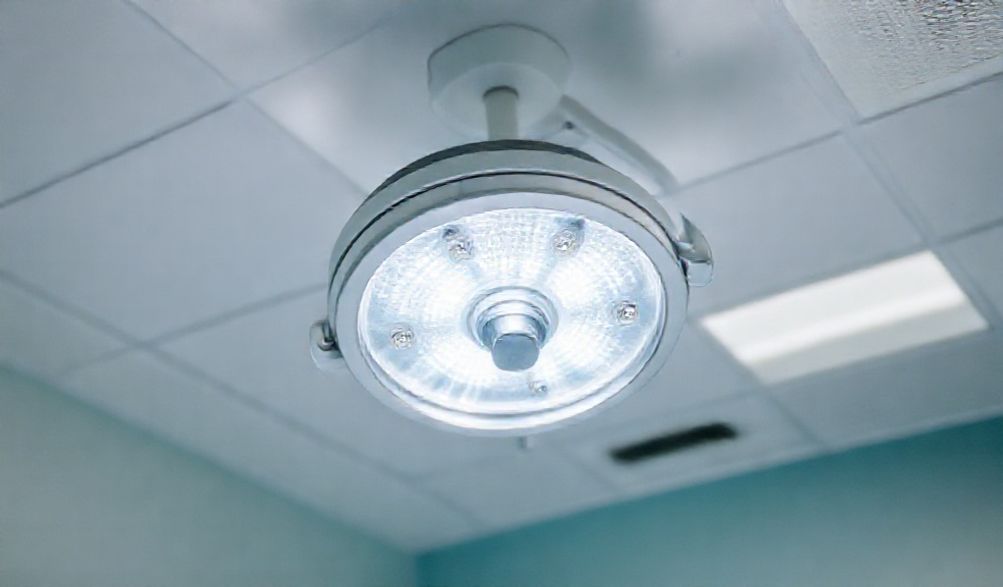
The Complete Guide to Ceiling Mounted Surgical Lights: Technology, Benefits & Selection
Introduction
In the high-stakes environment of an operating room, every piece of equipment plays a role in the symphony of patient care. Yet, few are as fundamentally critical—and as frequently underestimated in procurement—as the ceiling mounted surgical light. For surgical directors, hospital procurement teams, and healthcare facility planners, selecting this system is a decision that resonates for over a decade, impacting clinical outcomes, staff well-being, and operational budgets daily.
Drawing on decades of clinical engineering and operating room design experience, this guide cuts through the marketing jargon. We move beyond spec sheets to provide a clear, evidence-based resource rooted in real-world application. A ceiling mounted surgical light is not merely a “bright fixture”; it is a life-support system for a surgeon’s vision. It is the tool that enables the precise differentiation of a delicate nerve from surrounding tissue, the clear visualization of a deep cavity in cardiac surgery, and the accurate assessment of tissue perfusion.
This pillar page synthesizes hard technical specifications, peer-reviewed clinical outcomes research, and practical procurement insights. Our goal is to empower your decision-making, ensuring your investment enhances patient safety, optimizes surgical efficiency, and stands the test of time in a rapidly advancing technological landscape.
1. What is a Ceiling Mounted Surgical Light? Core Function & Evolution
Defining the Modern Surgical Luminaire
At its core, a modern ceiling mounted surgical light is a sterile, adjustable, high-intensity illumination system engineered for one purpose: to provide optimal visual conditions for surgery. Its function extends far beyond simple brightness. It must:
- Eliminate Shadow: Effectively minimize shadows cast by surgeons’ heads, hands, and instruments, which can obscure critical anatomy.
- Provide Deep Cavity Illumination: Deliver consistent, high-quality light into deep and narrow surgical sites, such as those in spinal, pelvic, or cardiothoracic procedures.
- Ensure True Tissue Color Rendition: Emit light that allows the surgical team to distinguish subtle differences between tissue types, arterial and venous blood, and recognize signs like cyanosis or ischemia.
The key distinction from its wall-mounted или mobile counterparts is its integration into the OR’s infrastructure. By being suspended from the ceiling, it removes obstructions—stands, trailing cables, and bulky bases—from the sterile field and floor. This creates a safer, more flexible, and uncluttered workspace, allowing for free movement of staff and equipment.
A Brief History: From Incandescent to LED
The evolution of surgical lighting mirrors the advancement of surgery itself. The journey began with simple incandescent lamps, which provided warmth but inconsistent, yellowish light and posed significant heat risks to both patient and staff. The introduction of halogen technology was a major leap, offering brighter, whiter light through gas-filled bulbs. Halogen systems often used multiple small bulbs arranged in a ring or configuration to help reduce shadows.
However, the true revolution came with the adoption of Light Emitting Diode (LED) technology. LEDs transformed the paradigm by offering:
* Cool Light: Drastically reduced infrared and ultraviolet radiation, minimizing tissue drying and heat discomfort for the surgical team.
* Exceptional Longevity: Lifespans of 30,000 to 60,000 hours versus the 1,000-2,000 hours of a typical halogen bulb, slashing maintenance and replacement costs.
* Consistent Color Temperature: No color shift over the bulb’s lifetime, unlike halogen bulbs which dim and yellow with age.
* Instant On/Off & Dimming: Immediate full illumination without warm-up time and precise, flicker-free dimming control.
Today’s systems are computer-controlled luminaires, integrating advanced optics, ergonomic mechanics, and often, digital connectivity for imaging and data integration.
2. Critical Technical Specifications & What They Mean for Surgery
Illumination Quality: Lux, Color Temperature & Rendering
Understanding these metrics is non-negotiable for informed procurement.
-
Lux Levels (Illuminance): This measures the intensity of light falling on the surgical field. While “more lux” may seem better, the need is procedure-specific.
- General Surgery: Typically requires 40,000 – 100,000 lux at the center of the light field.
- Deep Cavity/Microsurgery: Demands higher intensities, often 100,000 – 160,000 lux or more, to compensate for depth and the use of magnifying loupes or microscopes.
- Data-Backed Insight: Excessive, unfocused lux can cause glare and visual fatigue. The key is sufficient, uniform lux across the entire defined field diameter (e.g., 180mm, 250mm).
-
Color Temperature (Measured in Kelvin, K): This describes the “warmth” or “coolness” of the white light.
- The clinical sweet spot is 4000K to 4500K—a neutral, daylight-mimicking white.
- Why it matters: This range optimally balances contrast and comfort. It provides the clarity needed for detail work without the harsh, bluish cast of higher temperatures (5000K+) that can distort tissue appearance and strain eyes over long procedures.
-
Индекс цветопередачи (CRI): Arguably the most critical specification for patient safety. CRI measures a light source’s ability to reveal the true colors of objects compared to natural light.
- A CRI >90 (with a high R9 value) is the industry standard for surgery. The R9 value specifically measures the accurate rendering of deep reds, crucial for distinguishing oxygenated blood, muscle, and organ tissue.
- Clinical Evidence: Studies, including those published in journals like Surgical Endoscopy, have demonstrated that high-CRI lighting improves a surgeon’s ability to differentiate tissue types and identify anatomical structures, directly reducing the risk of iatrogenic injury.
Light Field Design: Depth of Illumination & Shadow Management
How light is delivered is as important as how much is delivered.
-
Depth of Illumination (DoI): This is the distance along the central axis where the light intensity does not fall below a certain percentage (often 60%) of the central lux value. A high DoI (e.g., 800mm to 1200mm+) means the light remains bright and consistent even in a deep wound, eliminating the need to constantly re-focus or reposition the light.
-
Shadow Management: Modern lights use optical designs to virtually eliminate the shadow of a surgeon’s head or hand.
- Halogen Legacy Design: Often used multiple point sources (an array of small bulbs) so that if one source is obstructed, others fill in the shadow.
- LED Modern Design: Typically employs concentric ring optics. The light is emitted from multiple LED rings; an obstruction may block one ring, but the others continue to illuminate the field seamlessly. This creates a phenomenon known as “shadow dilution.”
Mechanical Performance: Reach, Movement & Sterility
The best light is useless if it can’t be positioned effortlessly and kept sterile.
-
Tracking & Positioning: A light must move intuitively to follow the surgical action.
- Multi-Axis Movement: Look for systems with multiple rotational and telescoping joints, allowing the light head to be positioned exactly where needed, from any approach angle.
- Интуитивное управление: Surgeons cannot break sterility. Controls must include easy-to-use, hermetically sealed handles on the light head itself, voice activation, or touchless foot switches. “Memory” settings to recall preferred positions for specific procedures are a major ergonomic benefit.
-
Sterile Handling: Every surface a scrubbed person might touch must be designed for cleaning.
- Sealed Handles: Should be smooth, crevice-free, and able to withstand repeated disinfection with hospital-grade chemicals.
- Barrier Compatibility: The design should accommodate sterile disposable handles or drapes without impeding movement or balance.
3. Key Benefits of Modern Ceiling Mounted Systems
Unmatched Clinical Outcomes & Surgeon Ergonomics
The direct link between lighting and surgical performance is well-established.
* Reduced Visual Fatigue: High-quality, uniform light with minimal glare and accurate color reduces eye strain and accommodative stress for the entire team, especially during marathon procedures.
* Enhanced Precision & Safety: Superior shadow control and deep cavity illumination mean surgeons have a clearer view of the operative site, leading to more confident dissection, reduced error rates, and potentially shorter operative times.
* Improved Ergonomics: Easy positioning prevents surgeons from adopting awkward postures to “chase the light,” reducing physical strain and fatigue.
Operational Efficiency & OR Workflow Integration
The ceiling-mounted design is a cornerstone of the modern, efficient OR.
* Maximized Floor Space: By eliminating floor stands and power cords, the entire floor area is clear for staff movement, equipment (like C-arms or robotic consoles), and patient transfer. This enhances safety and turnover speed.
* Streamlined Layout Integration: These lights are part of a ceiling services matrix. They are planned in concert with anesthetic gas columns, surgical booms, camera systems, and displays. This integrated approach creates a predictable, flexible, and technology-ready environment.
Long-Term Cost-Effectiveness & Sustainability
The initial investment is offset by significant long-term savings.
* Dramatically Lower Maintenance: LED lifespan (10-15 years) versus the quarterly halogen bulb replacements eliminates ongoing parts costs and the labor (and OR downtime) for swapping bulbs.
* Энергоэффективность: LEDs consume 50-70% less power than equivalent halogen systems, yielding direct utility savings.
* Reduced HVAC Load: The “cool light” property of LEDs emits far less radiant heat into the room. This reduces the cooling burden on the OR’s HVAC system, contributing to further energy savings and improved ambient comfort.
4. How to Choose the Right System: A Procurement Checklist
Assessing Your Clinical & Procedural Needs
Begin with a clinical needs assessment. Ask:
* What surgical specialties are primary users? (e.g., Ortho/Spine requires deep illumination; Plastics needs exceptional color accuracy).
* What is the typical cavity depth for your most complex procedures?
* Is there a need for integrated high-definition video cameras for recording, streaming, or teaching?
* Will the lights be used in hybrid ORs with advanced imaging (CT/MRI)? They may require specific materials to be compatible.
Evaluating Installation & Infrastructure Requirements
The ceiling is more than an attachment point; it’s a structural component.
* Конструктивного анализа: A loaded light boom can weigh several hundred pounds. A professional structural engineer must verify the ceiling can support the dynamic and static loads.
* Ceiling Grid & Clear Height: Coordinate with your architect. The mounting system must integrate with your ceiling type (clean grid, plaster, etc.) and maintain required clearances.
* Pre-Installation Survey: This is critical. Insist on a site survey by a qualified engineer from the manufacturer or installer. They will identify conflicts with sprinklers, HVAC ducts, existing infrastructure, and plan precise placement.
Comparing Brands & Total Cost of Ownership (TCO)
Look beyond the sticker price. Calculate the TCO over a 10-year horizon:
* Purchase Price: The initial capital outlay.
* Installation Cost: Can vary widely based on structural needs and complexity.
* Гарантия и обслуживание: What is covered and for how long? Is there a local, responsive service network?
* Consumables & Parts: Project the cost of replacement handles, barrier drapes, and any non-LED components over time.
* Потребление энергии: Request calculated annual energy use comparisons.
* Upgrade Path: Does the system allow for future software or hardware upgrades?
5. Installation, Maintenance & Safety Standards
The Installation Process: Ensuring Safety & Performance
Proper installation is paramount for safety and function. The process should follow strict stages:
1. Planning & Coordination: Finalizing plans with all trades (electrical, data, structural).
2. Structural Reinforcement: Installing necessary backing or supports in the ceiling.
3. Mounting & Assembly: Installing the track, boom arms, and light head, followed by electrical connection.
4. Calibration & Testing: Adjusting balance, verifying smooth movement, and testing all controls and backup systems.
5. Final Validation: Performance testing (lux measurements, field diameter checks) against the manufacturer’s specifications and the purchaser’s requirements. Always use manufacturer-certified or highly recommended installers.
Routine Maintenance & Sterilization Protocols
- Протоколы регулярной очистки и профилактического обслуживания Wipe down handles and external surfaces with a hospital-approved disinfectant. Check for smooth movement.
- Еженедельно/ежемесячно: Inspect for loose components, test all control interfaces (handle, foot switch, touch panel), and check the integrity of sterile barriers.
- Ежегодно: A certified technician should perform a full inspection: verifying lux output, color metrics, mechanical balance, electrical safety, and backup system function. This is often part of a preventative maintenance contract.
Compliance with Medical Device Regulations
Ceiling mounted surgical lights are regulated medical devices. Key standards include:
* IEC 60601-2-41: The paramount international standard specifically for the basic safety and essential performance of surgical luminaires. Compliance is non-negotiable.
* FDA Classification: In the U.S., they are typically Class II medical devices, requiring 510(k) clearance.
* Regional Markings: Ensure systems carry the necessary certifications for your region (e.g., CE mark for Europe, UKCA for the United Kingdom).
Часто задаваемые вопросы (ЧЗВ)
Q: What is the typical lifespan of a ceiling mounted surgical LED light?
О: High-quality LED systems are engineered for 30,000 to 60,000 hours of use. With typical OR utilization, this often translates to 10-15 years of clinical service before any significant degradation in light output occurs, far exceeding the lifespan of older technologies.
Q: Can existing halogen surgical lights be upgraded to LED?
О: Some manufacturers offer retrofit LED modules for their older models. While this can improve efficiency and color, it may not provide all the benefits of a new system (e.g., updated optics for better shadow control, modern touch controls, improved heat sinking). A full system replacement is often recommended for optimal performance and safety. A cost-benefit analysis by a certified technician is essential.
Q: How critical is the Color Rendering Index (CRI) for general surgery?
О: Extremely critical. A CRI >90 (with a high R9 value for red rendition) is considered the minimum for safe surgery. It is a key patient safety feature, allowing for accurate differentiation between tissues, arteries, veins, and the recognition of critical signs like cyanosis. Do not compromise on this specification.
Q: What are the backup options if the main light fails during surgery?
О: Modern systems are designed with redundancy. Safeguards include: redundant LED clusters within a single head (if one cluster fails, others remain lit), backup battery packs for control systems, and a “buddy light” function where an adjacent light in the OR can be quickly positioned to illuminate the field. Your facility’s clinical risk assessment should dictate the level of backup redundancy required.
Заключение
Selecting a ceiling mounted surgical light is a significant, long-term capital decision with direct and daily implications for surgical success, staff well-being, and facility efficiency. This guide has moved from the fundamental physics of illumination to the practical realities of installation, maintenance, and regulatory compliance. The goal is not to find the “brightest” light, but to identify the most appropriate surgical visualization system for your institution’s unique clinical needs, workflow, and physical environment.
Ваш следующий шаг: Use the procurement checklist in Section 4 to draft a detailed functional requirements document. Then, engage with reputable manufacturers who can provide documented clinical evidence, demonstrate a robust local service network, and, most importantly, arrange a live demonstration in a simulated or training OR environment. There is no substitute for your surgical team experiencing the light quality, handling, and ergonomics firsthand before making this vital investment in your operating theater’s future.
p>