
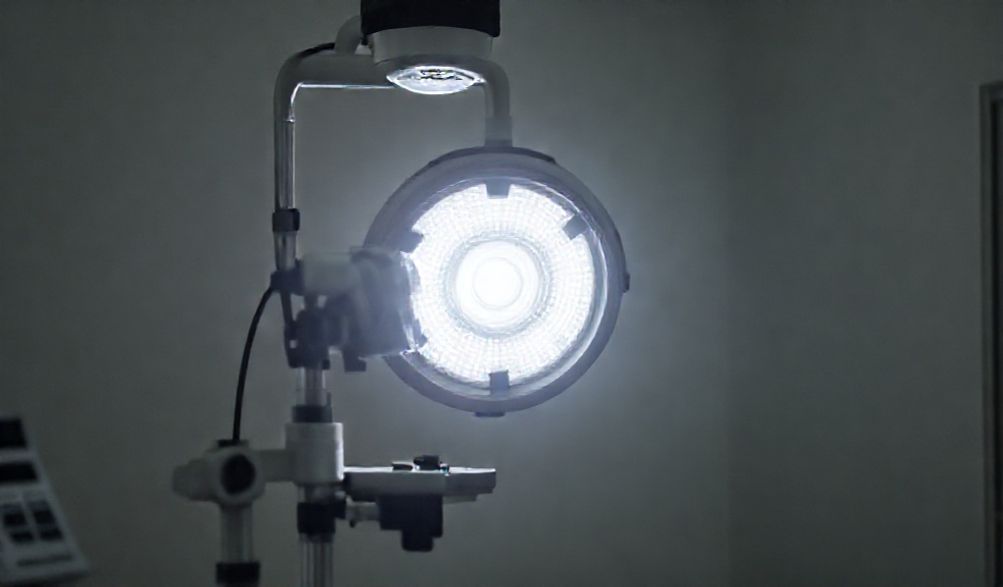
Examination Lights: A Guide to Types, Features, and Optimal Selection for Medical Professionals
In the intricate ecosystem of a modern medical facility, where advanced imaging systems and digital records command attention, the humble смотровой светильник often operates in the background. Yet, its role is anything but minor. As the primary tool for visual diagnosis, the quality of illumination it provides is a fundamental pillar of clinical accuracy, procedural efficiency, and patient safety. An inadequate or poorly chosen light can cast shadows of doubt—literally and figuratively—on a practitioner’s ability to assess, diagnose, and treat.
This guide is designed to illuminate the critical considerations surrounding medical examination lights. Whether you are a healthcare administrator overseeing a facility upgrade, a procurement specialist evaluating options, or a clinician seeking the best tool for your practice, understanding the technology, applications, and selection criteria is essential. We will synthesize insights from clinical ergonomics, manufacturer innovations, and best practice standards to empower you to make an informed investment—one that enhances patient outcomes, supports clinician well-being, and delivers long-term value.
The Critical Role of Proper Illumination in Medical Examination
Before delving into specifications, it’s vital to understand почему the right смотровой светильник is so crucial. It transcends simple visibility; it is an active diagnostic instrument.
Impact on Diagnostic Accuracy and Patient Outcomes
The human eye is a remarkable diagnostic tool, but it is entirely dependent on the quality of light it receives. Suboptimal lighting can obscure the subtle visual cues that are critical for accurate diagnosis.
* Shadow Reduction & Detail: Высококачественная смотровой светильник is engineered to minimize harsh shadows that can hide lesions, variations in skin texture, or the margins of a wound. This is often achieved through multiple LED point sources or specialized reflectors that fill the field with even light.
* Индекс цветопередачи (CRI): This is perhaps the most critical metric for diagnosis. A bruise, cyanosis, jaundice, or erythema must be seen in its true color. A light with a low CRI can distort these hues, potentially leading to misdiagnosis. Studies have shown that high-CRI lighting increases diagnostic confidence, particularly in fields like dermatology, dentistry, and surgery where color differentiation is paramount.
* Adequate Intensity: Insufficient light intensity (measured in Lux) can strain the eyes and mask fine details. The appropriate level of illuminance ensures that clinicians can see clearly without having to bring the light dangerously close to the patient or squint, facilitating a more thorough and confident examination.
Ergonomics and Clinician Well-being
Clinician burnout and musculoskeletal injuries are significant concerns in healthcare. The смотровой светильник can be a contributor or a mitigator.
* Adjustability & Glare Control: A light that is difficult to position or that creates glare on reflective surfaces (like instruments or wet tissue) forces practitioners into awkward postures—craning their neck, hunching over, or turning away. Modern lights with smooth, counterbalanced arms and anti-glare optics allow for effortless, one-handed positioning, reducing physical strain over long clinical days.
* Reducing Eye Fatigue: Consistent, flicker-free light with high color accuracy reduces the constant muscular adjustments the eyes must make to compensate for poor lighting, thereby decreasing visual fatigue and headaches.
Patient Comfort and Safety
The patient’s experience is also directly affected by the смотровой светильник.
* Minimal Heat Emission: Older halogen lights are notorious for radiating significant heat, which can be uncomfortable for the patient and potentially dry out exposed tissues. LED-based examination lights produce negligible radiant heat, enhancing patient comfort, especially during prolonged procedures.
* Quiet Operation & Non-Intrusive Design: The hum of a cooling fan or the noise of stiff mechanical joints can increase patient anxiety. Furthermore, a light that is easy to position accurately minimizes the need for repeated adjustments around a nervous patient, creating a calmer, more professional environment.
Key Technical Specifications and Features Explained
Navigating product specifications can be daunting. Here’s a breakdown of the key terms and what they mean for clinical use.
Understanding Light Quality Metrics: Lux, CRI, and CCT
- Lux (Illuminance): This measures the intensity of light falling on a surface. General examination rooms typically require 15,000 to 30,000 Lux at the focal point. For detailed procedures like minor surgery, suturing, or wound debridement, intensities of 40,000 to 100,000 Lux or more are necessary to illuminate deep cavities and reveal fine detail.
- Индекс цветопередачи (CRI): Rated on a scale of 0 to 100, CRI indicates how accurately a light source reveals the true colors of objects compared to natural sunlight. For any diagnostic task, an смотровой светильник с CRI of 90 or higher is essential. A CRI of 95+ is considered excellent for critical color discrimination.
- Коррелированная цветовая температура (CCT): Measured in Kelvin (K), CCT describes the apparent “warmth” or “coolness” of white light.
- Lower CCT (3000K-4000K): Appears “warm” or yellowish. It can be soothing but may not provide the optimal contrast for all tissues.
- Higher CCT (4500K-5500K+): Appears “cool” or bluish-white. This is often preferred for clinical and surgical settings as it enhances contrast and is perceived as brighter, aiding in the detection of subtle variations.
Light Source Technology: LED vs. Halogen
The shift from halogen to LED represents the most significant evolution in смотровой светильник technology.
* Светодиоды: The current industry standard.
* Преимущества: Extremely energy-efficient (saving up to 80% over halogen), exceptionally long lifespan (50,000+ hours), virtually no infrared heat emission, and instant-on at full brightness. Modern LEDs also achieve superb CRI scores.
* Аспект для рассмотрения: Quality varies. Look for medical-grade LEDs with stable drivers to prevent flicker.
* Halogen Lights: The traditional technology.
* Characteristics: Produce a warm light, but generate intense heat and have a short bulb life (1,000-2,000 hours). They gradually dim over time and consume significant energy.
* Current Use: Largely phased out in favor of LED, but may still be found in some older installations or niche applications where specific spectral qualities are desired.
Mechanical Design and Functionality
The best light is useless if you can’t position it correctly or keep it clean.
* Mobility & Positioning:
* Потолочное крепление: Offers the greatest freedom of movement, keeps floors clear, and is ideal for operating rooms, procedure rooms, and busy exam rooms. Requires professional installation.
* Настенное крепление: Saves floor space and provides good coverage for a dedicated exam area.
* Floor-Standing: Portable and flexible, perfect for multi-purpose rooms or clinics with changing layouts. Look for a stable base and arms with a wide range of motion.
* Ключевые особенности: Smooth, counterbalanced articulation (often with sealed, maintenance-free joints), a long reach, and intuitive handles are critical for ergonomics.
* Sterilization and Hygiene: In the era of infection control, the смотровой светильник is a fomite risk. Designs should feature:
* Seamless, smooth surfaces that can be easily wiped down with hospital-grade disinfectants.
* Light handles designed for single-use disposable sleeves or that are fully autoclavable.
* Sealed joints and switches that prevent fluid ingress.
Types of Examination Lights and Their Primary Applications
Not all clinical tasks require the same tool. Matching the light to the application is key.
General Diagnostic Examination Lights
The workhorse of primary care, pediatrics, and consulting rooms.
* Purpose: Routine physical exams, otoscopy, basic wound inspection.
* Функции: Good, adjustable intensity (20,000-40,000 Lux), high CRI (>90), flexible gooseneck or multi-joint arm for easy positioning, and often a combination of spot and broad field settings.
Procedure/Surgical Examination Lights
For environments where minor surgery, detailed wound care, suturing, or dermatological procedures are performed.
* Purpose: Providing intense, shadow-reduced light for deep cavity illumination and fine detail work.
* Функции: Higher intensity (50,000-150,000+ Lux), often with multiple light heads or a ring design to eliminate shadows from the clinician’s hands/head. Focus is on deep cavity access and superior color rendering.
Specialized Examination Lights
- ENT and Dental Lights: Feature a very focused, coaxial beam (where the light is aligned with the clinician’s line of sight) to illuminate deep, narrow cavities like the ear canal, nose, or oral cavity. Often head-mounted or on a specific procedural chair.
- Vaginal Speculum Lights & Penlights: Small, focused lights for specific localized exams. Speculum lights are integrated or attachable for gynecological procedures. Penlights are handheld for pupil checks and quick assessments.
- Portable and Battery-Operated Lights: Essential for emergency response, home healthcare, triage, and power-outage scenarios. Prioritize brightness, battery life, durability, and a hands-free option (e.g., headband).
How to Select the Right Examination Light: A Procurement Checklist
Use this structured approach to evaluate your needs and potential purchases.
1. Assessing Your Clinical Needs and Workflow
- Audit Procedures: What specific examinations and procedures will the light be used for? (e.g., general physical vs. laceration repair).
- Map the Room: Consider room size, ceiling height, exam table/bed location, and potential obstacles. Will a floor, wall, or ceiling mount work best?
- Involve End-Users: Have clinicians who will use the light daily evaluate its reach, ease of positioning, and handle comfort.
2. Evaluating Total Cost of Ownership (TCO)
Смотрите дальше ценника.
* Первоначальные затраты: Purchase price of the light and installation.
* Эксплуатационные расходы: LED lights drastically reduce electricity bills.
* Затраты на техническое обслуживание: Halogen requires frequent, costly bulb replacements. Quality LED systems have minimal maintenance. Factor in the cost and terms of the warranty and service agreements.
3. Compliance and Safety Standards
This is non-negotiable. Ensure any смотровой светильник under consideration is:
* Certified as a medical device (e.g., FDA Class I or II, CE marked as an MD).
* Compliant with relevant international standards (e.g., IEC 60601-1 for electrical safety, ISO 9680 for performance).
* Constructed with biocompatible, cleanable materials suitable for the clinical environment.
Установка, техническое обслуживание и передовые практики
Protect your investment and ensure optimal performance with proper care.
Professional Installation and Initial Calibration
Especially for ceiling-mounted systems, professional installation by a qualified technician is mandatory. They will ensure it is securely anchored to structural supports, correctly wired, and calibrated for smooth, balanced movement. DIY installation risks equipment failure and serious injury.
Routine Cleaning and Preventive Maintenance
- Daily/After Each Patient: Wipe down all handles, touch surfaces, and the light head with an approved disinfectant. Replace disposable handle sleeves.
- Ежемесячно/ежеквартально: Check all articulation joints for smooth movement. Wipe down arms and poles to remove dust.
- Ежегодно: Include the смотровой светильник in your facility’s biomedical equipment preventive maintenance schedule. A technician should verify light output (Lux), check electrical safety, and lubricate joints if specified by the manufacturer.
Устранение распространённых проблем
- Flickering Light (LED): Обычно указывает на неисправность драйвера светодиодов или блока питания. Обратитесь в сервисную службу.
- Скованность или провисание движения: Может потребоваться проверка или повторная калибровка суставов. Не прилагайте чрезмерных усилий.
- Снижение светового потока: Для светодиодного света это может сигнализировать о конце срока службы диодной матрицы. Для галогенного света — время заменить лампу.
Раздел Часто задаваемых вопросов (ЧАВО)
В1: Какая характеристика является самой важной при выборе осветительного прибора для обследования?
О: Хотя необходим комплекс характеристик, Высокий индекс цветопередачи (CRI >90) является безусловной основой для диагностической точности. Это гарантирует, что вы видите истинный цвет тканей. Это должно сочетаться с достаточной, регулируемой интенсивностью (Люкс) для ваших конкретных задач.
В2: Действительно ли светодиодные осветители для обследования лучше галогенных?
О: Для подавляющего большинства клинических применений — да. Светодиодная технология предлагает решающие преимущества: превосходная энергоэффективность (ниже эксплуатационные расходы), срок службы в 25-50 раз больше, чем у галогенных ламп, минимальное тепловыделение (повышает комфорт пациента) и мгновенный, стабильный световой поток с отличным CRI. Более высокая начальная стоимость быстро компенсируется экономией.
В3: Какая интенсивность света (Люкс) необходима для стандартного процедурного кабинета?
О: Для общих физикальных обследований обычно достаточно света, способного обеспечить 15 000 до 30 000 Люкс в фокальной точке. Для малых хирургических процедур (наложение швов, обработка ран) требования составляют 40 000 до 100 000 Люкс или более. Всегда сверяйтесь со специализированными рекомендациями.
В4: Могу ли я самостоятельно установить потолочный осветительный прибор для обследования?
О: Это настоятельно не рекомендуется и часто нарушает нормы безопасности. Потолочные системы тяжелые и требуют надежного крепления к потолочным балкам, правильного электрического подключения и калибровки. Неправильная установка создает серьезный риск для безопасности. Всегда пользуйтесь услугами квалифицированного специалиста.
В5: Как часто следует обслуживать осветительный прибор для обследования?
О: Пользовательская очистка (дезинфекция ручек и поверхностей) должна проводиться после каждого пациента. Полное техническое обслуживание — проверка механических функций, электробезопасности и светового потока — должно выполняться ежегодно в рамках плановой программы профилактического обслуживания вашего учреждения, согласно руководству по обслуживанию производителя.
Заключение
Выбор правильного смотровой светильник является стратегическим решением, оказывающим прямое, ежедневное влияние на клиническую помощь. Это инвестиция в диагностическую точность, эргономику работы врача и безопасность пациента. Расставляя приоритеты в пользу высокоточной освещенности (CRI >90 и соответствующий уровень Люкс), принимая надежность и эффективность современных светодиодных технологий, и настаивая на эргономичном дизайне и строгих стандартах соответствия, вы оснащаете свою практику фундаментальным инструментом для оказания высококачественной медицинской помощи.
Оптимальный выбор возникает при согласовании технических характеристик с реальным клиническим рабочим процессом. Мы рекомендуем привлекать вашу клиническую команду к демонстрациям, тестировать приборы в вашей реальной обстановке и анализировать долгосрочную совокупную стоимость владения. Таким образом, вы гарантируете, что это критически важное оборудование будет способствовать совершенству в уходе за пациентами на долгие годы вперед.
p>